
- Kingdom
- Animalia
- Phylum
- Chordata
- Class
- Mammalia
- Order
- Artiodactyla
- Family
- Bovidae
- Genus
- Capra
- Species
- Capra hircus
Overview
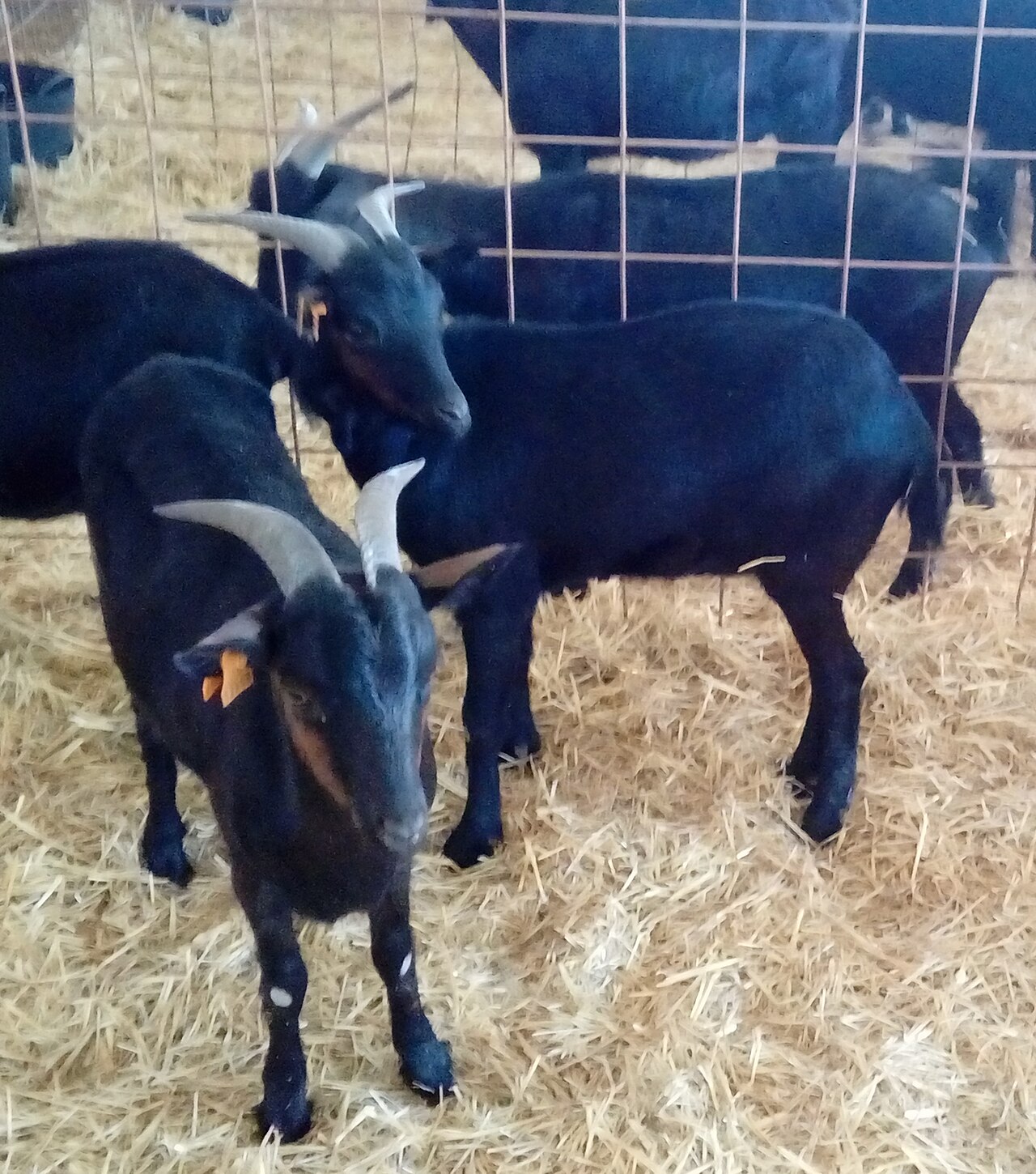
The Verata is a traditional Spanish breed of domestic goat. It is a dual-purpose breed, reared both for its meat and for its milk. It is named for, and is thought to originate in, the comarca of La Vera, in the province of Cáceres, in the northern part of the autonomous community of Extremadura in western central Spain. It is one of two traditional goat breeds in Extremadura, the other being the Retinta Extremeña.
History
The Verata is a traditional and heterogeneous goat breed from the Tagus depression in western central Spain, bounded to the south by the Montes de Toledo and to the north by the western Sistema Central. It was traditionally reared in the Sierra de Gredos, in the area where the provinces of Ávila, Cáceres and Toledo meet.• Towards the end of the twentieth century there was some displacement of the breed from its area of origin, the comarca of La Vera, into the comarca of Navalmoral de la Mata to the south.•
A herd-book was established by the Ministerio de Agricultura, Pesca y Alimentación, the Spanish ministry of agriculture, in 1986.• A breed association, the Asociación Extremeña de Criadores de Caprino de Raza Verata, received government approval in 2000,• and in 2008 the Verata was included by royal decree in a list of indigenous livestock breeds at risk of extinction.• A breeding programme was approved by the Junta of Extremadura in 2020.•
The Verata population has been in decline since the early twentieth century, for reasons including both economic depression and the aging of the rural population in its area of distribution.• In 1986 the total number for the breed was reported to be just under 100000 head; in 2024 it was 6554, consisting of 6040 breeding nannies and 265 billies.• Its conservation status was listed as "at risk/vulnerable".•
Characteristics
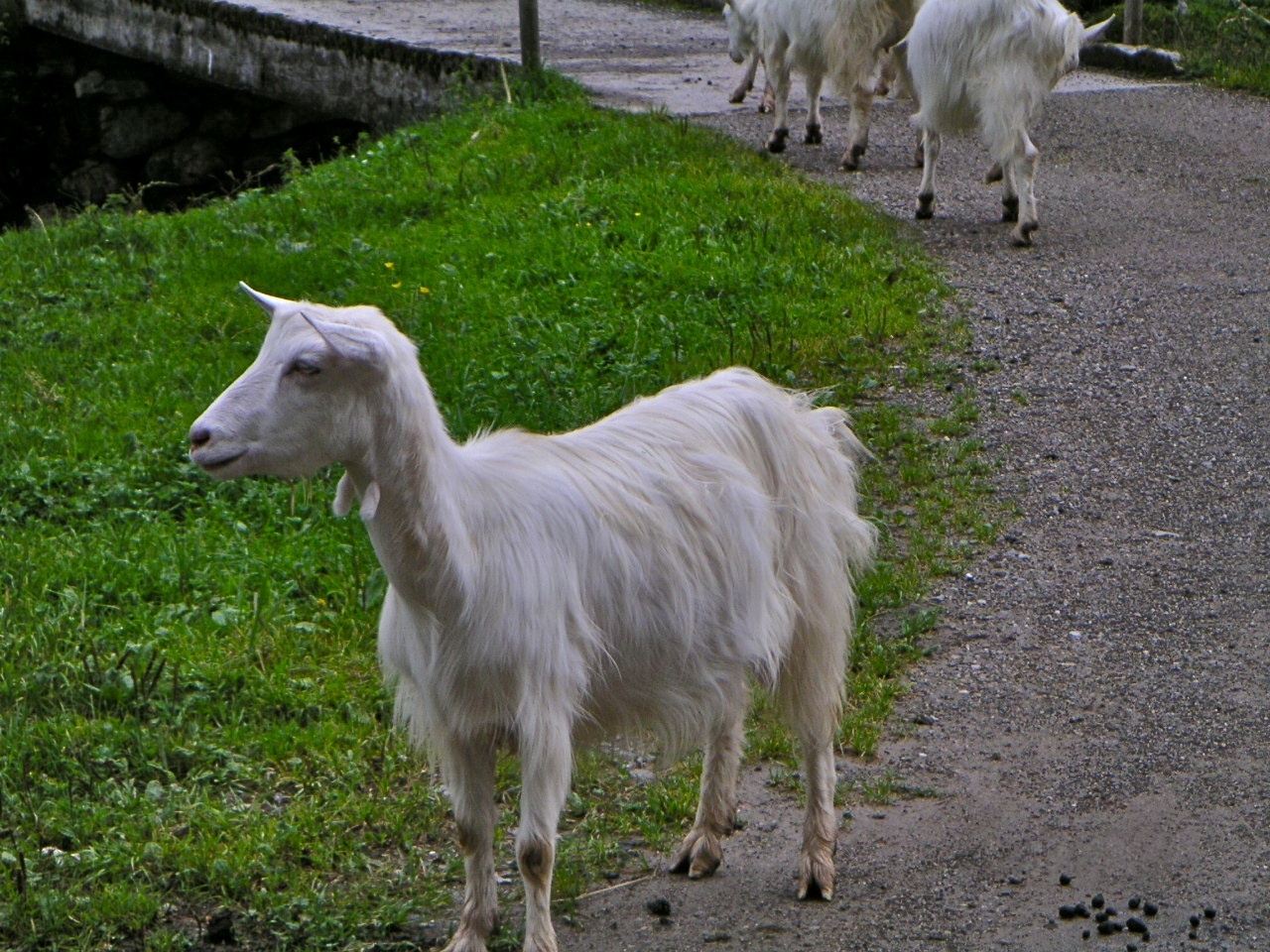
The Verata usually varies in colour from jet-black to mahogany; a chestnut coat with dark belly and limbs also occurs.• Horns are present in both sexxes; in the male they are close together at the base, rising vertically and then spiralling outwards. Billies are always beards, nannies often so.•
The Verata displays marked sexual dimorphism: average heights at the shoulder are about 60 cm for nannies and 75 cm for billies, with corresponding body weights of 70 kg and 80 kg.•
The goats are rustic and hardy, and are well adapted to a variety of types of terrain, from irrigated valley land to medium or high mountain pasture, where they are able to exploit vegetation that other animals cannot.•
Use
The Verata is a dual-purpose breed, reared both for milk and for meat. Milk yields are usually in the range 250–300 kg in a lactation of 180-240 days, but may reach 500 kg in some cases.•
Kids are slaughtered either as suckling kid at an age of 30–35 days, when they weigh some 7–8 kg, or at Easter time at a live weight of between 20 and 28 kg.•
Gallery
Ajouter des photos
Partagez vos photos de cette espèce (jusqu'à 20 à la fois) : elles sont vérifiées automatiquement, puis publiées.
Autres races de l'espèce (197)
Espèce : Chèvre
Voir les 185 autres races
- Chèvre de Damas
- Chèvre de Lorraine
- Chèvre de Thuringe
- Chèvre des fossés
- Chèvre du Simplon
- Chèvre du Toggenbourg
- Chèvre galicienne
- Chèvre grisonne à raies
- Chèvre naine
- Chèvre naine nigériane
- Chèvre à col noir du Valais
- Chèvres naines d'Afrique de l'Ouest
- Corse
- Girgentana
- Golden Guernsey
- Kiko
- Massif central
- Palmera
- Poitevine
- Provençale
- Pyrénées
- Rove
- Saanen
- Spanish
- Tennessee
- Weiße Deutsche Edelziege
- Ahuntz azpigorri
- Alpina Comune
- Altai Mountain goat
- American Lamancha
- Bagot
- Balkan goat
- Barbari
- Beetal
- Bionda dell'Adamello
- Black Bengal goat
- British Primitive goat
- Chamois Coloured goat
- Chamoisée valdôtaine
- Chèvre de Malte
- Chèvre du Massif de l'Erz
- Chèvre du Sahel
- Chèvre grise des montagnes
- Chèvre irlandaise
- Chèvre islandaise
- Chèvre landrace hollandaise
- Chèvre myotonique
- Dreznica
- Finnish Landrace goat
- Frisa Valtellinese
- Garfagnina
- Jamunapari
- Kamori
- Kinder
- Majorera
- Malabari
- Malagueña
- Messinese
- Murciano-Granadina
- Nigora
- Oberhasli
- Orobica
- Passeirer Gebirgsziege
- Payoya
- Pygmy
- San Clemente Island goat
- Savanna goat
- Sirohi
- Somali goat
- Tauernscheck
- Tokara
- Florida
- Kalahari Red
- Pezzata Mòchena
- Pygora goat
- Sojat
- Yemen Mountain goat
- Blanca andaluza
- Blobe Ziege
- Cabra blanca celtibérica
- Chèvre de Juan Fernández
- Chèvre rousse de Maradi
- Copper Neck Goat
- Dutch Pied
- Flemish goat
- Jämtget
- Lapp Goat
- Malashevska goat
- Pinzgau goat
- Vierhornziege
- Chèvre cou-clair du Berry
- Chèvre de Savoie
- Sundgau
- Belgische Hertegeit
- Chèvre du Don
- Chèvre du Drâa
- Chèvre fermière danoise
- Orenbourg
- Rouge méditerranéenne
- Argentata dell'Etna
- Asmari
- Aspromonte
- Australian Cashmere goat
- Bianca Monticellana
- Bormina
- British Alpine
- Canindé
- Capestrina
- Ciavenasca
- Cilentana Fulva
- Cilentana Grigia
- Cilentana Nera
- Ciociara Grigia
- Di L'Aquila
- Dutch Toggenburg
- Garganica
- Granadina goat
- Grigia Molisana
- Istriana
- Jonica
- Lariana
- Murciana goat
- Napoletana
- Nera Verzasca
- Nicastrese
- Repartida
- Roccaverano
- Rustica di Calabria
- Sable Saanen
- Sarda Primitiva
- Sarda goat
- Skopelos
- Zhongwei
- Chamba
- Charnequeira
- Chengde Down
- Chengdu Brown
- Chigu
- Chèvre des Carpates
- Dera Din Panah
- Di Teramo
- Duan
- Hejazi
- Hexi Cashmere
- Huai
- Hungarian Improved
- Ispir
- Jining Grey
- Kaghani
- Laoshan
- Moxotó
- Philippine goat
- Surati
- Swedish Landrace goat
- Uzbek Black goat
- Valfortorina
- White Shorthaired
- Xinjiang
- Zalawadi
- Ziwuling noire
- Kirdimi
- Anatolian Black Goat
- Bulgarian White Dairy Goat
- Capra dell'Aspromonte
- Capra hircus kelleri
- Dutch white goat
- East African Dwarf
- Grigia Lucana
- Göingeget
- Hyrcus
- Istarska koza
- Kanni Adu
- Konkan Kanyal
- Kystgeit
- Liaoning Cashmere Goat
- Mongolian Cashmere Goat
- North-Neuquén goat
- Norwegian milk goat
- Oberhasli naine
- Osmanabadi goat
- Pitiüsa
- Shiba goat
- Slovenian Alpine goat
- Slovenian Saanen goat
- Tibetan goat
Sources et crédits
Informations provenant de plusieurs sources vérifiées. Dernière mise à jour : .
Crédits photos (2)
- Photo : Menesteo · CC BY-SA 4.0 · via Wikimedia Commons
- Photo : Menesteo · CC BY-SA 4.0 · via Wikimedia Commons
Mentions de licence
Texte disponible sous licence CC BY-SA 4.0. Il adapte notamment Wikipedia (CC BY-SA): Verata (goat breed) (Wikipédia, auteurs dans l’historique de l’article).
- Taxonomie : GBIF Backbone Taxonomy (CC BY 4.0)
Détail : Sources et licences.
Discussion (0)
Aucun message pour l’instant. Lancez la discussion sur cette fiche (sources, précisions, débats éditoriaux).
Connectez-vous pour participer à la discussion.