
- Kingdom
- Animalia
- Phylum
- Chordata
- Class
- Mammalia
- Order
- Artiodactyla
- Family
- Bovidae
- Genus
- Capra
- Species
- Capra hircus
Overview
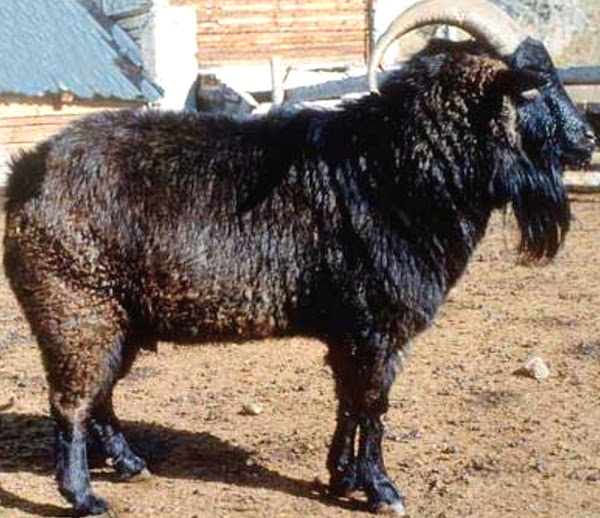
The Altai Mountain goat is a breed of domestic goat bred for wool production in the Altai Republic of the Russian Federation. The breed was developed during the years from 1944 to 1982 in the Gorno-Altai Autonomous Soviet Socialist Republic region of the Soviet Union, by cross-breeding the Don goat with local goats for a high wool yield.
Appearance
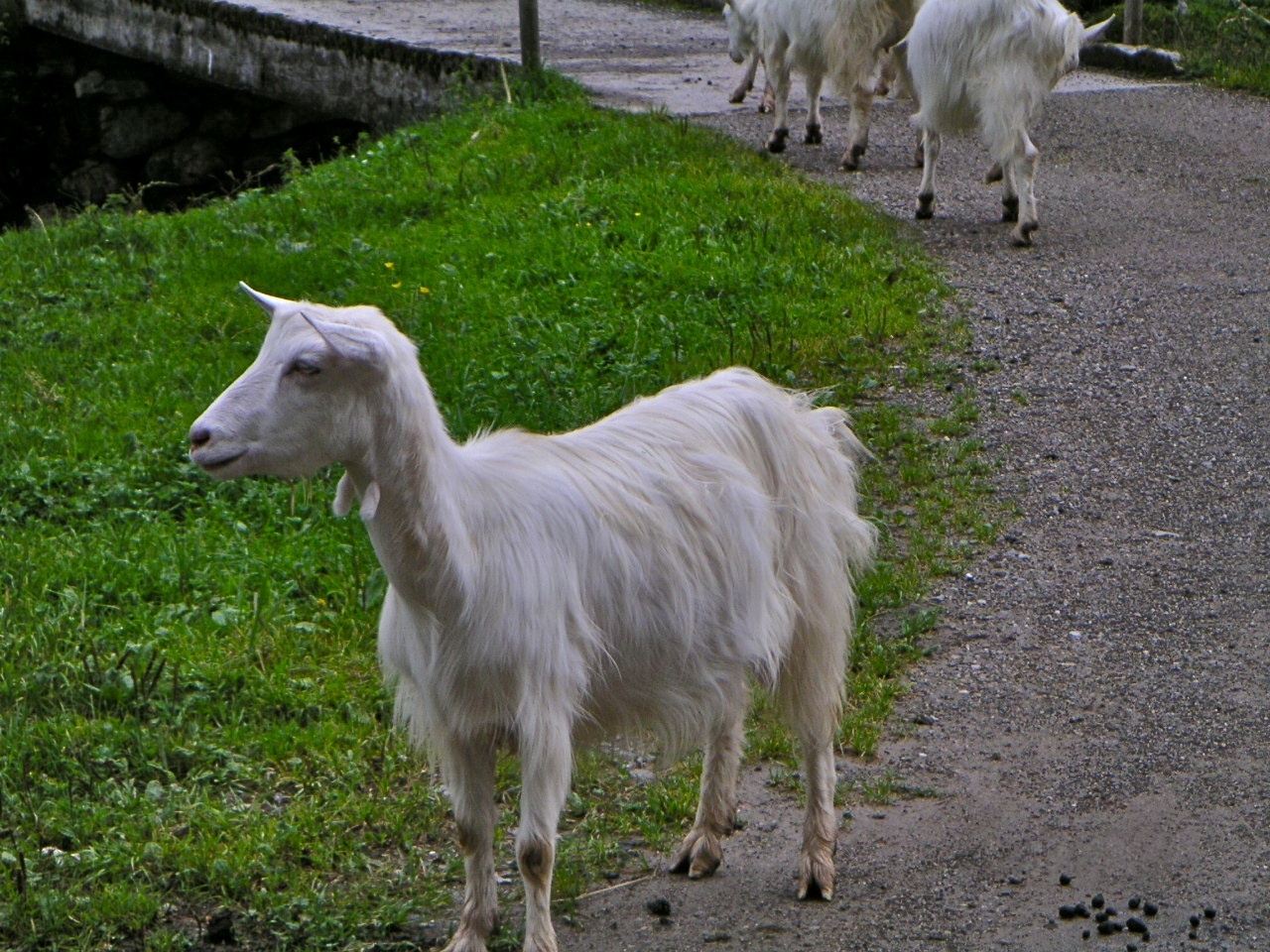
Females (nanny goats) weigh 41 to 44kg (90 to 97lb) while males (billy goats) weigh 65 to 70kg (143 to 155lb). Altai Mountain goats are black in color at a young age, and change to dark brown or grey as they mature. A distinctive feature of the Altai Mountain goat is the length and volume of the wool they grow, which is three to four times more than the local goats of the region.[citation needed]
Origin
The breed was first introduced in the Altai Republic region of the Altai Mountains. The breed was slowly developed between 1944 and 1982 by cross-breeding the Don goat with goats local to the region. The goal of developing the breed was to create a goat with a high wool production that could withstand the severe weather conditions of the harsh winters in Siberia.
Reproduction and care
The Altai Mountain goat was originally bred to increase the amount of wool available per goat. During the project's peak, the population grew almost 30 percent in a year. They are currently bred to increase the population.
Due to their selective breeding for climate tolerance, Altai Mountain goats can be kept on pasture year-round.
South African project
In 1997, approximately 500 Altai Mountain goats were released in South Africa by Sentrachem, a South African agricultural chemical company. As a result, owning goat flocks became more profitable by producing a breed that had a high yield of both meat and cashmere. This helped spur agricultural production in South Africa and bolster the fiber and Cashmere wool industry. When cross-bred with the indigenous goats, the goats are expected to have a higher meat and cashmere yield (around 600g of brown cashmere), increasing profitability of goat herds.
Further reading
- • "Breeds of Livestock - Don Goats : Breeds of Livestock, Department of Animal Science". afs.okstate.edu. 6 July 2021.
- • "Animal genetic resources of the USSR". www.fao.org.
Gallery
Ajouter des photos
Partagez vos photos de cette espèce (jusqu'à 20 à la fois) : elles sont vérifiées automatiquement, puis publiées.
Autres races de l'espèce (197)
Espèce : Chèvre
Voir les 185 autres races
- Chèvre de Damas
- Chèvre de Lorraine
- Chèvre de Thuringe
- Chèvre des fossés
- Chèvre du Simplon
- Chèvre du Toggenbourg
- Chèvre galicienne
- Chèvre grisonne à raies
- Chèvre naine
- Chèvre naine nigériane
- Chèvre à col noir du Valais
- Chèvres naines d'Afrique de l'Ouest
- Corse
- Girgentana
- Golden Guernsey
- Kiko
- Massif central
- Palmera
- Poitevine
- Provençale
- Pyrénées
- Rove
- Saanen
- Spanish
- Tennessee
- Weiße Deutsche Edelziege
- Ahuntz azpigorri
- Alpina Comune
- American Lamancha
- Bagot
- Balkan goat
- Barbari
- Beetal
- Bionda dell'Adamello
- Black Bengal goat
- British Primitive goat
- Chamois Coloured goat
- Chamoisée valdôtaine
- Chèvre de Malte
- Chèvre du Massif de l'Erz
- Chèvre du Sahel
- Chèvre grise des montagnes
- Chèvre irlandaise
- Chèvre islandaise
- Chèvre landrace hollandaise
- Chèvre myotonique
- Dreznica
- Finnish Landrace goat
- Frisa Valtellinese
- Garfagnina
- Jamunapari
- Kamori
- Kinder
- Majorera
- Malabari
- Malagueña
- Messinese
- Murciano-Granadina
- Nigora
- Oberhasli
- Orobica
- Passeirer Gebirgsziege
- Payoya
- Pygmy
- San Clemente Island goat
- Savanna goat
- Sirohi
- Somali goat
- Tauernscheck
- Tokara
- Verata
- Florida
- Kalahari Red
- Pezzata Mòchena
- Pygora goat
- Sojat
- Yemen Mountain goat
- Blanca andaluza
- Blobe Ziege
- Cabra blanca celtibérica
- Chèvre de Juan Fernández
- Chèvre rousse de Maradi
- Copper Neck Goat
- Dutch Pied
- Flemish goat
- Jämtget
- Lapp Goat
- Malashevska goat
- Pinzgau goat
- Vierhornziege
- Chèvre cou-clair du Berry
- Chèvre de Savoie
- Sundgau
- Belgische Hertegeit
- Chèvre du Don
- Chèvre du Drâa
- Chèvre fermière danoise
- Orenbourg
- Rouge méditerranéenne
- Argentata dell'Etna
- Asmari
- Aspromonte
- Australian Cashmere goat
- Bianca Monticellana
- Bormina
- British Alpine
- Canindé
- Capestrina
- Ciavenasca
- Cilentana Fulva
- Cilentana Grigia
- Cilentana Nera
- Ciociara Grigia
- Di L'Aquila
- Dutch Toggenburg
- Garganica
- Granadina goat
- Grigia Molisana
- Istriana
- Jonica
- Lariana
- Murciana goat
- Napoletana
- Nera Verzasca
- Nicastrese
- Repartida
- Roccaverano
- Rustica di Calabria
- Sable Saanen
- Sarda Primitiva
- Sarda goat
- Skopelos
- Zhongwei
- Chamba
- Charnequeira
- Chengde Down
- Chengdu Brown
- Chigu
- Chèvre des Carpates
- Dera Din Panah
- Di Teramo
- Duan
- Hejazi
- Hexi Cashmere
- Huai
- Hungarian Improved
- Ispir
- Jining Grey
- Kaghani
- Laoshan
- Moxotó
- Philippine goat
- Surati
- Swedish Landrace goat
- Uzbek Black goat
- Valfortorina
- White Shorthaired
- Xinjiang
- Zalawadi
- Ziwuling noire
- Kirdimi
- Anatolian Black Goat
- Bulgarian White Dairy Goat
- Capra dell'Aspromonte
- Capra hircus kelleri
- Dutch white goat
- East African Dwarf
- Grigia Lucana
- Göingeget
- Hyrcus
- Istarska koza
- Kanni Adu
- Konkan Kanyal
- Kystgeit
- Liaoning Cashmere Goat
- Mongolian Cashmere Goat
- North-Neuquén goat
- Norwegian milk goat
- Oberhasli naine
- Osmanabadi goat
- Pitiüsa
- Shiba goat
- Slovenian Alpine goat
- Slovenian Saanen goat
- Tibetan goat
Sources et crédits
Informations provenant de plusieurs sources vérifiées. Dernière mise à jour : .
Crédits photos (2)
- Photo : HuskyEdits · CC BY-SA 4.0 · via Wikimedia Commons
- Photo : HuskyEdits · CC BY-SA 4.0 · via Wikimedia Commons
Mentions de licence
Texte disponible sous licence CC BY-SA 4.0. Il adapte notamment Wikipedia (CC BY-SA): Altai Mountain goat (Wikipédia, auteurs dans l’historique de l’article).
- Taxonomie : GBIF Backbone Taxonomy (CC BY 4.0)
Détail : Sources et licences.
Discussion (0)
Aucun message pour l’instant. Lancez la discussion sur cette fiche (sources, précisions, débats éditoriaux).
Connectez-vous pour participer à la discussion.