
- Kingdom
- Animalia
- Phylum
- Chordata
- Class
- Mammalia
- Order
- Artiodactyla
- Family
- Bovidae
- Genus
- Capra
- Species
- Capra hircus
Overview
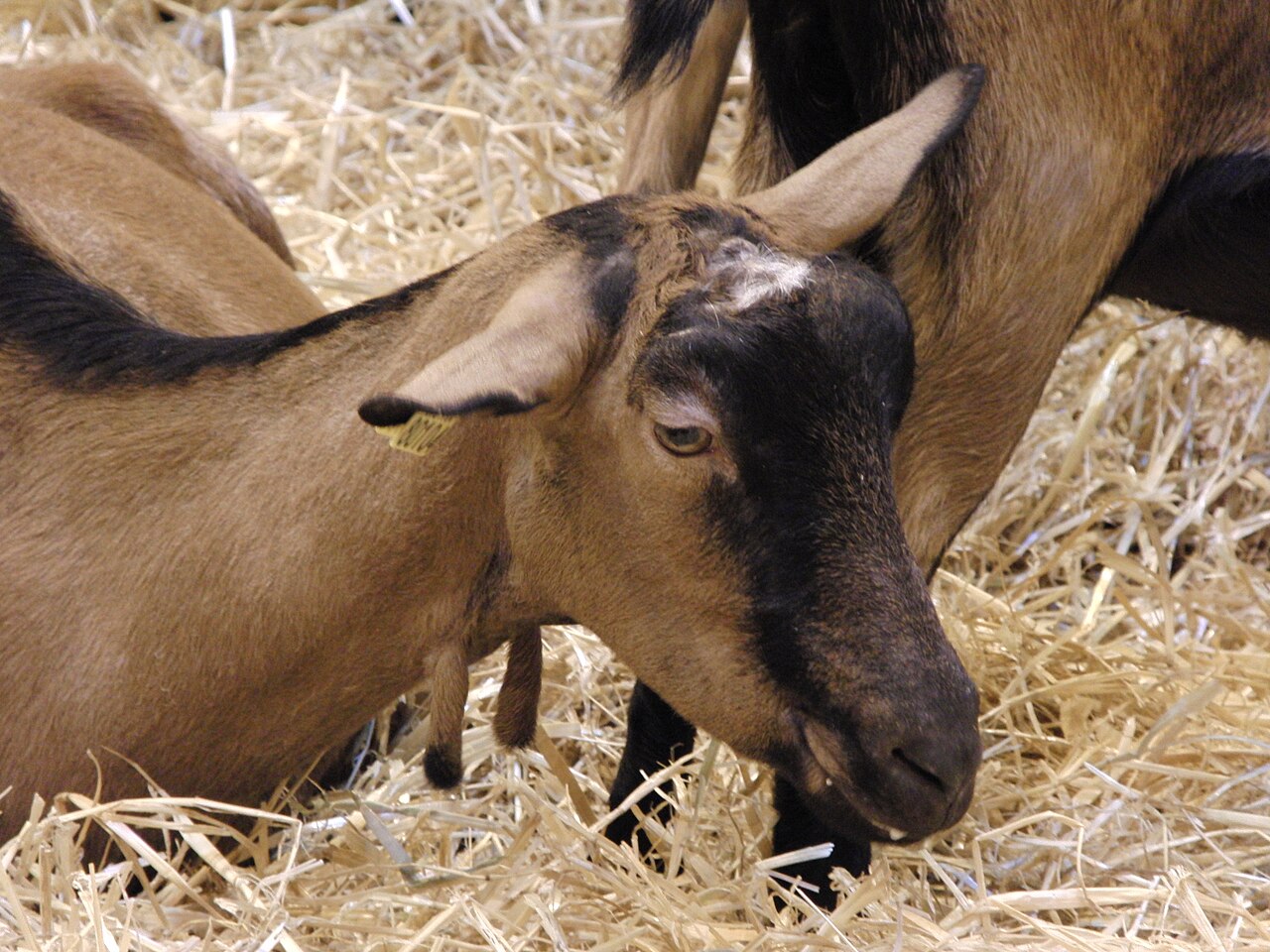
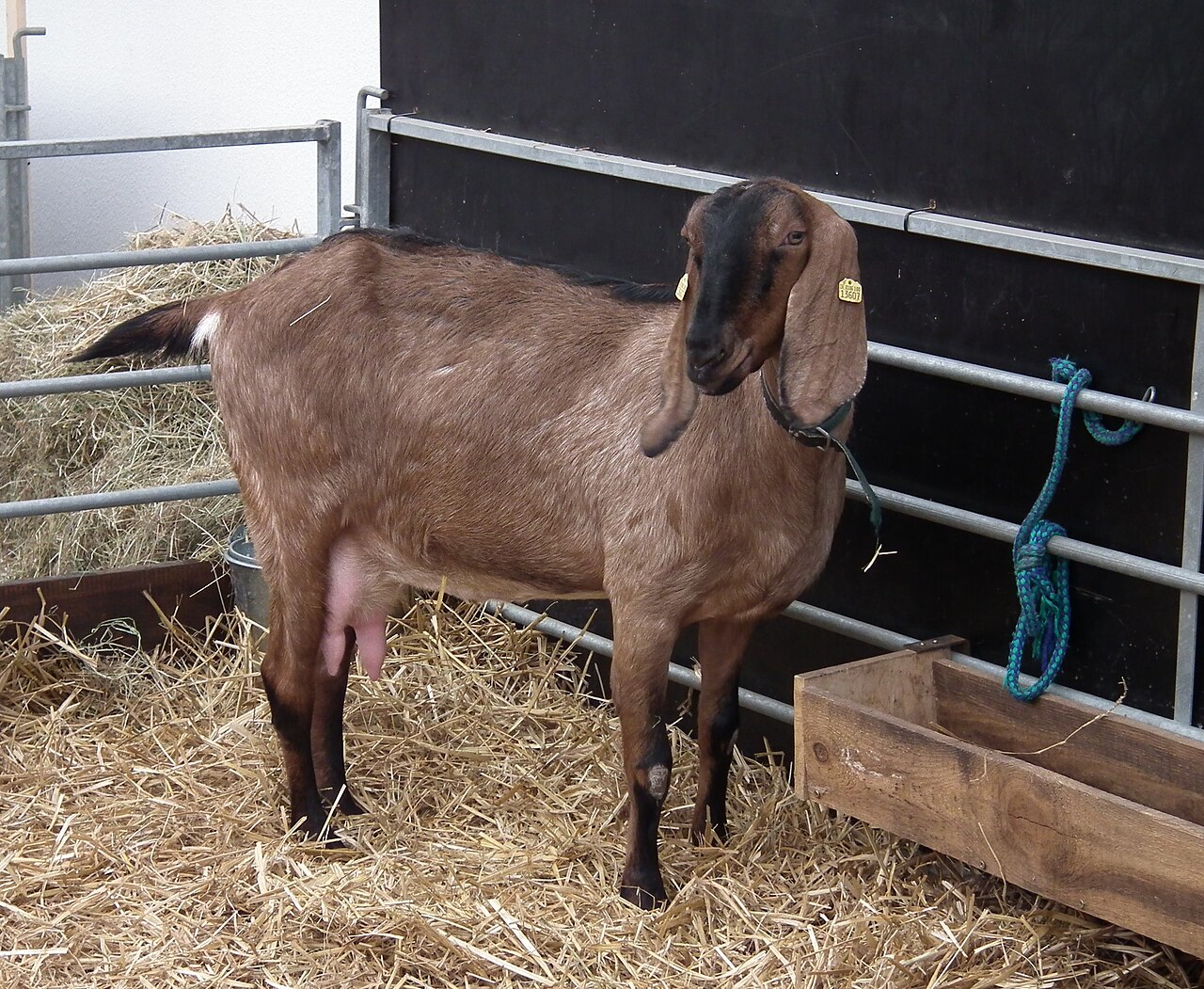
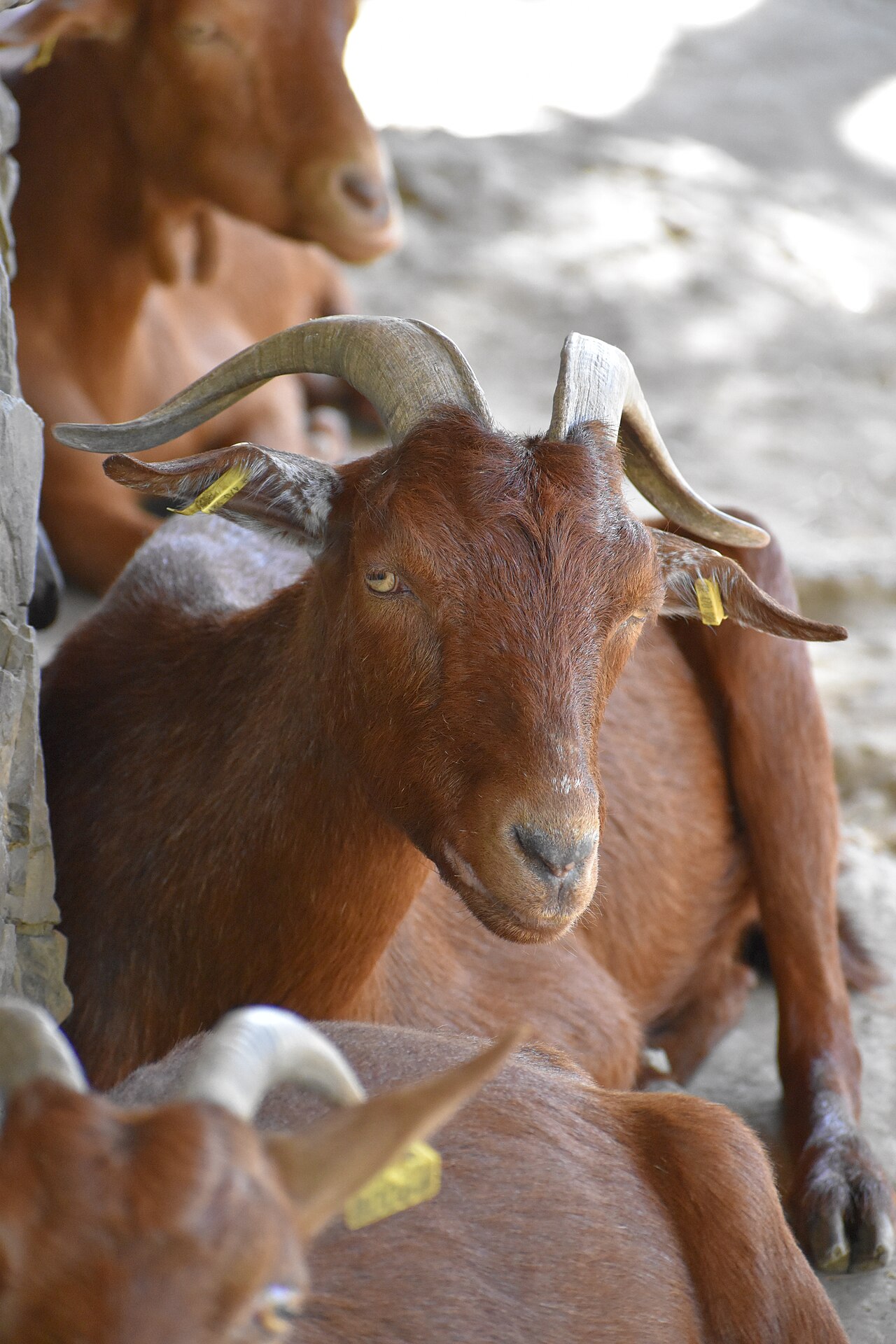
Murciana, also called Murcian, Murcien, Murciene and Royal Murciana is a dual-purpose (for both milk and meat) breed of goat originally bred in the Murcia province along the Mediterranean coast of southeastern Spain. The main milk-producing goat breed in Spain is a cross between the Murciana and the Granadina goat known as Murciano-granadina goat. Only the latter is officially recognized by the Spanish government, so Murciana goats are considered a variety of such breed.
Breed characteristics
While it is shorter-eared than many goats, the Murciana's ear is shaped like those of the Swiss breeds, such as Alpines, Oberhaslis, and Saanens, and carried horizontally. They are renowned for producing high-quality milk that is exceptionally butterfat-rich. Goats from the Murcia and Malta breeds, including the Murciana, are more likely to breed out of season than are goats of the French Alpine and related breeds, due to concerted breeding efforts to culture this tendency, which may allow year-round freshening and milking. This breed may have actually originated in Africa.
Primary regions
Primary Murciana goat farming areas are in the region of Murcia, in the communities of Jumilla and Yecla.
History
By the early 16th century, Murciana goats were well established in Spain, as were several other Spanish breeds, including the Malaguena goat, the La Blanca Celtibora goat, and the La Castellana Extremena goat, due to breeding policies set by Spain's long-established Sheepmaster's Guild.
Display ads in The Goat World of the time indicate the Murciana goats were in the U.S. by 1920, referred to as the "Royal Murciana." Dr. C. P. DeLangle, in his article The Murcien Goat, printed in the August 1921 issue of The Goat World wrote of them, "The Murcien goat is one, if not the handsomest goats known." By 1936, the Murcianas may have become scarce in the U.S., as the January issue of the Dairy Goat Journal called for help to re-establish the breed, noting there did not seem to be a pure-bred buck in America, and that a Mrs. Katherine Kadel had the only purebred does at that time. The same article also noted a reliable supply of Murcianas could be found in Mexico, in a herd imported from Spain that also contained Granada goats.
Bloodlines
The breed forms part of the ancestral bloodline of the American Lamancha goat, originally bred in the 1930s by Mrs. Eula Fay Frey of Glide, Oregon, in the United States. The registered Murciana whose bloodline ran through Mrs. Frey's herd was owned by a Mr. and Mrs. Harry Gordon and her primary foundational buck was a bright red Murciana-Nubian cross named Christopher.
The long-isolated feral goats of the Channel Islands, off the coast of California, such as the San Clemente Island goat and the Santa Catalina Island goat, are thought to be descended from goats brought to the island by Spanish missionaries and settlers, including La Blanca Celtiboras, La Castellana Extremenas, and later the more common dairy and meat goats of Spain, the Malaguenas and Murcianas.
Organizations
There exists in Spain an organization called Asociación Española de Criadores de Cabras de Raza Murciano-Granadina (ACRIMUR); the Spanish National Association of the Murciana-Granadina Goat.
Ajouter des photos
Partagez vos photos de cette espèce (jusqu'à 20 à la fois) : elles sont vérifiées automatiquement, puis publiées.
Autres races de l'espèce (197)
Espèce : Chèvre
Voir les 185 autres races
- Chèvre de Damas
- Chèvre de Lorraine
- Chèvre de Thuringe
- Chèvre des fossés
- Chèvre du Simplon
- Chèvre du Toggenbourg
- Chèvre galicienne
- Chèvre grisonne à raies
- Chèvre naine
- Chèvre naine nigériane
- Chèvre à col noir du Valais
- Chèvres naines d'Afrique de l'Ouest
- Corse
- Girgentana
- Golden Guernsey
- Kiko
- Massif central
- Palmera
- Poitevine
- Provençale
- Pyrénées
- Rove
- Saanen
- Spanish
- Tennessee
- Weiße Deutsche Edelziege
- Ahuntz azpigorri
- Alpina Comune
- Altai Mountain goat
- American Lamancha
- Bagot
- Balkan goat
- Barbari
- Beetal
- Bionda dell'Adamello
- Black Bengal goat
- British Primitive goat
- Chamois Coloured goat
- Chamoisée valdôtaine
- Chèvre de Malte
- Chèvre du Massif de l'Erz
- Chèvre du Sahel
- Chèvre grise des montagnes
- Chèvre irlandaise
- Chèvre islandaise
- Chèvre landrace hollandaise
- Chèvre myotonique
- Dreznica
- Finnish Landrace goat
- Frisa Valtellinese
- Garfagnina
- Jamunapari
- Kamori
- Kinder
- Majorera
- Malabari
- Malagueña
- Messinese
- Murciano-Granadina
- Nigora
- Oberhasli
- Orobica
- Passeirer Gebirgsziege
- Payoya
- Pygmy
- San Clemente Island goat
- Savanna goat
- Sirohi
- Somali goat
- Tauernscheck
- Tokara
- Verata
- Florida
- Kalahari Red
- Pezzata Mòchena
- Pygora goat
- Sojat
- Yemen Mountain goat
- Blanca andaluza
- Blobe Ziege
- Cabra blanca celtibérica
- Chèvre de Juan Fernández
- Chèvre rousse de Maradi
- Copper Neck Goat
- Dutch Pied
- Flemish goat
- Jämtget
- Lapp Goat
- Malashevska goat
- Pinzgau goat
- Vierhornziege
- Chèvre cou-clair du Berry
- Chèvre de Savoie
- Sundgau
- Belgische Hertegeit
- Chèvre du Don
- Chèvre du Drâa
- Chèvre fermière danoise
- Orenbourg
- Rouge méditerranéenne
- Argentata dell'Etna
- Asmari
- Aspromonte
- Australian Cashmere goat
- Bianca Monticellana
- Bormina
- British Alpine
- Canindé
- Capestrina
- Ciavenasca
- Cilentana Fulva
- Cilentana Grigia
- Cilentana Nera
- Ciociara Grigia
- Di L'Aquila
- Dutch Toggenburg
- Garganica
- Granadina goat
- Grigia Molisana
- Istriana
- Jonica
- Lariana
- Napoletana
- Nera Verzasca
- Nicastrese
- Repartida
- Roccaverano
- Rustica di Calabria
- Sable Saanen
- Sarda Primitiva
- Sarda goat
- Skopelos
- Zhongwei
- Chamba
- Charnequeira
- Chengde Down
- Chengdu Brown
- Chigu
- Chèvre des Carpates
- Dera Din Panah
- Di Teramo
- Duan
- Hejazi
- Hexi Cashmere
- Huai
- Hungarian Improved
- Ispir
- Jining Grey
- Kaghani
- Laoshan
- Moxotó
- Philippine goat
- Surati
- Swedish Landrace goat
- Uzbek Black goat
- Valfortorina
- White Shorthaired
- Xinjiang
- Zalawadi
- Ziwuling noire
- Kirdimi
- Anatolian Black Goat
- Bulgarian White Dairy Goat
- Capra dell'Aspromonte
- Capra hircus kelleri
- Dutch white goat
- East African Dwarf
- Grigia Lucana
- Göingeget
- Hyrcus
- Istarska koza
- Kanni Adu
- Konkan Kanyal
- Kystgeit
- Liaoning Cashmere Goat
- Mongolian Cashmere Goat
- North-Neuquén goat
- Norwegian milk goat
- Oberhasli naine
- Osmanabadi goat
- Pitiüsa
- Shiba goat
- Slovenian Alpine goat
- Slovenian Saanen goat
- Tibetan goat
Sources et crédits
Informations provenant de plusieurs sources vérifiées. Dernière mise à jour : .
Mentions de licence
Texte disponible sous licence CC BY-SA 4.0. Il adapte notamment Wikipedia (CC BY-SA): Murciana goat (Wikipédia, auteurs dans l’historique de l’article).
- Taxonomie : GBIF Backbone Taxonomy (CC BY 4.0)
Détail : Sources et licences.
Discussion (0)
Aucun message pour l’instant. Lancez la discussion sur cette fiche (sources, précisions, débats éditoriaux).
Connectez-vous pour participer à la discussion.