
- Kingdom
- Animalia
- Phylum
- Chordata
- Class
- Mammalia
- Order
- Artiodactyla
- Family
- Bovidae
- Genus
- Capra
- Species
- Capra hircus
Overview
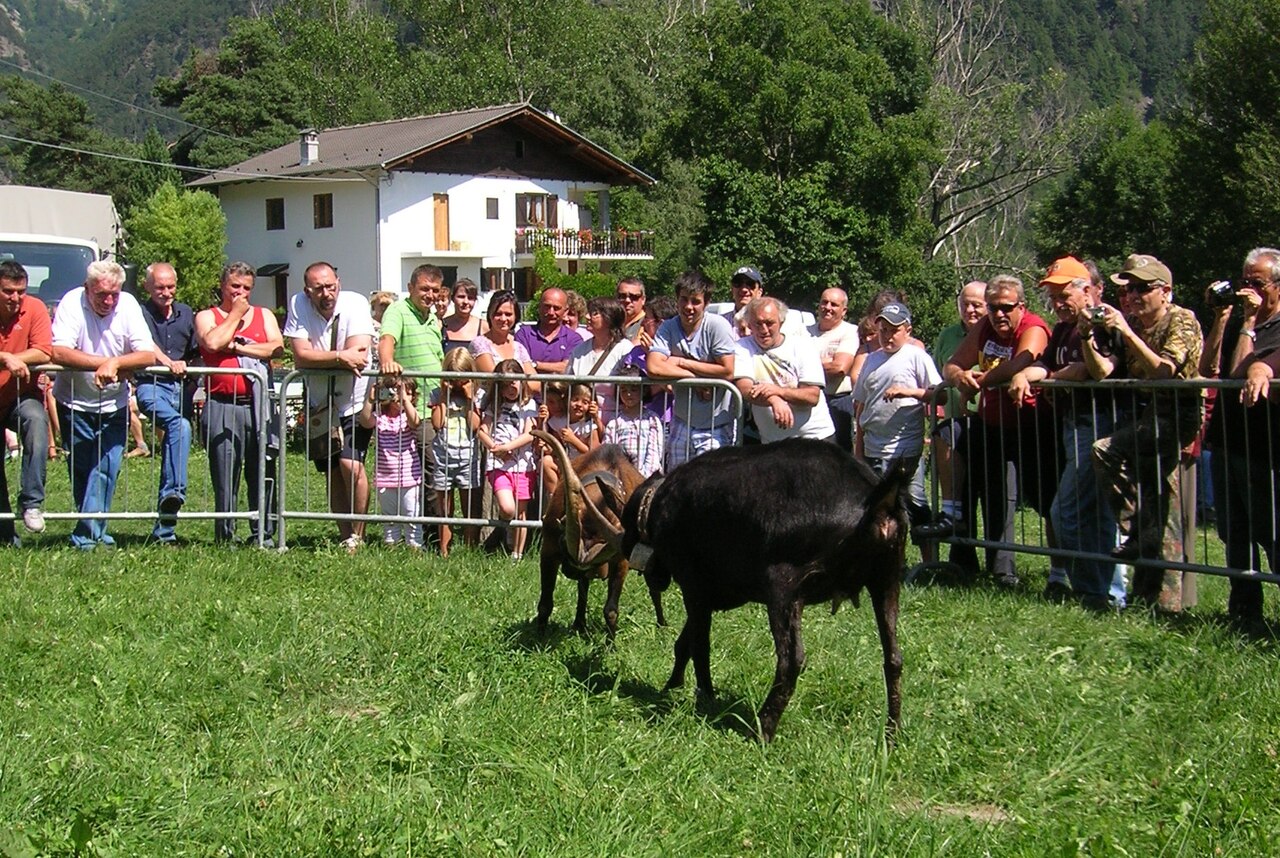
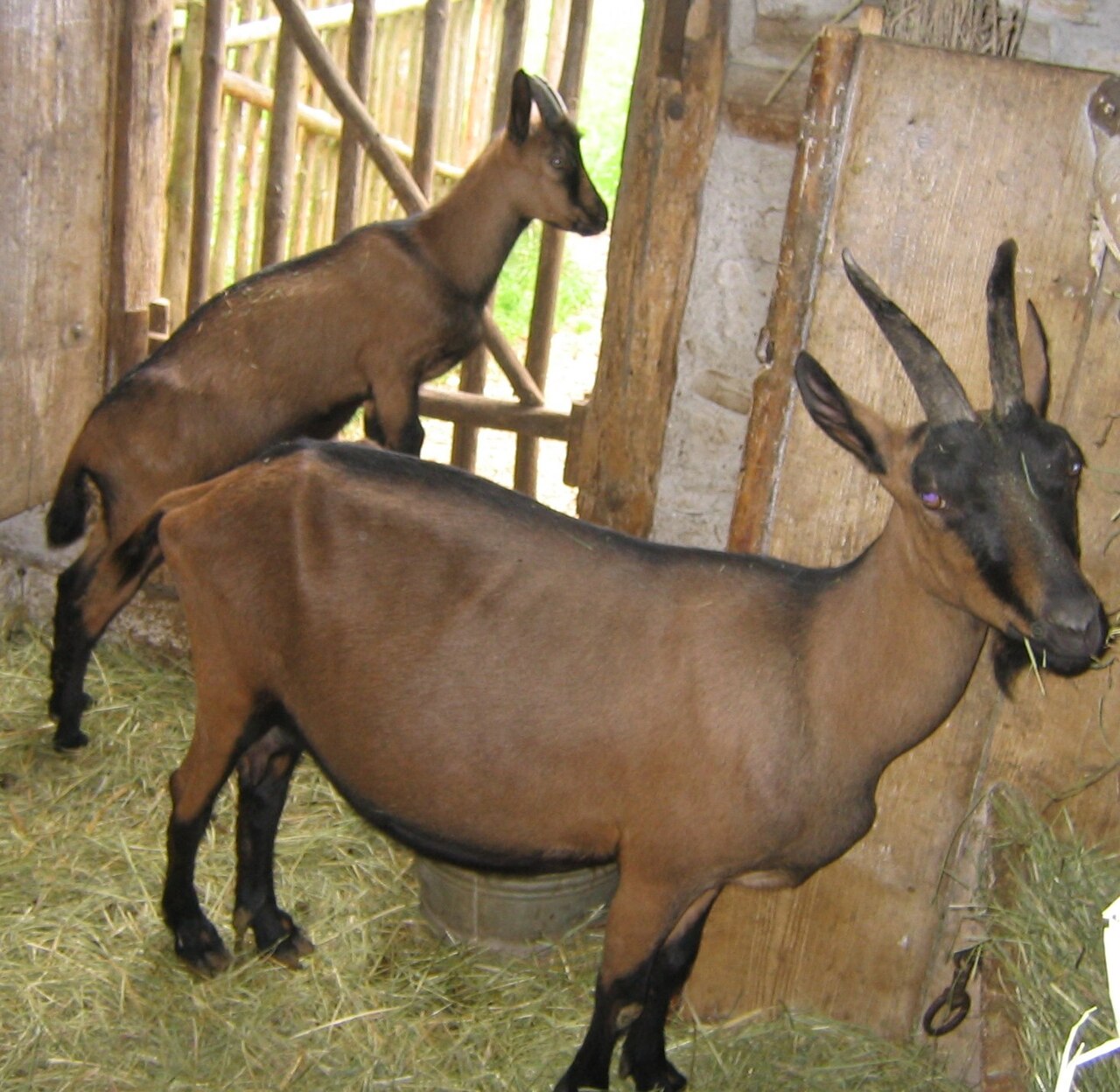
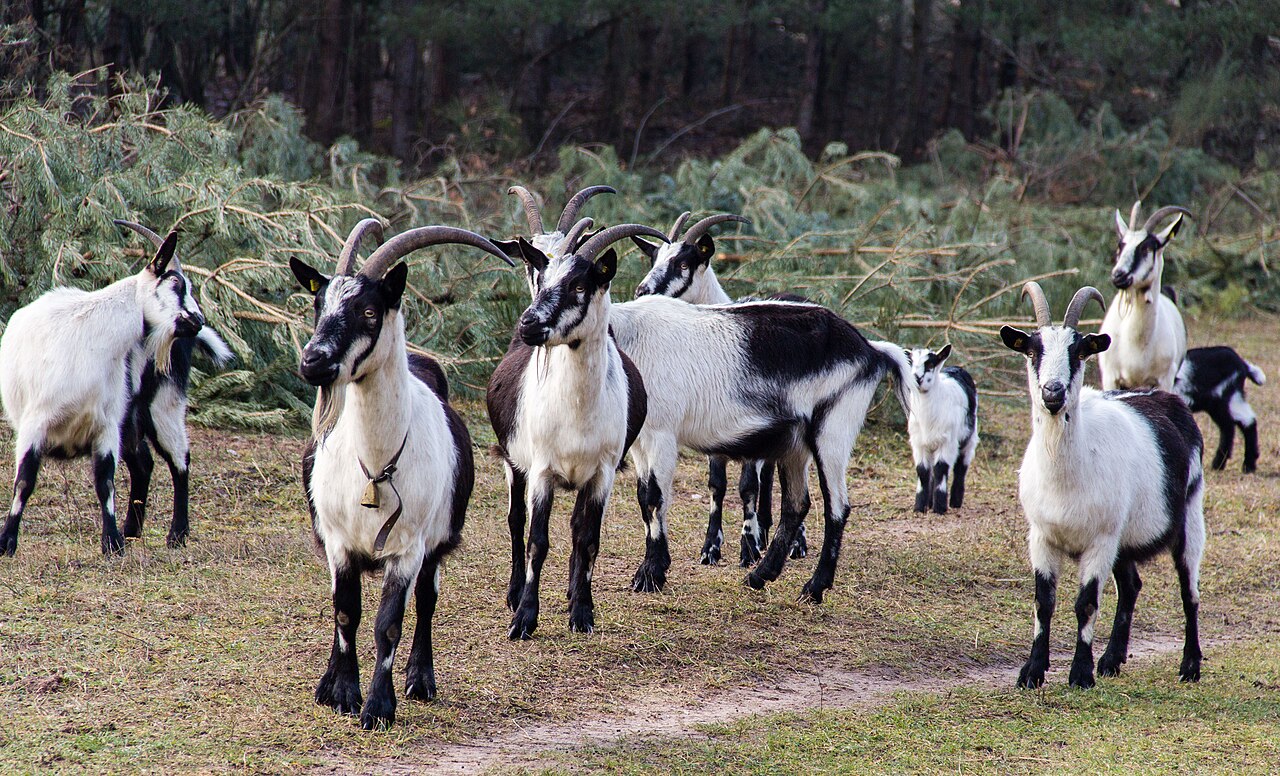
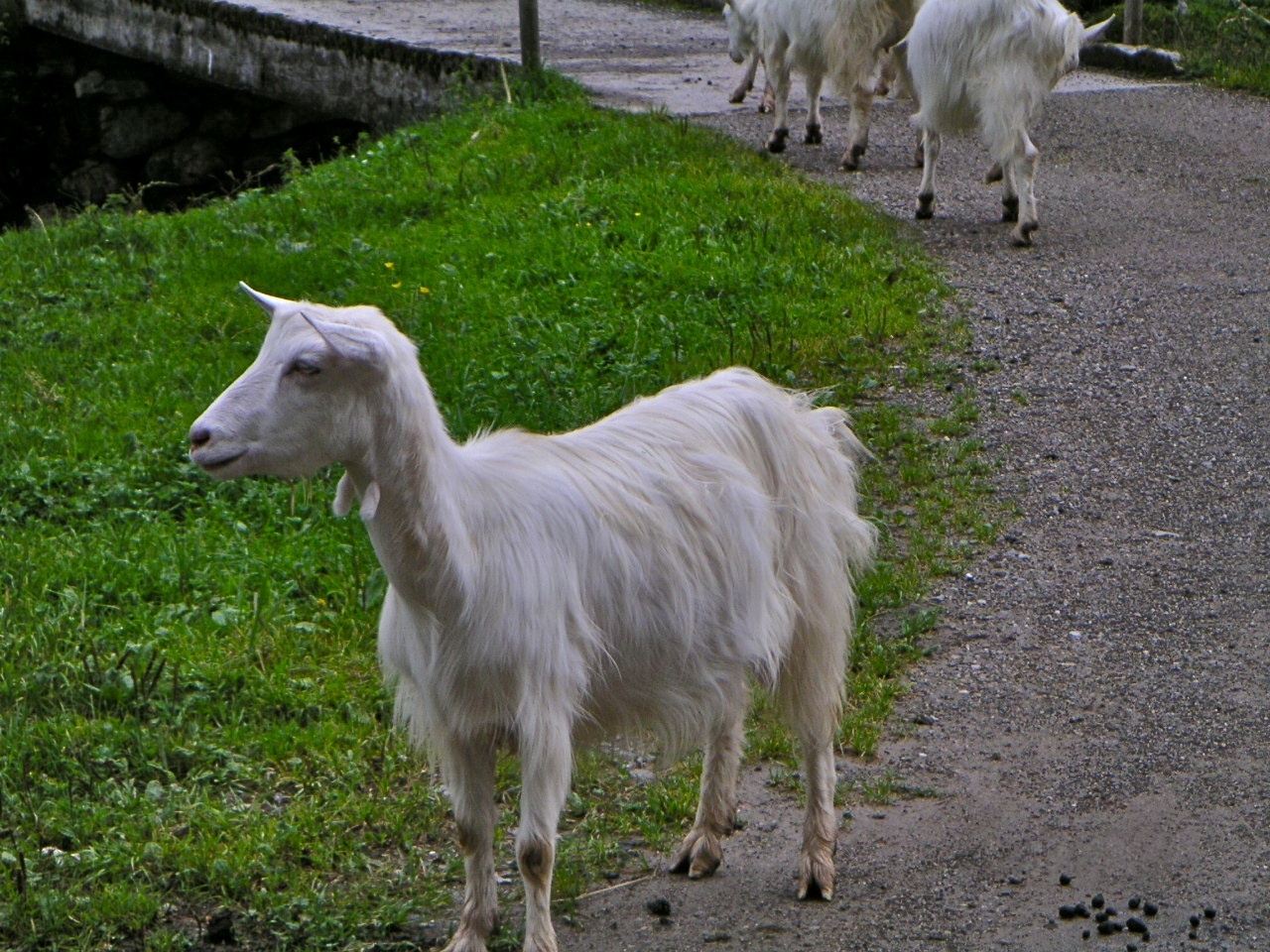
The Valdostana (It.) or Chamoisée valdôtaine (Fr.) is an Italian breed of domestic goat from the autonomous region of Aosta Valley in north-western Italy, from which it takes its name. It is characterised by large sabre-shaped horns, which it uses in combat in the traditional local sport of goat-fighting.
It is an endangered breed: its conservation status is listed in DAD-IS as 'critical'.
History
The Valdostana is a traditional regional breed of the autonomous region of Aosta Valley in north-western Italy, from which it takes its name.• The earliest written documentation of it dates from 1917.• It is reared particularly in the Ayas Valley and in the Lys Valley (in Aosta Valley), and also in the Chiusella Valley, the Orco Valley and the Susa Valley and in the upper Canavese (in Piedmont).• It was in the past distributed in the Graian Alps and Pennine Alps.•
It is one of the forty-three autochthonous Italian goat breeds of limited distribution for which a herd-book is kept by the Associazione Nazionale della Pastorizia, the Italian national association of sheep- and goat-breeders.•
It is a rare breed: in 2007 its conservation status was listed by the FAO as 'critical'.• At the end of 2013 the registered population was variously reported as 959• and as 856;• in the 2020 the total number reported to DAD-IS was 71.•
Characteristics
The Valdostana is a rustic solidly-built goat of Alpine type, well suited to the mountainous terrain of the region.• There is considerable variation in the colour of the coat, which may be ashen, black, brown, or dark grey with some blond hair. The horns in both sexes are sabre-shaped and large;• this may be partly the result of selective breeding by farmers to improve the fighting ability of the animals.•
Use
The Valdostana is kept both for meat, which is consumed both fresh and preserved in the form of goat salame and of Motsetta; and for milk, which is used for cheese-making.• A study in 2002 found the average milk yield to be 249 kg in 197 days.•
It is much used in the traditional sport of goat-fighting, the bataille des chèvres. Since 1998 this sport has been regulated by the association Comité régional des batailles de chèvres, which organises an annual regional championship.•
Gallery
Ajouter des photos
Partagez vos photos de cette espèce (jusqu'à 20 à la fois) : elles sont vérifiées automatiquement, puis publiées.
Autres races de l'espèce (197)
Espèce : Chèvre
Voir les 185 autres races
- Chèvre de Damas
- Chèvre de Lorraine
- Chèvre de Thuringe
- Chèvre des fossés
- Chèvre du Simplon
- Chèvre du Toggenbourg
- Chèvre galicienne
- Chèvre grisonne à raies
- Chèvre naine
- Chèvre naine nigériane
- Chèvre à col noir du Valais
- Chèvres naines d'Afrique de l'Ouest
- Corse
- Girgentana
- Golden Guernsey
- Kiko
- Massif central
- Palmera
- Poitevine
- Provençale
- Pyrénées
- Rove
- Saanen
- Spanish
- Tennessee
- Weiße Deutsche Edelziege
- Ahuntz azpigorri
- Alpina Comune
- Altai Mountain goat
- American Lamancha
- Bagot
- Balkan goat
- Barbari
- Beetal
- Bionda dell'Adamello
- Black Bengal goat
- British Primitive goat
- Chamois Coloured goat
- Chèvre de Malte
- Chèvre du Massif de l'Erz
- Chèvre du Sahel
- Chèvre grise des montagnes
- Chèvre irlandaise
- Chèvre islandaise
- Chèvre landrace hollandaise
- Chèvre myotonique
- Dreznica
- Finnish Landrace goat
- Frisa Valtellinese
- Garfagnina
- Jamunapari
- Kamori
- Kinder
- Majorera
- Malabari
- Malagueña
- Messinese
- Murciano-Granadina
- Nigora
- Oberhasli
- Orobica
- Passeirer Gebirgsziege
- Payoya
- Pygmy
- San Clemente Island goat
- Savanna goat
- Sirohi
- Somali goat
- Tauernscheck
- Tokara
- Verata
- Florida
- Kalahari Red
- Pezzata Mòchena
- Pygora goat
- Sojat
- Yemen Mountain goat
- Blanca andaluza
- Blobe Ziege
- Cabra blanca celtibérica
- Chèvre de Juan Fernández
- Chèvre rousse de Maradi
- Copper Neck Goat
- Dutch Pied
- Flemish goat
- Jämtget
- Lapp Goat
- Malashevska goat
- Pinzgau goat
- Vierhornziege
- Chèvre cou-clair du Berry
- Chèvre de Savoie
- Sundgau
- Belgische Hertegeit
- Chèvre du Don
- Chèvre du Drâa
- Chèvre fermière danoise
- Orenbourg
- Rouge méditerranéenne
- Argentata dell'Etna
- Asmari
- Aspromonte
- Australian Cashmere goat
- Bianca Monticellana
- Bormina
- British Alpine
- Canindé
- Capestrina
- Ciavenasca
- Cilentana Fulva
- Cilentana Grigia
- Cilentana Nera
- Ciociara Grigia
- Di L'Aquila
- Dutch Toggenburg
- Garganica
- Granadina goat
- Grigia Molisana
- Istriana
- Jonica
- Lariana
- Murciana goat
- Napoletana
- Nera Verzasca
- Nicastrese
- Repartida
- Roccaverano
- Rustica di Calabria
- Sable Saanen
- Sarda Primitiva
- Sarda goat
- Skopelos
- Zhongwei
- Chamba
- Charnequeira
- Chengde Down
- Chengdu Brown
- Chigu
- Chèvre des Carpates
- Dera Din Panah
- Di Teramo
- Duan
- Hejazi
- Hexi Cashmere
- Huai
- Hungarian Improved
- Ispir
- Jining Grey
- Kaghani
- Laoshan
- Moxotó
- Philippine goat
- Surati
- Swedish Landrace goat
- Uzbek Black goat
- Valfortorina
- White Shorthaired
- Xinjiang
- Zalawadi
- Ziwuling noire
- Kirdimi
- Anatolian Black Goat
- Bulgarian White Dairy Goat
- Capra dell'Aspromonte
- Capra hircus kelleri
- Dutch white goat
- East African Dwarf
- Grigia Lucana
- Göingeget
- Hyrcus
- Istarska koza
- Kanni Adu
- Konkan Kanyal
- Kystgeit
- Liaoning Cashmere Goat
- Mongolian Cashmere Goat
- North-Neuquén goat
- Norwegian milk goat
- Oberhasli naine
- Osmanabadi goat
- Pitiüsa
- Shiba goat
- Slovenian Alpine goat
- Slovenian Saanen goat
- Tibetan goat
Sources et crédits
Informations provenant de plusieurs sources vérifiées. Dernière mise à jour : .
Crédits photos (7)
- Photo : Patafisik · CC BY-SA 3.0 · via Wikimedia Commons
- Photo : Patafisik · CC BY-SA 3.0 · via Wikimedia Commons
- Photo : Patafisik · CC BY-SA 4.0 · via Wikimedia Commons
- Photo : Patafisik · CC BY-SA 4.0 · via Wikimedia Commons
- Photo : Patafisik · CC BY-SA 4.0 · via Wikimedia Commons
- Photo : Patafisik · CC BY-SA 4.0 · via Wikimedia Commons
- Photo : Elena Tartaglione & Patafisik · CC BY-SA 4.0 · via Wikimedia Commons
Mentions de licence
Texte disponible sous licence CC BY-SA 4.0. Il adapte notamment Wikipedia (CC BY-SA): Valdostana (Wikipédia, auteurs dans l’historique de l’article).
- Taxonomie : GBIF Backbone Taxonomy (CC BY 4.0)
Détail : Sources et licences.
Discussion (0)
Aucun message pour l’instant. Lancez la discussion sur cette fiche (sources, précisions, débats éditoriaux).
Connectez-vous pour participer à la discussion.