
- Kingdom
- Animalia
- Phylum
- Chordata
- Class
- Mammalia
- Order
- Artiodactyla
- Family
- Bovidae
- Genus
- Capra
- Species
- Capra hircus
Overview
The Australian Cashmere goat is a breed of Cashmere domestic goats originating in Australia. Whilst retaining the fertility and hardiness of the bush goat, the Australian Cashmere is quite different in appearance and temperament. In midwinter, it has an excellent overall coverage of long, dense cashmere.
History
Goats were liberated on the islands off the coast of Australia by Dutch and Portuguese navigators long before the British settlement of Australia. The introduced goats came from a great variety of backgrounds and they acclimatised readily to the Australian environment. Most pre-1830 prints of early Australia show the animals on the hills in the background as goats. Some early efforts were made to develop a goat fleece industry in Australia. William Riley, in 1832 imported "Angora-Cachemire" animals to his property, Raby, New South Wales. In that year, he delivered a paper to the Agricultural and Horticultural Society of New South Wales in an effort to encourage the development of a Cashmere/Angora fleece industry in Australia. A further 150 years were needed for Australian graziers to develop some of his concepts. An advertisement also appeared in 1832 in the Western Australia publication "Colonial Paper" for young half-bred Cashmere bucks offered for sale at three pounds each by W. Tanner of Caversham.
The gold rush period likely brought the demise of the infant goat industry. Prior to the gold rush, flocks of grazing animals, goats and sheep were controlled by shepherds. Most abandoned their charges in favour of making their fortune on the gold fields. The landowners then had to make some attempt at fencing their runs. Rudimentary fences could be erected to control sheep, which on large runs without fences would keep to the open plains. The goats were not controlled by fences and actively sought the rougher country as their browsing environment, thus forming the large herds of wild (or bush) goats that became well established in much of inland Australia. Eventually, the spread of settlement pushed these herds back into the semiarid, sparsely settled areas of the country.
Other introductions occurred in Australia in the 1800s. Wilson (1873) records that Dr. Chalmers imported 49 Cashmere goats through Melbourne in 1863 from Chinese Tartery. At this time, Wilson was running his own flock of Cashmere goats at Longerenong in Western Victoria. These were descendants of one male and two females imported from India.
Through the intervening years, history records many references to goats in Australia. In 1879, herds of goats roaming the streets of Sydney created such a nuisance that police action was required to get them away. Goat racing in which goats were driven by youths in light gigs became very popular at the end of the century, particularly in Queensland. The famous opera singer, Dame Nellie Melba, was so taken with the spectacle at Rockhampton, Queensland, that she arranged for the running of the Melba Derby.
Cashmere rediscovered
Cashmere was effectively rediscovered on Australian goats in 1972 when two Commonwealth Scientific and Industrial Research Organisation (CSIRO) researchers, Dr. Ian Smith and Mr. Wal Clarke, identified cashmere on some feral goats under inspection at the property of the Australian Mohair Company at Brewarrina. For a number of years, the CSIRO maintained a small research herd of selected animals at their Prospect laboratory until budget restraints forced their dispersal. Some important early histological work was carried out during this period.
By the late 1970s, a number of breeders were toying with the concept of developing and breeding an Australian Cashmere goat. Much of this early breeding was hampered by a lack of knowledge of the problems involved and by lack of a fibre market.
Interest and morale were given a major boost when in August 1980 Dawson International Limited PLC, Scotland, then the world's largest cashmere processors, purchased a property at Adelong, N.S.W., with the view to setting up a demonstration farm to encourage Australian cashmere production. The chairman of Dawson International Limited, Sir Alan Smith, saw the world cashmere supply situation tightening. Although cashmere represented only a small percentage of the volume of fibre handled by the company, it accounted for 50% of the turnover and was a major contributor to company profitability.
Ajouter des photos
Partagez vos photos de cette espèce (jusqu'à 20 à la fois) : elles sont vérifiées automatiquement, puis publiées.
Autres races de l'espèce (197)
Espèce : Chèvre
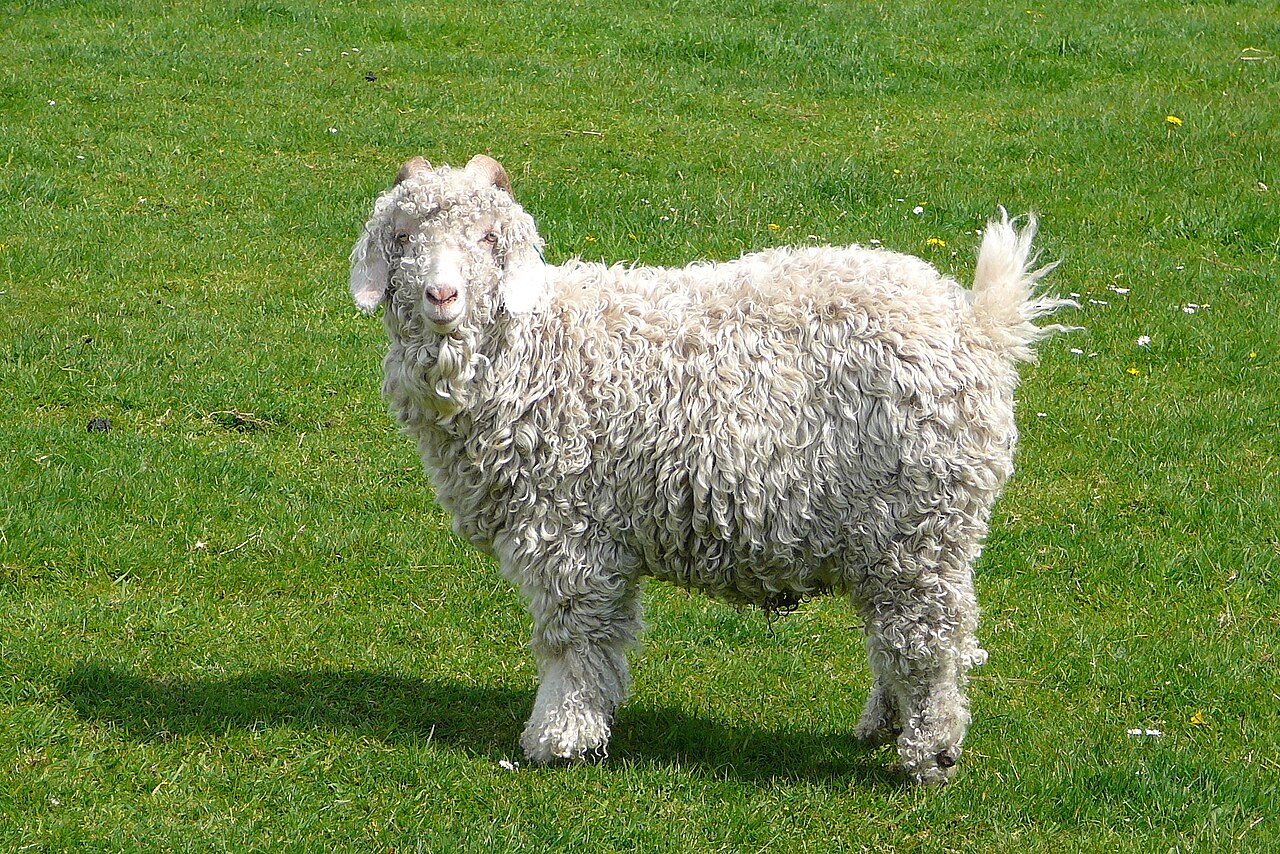
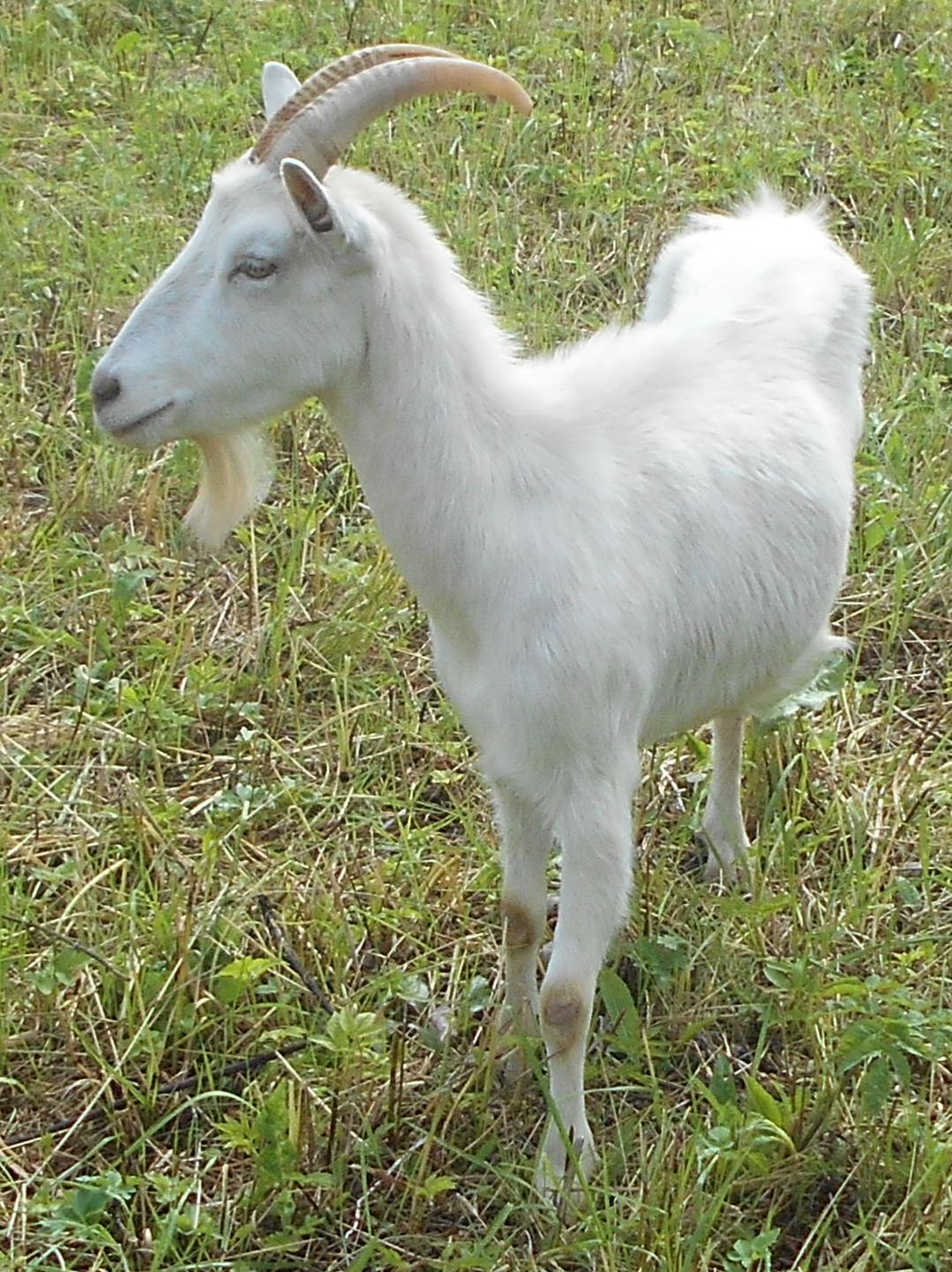
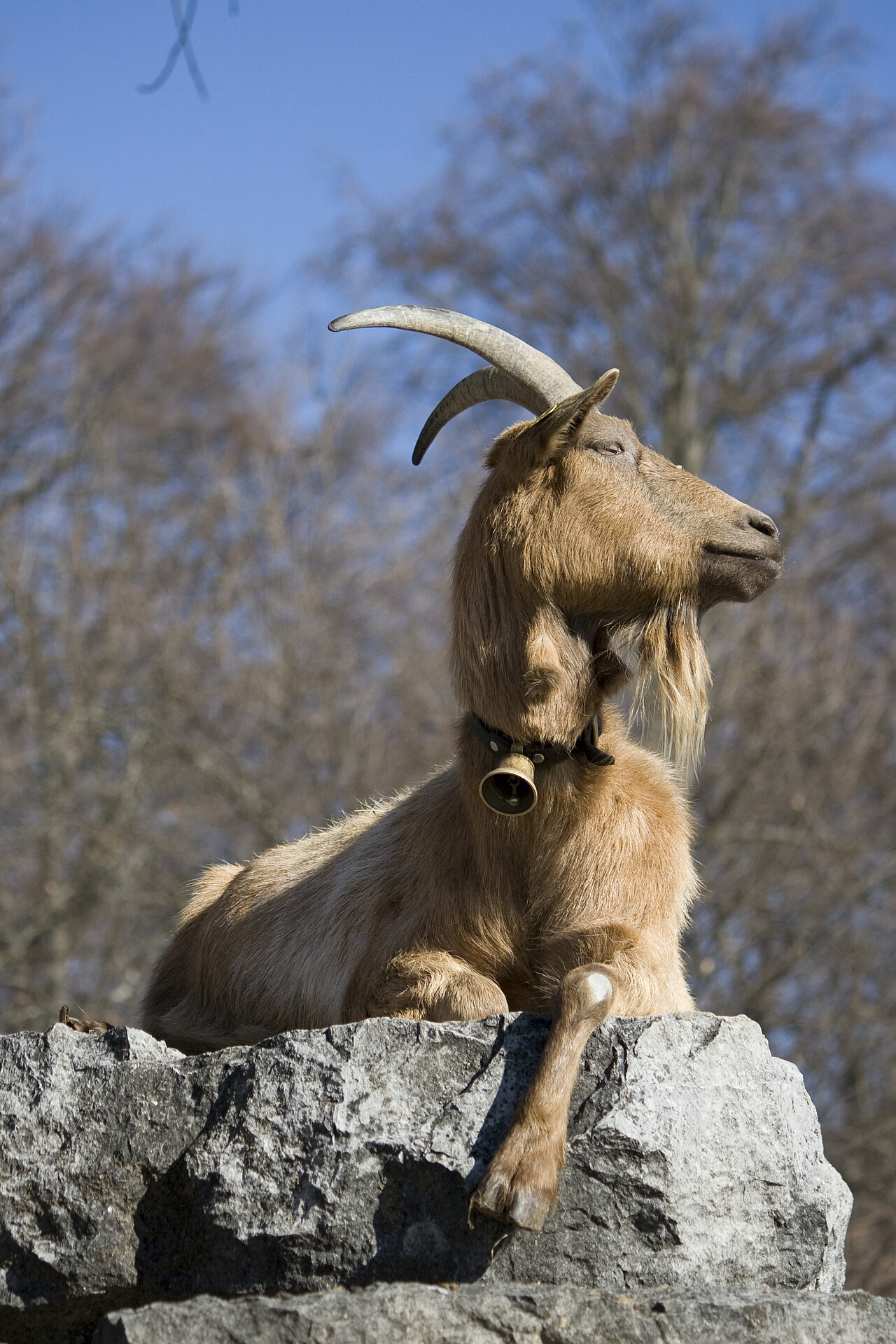
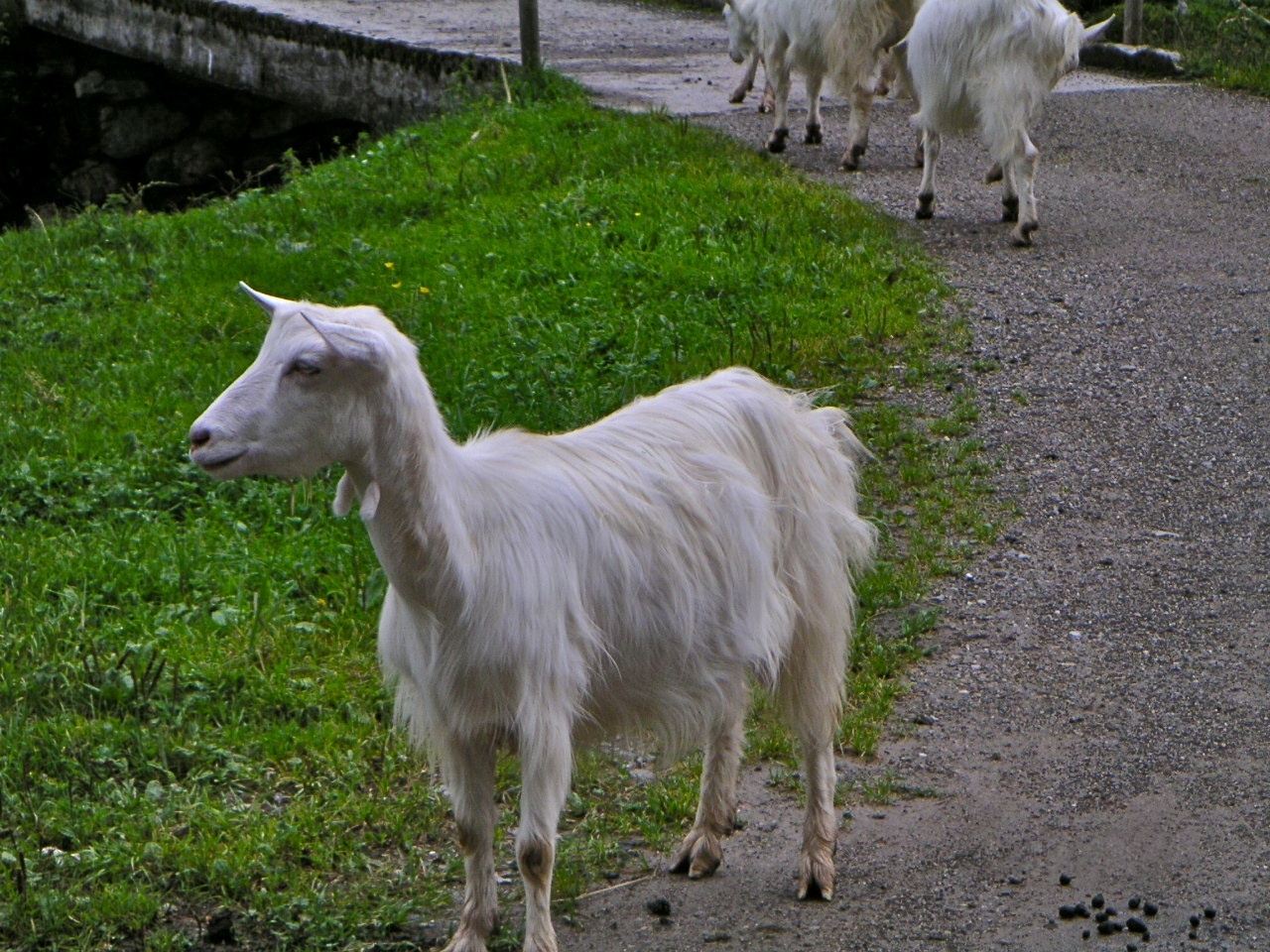
Voir les 185 autres races
- Chèvre de Damas
- Chèvre de Lorraine
- Chèvre de Thuringe
- Chèvre des fossés
- Chèvre du Simplon
- Chèvre du Toggenbourg
- Chèvre galicienne
- Chèvre grisonne à raies
- Chèvre naine
- Chèvre naine nigériane
- Chèvre à col noir du Valais
- Chèvres naines d'Afrique de l'Ouest
- Corse
- Girgentana
- Golden Guernsey
- Kiko
- Massif central
- Palmera
- Poitevine
- Provençale
- Pyrénées
- Rove
- Saanen
- Spanish
- Tennessee
- Weiße Deutsche Edelziege
- Ahuntz azpigorri
- Alpina Comune
- Altai Mountain goat
- American Lamancha
- Bagot
- Balkan goat
- Barbari
- Beetal
- Bionda dell'Adamello
- Black Bengal goat
- British Primitive goat
- Chamois Coloured goat
- Chamoisée valdôtaine
- Chèvre de Malte
- Chèvre du Massif de l'Erz
- Chèvre du Sahel
- Chèvre grise des montagnes
- Chèvre irlandaise
- Chèvre islandaise
- Chèvre landrace hollandaise
- Chèvre myotonique
- Dreznica
- Finnish Landrace goat
- Frisa Valtellinese
- Garfagnina
- Jamunapari
- Kamori
- Kinder
- Majorera
- Malabari
- Malagueña
- Messinese
- Murciano-Granadina
- Nigora
- Oberhasli
- Orobica
- Passeirer Gebirgsziege
- Payoya
- Pygmy
- San Clemente Island goat
- Savanna goat
- Sirohi
- Somali goat
- Tauernscheck
- Tokara
- Verata
- Florida
- Kalahari Red
- Pezzata Mòchena
- Pygora goat
- Sojat
- Yemen Mountain goat
- Blanca andaluza
- Blobe Ziege
- Cabra blanca celtibérica
- Chèvre de Juan Fernández
- Chèvre rousse de Maradi
- Copper Neck Goat
- Dutch Pied
- Flemish goat
- Jämtget
- Lapp Goat
- Malashevska goat
- Pinzgau goat
- Vierhornziege
- Chèvre cou-clair du Berry
- Chèvre de Savoie
- Sundgau
- Belgische Hertegeit
- Chèvre du Don
- Chèvre du Drâa
- Chèvre fermière danoise
- Orenbourg
- Rouge méditerranéenne
- Argentata dell'Etna
- Asmari
- Aspromonte
- Bianca Monticellana
- Bormina
- British Alpine
- Canindé
- Capestrina
- Ciavenasca
- Cilentana Fulva
- Cilentana Grigia
- Cilentana Nera
- Ciociara Grigia
- Di L'Aquila
- Dutch Toggenburg
- Garganica
- Granadina goat
- Grigia Molisana
- Istriana
- Jonica
- Lariana
- Murciana goat
- Napoletana
- Nera Verzasca
- Nicastrese
- Repartida
- Roccaverano
- Rustica di Calabria
- Sable Saanen
- Sarda Primitiva
- Sarda goat
- Skopelos
- Zhongwei
- Chamba
- Charnequeira
- Chengde Down
- Chengdu Brown
- Chigu
- Chèvre des Carpates
- Dera Din Panah
- Di Teramo
- Duan
- Hejazi
- Hexi Cashmere
- Huai
- Hungarian Improved
- Ispir
- Jining Grey
- Kaghani
- Laoshan
- Moxotó
- Philippine goat
- Surati
- Swedish Landrace goat
- Uzbek Black goat
- Valfortorina
- White Shorthaired
- Xinjiang
- Zalawadi
- Ziwuling noire
- Kirdimi
- Anatolian Black Goat
- Bulgarian White Dairy Goat
- Capra dell'Aspromonte
- Capra hircus kelleri
- Dutch white goat
- East African Dwarf
- Grigia Lucana
- Göingeget
- Hyrcus
- Istarska koza
- Kanni Adu
- Konkan Kanyal
- Kystgeit
- Liaoning Cashmere Goat
- Mongolian Cashmere Goat
- North-Neuquén goat
- Norwegian milk goat
- Oberhasli naine
- Osmanabadi goat
- Pitiüsa
- Shiba goat
- Slovenian Alpine goat
- Slovenian Saanen goat
- Tibetan goat
Sources et crédits
Informations provenant de plusieurs sources vérifiées. Dernière mise à jour : .
Mentions de licence
Texte disponible sous licence CC BY-SA 4.0. Il adapte notamment Wikipedia (CC BY-SA): Australian Cashmere goat (Wikipédia, auteurs dans l’historique de l’article).
- Taxonomie : GBIF Backbone Taxonomy (CC BY 4.0)
Détail : Sources et licences.
Discussion (0)
Aucun message pour l’instant. Lancez la discussion sur cette fiche (sources, précisions, débats éditoriaux).
Connectez-vous pour participer à la discussion.