
- Kingdom
- Animalia
- Phylum
- Chordata
- Class
- Mammalia
- Order
- Artiodactyla
- Family
- Bovidae
- Genus
- Capra
- Species
- Capra hircus
Overview
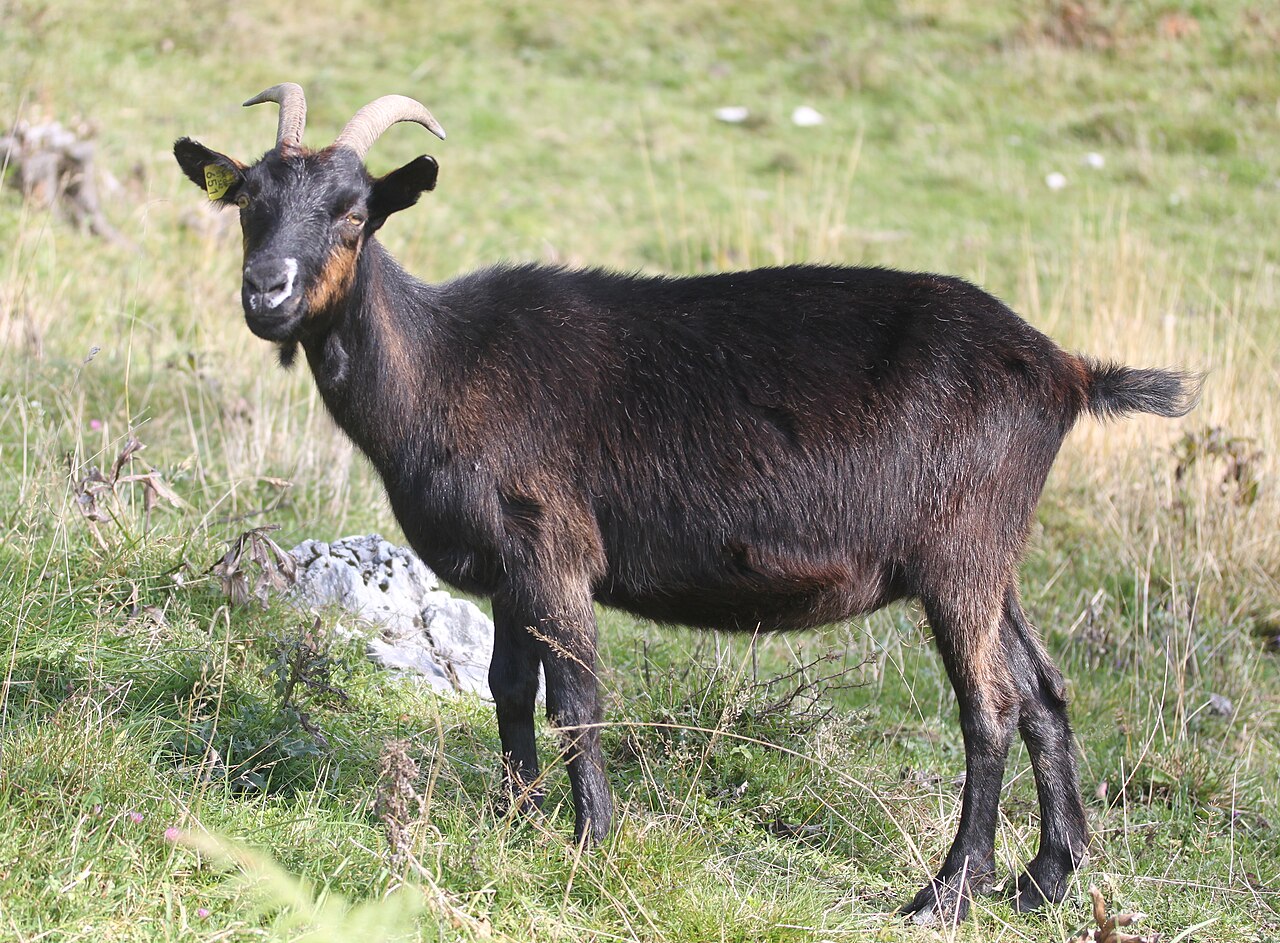
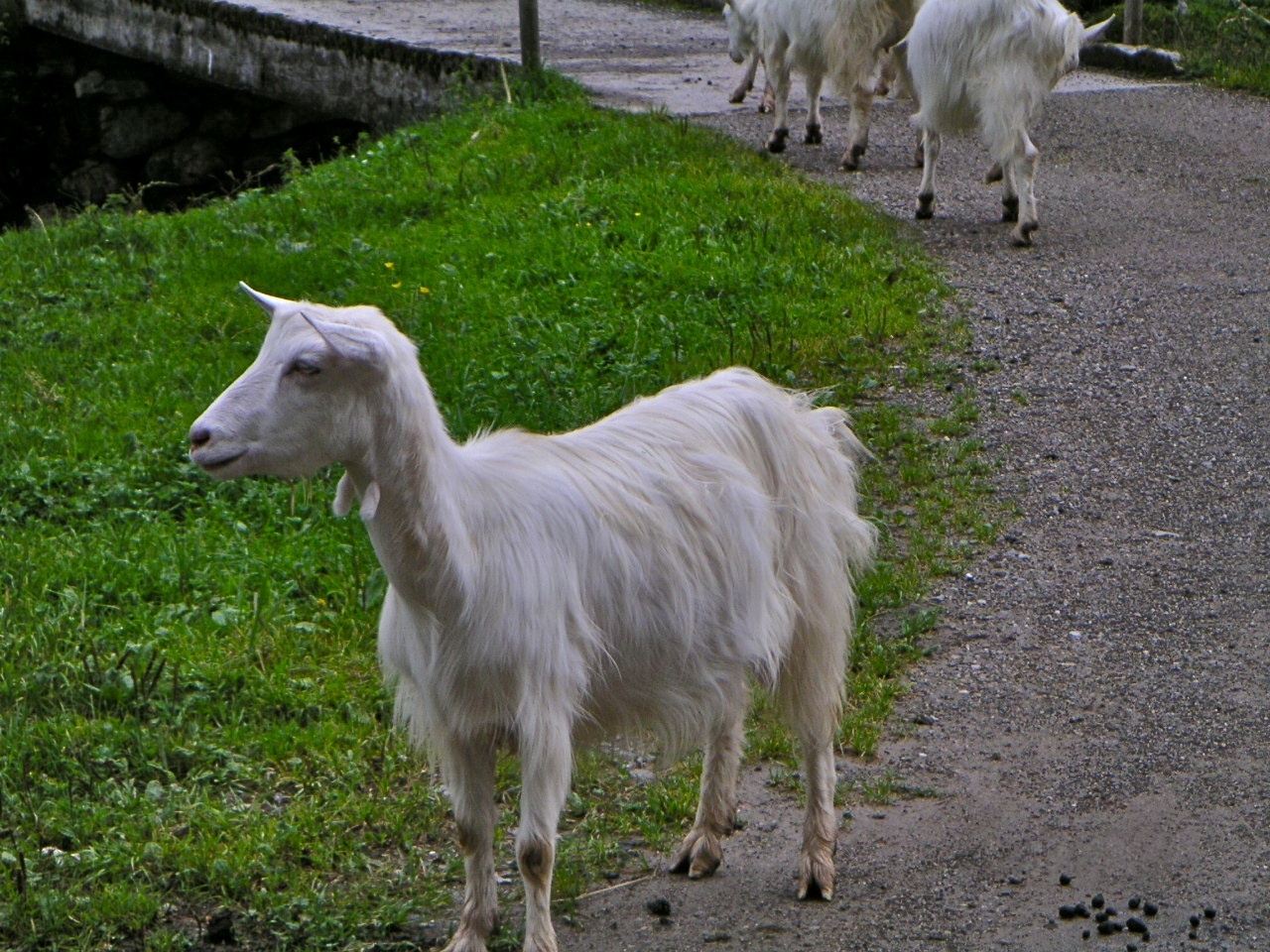
The Drežnica (Slovene: drežniska koza or bovška koza) is a Slovenian autochthonous breed of domestic goat originating in the Posočje region of north-west Slovenia. It is the only goat breed listed among Slovenian either autochthonous either traditional breeds of domestic animals. Animals of this breed are middle-sized darker goats, that are being used both for production of milk and dairy products as well as obtaining goat meat.
Origin and distribution
The Drežnica is a breed originating in northwestern Slovenia, on the area of Posočje, specifically places Drežnica and Bovec. The breed got its name after the village Drežnica, while some people call these goats Bovec goat. Today the Drežnica goat is the most widespread on the area of its origin, mostly around Bovec and Drežnica, in Tolmin and in smaller herds also elsewhere in Slovenia.
The breed was strongly influenced by the neglected role of goat farming as a discipline of animal husbandry. Past governments of Slovenian area were restricting or prohibiting goat grazing on some parts of Slovenia; consequently an organized and systematic breeding of the Drežnica goat was not possible for a long time. A huge hit for the breed was the Second World War, when the numbers of the Drežnica goat declined critically. Today there is thought to be between 880 and 900 goats of this breed (y. 2020), with population's trend being stable. The official register includes 722 selected breeding females and 101 selected breeding males in 2021.
Features
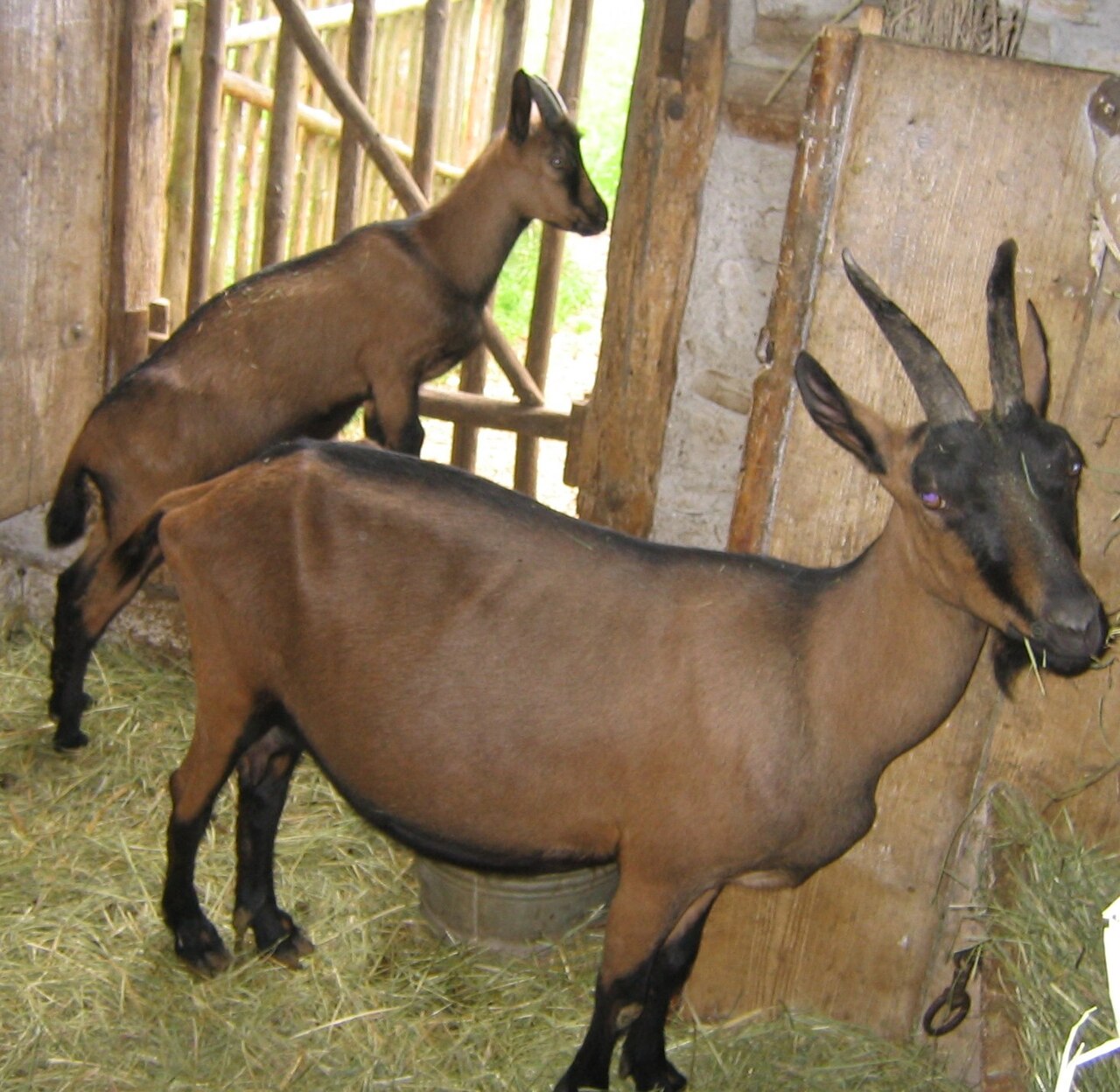
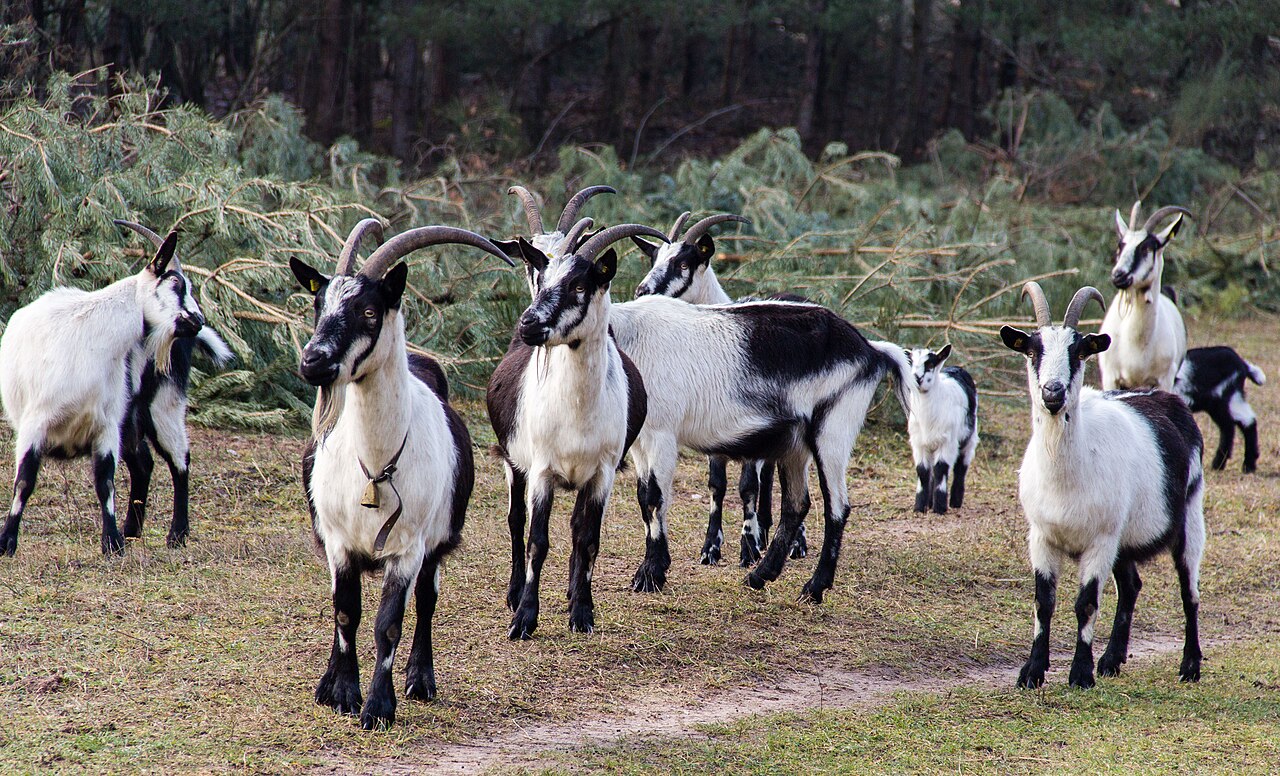
Goats of this breed are of medium frame, with bucks in average weighing from 65 to 80 kg and reaching from 65 to 75 cm of height, while does weigh from 45 to 60 kg and in average reach from 60 to 70 cm. Males are known for their forehead ponytail and a pronounced, long beard, that is also a feature of some females. On a robust, convexly profiled head with short ears are in most cases (always in bucks, sometimes also in does) horns that occasionally reach one metre of length. A goat's hooves are firm and enable safe climbing even on steep rocks.
Coat colours
The breed is known for having diverse range of coat colours, with darker pelts being the most common; a majority of animals is either black (1/3 of the population) either black-brown, less common goats are gray-black, brown, yellow-brown, black with white blotches on the head or patterns on the trunk and white with black blotches. Occasionally goat's back and thighs are covered with longer fur. Slovenian breeders use special terminology for referring to distinct coat colours: some goats are said to be rumene (goats with orange fur), golobaste (front part light, rear part dark), vajsaste or bajsaste (mostly white), zelene (goats with the so-called gray pattern, meaning there is white or gray hair among black fur), sajaste (black-brown or brown), zelena plista (animals are black or gray-black and have a "flower" on their forehead), pirnjaste or blekaste (white goats with black blotches), cimbaste (goats that have their back and thighs covered with longer hair), ribaste (black goats with brown neck), cevnjaste (long-haired) and gamsaste (mostly brown). Some experts think that such diversity of a coat colour is a consequence of breeding females of the Drežnica goat with bucks of other breeds.
Breeding and usage
The Drežnica goat is usually bred in a traditional (extensive) way, with animals grazing on pastures on hills and mountains during a favourable part of the year. Goats are used to harder conditions of montane pasture and are able to thrive even in poor circumstances, as they can get food from steep and hardly accessible lands. During winter goats are being kept in stables and fed with hay. Goat grazing is thought to be beneficial for montane ecosystems as animals are preventing overgrowth of pastures.
The breed is divided into two types based on the usage: meat and milk type. Goats of the meat type, which are usually less fertile (average number of born juveniles is 1.07), have strong bones, are robust and muscular, are a feature of lands near Drežnica, while more fertile (average number of born juveniles is 1.36) and less robust animals of the milk type are more common in vicinities of Bovec. Goats of the milk type have darker udder with non-equal number of teats, while goats of the meat type are characterised by a small udder and short teats. As Drežnica goats used for obtaining meat are spending less time with people, they are more lively and have a more pronounced temperament. Meat goats are being raised for their kids, while milk goats are also used for providing milk (an average milkiness in lactation is 360 kg, with some animals reaching 500 kg), which is often used for making goat cheese, known as the Bovec cheese. Milk of the Drežnica goat consists of 4.3 % fat and 3.4 % protein. Often milk of cows and sheep is also used for a production of this cheese, with whey and ricotta as byproducts.
See also
Wikimedia Commons has media related to Drežnica goat.
- List of Slovenian domestic animal breeds
- List of goat breeds
Ajouter des photos
Partagez vos photos de cette espèce (jusqu'à 20 à la fois) : elles sont vérifiées automatiquement, puis publiées.
Autres races de l'espèce (197)
Espèce : Chèvre
Voir les 185 autres races
- Chèvre de Damas
- Chèvre de Lorraine
- Chèvre de Thuringe
- Chèvre des fossés
- Chèvre du Simplon
- Chèvre du Toggenbourg
- Chèvre galicienne
- Chèvre grisonne à raies
- Chèvre naine
- Chèvre naine nigériane
- Chèvre à col noir du Valais
- Chèvres naines d'Afrique de l'Ouest
- Corse
- Girgentana
- Golden Guernsey
- Kiko
- Massif central
- Palmera
- Poitevine
- Provençale
- Pyrénées
- Rove
- Saanen
- Spanish
- Tennessee
- Weiße Deutsche Edelziege
- Ahuntz azpigorri
- Alpina Comune
- Altai Mountain goat
- American Lamancha
- Bagot
- Balkan goat
- Barbari
- Beetal
- Bionda dell'Adamello
- Black Bengal goat
- British Primitive goat
- Chamois Coloured goat
- Chamoisée valdôtaine
- Chèvre de Malte
- Chèvre du Massif de l'Erz
- Chèvre du Sahel
- Chèvre grise des montagnes
- Chèvre irlandaise
- Chèvre islandaise
- Chèvre landrace hollandaise
- Chèvre myotonique
- Finnish Landrace goat
- Frisa Valtellinese
- Garfagnina
- Jamunapari
- Kamori
- Kinder
- Majorera
- Malabari
- Malagueña
- Messinese
- Murciano-Granadina
- Nigora
- Oberhasli
- Orobica
- Passeirer Gebirgsziege
- Payoya
- Pygmy
- San Clemente Island goat
- Savanna goat
- Sirohi
- Somali goat
- Tauernscheck
- Tokara
- Verata
- Florida
- Kalahari Red
- Pezzata Mòchena
- Pygora goat
- Sojat
- Yemen Mountain goat
- Blanca andaluza
- Blobe Ziege
- Cabra blanca celtibérica
- Chèvre de Juan Fernández
- Chèvre rousse de Maradi
- Copper Neck Goat
- Dutch Pied
- Flemish goat
- Jämtget
- Lapp Goat
- Malashevska goat
- Pinzgau goat
- Vierhornziege
- Chèvre cou-clair du Berry
- Chèvre de Savoie
- Sundgau
- Belgische Hertegeit
- Chèvre du Don
- Chèvre du Drâa
- Chèvre fermière danoise
- Orenbourg
- Rouge méditerranéenne
- Argentata dell'Etna
- Asmari
- Aspromonte
- Australian Cashmere goat
- Bianca Monticellana
- Bormina
- British Alpine
- Canindé
- Capestrina
- Ciavenasca
- Cilentana Fulva
- Cilentana Grigia
- Cilentana Nera
- Ciociara Grigia
- Di L'Aquila
- Dutch Toggenburg
- Garganica
- Granadina goat
- Grigia Molisana
- Istriana
- Jonica
- Lariana
- Murciana goat
- Napoletana
- Nera Verzasca
- Nicastrese
- Repartida
- Roccaverano
- Rustica di Calabria
- Sable Saanen
- Sarda Primitiva
- Sarda goat
- Skopelos
- Zhongwei
- Chamba
- Charnequeira
- Chengde Down
- Chengdu Brown
- Chigu
- Chèvre des Carpates
- Dera Din Panah
- Di Teramo
- Duan
- Hejazi
- Hexi Cashmere
- Huai
- Hungarian Improved
- Ispir
- Jining Grey
- Kaghani
- Laoshan
- Moxotó
- Philippine goat
- Surati
- Swedish Landrace goat
- Uzbek Black goat
- Valfortorina
- White Shorthaired
- Xinjiang
- Zalawadi
- Ziwuling noire
- Kirdimi
- Anatolian Black Goat
- Bulgarian White Dairy Goat
- Capra dell'Aspromonte
- Capra hircus kelleri
- Dutch white goat
- East African Dwarf
- Grigia Lucana
- Göingeget
- Hyrcus
- Istarska koza
- Kanni Adu
- Konkan Kanyal
- Kystgeit
- Liaoning Cashmere Goat
- Mongolian Cashmere Goat
- North-Neuquén goat
- Norwegian milk goat
- Oberhasli naine
- Osmanabadi goat
- Pitiüsa
- Shiba goat
- Slovenian Alpine goat
- Slovenian Saanen goat
- Tibetan goat
Sources et crédits
Informations provenant de plusieurs sources vérifiées. Dernière mise à jour : .
Crédits photos (1)
- Photo : JakobZ · CC BY-SA 4.0 · via Wikimedia Commons
Mentions de licence
Texte disponible sous licence CC BY-SA 4.0. Il adapte notamment Wikipedia (CC BY-SA): Drežnica goat (Wikipédia, auteurs dans l’historique de l’article).
- Taxonomie : GBIF Backbone Taxonomy (CC BY 4.0)
Détail : Sources et licences.
Discussion (0)
Aucun message pour l’instant. Lancez la discussion sur cette fiche (sources, précisions, débats éditoriaux).
Connectez-vous pour participer à la discussion.