
- Kingdom
- Animalia
- Phylum
- Chordata
- Class
- Mammalia
- Order
- Artiodactyla
- Family
- Bovidae
- Genus
- Capra
- Species
- Capra hircus
Overview
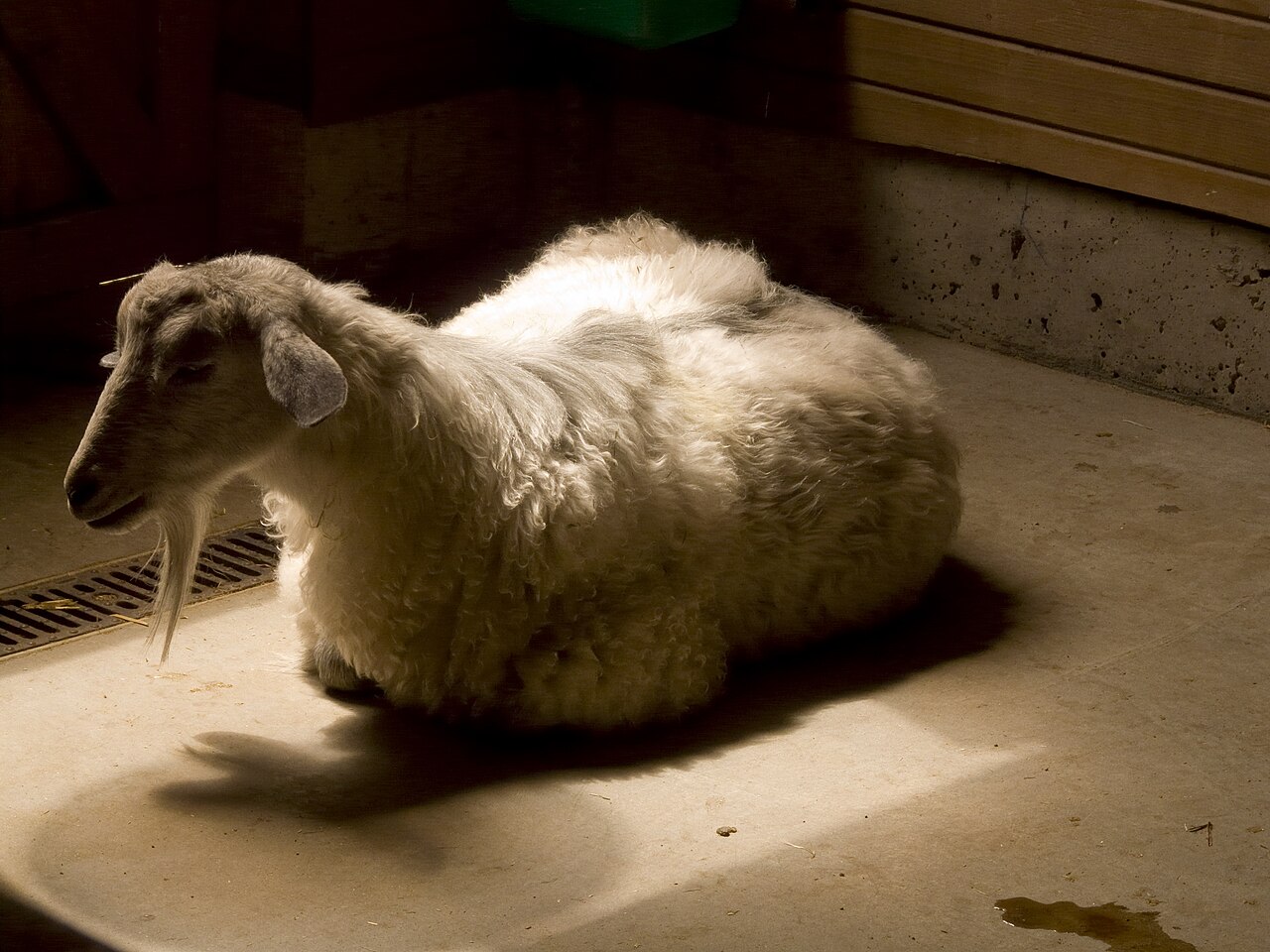
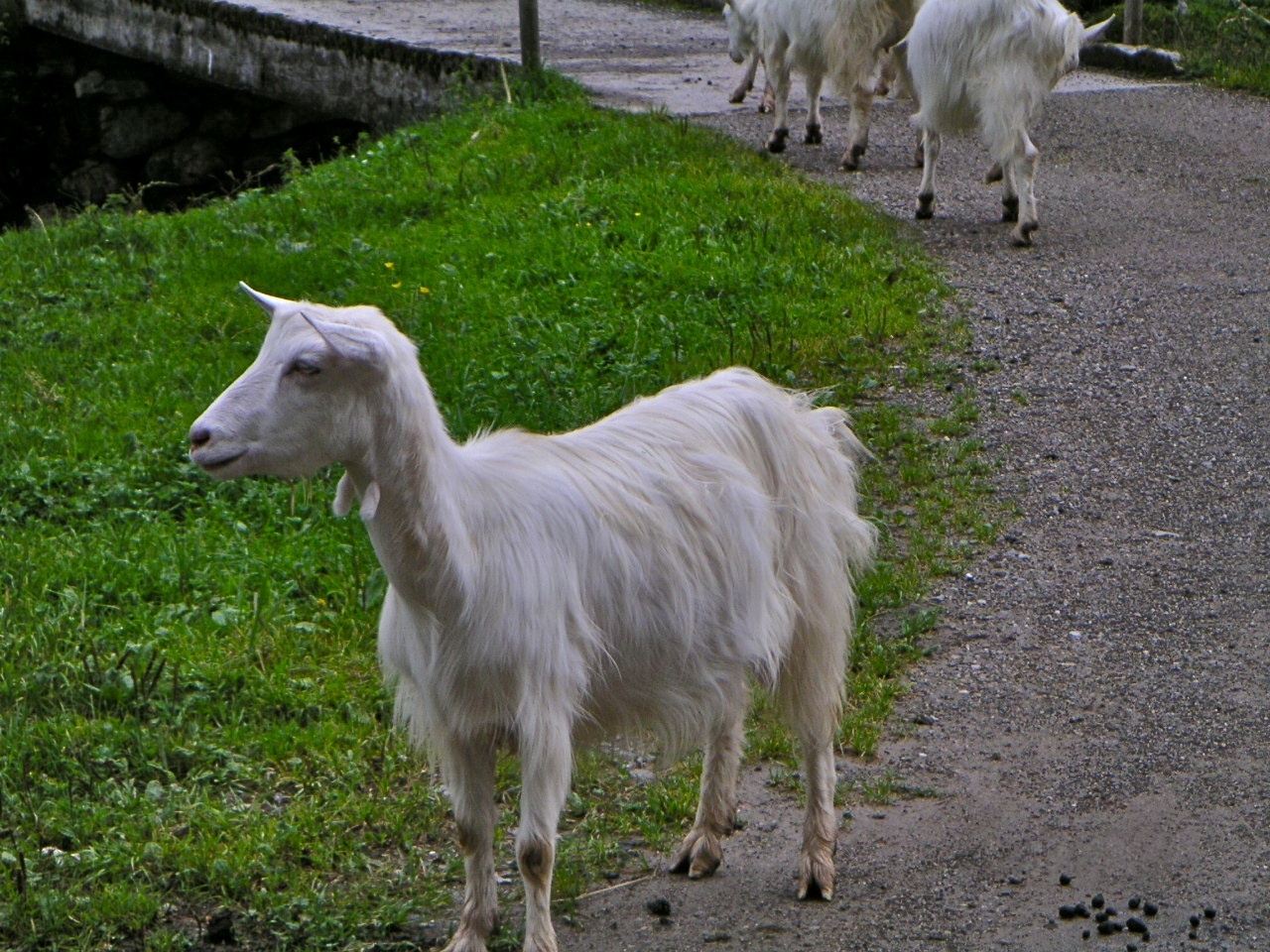
The Pygora goat is a breed of goat that originated from crossing the registered NPGA Pygmy goat and the white AAGBA Angora goat. Pygoras, along with the Angora goat and Cashmere goat, are fiber goats (goats bred for their wool). Pygora goats produce three distinct kinds of fleece.
History
The Pygora was a purposeful cross, bred by Katharine Jorgensen of Oregon City, Oregon.[when?] In 1987, the Pygora Breeders Association was formed in the United States, and has since then been registering and promoting Pygoras. Today, the registered Pygora goat may not be more than 75% AAGBA-registered Angora goat or 75% NPGA-registered Pygmy goat.
Breed standards
First generation (F1) Pygmy-Angora crosses are not considered true Pygoras; however, these may be bred with other Pygora goats, F1 crosses, or back to pure Pygmy or Angora goats to produce true Pygora goats. This may be continued while maintaining the integrity of the breed as long as they have no more than 75% Pygmy or Angora ancestry.
Characteristics
Pygoras live for 12 to 14 years, and are commonly used for fiber, along with being show, breeding, and fiber-producing animals. The weight of a healthy Pygora depends on whether it is a male, female or kid. Most kids are about 5 pounds at birth; does range in weight from 65 to 75 pounds and bucks and wethers range from 75 to 95 pounds. Pygora fiber is frequently used by artists for spinning, spindling, knitting, crocheting, weaving, tapestries, and other fiber arts. It is also commonly used in clothing. Pygoras can also be milked, producing about one liter per day. Pygora wethers generally have higher quality fiber than the does and bucks because they do not spend all their energy producing young. Pygora are mainly for producing fiber, but some people also show them as a hobby, in fairs, fiber shows, and in 4H. Some pygora breeders and 4-H clubs show goats at the Oregon Flock and Fibre Festival (OFFF). Angoras can be found there as well.
Registered Pygora goats will produce cashmere-like fleece (Classified as Type-C), a mohair-like fleece (Type-A), or a combination of the two fleeces (Type-B). Type-A fleece is composed of fibers averaging 6 or more inches in length that drape in ringlets. It may occur as a single coat, but a silky guard hair is usually present. The fibers are typically less than 28 micrometers in diameter. Type-B fleece fibers average between 3 and 6 inches (150 mm) in length with one, possibly two, guard hairs. The fibers are usually less than 24 μm in diameter. Type-C fleece is very fine, typically 1 to 3 inches (76 mm) in length and less than 18.5 μm in diameter. Pygoras come in a variety of colors: white, red, brown, black, gray or a mix of the colors.
Gallery
Ajouter des photos
Partagez vos photos de cette espèce (jusqu'à 20 à la fois) : elles sont vérifiées automatiquement, puis publiées.
Autres races de l'espèce (197)
Espèce : Chèvre
Voir les 185 autres races
- Chèvre de Damas
- Chèvre de Lorraine
- Chèvre de Thuringe
- Chèvre des fossés
- Chèvre du Simplon
- Chèvre du Toggenbourg
- Chèvre galicienne
- Chèvre grisonne à raies
- Chèvre naine
- Chèvre naine nigériane
- Chèvre à col noir du Valais
- Chèvres naines d'Afrique de l'Ouest
- Corse
- Girgentana
- Golden Guernsey
- Kiko
- Massif central
- Palmera
- Poitevine
- Provençale
- Pyrénées
- Rove
- Saanen
- Spanish
- Tennessee
- Weiße Deutsche Edelziege
- Ahuntz azpigorri
- Alpina Comune
- Altai Mountain goat
- American Lamancha
- Bagot
- Balkan goat
- Barbari
- Beetal
- Bionda dell'Adamello
- Black Bengal goat
- British Primitive goat
- Chamois Coloured goat
- Chamoisée valdôtaine
- Chèvre de Malte
- Chèvre du Massif de l'Erz
- Chèvre du Sahel
- Chèvre grise des montagnes
- Chèvre irlandaise
- Chèvre islandaise
- Chèvre landrace hollandaise
- Chèvre myotonique
- Dreznica
- Finnish Landrace goat
- Frisa Valtellinese
- Garfagnina
- Jamunapari
- Kamori
- Kinder
- Majorera
- Malabari
- Malagueña
- Messinese
- Murciano-Granadina
- Nigora
- Oberhasli
- Orobica
- Passeirer Gebirgsziege
- Payoya
- Pygmy
- San Clemente Island goat
- Savanna goat
- Sirohi
- Somali goat
- Tauernscheck
- Tokara
- Verata
- Florida
- Kalahari Red
- Pezzata Mòchena
- Sojat
- Yemen Mountain goat
- Blanca andaluza
- Blobe Ziege
- Cabra blanca celtibérica
- Chèvre de Juan Fernández
- Chèvre rousse de Maradi
- Copper Neck Goat
- Dutch Pied
- Flemish goat
- Jämtget
- Lapp Goat
- Malashevska goat
- Pinzgau goat
- Vierhornziege
- Chèvre cou-clair du Berry
- Chèvre de Savoie
- Sundgau
- Belgische Hertegeit
- Chèvre du Don
- Chèvre du Drâa
- Chèvre fermière danoise
- Orenbourg
- Rouge méditerranéenne
- Argentata dell'Etna
- Asmari
- Aspromonte
- Australian Cashmere goat
- Bianca Monticellana
- Bormina
- British Alpine
- Canindé
- Capestrina
- Ciavenasca
- Cilentana Fulva
- Cilentana Grigia
- Cilentana Nera
- Ciociara Grigia
- Di L'Aquila
- Dutch Toggenburg
- Garganica
- Granadina goat
- Grigia Molisana
- Istriana
- Jonica
- Lariana
- Murciana goat
- Napoletana
- Nera Verzasca
- Nicastrese
- Repartida
- Roccaverano
- Rustica di Calabria
- Sable Saanen
- Sarda Primitiva
- Sarda goat
- Skopelos
- Zhongwei
- Chamba
- Charnequeira
- Chengde Down
- Chengdu Brown
- Chigu
- Chèvre des Carpates
- Dera Din Panah
- Di Teramo
- Duan
- Hejazi
- Hexi Cashmere
- Huai
- Hungarian Improved
- Ispir
- Jining Grey
- Kaghani
- Laoshan
- Moxotó
- Philippine goat
- Surati
- Swedish Landrace goat
- Uzbek Black goat
- Valfortorina
- White Shorthaired
- Xinjiang
- Zalawadi
- Ziwuling noire
- Kirdimi
- Anatolian Black Goat
- Bulgarian White Dairy Goat
- Capra dell'Aspromonte
- Capra hircus kelleri
- Dutch white goat
- East African Dwarf
- Grigia Lucana
- Göingeget
- Hyrcus
- Istarska koza
- Kanni Adu
- Konkan Kanyal
- Kystgeit
- Liaoning Cashmere Goat
- Mongolian Cashmere Goat
- North-Neuquén goat
- Norwegian milk goat
- Oberhasli naine
- Osmanabadi goat
- Pitiüsa
- Shiba goat
- Slovenian Alpine goat
- Slovenian Saanen goat
- Tibetan goat
Sources et crédits
Informations provenant de plusieurs sources vérifiées. Dernière mise à jour : .
Crédits photos (2)
- Photo : April from usa · CC BY 2.0 · via Wikimedia Commons
- Photo : Marianne Madden from New York City, USA · CC BY-SA 2.0 · via Wikimedia Commons
Mentions de licence
Texte disponible sous licence CC BY-SA 4.0. Il adapte notamment Wikipedia (CC BY-SA): Pygora goat (Wikipédia, auteurs dans l’historique de l’article).
- Taxonomie : GBIF Backbone Taxonomy (CC BY 4.0)
Détail : Sources et licences.
Discussion (0)
Aucun message pour l’instant. Lancez la discussion sur cette fiche (sources, précisions, débats éditoriaux).
Connectez-vous pour participer à la discussion.