
- Kingdom
- Animalia
- Phylum
- Chordata
- Class
- Mammalia
- Order
- Artiodactyla
- Family
- Suidae
- Genus
- Sus
- Species
- Sus scrofa domesticus
Overview
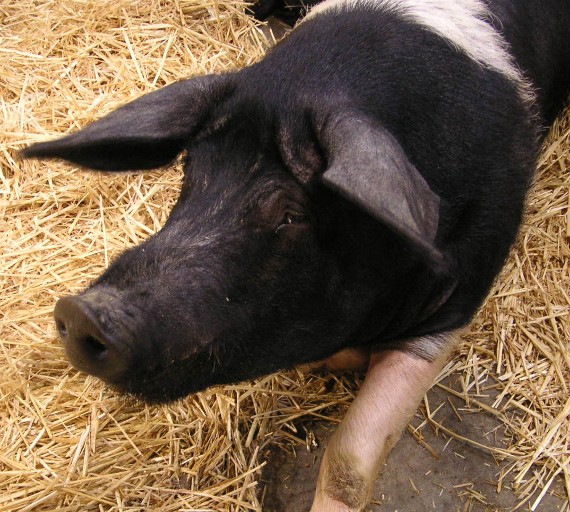
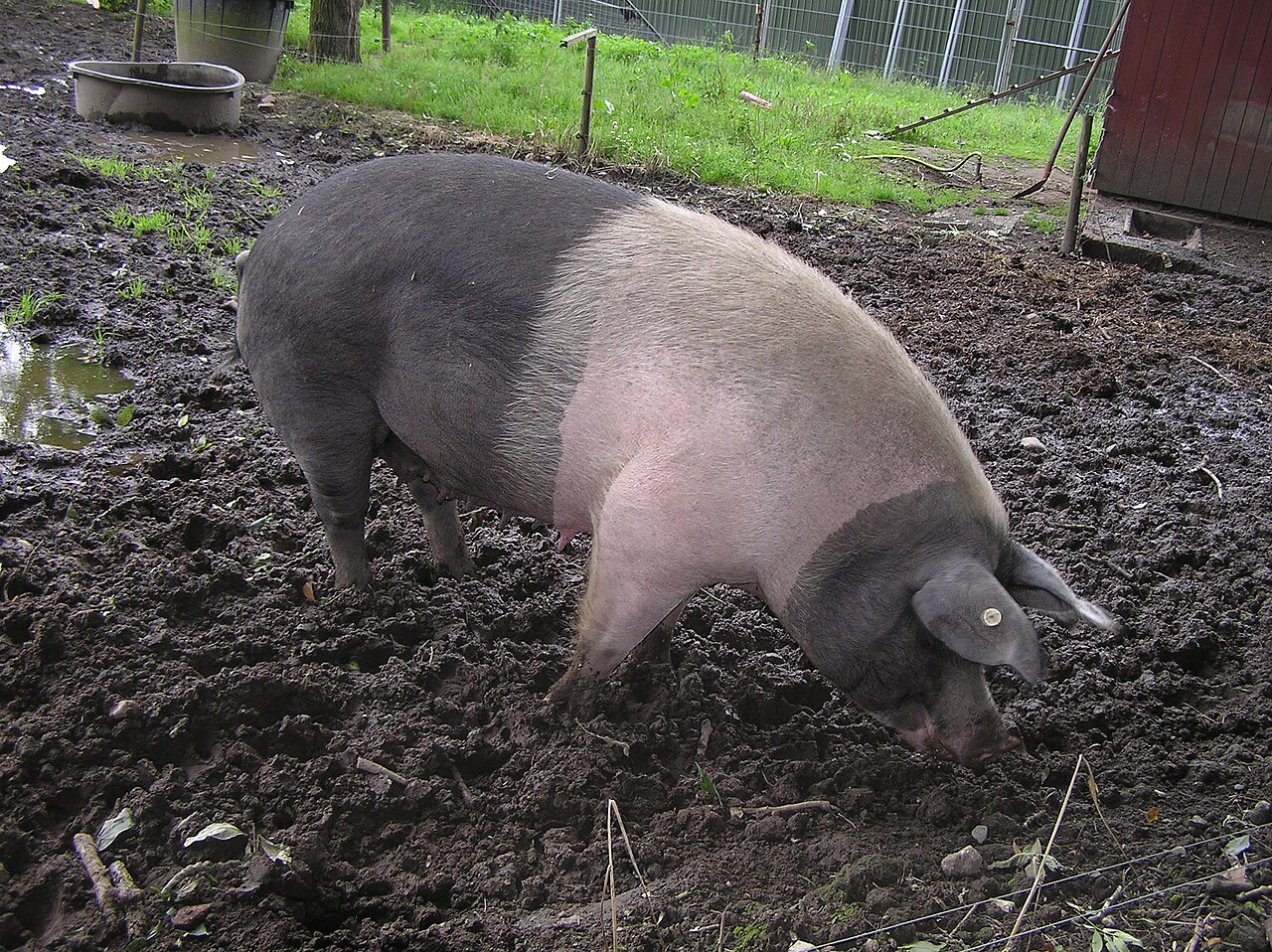
The Wessex Saddleback or Wessex Pig is a breed of domestic pig originating in the West Country of England (Wessex), especially in Wiltshire and the New Forest area of Hampshire. It is black, with white forequarters. In Britain it was amalgamated with the Essex pig to form the British Saddleback, and it is extinct as a separate breed in Britain. However, the Wessex Saddleback survives in Australia and New Zealand.
Description
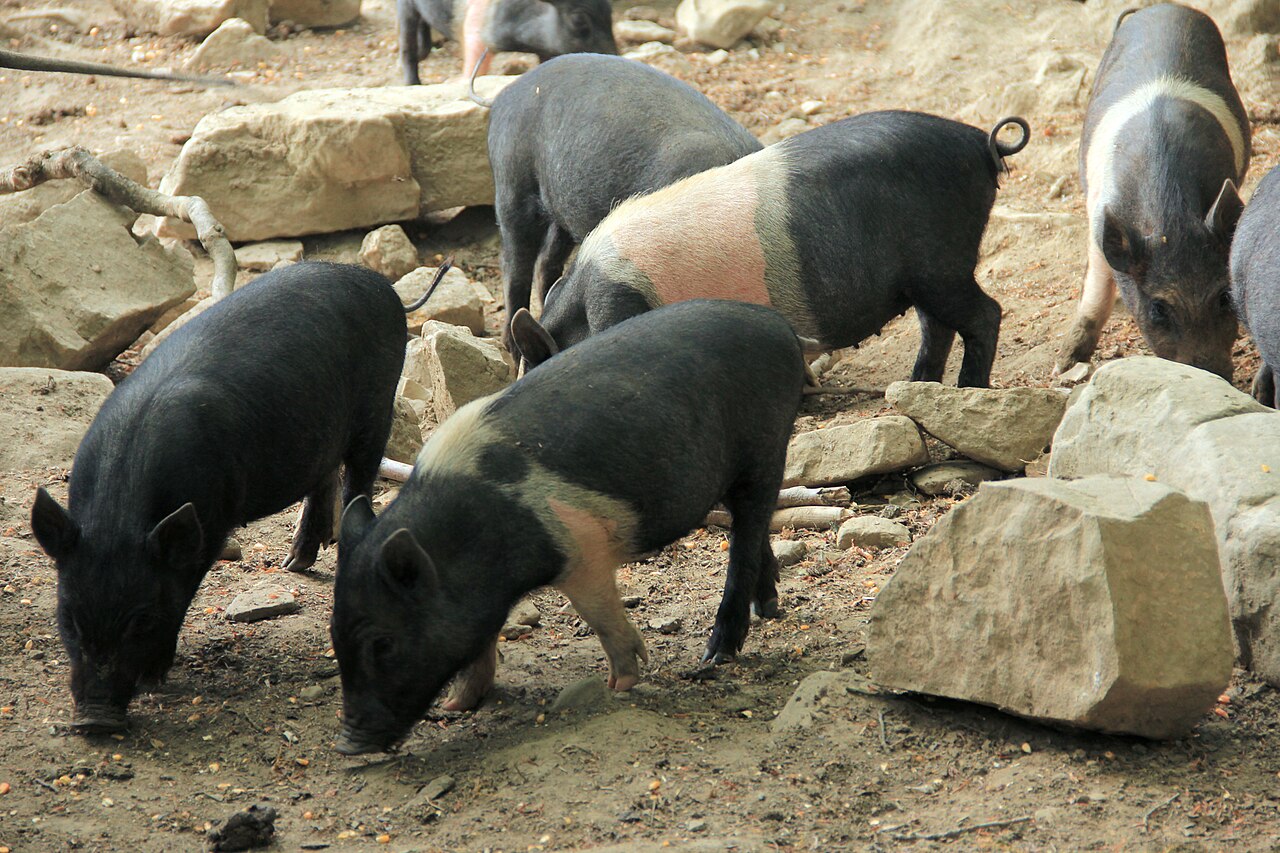
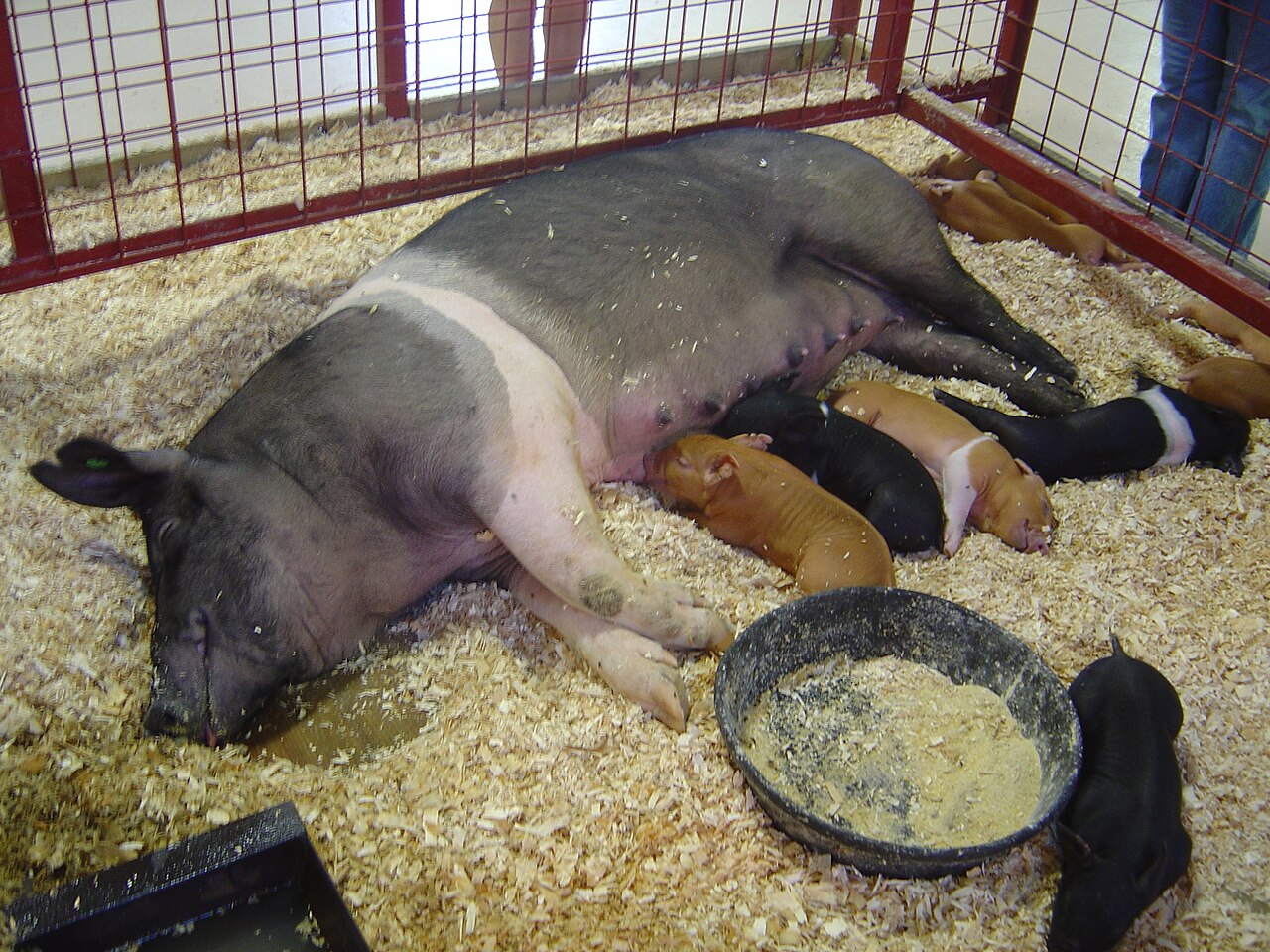
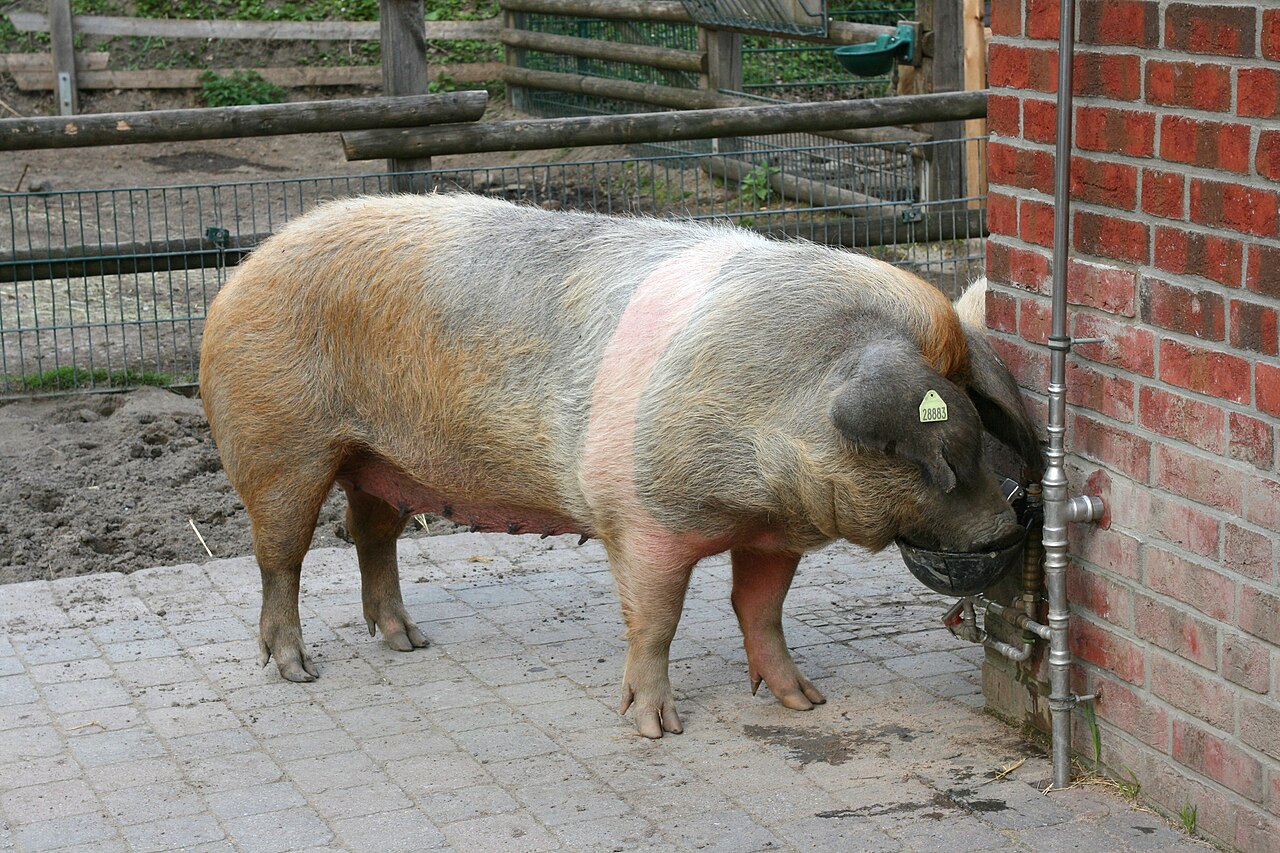
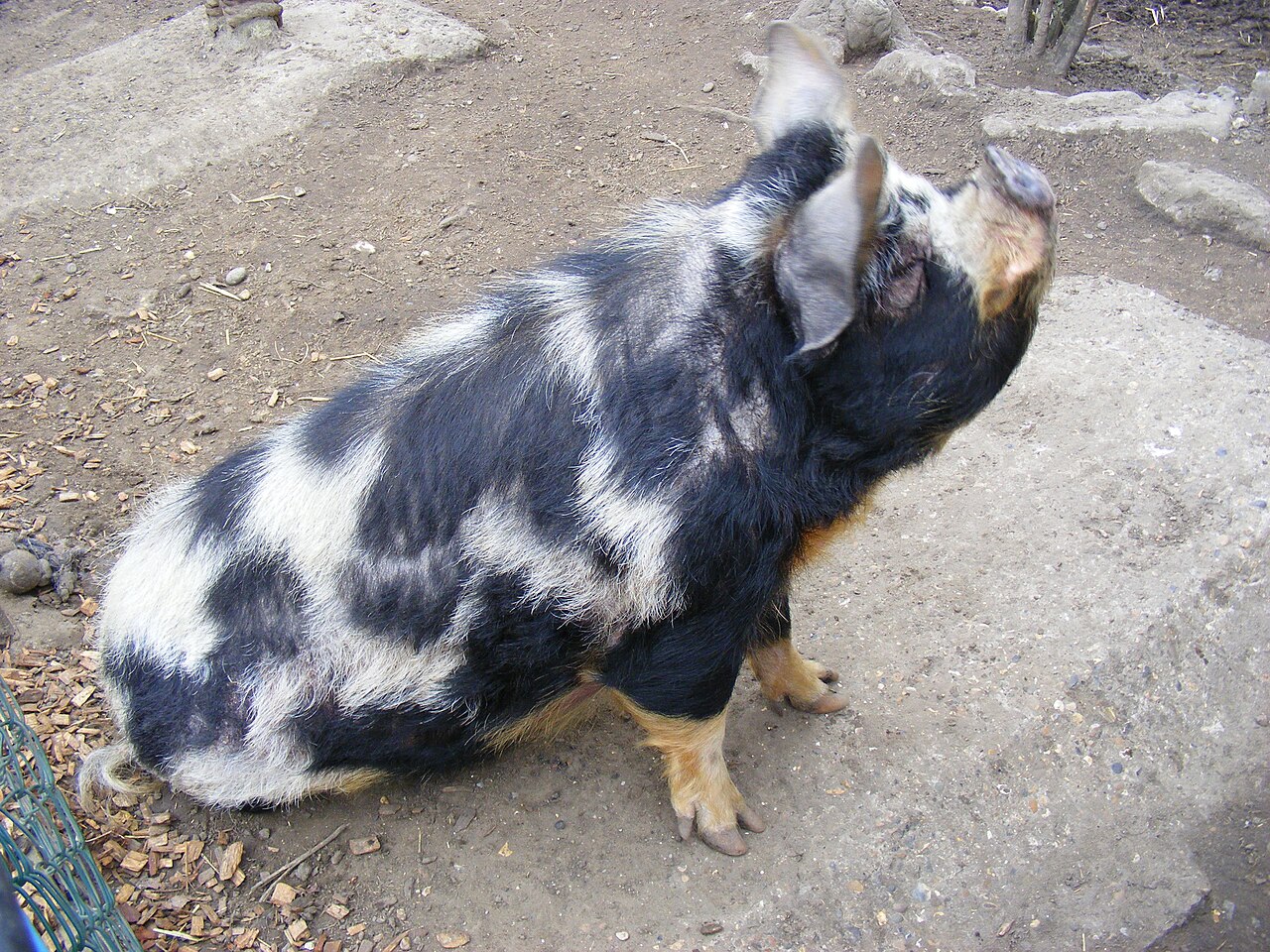
The Wessex Saddleback is black, with a white band about the forepart of the trunk, extending from one fore-foot over the shoulder to the other, forming a white band resembling a saddle (or "sheet"). It is a tall, rangy animal, adapted to foraging in woodland, its traditional use. This use survived longest in the New Forest, where pigs are still allowed to forage in woods for mast (acorns, beech-nuts and chestnuts) – but the New Forest pigs no longer include pure-bred Wessex Saddlebacks.
History
There is uncertainty about the origin of the Wessex Saddleback. Some sources state that it began as a cross of "the black breed of the New Forest" and "the Old English Sheeted breed", spreading through Hampshire and the Isle of Purbeck in the 18th century. However others simply say that the breed is "of unknown origin". The breed has been claimed to be one of the few British pig breeds to have been little affected by crossing with "Neapolitan" pigs of Far Eastern origin, and if this is true, it is perhaps one of those closest to the landrace pigs which foraged in woods throughout Britain for many centuries.
The Wessex Saddleback breed society began in 1918 in Britain, but by the middle of the 20th century pig farming was becoming more and more intensive. The more extensive systems to which the Wessex is suited declined, and the breed declined with them. Meanwhile, the similarly coloured (but otherwise rather different) Essex had followed a similar course, and in 1967 the two breeds were merged in an effort to prevent both becoming extinct. This formed a hybrid breed, the British Saddleback, though the name "Wessex Saddleback" is often used loosely in Britain for the British Saddleback. A few herds of Essex Pigs survived in a relatively pure form in Britain, and efforts are being made to revive them as a separate breed, but the Wessex is currently considered extinct in its country of origin.
However, before amalgamation some Wessex Saddlebacks had been exported to other parts of the world, and the breed survives in small numbers in Australia, New Zealand, and perhaps elsewhere. In Australia in 2008 there are less than 100 registered breeding sows, and they are considered critically endangered by the Rare Breeds Trust of Australia.
In the early 19th Century, similar pigs from Hampshire were exported to North America, and formed the basis of the Hampshire pig, one of the commonest commercial breeds there. The Hampshire has since been re-imported to Britain, but it is now of a different type to the Wessex.
Uses
Regarded as an excellent eating pig, the Wessex Saddleback was traditionally used as a "baconer" and grown out for bacon and hams.
External links
Wikimedia Commons has media related to Wessex Saddleback.
- Information on the British Saddleback from the British Pig Association Archived 2007-09-19 at the Wayback Machine
- Scottish breeds
- Welsh breeds
Gallery
Ajouter des photos
Partagez vos photos de cette espèce (jusqu'à 20 à la fois) : elles sont vérifiées automatiquement, puis publiées.
Autres races de l'espèce (136)
Espèce : Porc
Voir les 124 autres races
- Landrace français
- Large white
- Meishan
- Pie noir de Bentheim
- Pie noir du Pays basque
- Piétrain
- Poland china
- Porc blanc de l'Ouest
- Porc celte
- Porc craonnais
- Porc de Bayeux
- Porc de Corse
- Porc gascon
- Porc laineux
- Porc noir de Bigorre
- Porc normand
- Race Normande
- Red Wattle
- Tamworth
- American Landrace
- Australian Yorkshire
- Beijing Black
- Belgian Landrace
- British Saddleback
- Cochon créole
- Cochon nain
- Cochon sarde
- Danish Landrace pig
- Dutch Landrace pig
- Essex pig
- Forest Mountain pig
- Gloucestershire Old Spots
- Guinea Hog
- Göttingen Minipig
- Italian Landrace
- Jeju Black pig
- Krškopolje pig
- Large Black
- Latvian White pig
- Lincolnshire Curly Coat
- Lithuanian Native pig
- Lithuanian White
- Middle White
- Nero Siciliano
- Nero di Parma
- Ossabaw Island Hog
- Porc ibérique
- Porc tibétain
- Siberian Black Pied
- Swabian-Hall
- Swedish Landrace pig
- Turopolje pig
- Ankamali pig
- Irish Greyhound Pig
- Agū
- Black Alpine Pig
- Bressane race
- Canarian Black
- Deutsches Sattelschwein
- Lanyu pig
- Meissner hog
- Perigord race
- Přeštické černostrakaté prase
- Mora Romagnola
- Mulefoot
- Porc d'Ourjoum
- Porc de Miélan
- Porc pie danois
- Aksai Black Pied
- American Yorkshire
- Apulo-Calabrese
- Ba Xuyen
- Bazna pig
- Belarus Black Pied pig
- British Lop
- Casertana pig
- Chato Murciano
- Choctaw Hog
- Cumberland pig
- Dorset Gold Tip
- Duroc Italiana
- Estonian Bacon
- Fengjing pig
- Kagoshima Berkshire
- Kakhetian pig
- Korean Native pig
- Lacombe pig
- Large White Italiana
- Large White Ulster pig
- Minnesota Miniature
- Mukota
- Myrhorod pig
- Porc bagnérais
- Porc de Breïtovo
- Porc de Kemerovo
- Porc de Livny
- Porc de Sibérie du Nord
- Porc du Caucase du Nord
- Semirechensk
- Small Black pig
- Small White pig
- Taihu pig
- Tokyo-X
- Tsivilsk pig
- Ukrainian Spotted Steppe
- Ukrainian White Steppe
- Welsh pig
- Yorkshire Blue and White
- Baudin pig
- Bulgarian White
- Meidam
- Ashanti Dwarf
- Baztango txerria
- Deutsche Landrasse
- Erhualian pig
- Estonian Large White
- Gasteizko muturmotz txerria
- Gochu Asturcelta
- Hitachi no kagayaki
- Jinhua pigs
- Mong Cai pig
- Nakijin agū
- Rose pork
- Yorkshire pig
Sources et crédits
Informations provenant de plusieurs sources vérifiées. Dernière mise à jour : .
Crédits photos (7)
- Photo : TTaylor · CC BY-SA 3.0 · via Wikimedia Commons
- Photo : TTaylor · CC BY-SA 3.0 · via Wikimedia Commons
- Photo : GimmeFood :) · CC BY 2.0 · via Wikimedia Commons
- Photo : Agriculture And Stock Department, Information Branch, Photography Section · Domaine public · via Wikimedia Commons
- Photo : Agriculture And Stock Department, Information Branch, Photography Section · Domaine public · via Wikimedia Commons
- Photo : Internet Archive Book Images · Domaine public · via Wikimedia Commons
- Photo : Domaine public · Domaine public · via Wikimedia Commons
Mentions de licence
Texte disponible sous licence CC BY-SA 4.0. Il adapte notamment Wikipedia (CC BY-SA): Wessex Saddleback (Wikipédia, auteurs dans l’historique de l’article).
- Taxonomie : GBIF Backbone Taxonomy (CC BY 4.0)
Détail : Sources et licences.
Discussion (0)
Aucun message pour l’instant. Lancez la discussion sur cette fiche (sources, précisions, débats éditoriaux).
Connectez-vous pour participer à la discussion.