
- Kingdom
- Animalia
- Phylum
- Chordata
- Class
- Mammalia
- Order
- Artiodactyla
- Family
- Suidae
- Genus
- Sus
- Species
- Sus scrofa domesticus
Overview
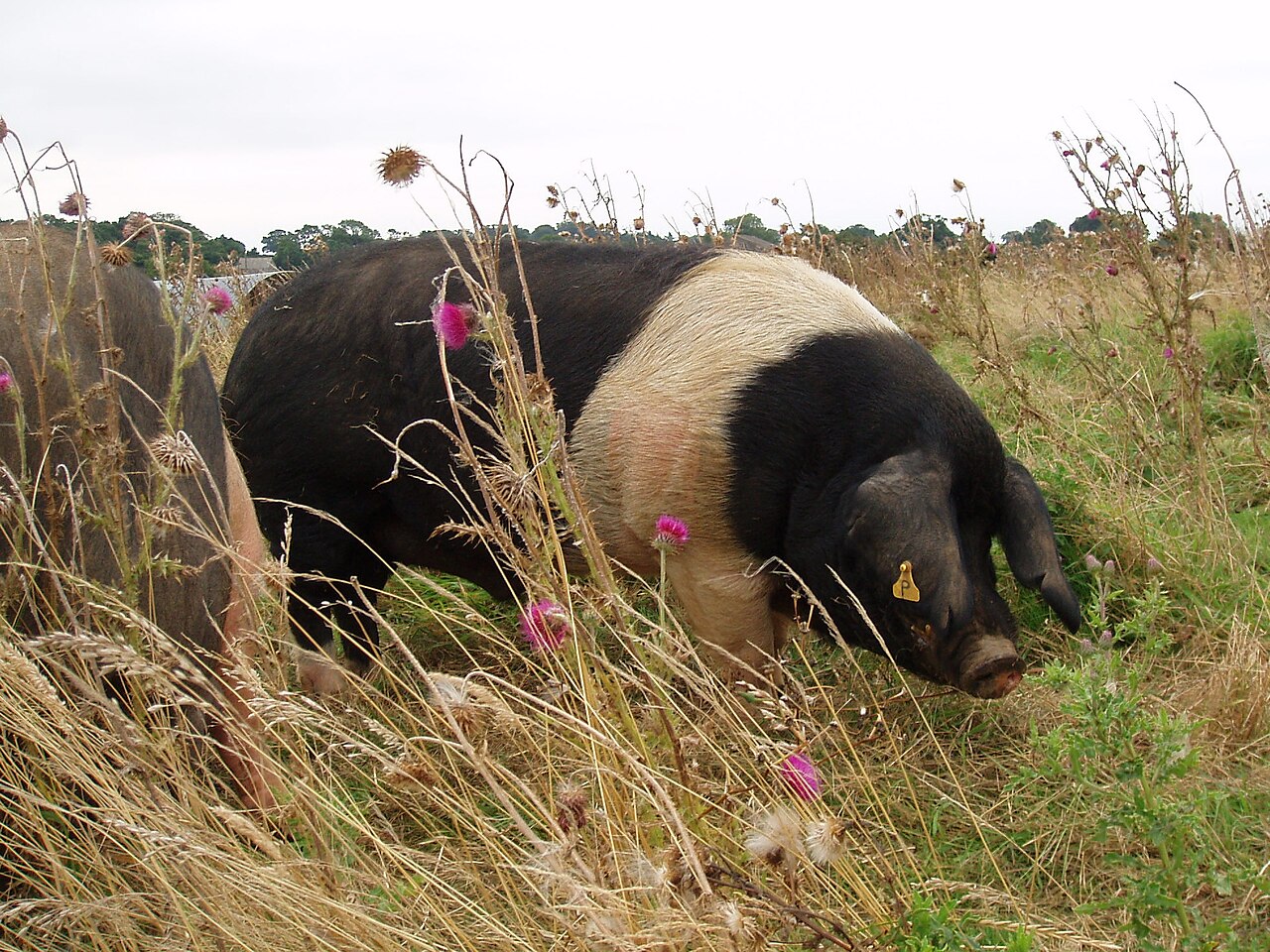
The Essex is a breed of domestic pig originating in the United Kingdom.
Characteristics
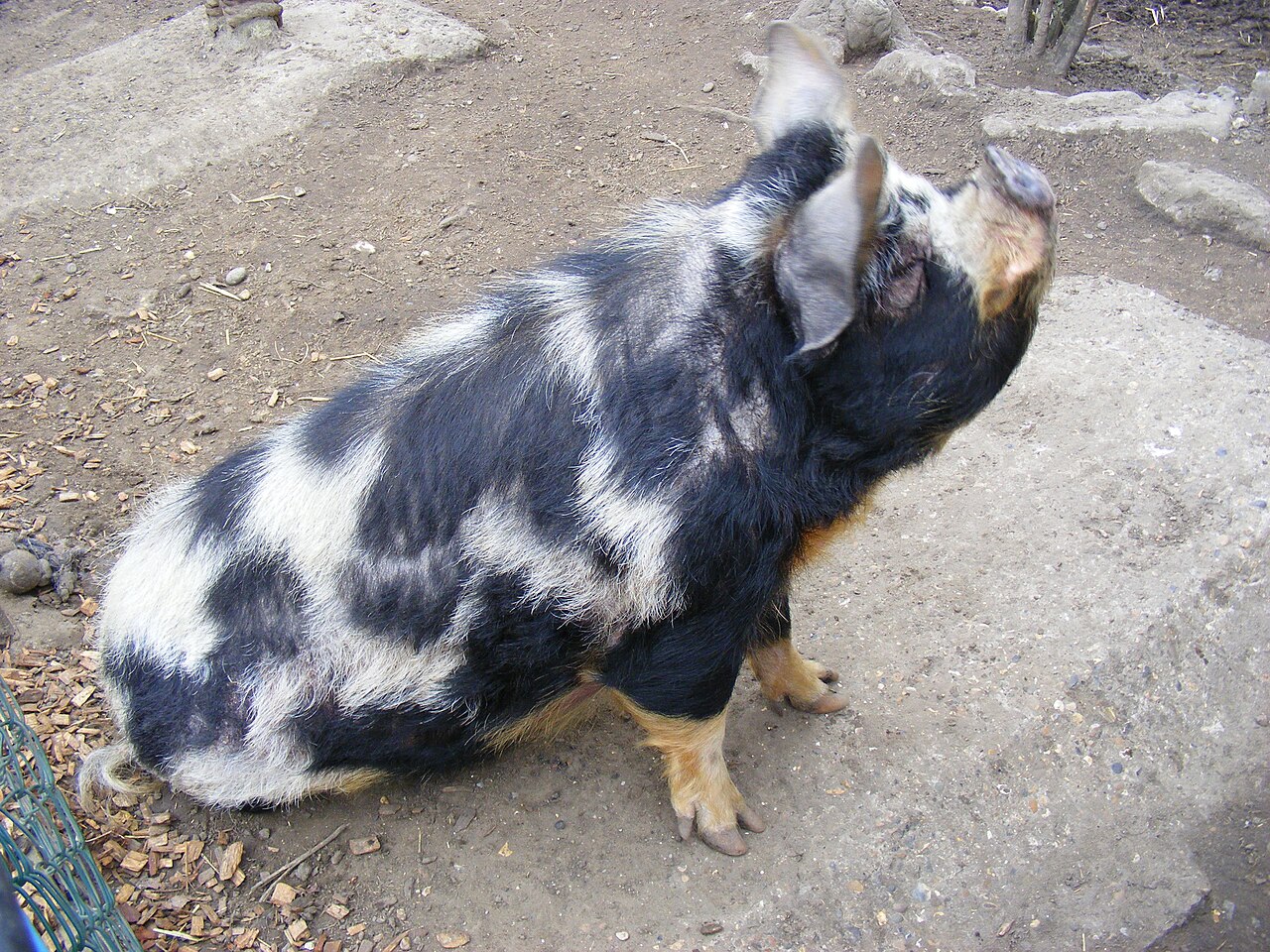
The Essex, in its traditional form, was a smallish pig with 'pricked' ears and a black ground colour, with a broad band of white 'sheeting' across the shoulders.
History
Like other old British pig breeds, the ancestor of the Essex may have originated in the county of the same name from selective breeding of local wild pigs.[citation needed] It was originally a smallish, "coarse" black-and-white pig that was noted for being easy to keep and cheap to feed, qualities that ensured its popularity with smallholders. The Old Essex, as it came to be known, was deliberately "improved" in the mid 19th century by crossing it with imported pigs. In the early nineteenth century, while travelling in Italy, Charles Western, 1st Baron Western obtained Neapolitan pigs to cross with his Essex sows. One of his tenants, Fisher Hobbs, bred the resulting Neapolitan-Essex boars with his "coarse" Essex sows and established the Improved Essex. In 1840 an Improved Essex boar and sow, both bred by Hobbs, each took first prize in its class at the second show of the Royal Agricultural Society at Cambridge.
The Essex pig remained locally popular until as recently as the mid-1950s, and had actually increased in numbers during the Second World War and immediately afterwards, based on its reputation for hardiness and its ability to feed itself by foraging. In 1954, 488 Essex boars (2% of the total British stock) were still licensed, and 3,716 sows registered.
The position of the Essex breed changed markedly after the publication of a 1955 report by the Advisory Committee on the Development of Pig Production in the United Kingdom, chaired by Sir Harold Howitt. The report, issued after the end of wartime rationing, expressed concern that the UK's pig farms were poorly placed to compete with European and Scandinavian pork and bacon producers, particularly those of Denmark, and identified that the wide variety of local breeds still used in the UK hampered development. It was therefore recommended that pig farmers concentrate on three breeds: the Welsh, the Landrace, and the Large White, and as a result the Essex pig went into a steep decline.
While the breed societies of the Wessex (another breed featuring a black ground colour and white shoulder markings, although with a different origin) and Essex pigs had amalgamated as early as 1918, the formal end of the Essex pig came in 1967, when the stud books were also amalgamated with the intention of merging the two breeds into the British Saddleback. This was intended to improve the breed's characteristics, produce hybrid vigour, and prevent inbreeding in the remaining small herds. For many years the Essex pig was considered to have become extinct in 1967, although it was thought a few pure-bred individuals might survive on small farms.
Re-creation of the breed
Later research showed that one farmer, John Croshaw, had refused to amalgamate his herd of Essex pigs (the "Glascote Herd"), which retained a pure Essex bloodline despite being officially registered as British Saddlebacks: Croshaw had carefully managed his stock to avoid inbreeding.
Ajouter des photos
Partagez vos photos de cette espèce (jusqu'à 20 à la fois) : elles sont vérifiées automatiquement, puis publiées.
Autres races de l'espèce (136)
Espèce : Porc
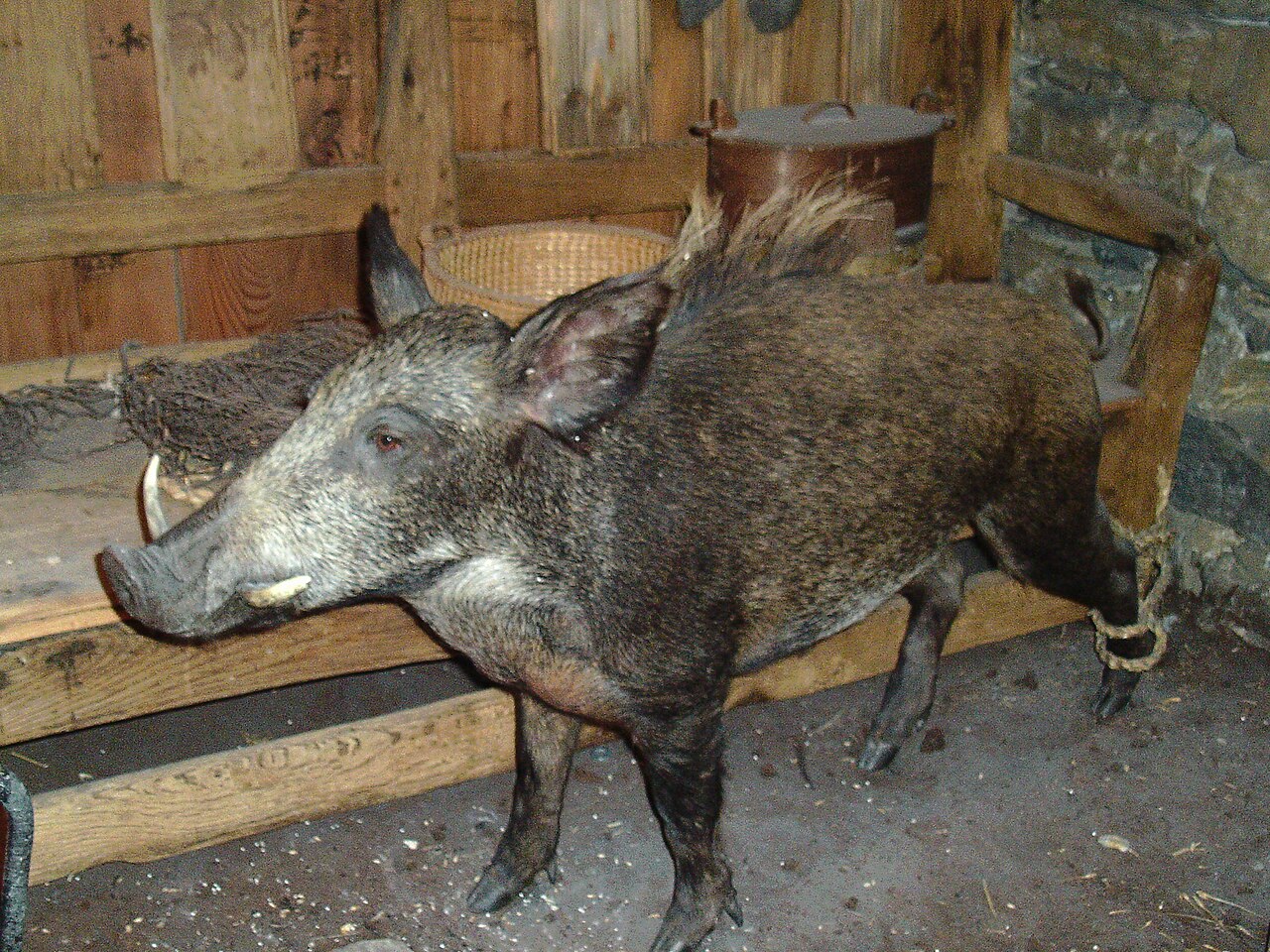
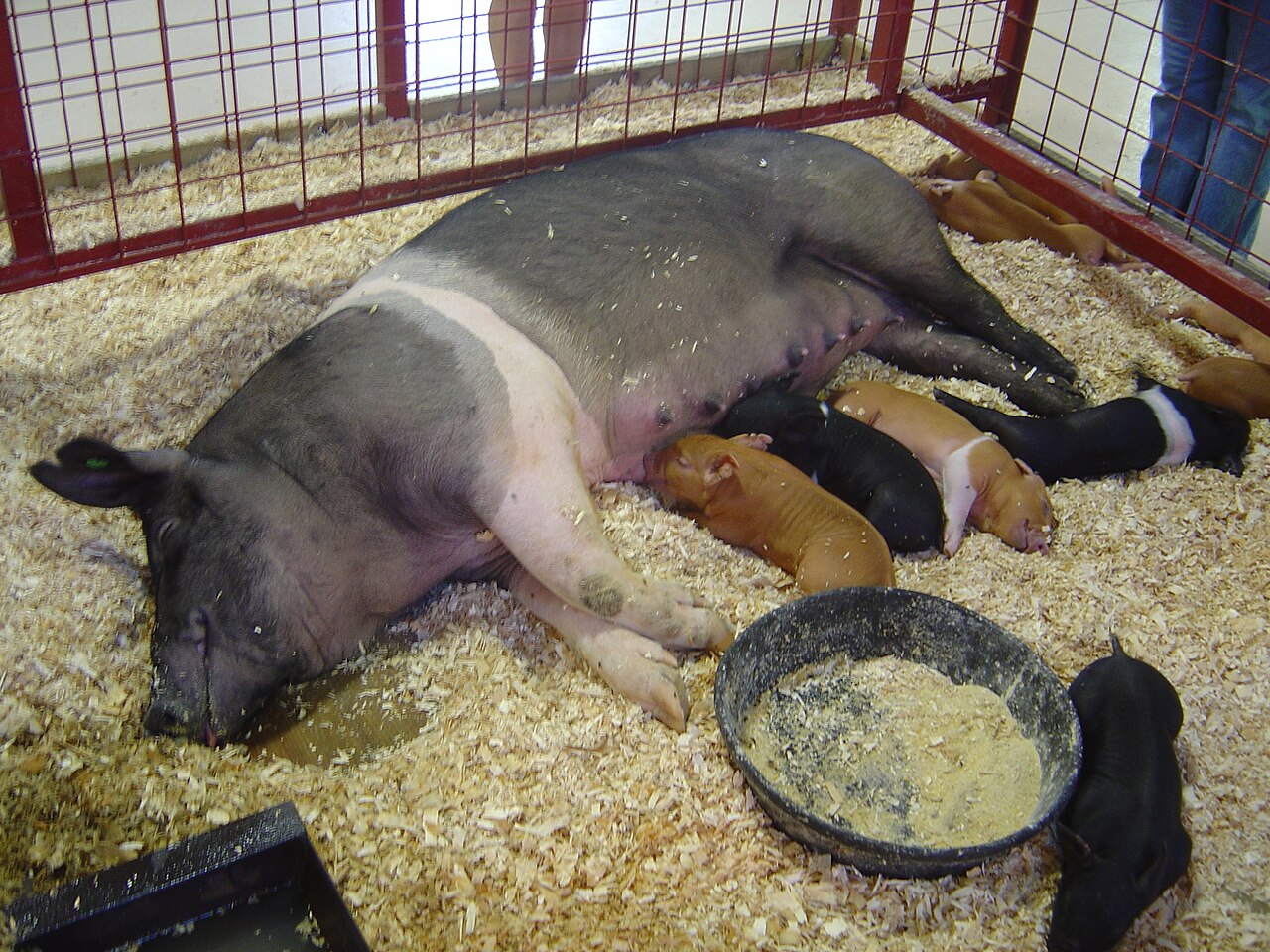
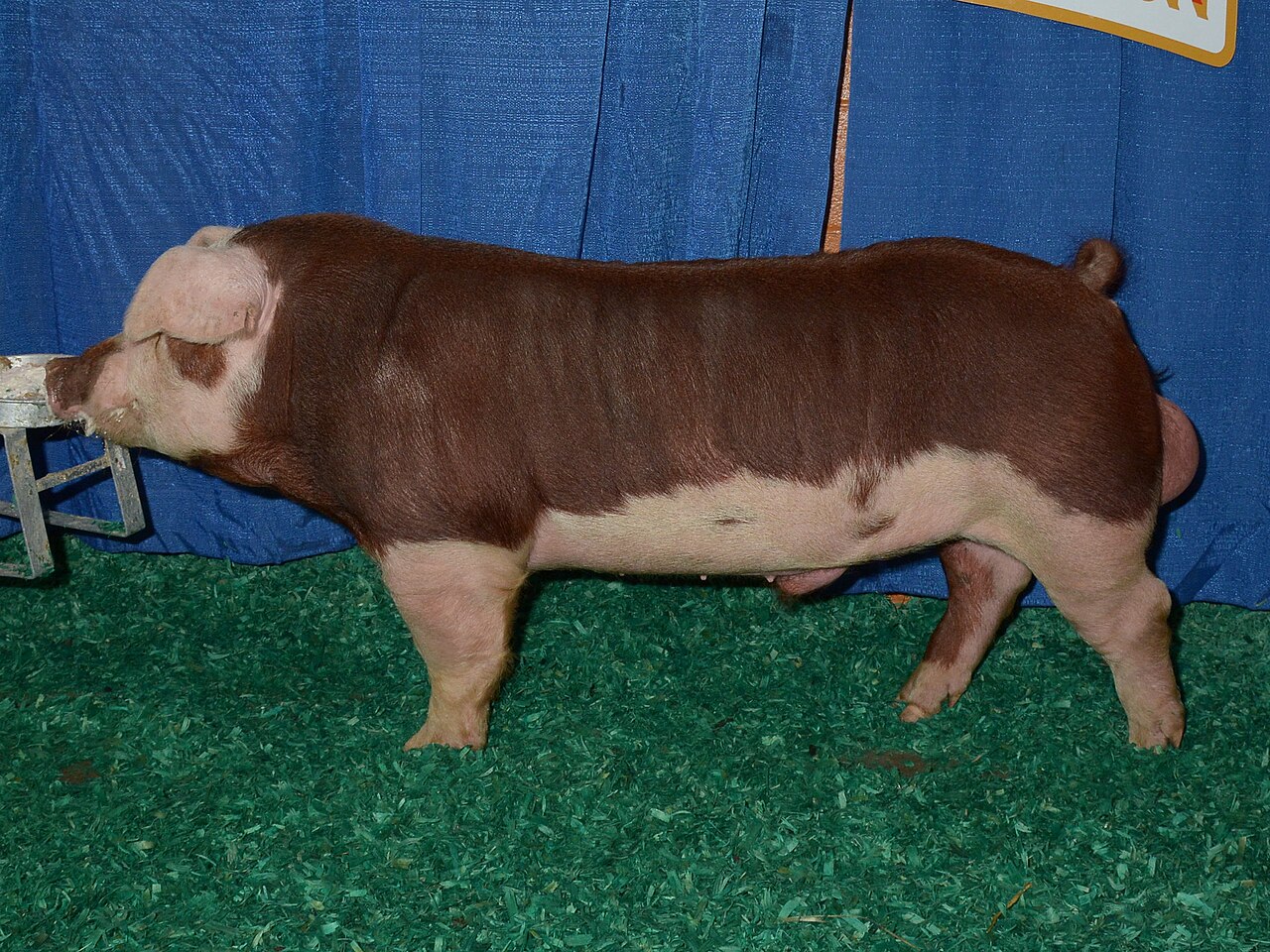
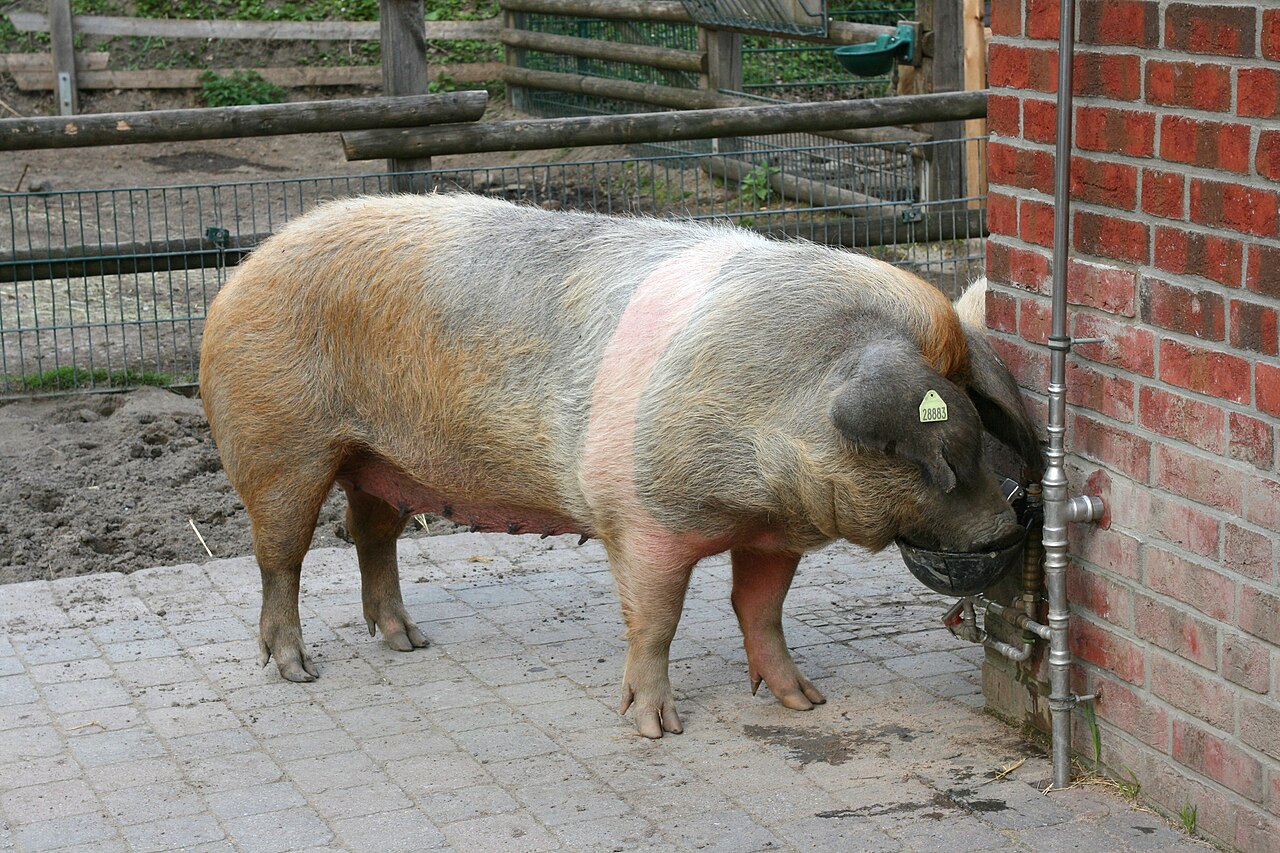
Voir les 124 autres races
- Landrace français
- Large white
- Meishan
- Pie noir de Bentheim
- Pie noir du Pays basque
- Piétrain
- Poland china
- Porc blanc de l'Ouest
- Porc celte
- Porc craonnais
- Porc de Bayeux
- Porc de Corse
- Porc gascon
- Porc laineux
- Porc noir de Bigorre
- Porc normand
- Race Normande
- Red Wattle
- Tamworth
- American Landrace
- Australian Yorkshire
- Beijing Black
- Belgian Landrace
- British Saddleback
- Cochon créole
- Cochon nain
- Cochon sarde
- Danish Landrace pig
- Dutch Landrace pig
- Forest Mountain pig
- Gloucestershire Old Spots
- Guinea Hog
- Göttingen Minipig
- Italian Landrace
- Jeju Black pig
- Krškopolje pig
- Large Black
- Latvian White pig
- Lincolnshire Curly Coat
- Lithuanian Native pig
- Lithuanian White
- Middle White
- Nero Siciliano
- Nero di Parma
- Ossabaw Island Hog
- Porc ibérique
- Porc tibétain
- Siberian Black Pied
- Swabian-Hall
- Swedish Landrace pig
- Turopolje pig
- Wessex Saddleback
- Ankamali pig
- Irish Greyhound Pig
- Agū
- Black Alpine Pig
- Bressane race
- Canarian Black
- Deutsches Sattelschwein
- Lanyu pig
- Meissner hog
- Perigord race
- Přeštické černostrakaté prase
- Mora Romagnola
- Mulefoot
- Porc d'Ourjoum
- Porc de Miélan
- Porc pie danois
- Aksai Black Pied
- American Yorkshire
- Apulo-Calabrese
- Ba Xuyen
- Bazna pig
- Belarus Black Pied pig
- British Lop
- Casertana pig
- Chato Murciano
- Choctaw Hog
- Cumberland pig
- Dorset Gold Tip
- Duroc Italiana
- Estonian Bacon
- Fengjing pig
- Kagoshima Berkshire
- Kakhetian pig
- Korean Native pig
- Lacombe pig
- Large White Italiana
- Large White Ulster pig
- Minnesota Miniature
- Mukota
- Myrhorod pig
- Porc bagnérais
- Porc de Breïtovo
- Porc de Kemerovo
- Porc de Livny
- Porc de Sibérie du Nord
- Porc du Caucase du Nord
- Semirechensk
- Small Black pig
- Small White pig
- Taihu pig
- Tokyo-X
- Tsivilsk pig
- Ukrainian Spotted Steppe
- Ukrainian White Steppe
- Welsh pig
- Yorkshire Blue and White
- Baudin pig
- Bulgarian White
- Meidam
- Ashanti Dwarf
- Baztango txerria
- Deutsche Landrasse
- Erhualian pig
- Estonian Large White
- Gasteizko muturmotz txerria
- Gochu Asturcelta
- Hitachi no kagayaki
- Jinhua pigs
- Mong Cai pig
- Nakijin agū
- Rose pork
- Yorkshire pig
Sources et crédits
Informations provenant de plusieurs sources vérifiées. Dernière mise à jour : .
Crédits photos (1)
- Photo : Amanda Slater from Coventry, England · CC BY-SA 2.0 · via Wikimedia Commons
Mentions de licence
Texte disponible sous licence CC BY-SA 4.0. Il adapte notamment Wikipedia (CC BY-SA): Essex pig (Wikipédia, auteurs dans l’historique de l’article).
- Taxonomie : GBIF Backbone Taxonomy (CC BY 4.0)
Détail : Sources et licences.
Discussion (0)
Aucun message pour l’instant. Lancez la discussion sur cette fiche (sources, précisions, débats éditoriaux).
Connectez-vous pour participer à la discussion.