
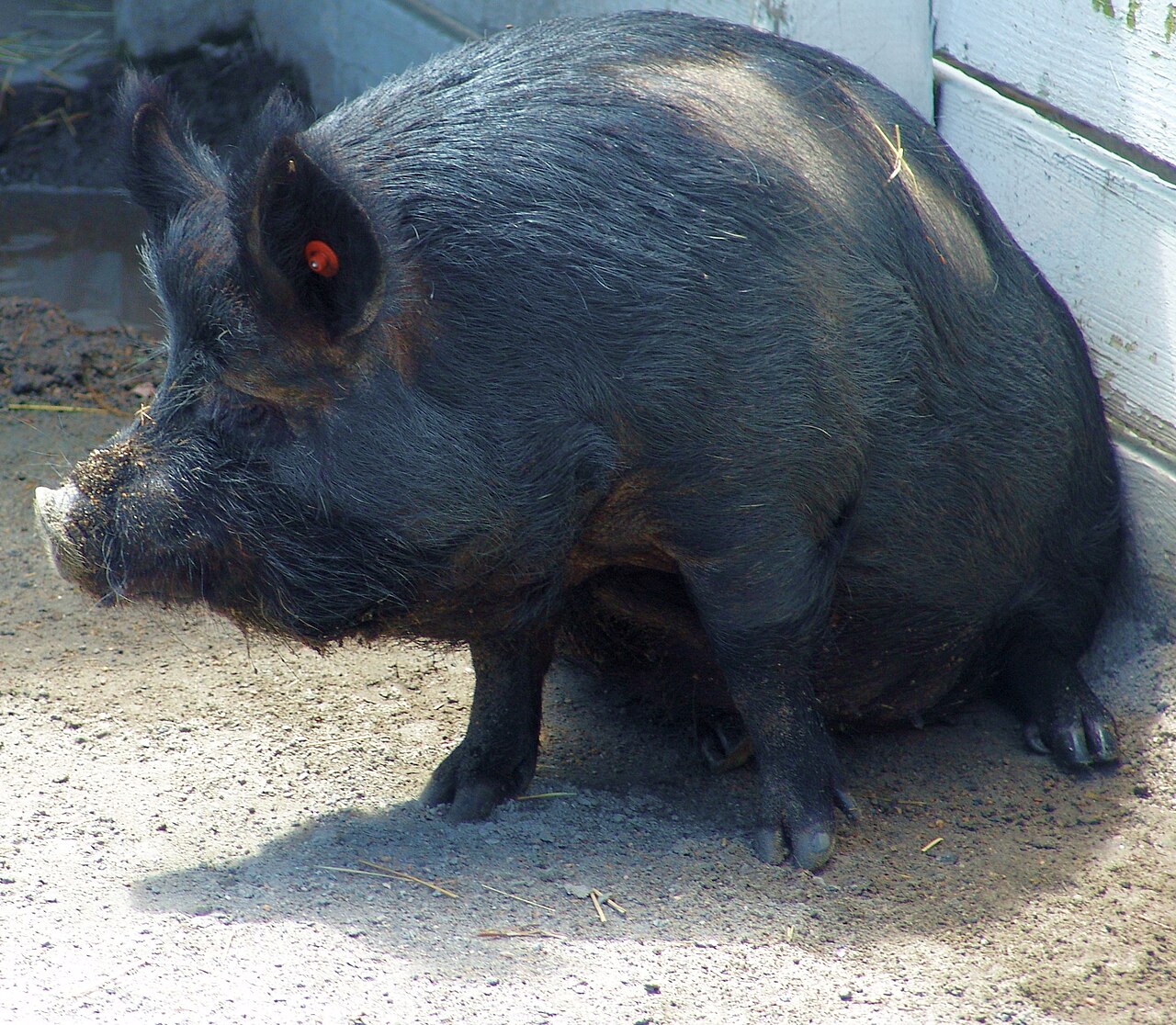
- Kingdom
- Animalia
- Phylum
- Chordata
- Class
- Mammalia
- Order
- Artiodactyla
- Family
- Suidae
- Genus
- Sus
- Species
- Sus scrofa domesticus
Overview
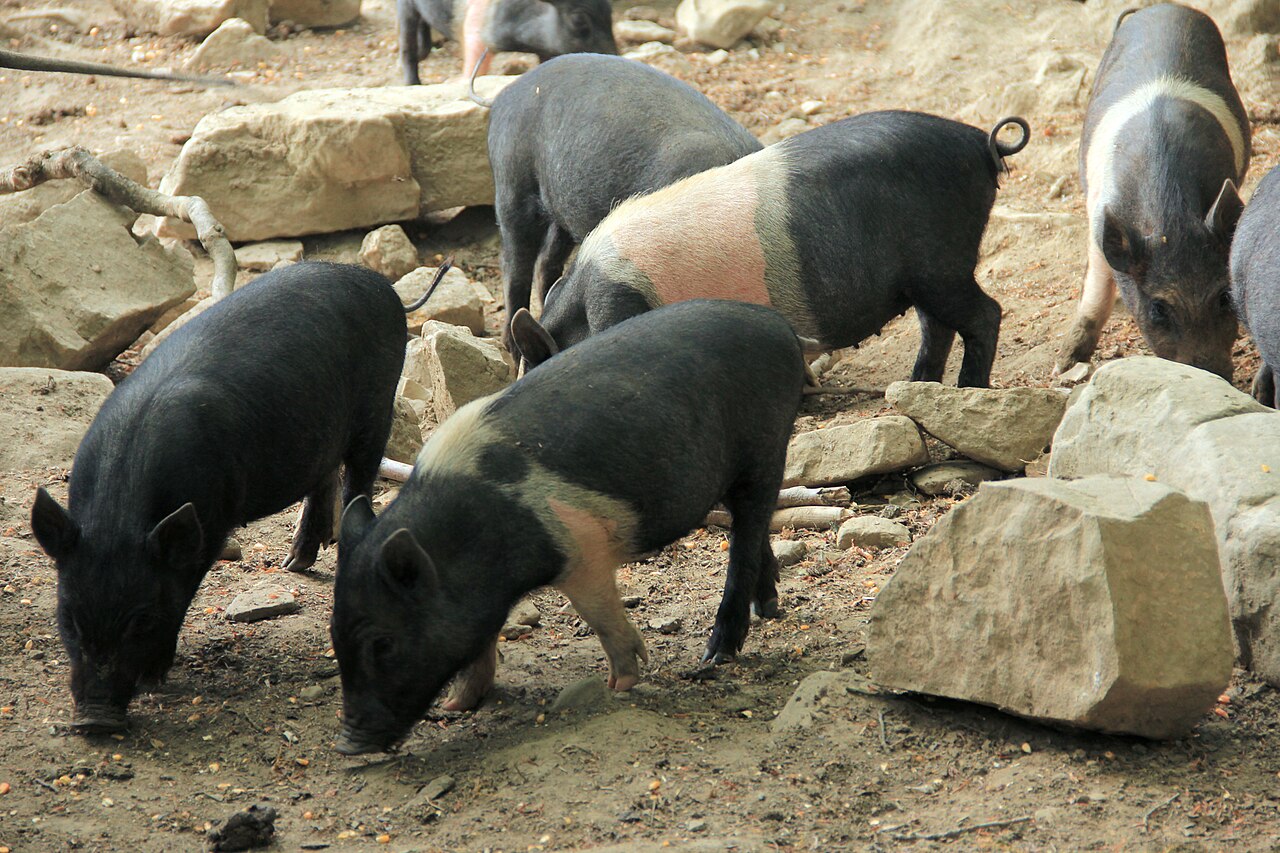
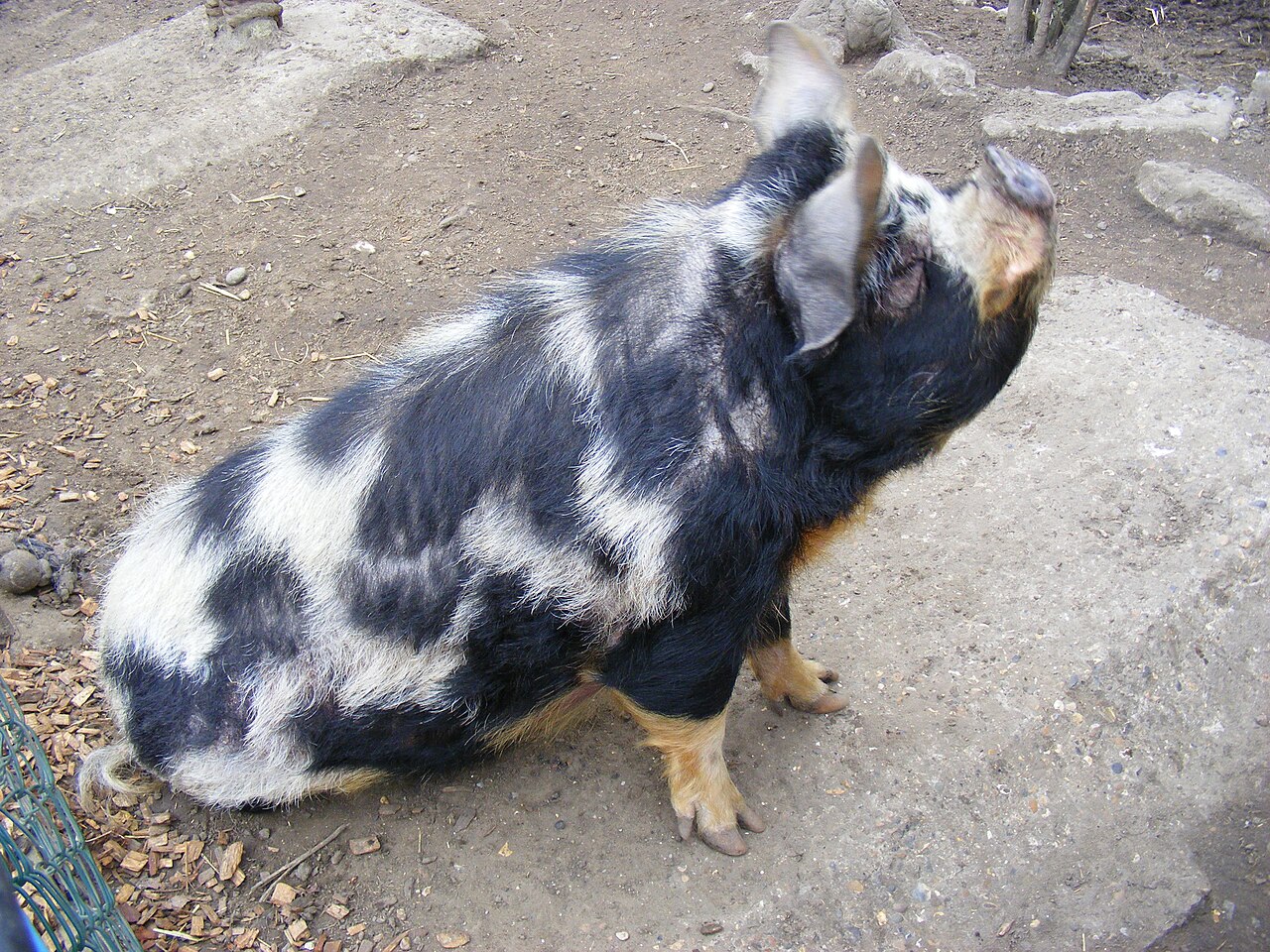
The Guinea Hog is an American breed of small black domestic pig originating in the south-eastern United States. It was formerly known by many names, including Acorn Eater, Guinea Forest Hog, Pineywoods Guinea and Yard Pig; it has since 2006 officially been named the American Guinea Hog. Its origins are unknown; a connection to the Essex pigs of eastern England has been suggested. It is unconnected to an older type of large red pig, also known as the Guinea Hog or as the Red Guinea, which was distributed in the north-eastern United States and disappeared in the late nineteenth century.
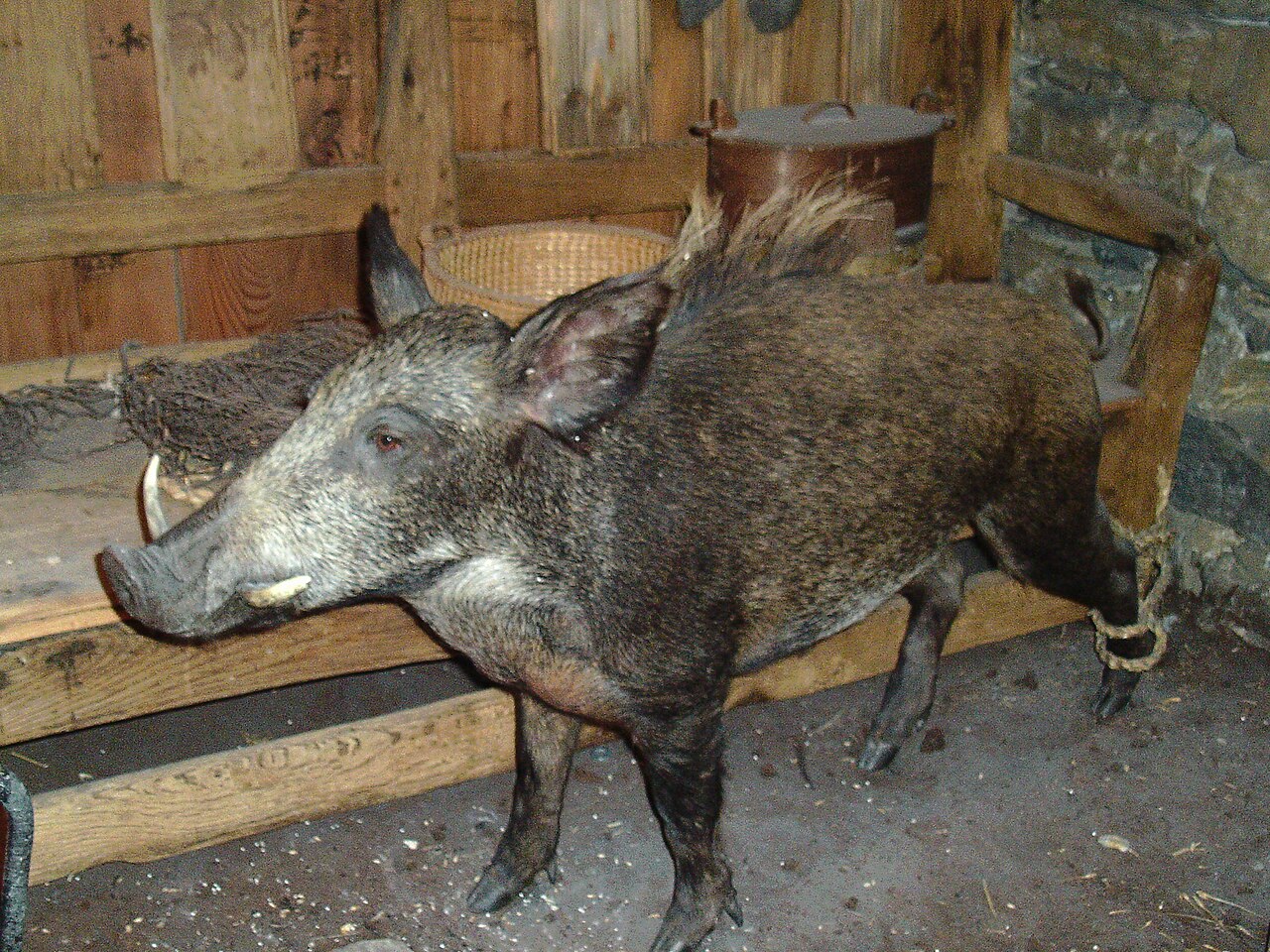
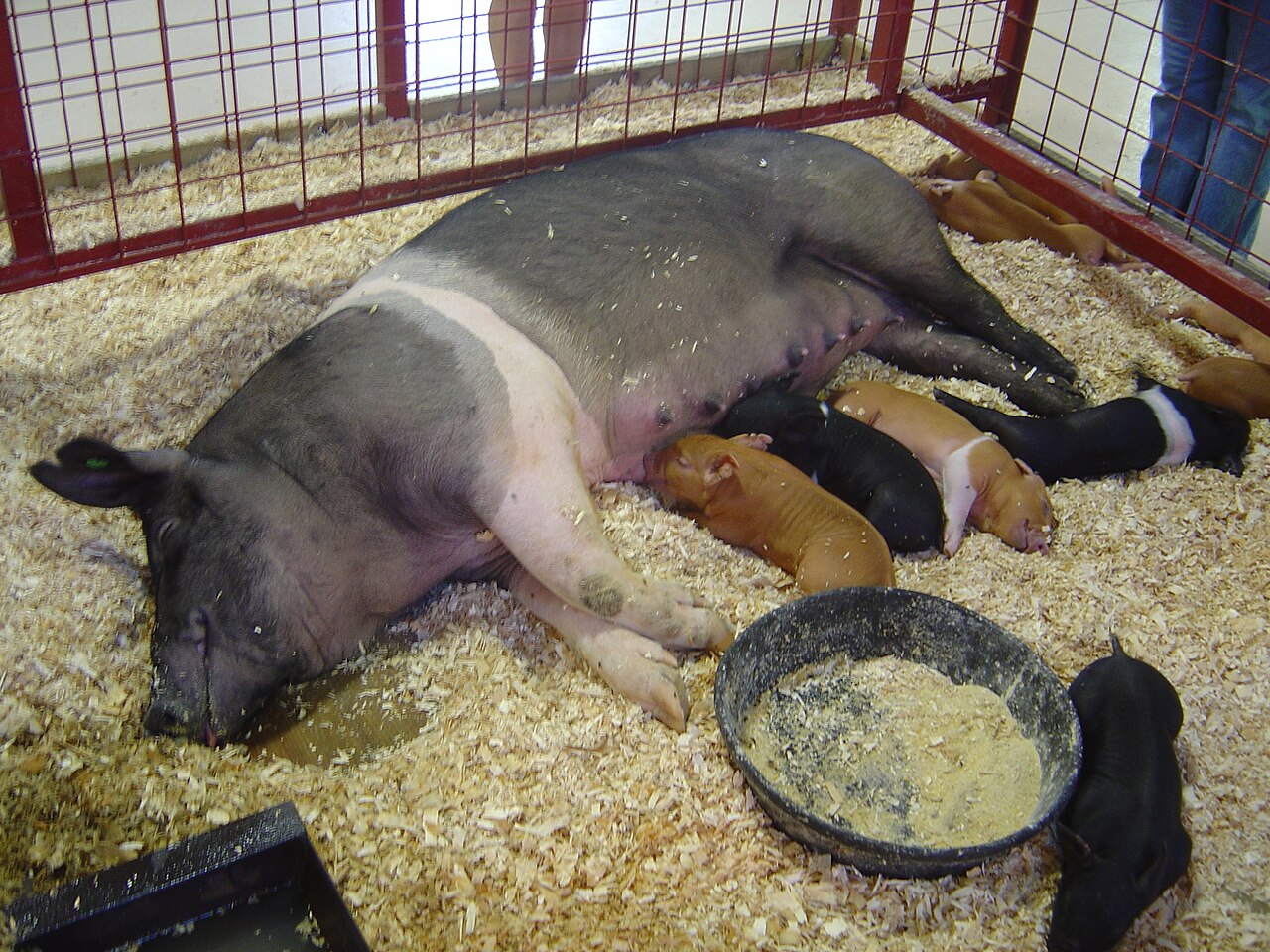
It is an endangered breed with a black coat, sturdy body, curly tail and upright ears.
There are two sub-types within the breed, a small-boned and a large-boned type, the latter having longer legs.
History
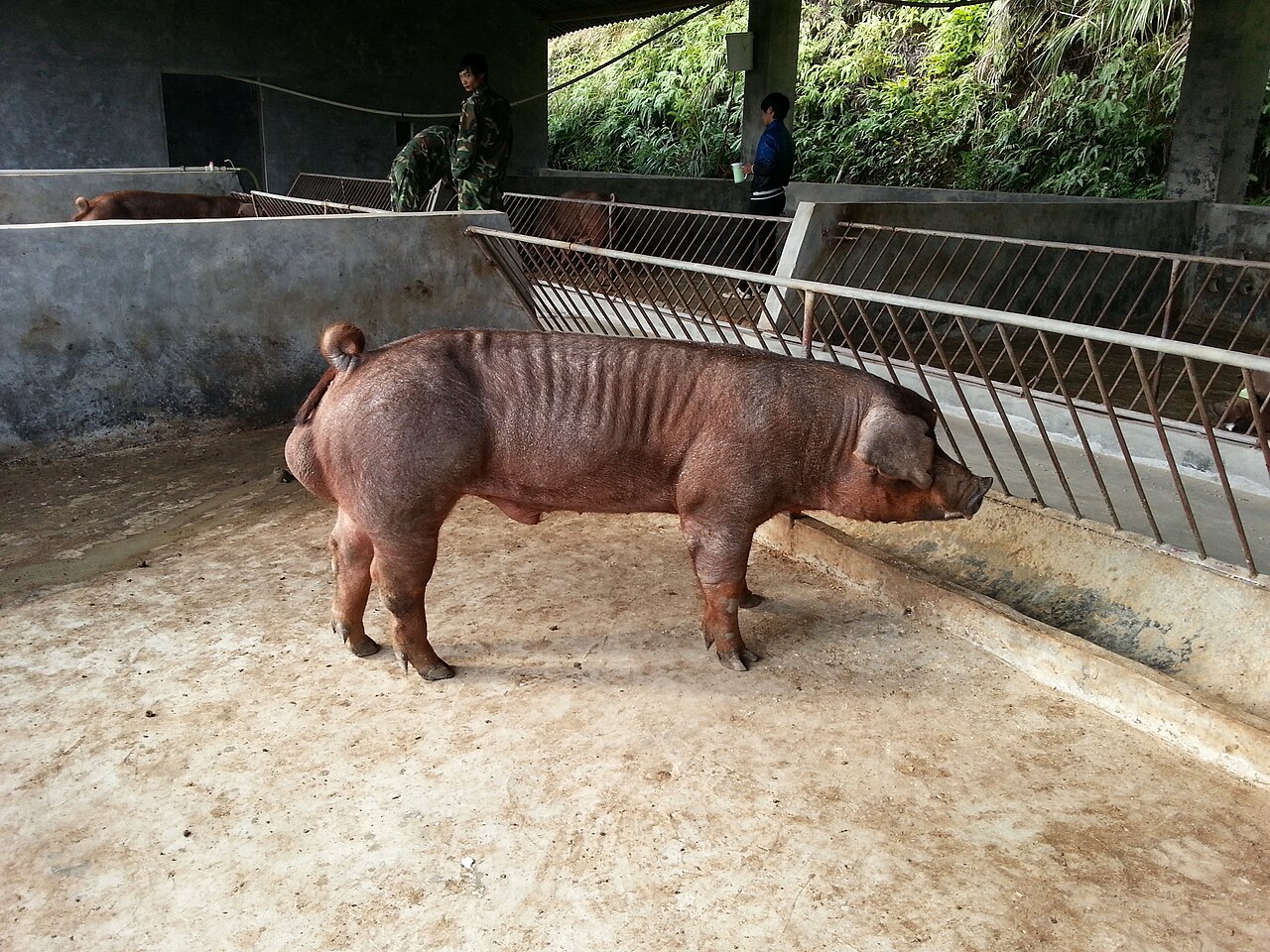
The modern Guinea Hog is a breed of small black domestic pig of unknown origin. It is distinct from two other types of suid – both sometimes called by the same name – that may have reached the Americas from Africa. The African species Potamochoerus porcus – sometimes called "Guinea hog" – is reported by Georg Marcgrave to have been present in Brazil in the early seventeenth century.• The large and bristly Red Guinea type of domestic pig of the north-eastern United States is documented from 1804 and is thought to derive from stock brought by slave ships from West Africa (perhaps via the Canary Islands); there is no mention of this after 1880, and it apparently merged in the late nineteenth century into the population of Jersey Red and Duroc pigs that would later combine to form the modern Duroc.•
A distinct and different Guinea Hog – a small black pig with erect ears – was widespread in the south-eastern United States from the early nineteenth century. This traditional rural breed, suitable for extensive management on smallholdings and family farms, was first documented in 1811 and remained numerous until the second half of the twentieth century, when numbers fell heavily; by 2009 the whole population was estimated to number no more than 400 head.•
A breed association, the Guinea Hog Association, was formed in 1991;• in 2005 this became the American Guinea Hog Association.• The Guinea Hog is included in the Ark of Taste of the international Slow Food Foundation.•
Characteristics
It is a small pig, with body weights varying from about 70 to 135 kg and heights between 38 and 51 cm. It has a curled tail and erect ears, but its morphology is highly variable in other characteristics such as the length of the snout and the type of bone structure.• The coat is usually black, sometimes with white points to the tip of the snout and the lower legs, as seen in the Berkshire.• Red and blue examples are documented in the past, and can still occasionally occur;• blue coloration can also be caused by vitiligo.•
Use
Feral pigs of this breed from Alabama were used from 1949 at the Hormel Institute of the University of Minnesota, in St Paul – with feral pigs from Santa Catalina Island, Pineywoods Rooter feral pigs from Louisiana and Ras-n-Lansa pigs from Guam – in the development of the now-extinct Minnesota Miniature or Hormel breed of miniature pig.•
Gallery
Ajouter des photos
Partagez vos photos de cette espèce (jusqu'à 20 à la fois) : elles sont vérifiées automatiquement, puis publiées.
Autres races de l'espèce (136)
Espèce : Porc
Voir les 124 autres races
- Landrace français
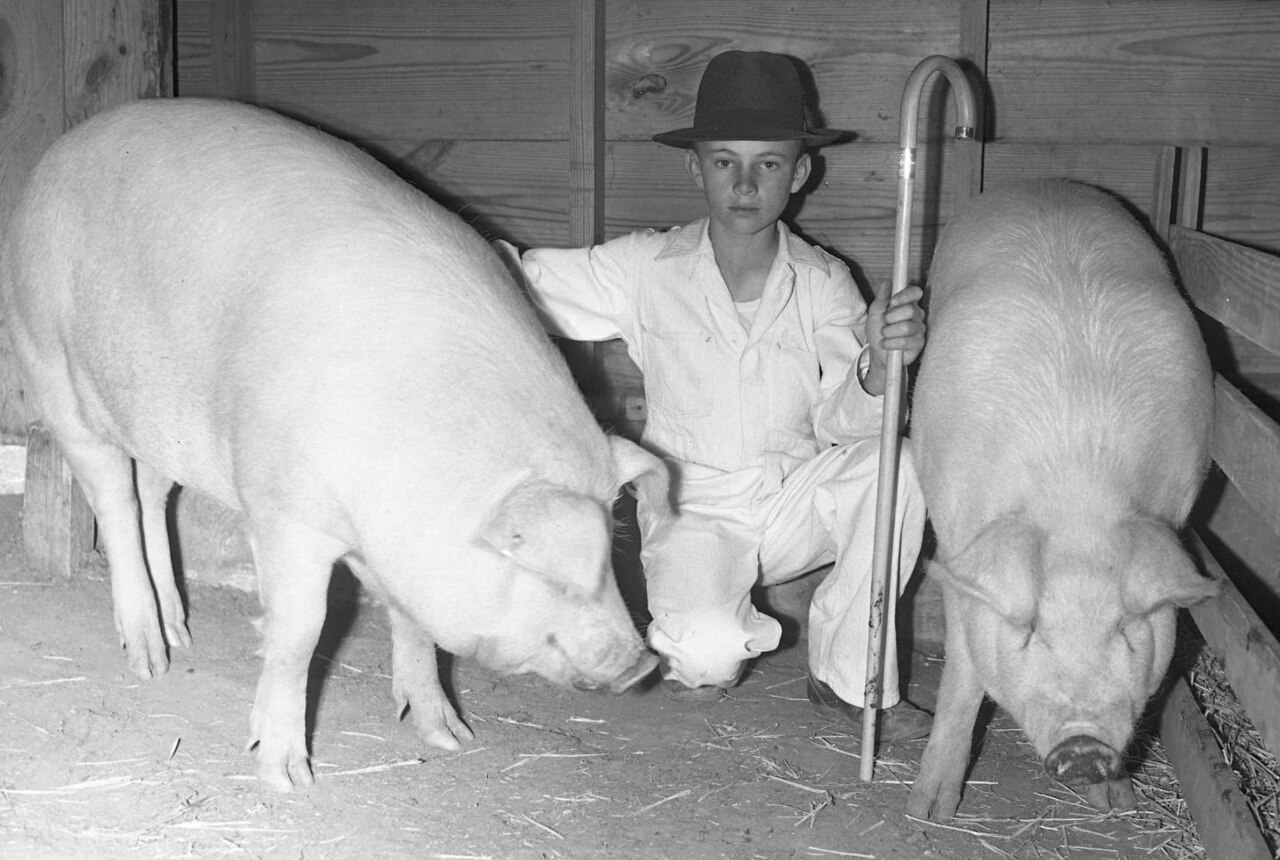
- Large white
- Meishan
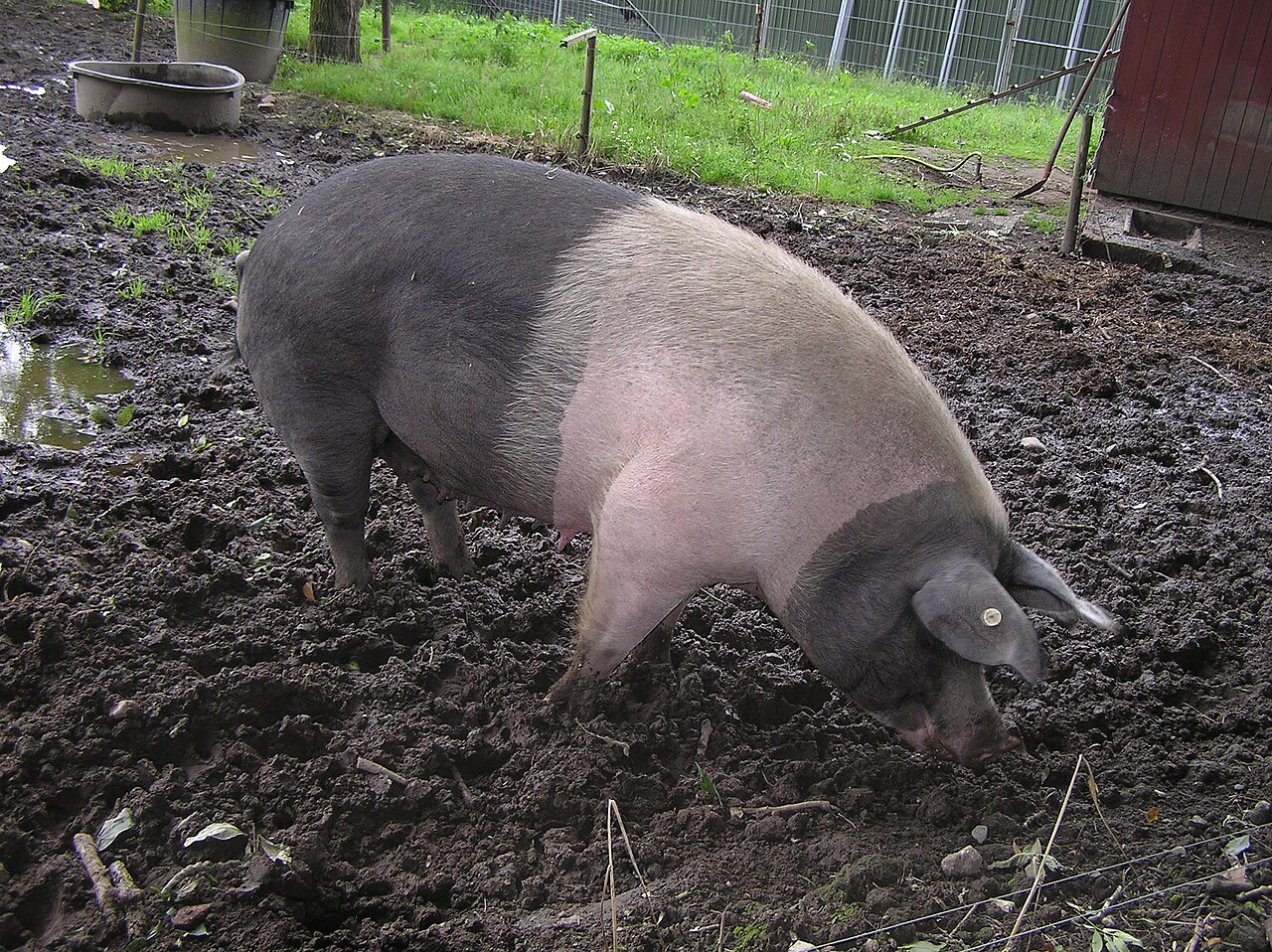
- Pie noir de Bentheim
- Pie noir du Pays basque
- Piétrain
- Poland china
- Porc blanc de l'Ouest
- Porc celte
- Porc craonnais
- Porc de Bayeux
- Porc de Corse
- Porc gascon
- Porc laineux
- Porc noir de Bigorre
- Porc normand
- Race Normande
- Red Wattle
- Tamworth
- American Landrace
- Australian Yorkshire
- Beijing Black
- Belgian Landrace
- British Saddleback
- Cochon créole
- Cochon nain
- Cochon sarde
- Danish Landrace pig
- Dutch Landrace pig
- Essex pig
- Forest Mountain pig
- Gloucestershire Old Spots
- Göttingen Minipig
- Italian Landrace
- Jeju Black pig
- Krškopolje pig
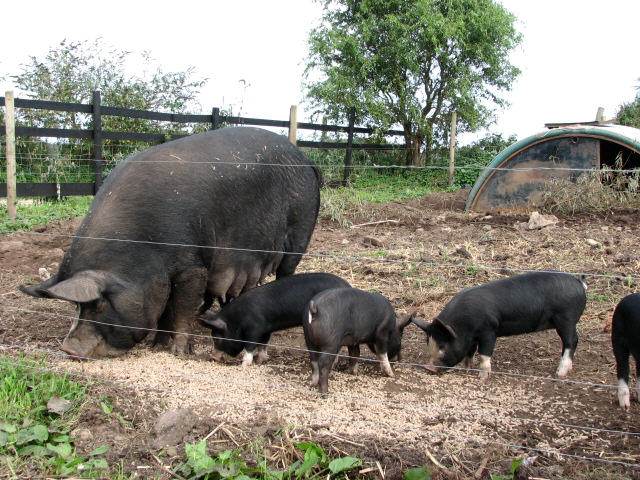
- Large Black
- Latvian White pig
- Lincolnshire Curly Coat
- Lithuanian Native pig
- Lithuanian White
- Middle White
- Nero Siciliano
- Nero di Parma
- Ossabaw Island Hog
- Porc ibérique
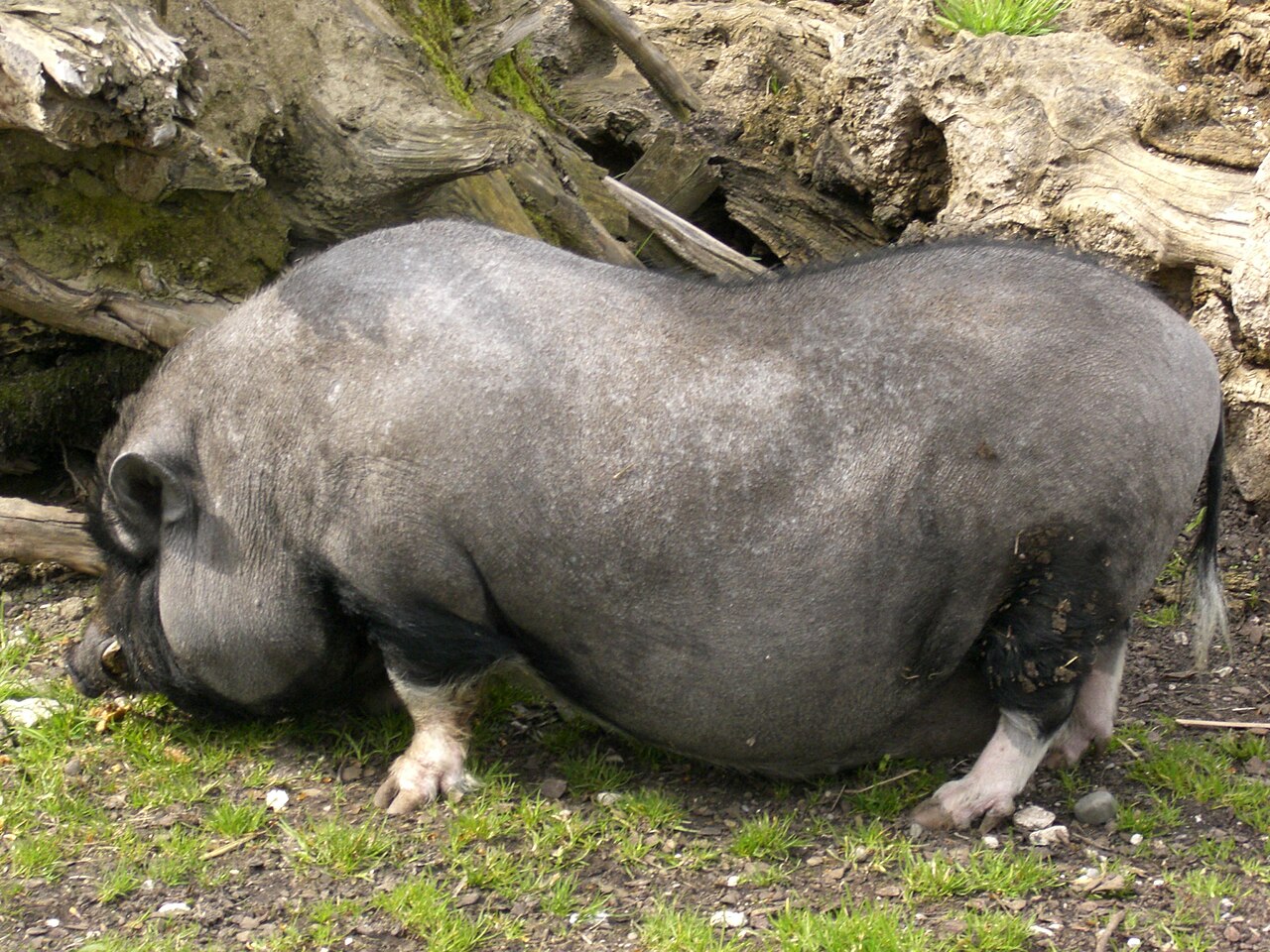
- Porc tibétain
- Siberian Black Pied
- Swabian-Hall
- Swedish Landrace pig
- Turopolje pig
- Wessex Saddleback
- Ankamali pig
- Irish Greyhound Pig
- Agū
- Black Alpine Pig
- Bressane race
- Canarian Black
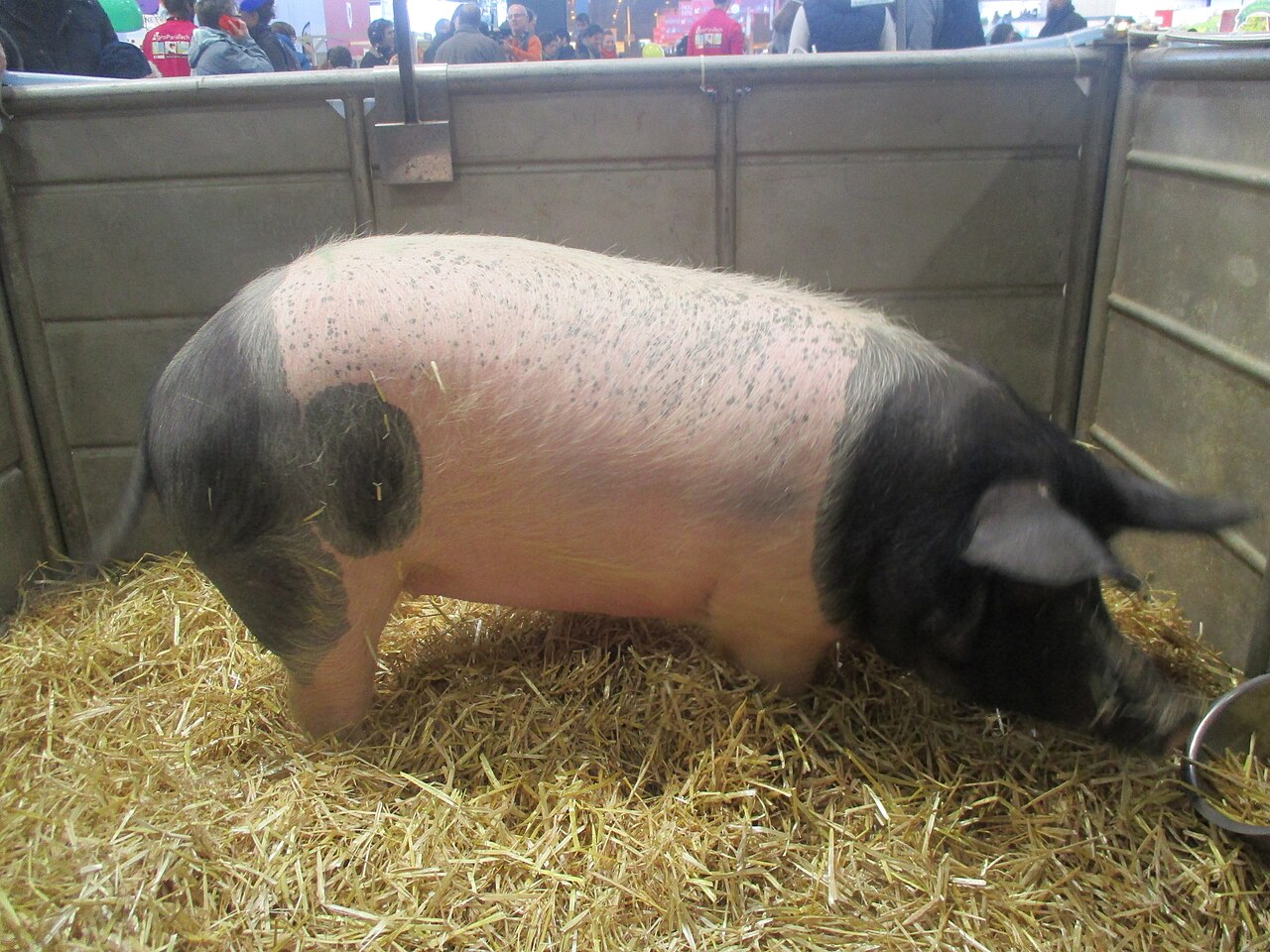
- Deutsches Sattelschwein
- Lanyu pig
- Meissner hog
- Perigord race
- Přeštické černostrakaté prase
- Mora Romagnola
- Mulefoot
- Porc d'Ourjoum
- Porc de Miélan
- Porc pie danois
- Aksai Black Pied
- American Yorkshire
- Apulo-Calabrese
- Ba Xuyen
- Bazna pig
- Belarus Black Pied pig
- British Lop
- Casertana pig
- Chato Murciano
- Choctaw Hog
- Cumberland pig
- Dorset Gold Tip
- Duroc Italiana
- Estonian Bacon
- Fengjing pig
- Kagoshima Berkshire
- Kakhetian pig
- Korean Native pig
- Lacombe pig
- Large White Italiana
- Large White Ulster pig
- Minnesota Miniature
- Mukota
- Myrhorod pig
- Porc bagnérais
- Porc de Breïtovo
- Porc de Kemerovo
- Porc de Livny
- Porc de Sibérie du Nord
- Porc du Caucase du Nord
- Semirechensk
- Small Black pig
- Small White pig
- Taihu pig
- Tokyo-X
- Tsivilsk pig
- Ukrainian Spotted Steppe
- Ukrainian White Steppe
- Welsh pig
- Yorkshire Blue and White
- Baudin pig
- Bulgarian White
- Meidam
- Ashanti Dwarf
- Baztango txerria
- Deutsche Landrasse
- Erhualian pig
- Estonian Large White
- Gasteizko muturmotz txerria
- Gochu Asturcelta
- Hitachi no kagayaki
- Jinhua pigs
- Mong Cai pig
- Nakijin agū
- Rose pork
- Yorkshire pig
Sources et crédits
Informations provenant de plusieurs sources vérifiées. Dernière mise à jour : .
Crédits photos (8)
- Photo : Drew Avery · CC BY 2.0 · via Wikimedia Commons
- Photo : abbamouse · CC BY-SA 2.0 · via Wikimedia Commons
- Photo : Sleeping_Guinea_Hog.jpg: abbamouse derivative work: SpinningSpark · CC BY-SA 2.0 · via Wikimedia Commons
- Photo : boliyou · CC BY-SA 2.0 · via Wikimedia Commons
- Photo : jude from Cambridge, MA, USA · CC BY 2.0 · via Wikimedia Commons
- Photo : Josh Koke from Chesapeake, United States · CC BY-SA 2.0 · via Wikimedia Commons
- Photo : Missvain · CC BY 4.0 · via Wikimedia Commons
- Photo : Missvain · CC BY 4.0 · via Wikimedia Commons
Mentions de licence
Texte disponible sous licence CC BY-SA 4.0. Il adapte notamment Wikipedia (CC BY-SA): Guinea Hog (Wikipédia, auteurs dans l’historique de l’article).
- Taxonomie : GBIF Backbone Taxonomy (CC BY 4.0)
Détail : Sources et licences.
Discussion (0)
Aucun message pour l’instant. Lancez la discussion sur cette fiche (sources, précisions, débats éditoriaux).
Connectez-vous pour participer à la discussion.