
- Kingdom
- Animalia
- Phylum
- Chordata
- Class
- Mammalia
- Order
- Artiodactyla
- Family
- Suidae
- Genus
- Sus
- Species
- Sus scrofa domesticus
Overview
The Chato Murciano is a breed of domestic pig originating from Murcia, Spain. It is the only surviving breed of pig locally and historically produced in Murcia and is at the risk of extinction. Despite its danger of becoming extinct, the Chato Murciano is a well-managed pig known for its production of bacon and lean pork. Several Spanish authorities specialising in agriculture work on programs aiming to conserve the breed by cross-breeding and artificial insemination
History
In Murcia, the Spanish were in need of an improved breed of pig as the current Murcian type was not meeting their standards. To solve this problem, they mix-bred the Murciano with the Victoria, Tamworth, the Large White and the Berkshire, the Chato Murciano was and still is currently bred for its lean meat and bacon. There were about fifty thousand pigs of this breed in 1865 and more than 100,000 in 1929. The breed originated and was farmed in Murcia, a region in the south-eastern area of Spain. The pig received its name from the Spanish due to its short nose, with “chato” meaning “short-nosed”, and “Murciano” meaning “from Murcia”.
Description
Along with its short nose, the breed usually has a black or white color and has small sized heads. Generally the head Chato Murciano can grow up to 28.5 cm long and 20 cm wide after reaching 12 years of age. This is only a 2–4 cm growth from when it is one year old. On its head, the snout increases size up to 10.5 cm but then decreases to about 9.5 cm when the pig reaches twelve years of age. Pigs at about 3.5 years or 12 years have their eyes separated from each other at about 16 cm where at 1 year, they are separated by 12.5 cm.
Although having white fur, black fur is a more common characteristic of the Chato Murciano but some tend to have white patches on parts of their body such as the tail and legs. These are believed to be inherited from the Berkshire, which is the pig the Spanish used to cross-breed with the primitive Murcian breed. Hair is found all over the pig’s body except on mammary glands belonging to the sow. There can be up to fourteen mammary glands on a Chato Murciano.
Breeding and Use
Bacon and lean pork is mainly why the pig is bred but it is an advantage for farmers as the breed is well adapted to southern Spain’s dry and warm climate. Being fed raw materials that are locally gathered, Chato Murciano are mostly killed at 18 months when their weight is around 180 kg. Because of its substantial amount of fat with extensive levels of oleic acid and muscle pigmentation, sausages of higher quality are able to be produced according to several studies conducted in the past.
In the 1980s, the breed was on the verge of extinction but due to programs instigated by agriculturists and governments, the pig is gradually becoming more sustainable.
Ajouter des photos
Partagez vos photos de cette espèce (jusqu'à 20 à la fois) : elles sont vérifiées automatiquement, puis publiées.
Autres races de l'espèce (136)
Espèce : Porc
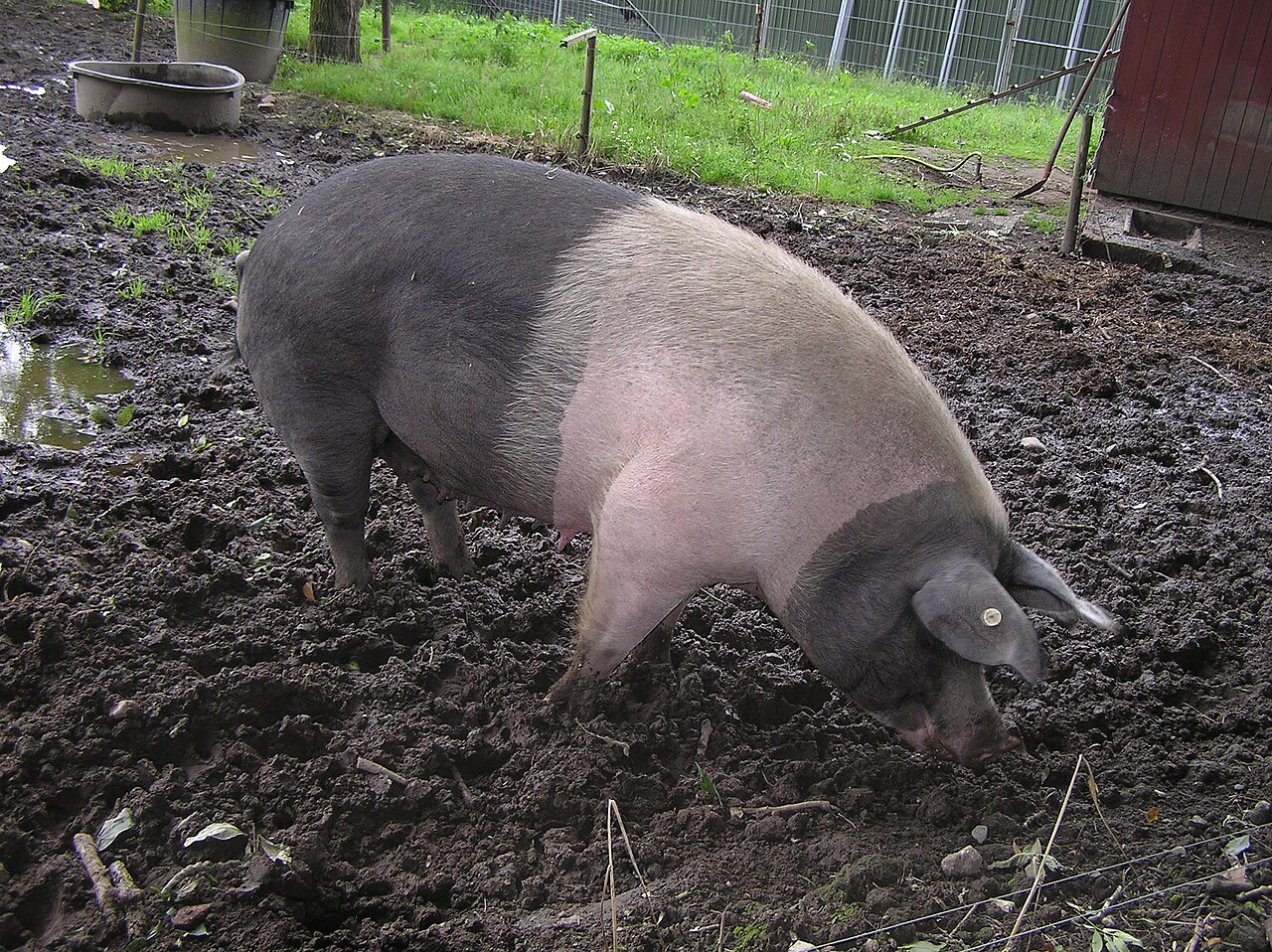
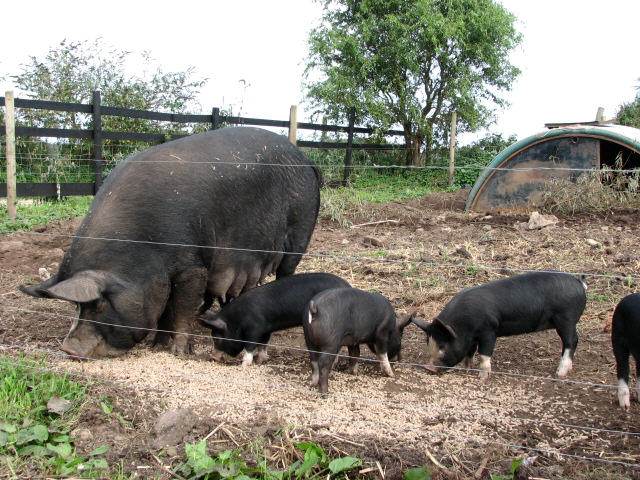
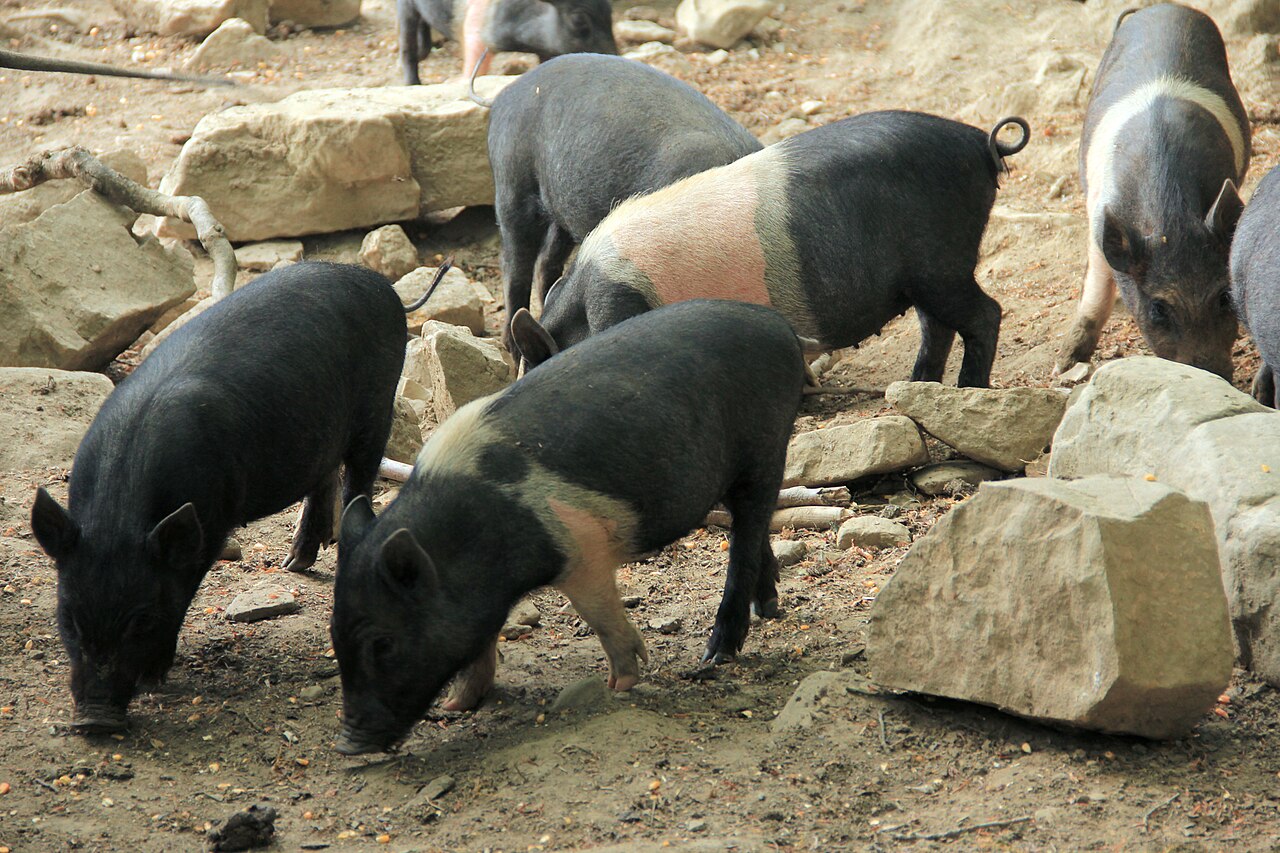
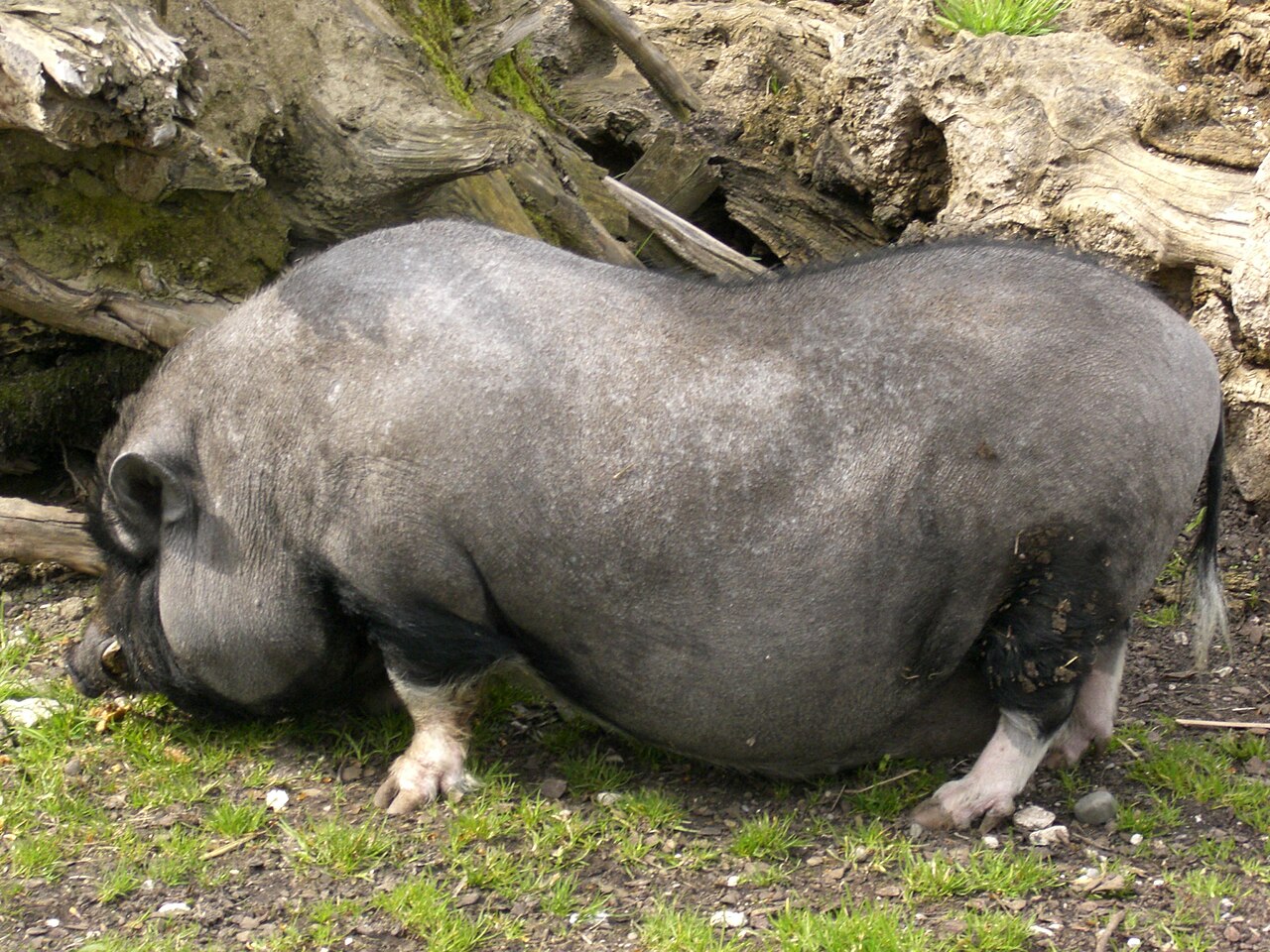
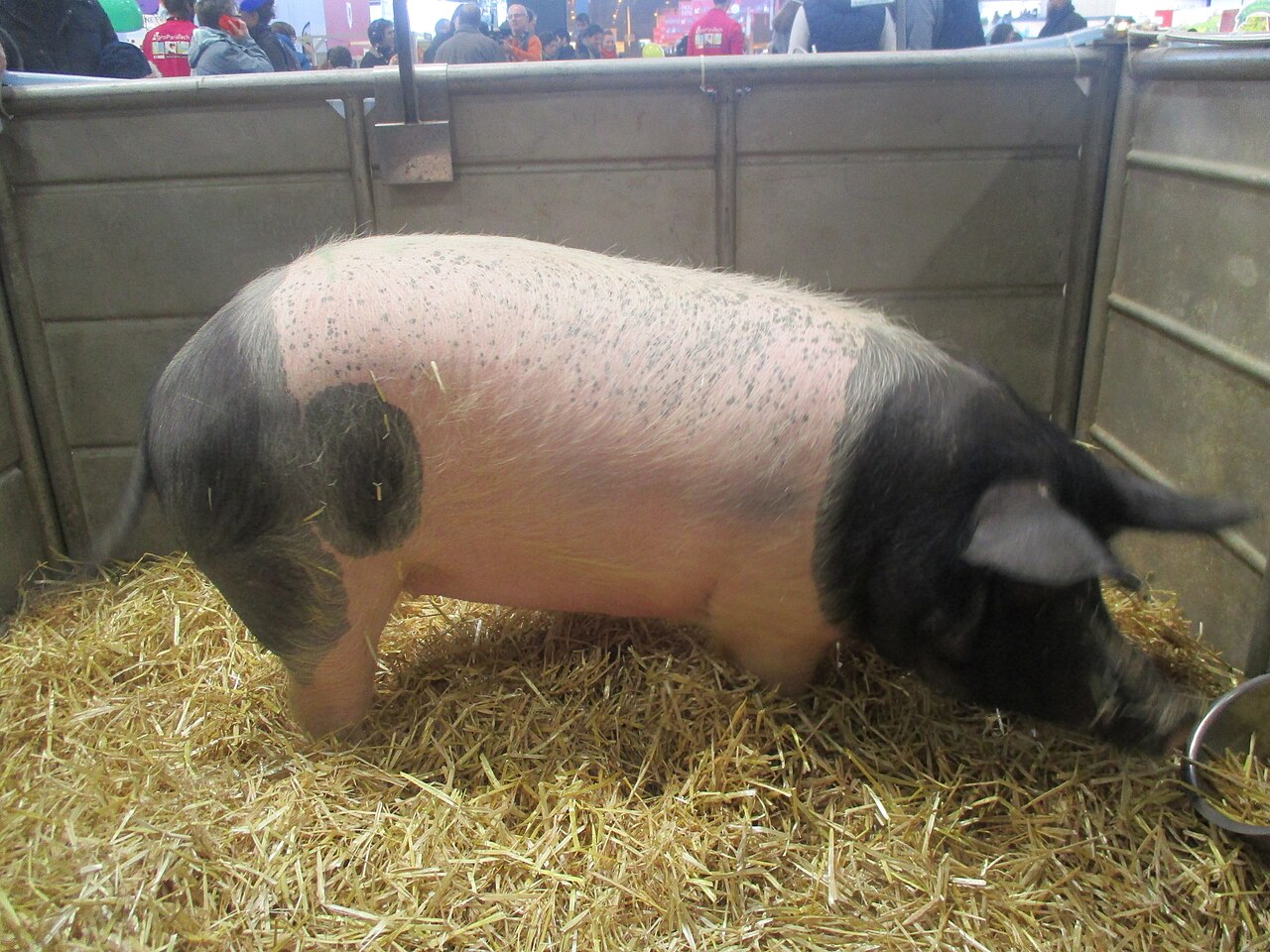

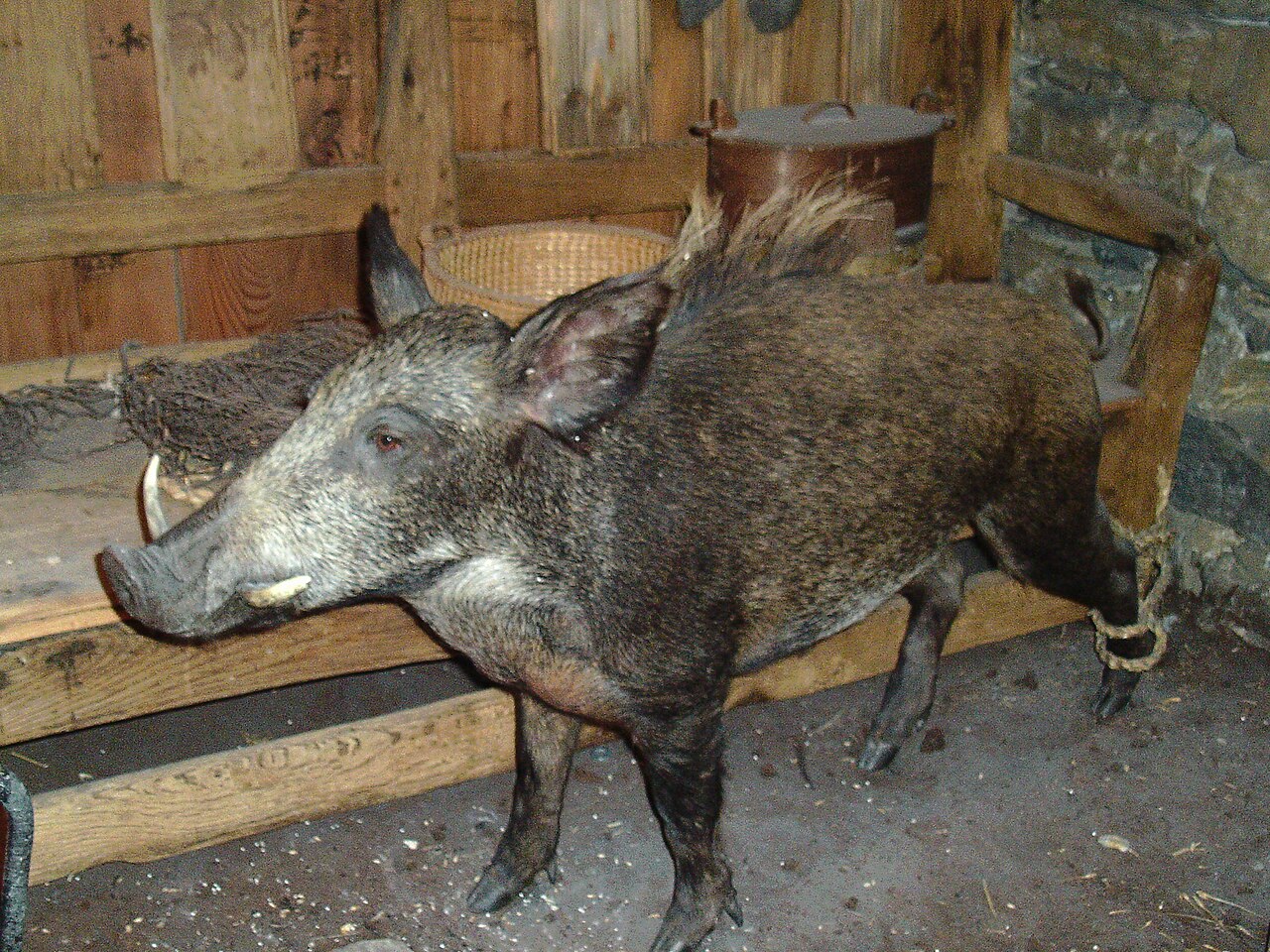
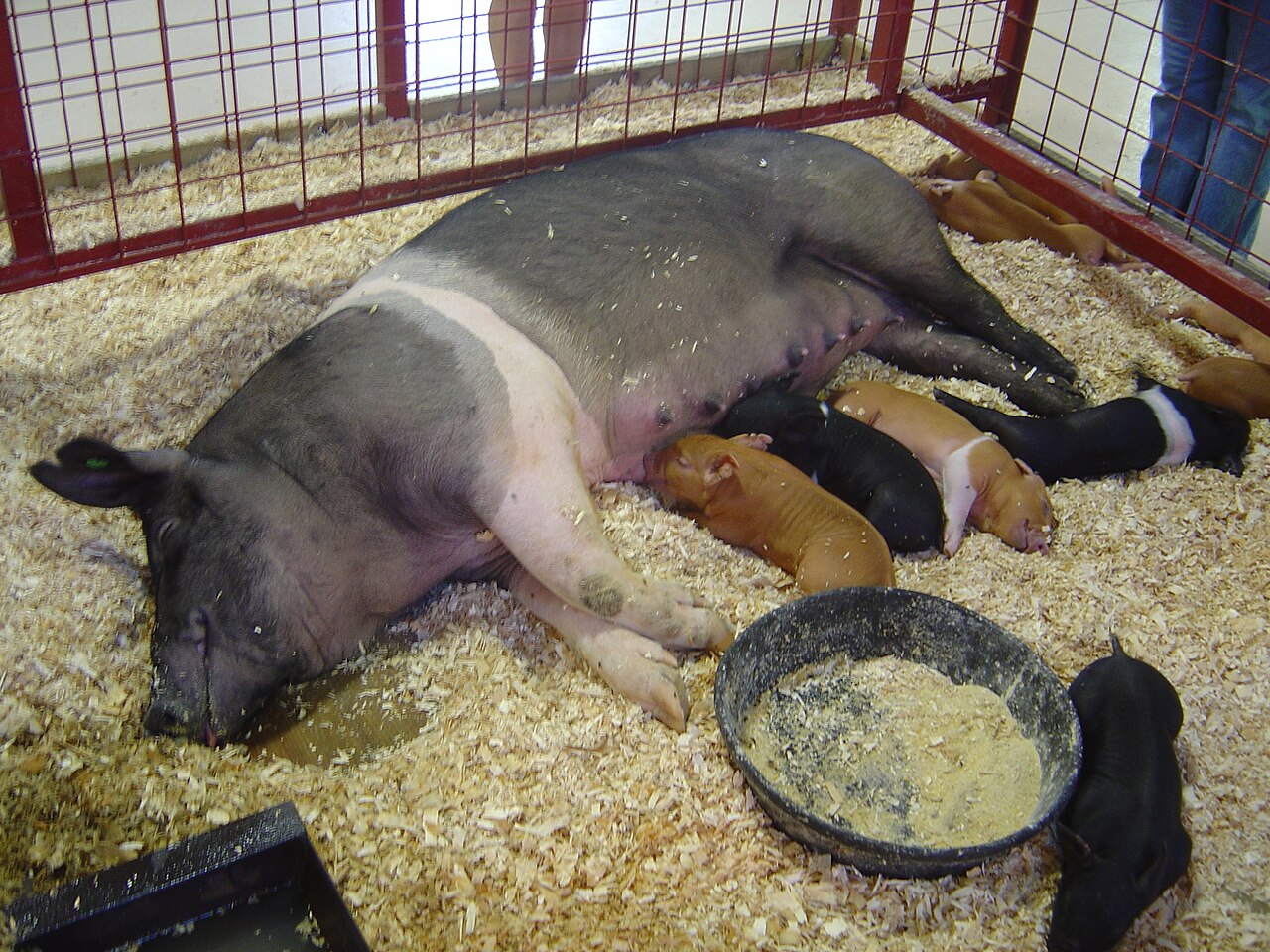
Voir les 124 autres races
- Landrace français
- Large white
- Meishan
- Pie noir de Bentheim
- Pie noir du Pays basque
- Piétrain
- Poland china
- Porc blanc de l'Ouest
- Porc celte
- Porc craonnais
- Porc de Bayeux
- Porc de Corse
- Porc gascon
- Porc laineux
- Porc noir de Bigorre
- Porc normand
- Race Normande
- Red Wattle
- Tamworth
- American Landrace
- Australian Yorkshire
- Beijing Black
- Belgian Landrace
- British Saddleback
- Cochon créole
- Cochon nain
- Cochon sarde
- Danish Landrace pig
- Dutch Landrace pig
- Essex pig
- Forest Mountain pig
- Gloucestershire Old Spots
- Guinea Hog
- Göttingen Minipig
- Italian Landrace
- Jeju Black pig
- Krškopolje pig
- Large Black
- Latvian White pig
- Lincolnshire Curly Coat
- Lithuanian Native pig
- Lithuanian White
- Middle White
- Nero Siciliano
- Nero di Parma
- Ossabaw Island Hog
- Porc ibérique
- Porc tibétain
- Siberian Black Pied
- Swabian-Hall
- Swedish Landrace pig
- Turopolje pig
- Wessex Saddleback
- Ankamali pig
- Irish Greyhound Pig
- Agū
- Black Alpine Pig
- Bressane race
- Canarian Black
- Deutsches Sattelschwein
- Lanyu pig
- Meissner hog
- Perigord race
- Přeštické černostrakaté prase
- Mora Romagnola
- Mulefoot
- Porc d'Ourjoum
- Porc de Miélan
- Porc pie danois
- Aksai Black Pied
- American Yorkshire
- Apulo-Calabrese
- Ba Xuyen
- Bazna pig
- Belarus Black Pied pig
- British Lop
- Casertana pig
- Choctaw Hog
- Cumberland pig
- Dorset Gold Tip
- Duroc Italiana
- Estonian Bacon
- Fengjing pig
- Kagoshima Berkshire
- Kakhetian pig
- Korean Native pig
- Lacombe pig
- Large White Italiana
- Large White Ulster pig
- Minnesota Miniature
- Mukota
- Myrhorod pig
- Porc bagnérais
- Porc de Breïtovo
- Porc de Kemerovo
- Porc de Livny
- Porc de Sibérie du Nord
- Porc du Caucase du Nord
- Semirechensk
- Small Black pig
- Small White pig
- Taihu pig
- Tokyo-X
- Tsivilsk pig
- Ukrainian Spotted Steppe
- Ukrainian White Steppe
- Welsh pig
- Yorkshire Blue and White
- Baudin pig
- Bulgarian White
- Meidam
- Ashanti Dwarf
- Baztango txerria
- Deutsche Landrasse
- Erhualian pig
- Estonian Large White
- Gasteizko muturmotz txerria
- Gochu Asturcelta
- Hitachi no kagayaki
- Jinhua pigs
- Mong Cai pig
- Nakijin agū
- Rose pork
- Yorkshire pig
Sources et crédits
Informations provenant de plusieurs sources vérifiées. Dernière mise à jour : .
Mentions de licence
Texte disponible sous licence CC BY-SA 4.0. Il adapte notamment Wikipedia (CC BY-SA): Chato Murciano (Wikipédia, auteurs dans l’historique de l’article).
- Taxonomie : GBIF Backbone Taxonomy (CC BY 4.0)
Détail : Sources et licences.
Discussion (0)
Aucun message pour l’instant. Lancez la discussion sur cette fiche (sources, précisions, débats éditoriaux).
Connectez-vous pour participer à la discussion.