
- Kingdom
- Animalia
- Phylum
- Chordata
- Class
- Mammalia
- Order
- Artiodactyla
- Family
- Suidae
- Genus
- Sus
- Species
- Sus scrofa domesticus
Overview
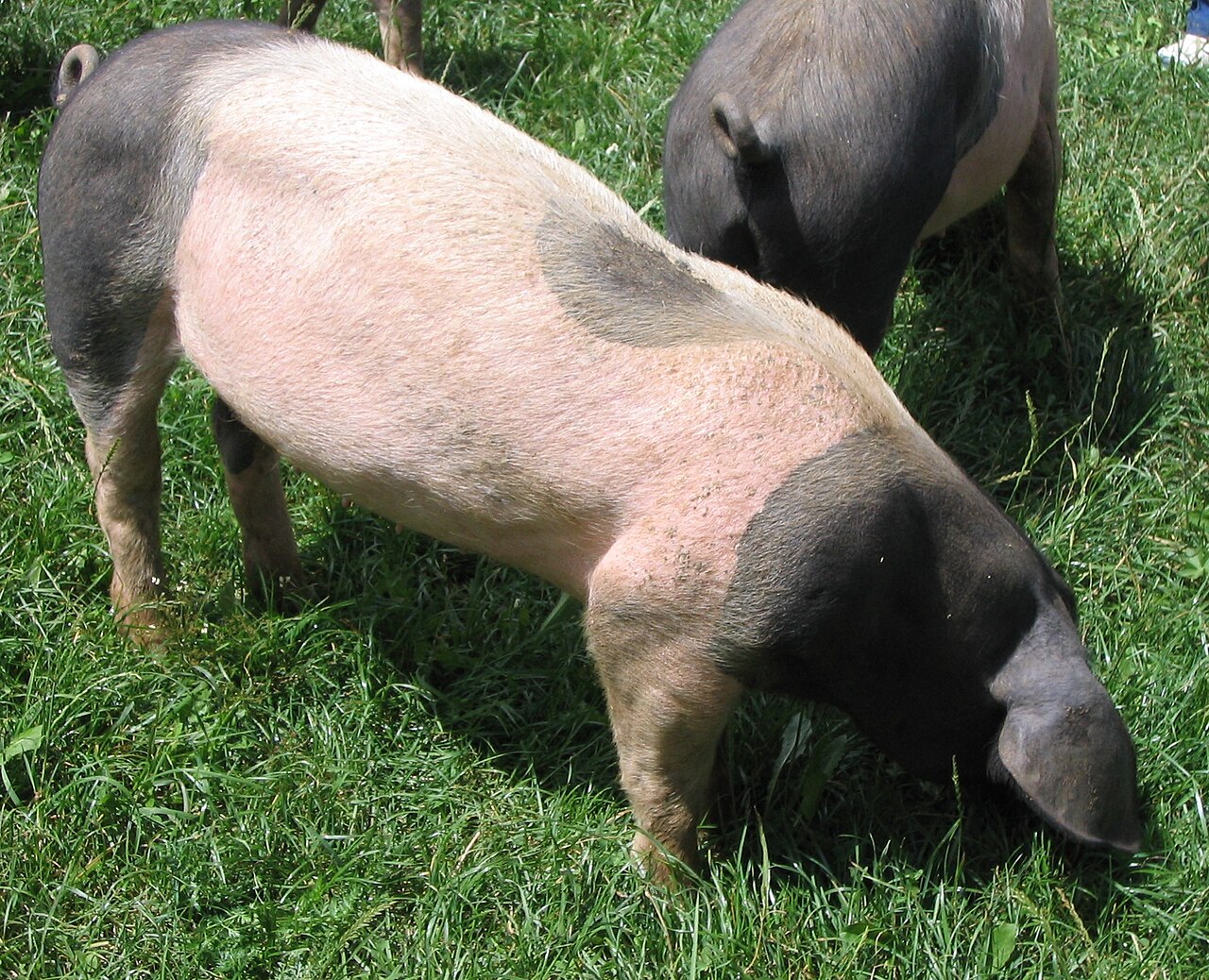
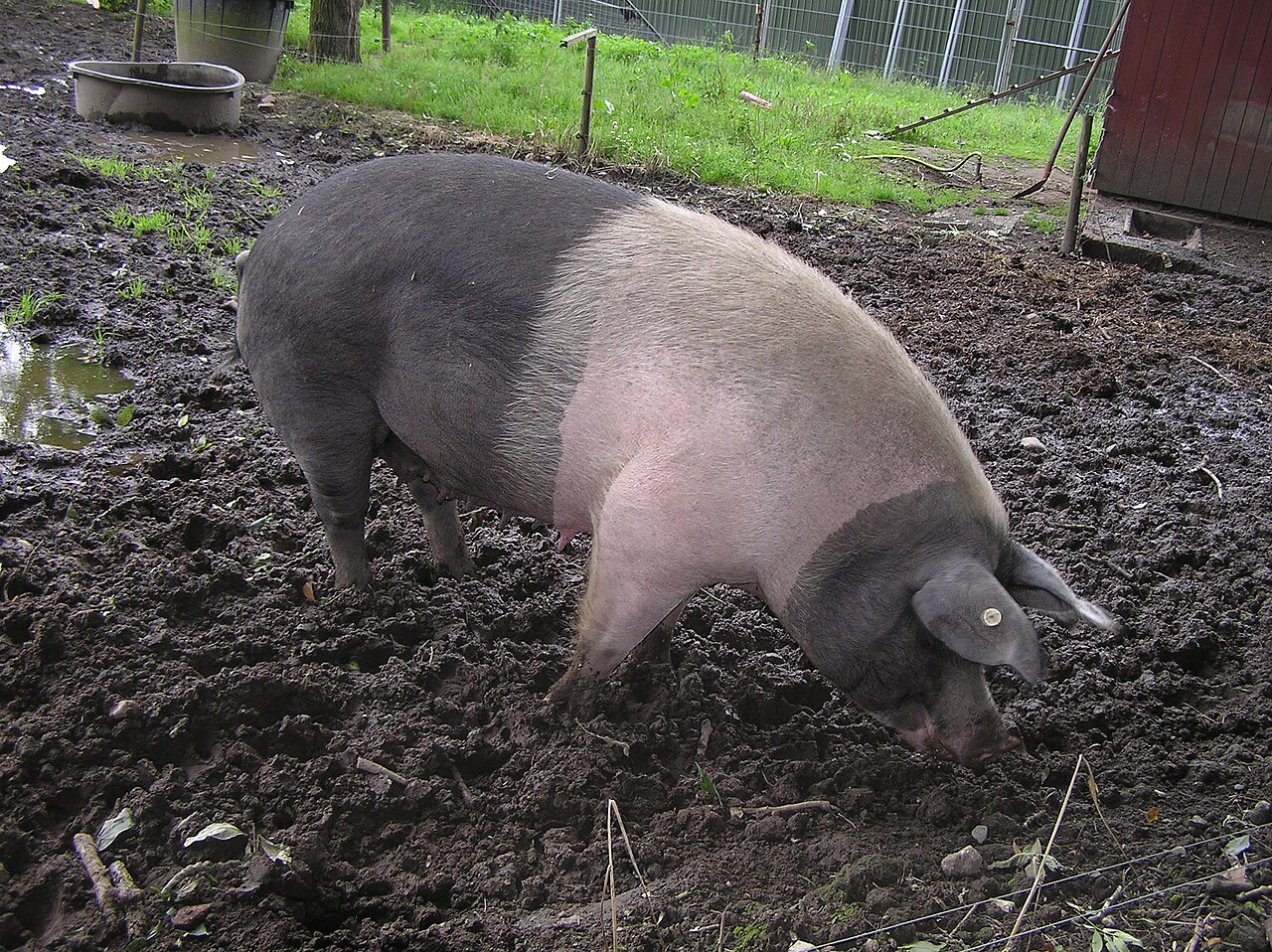
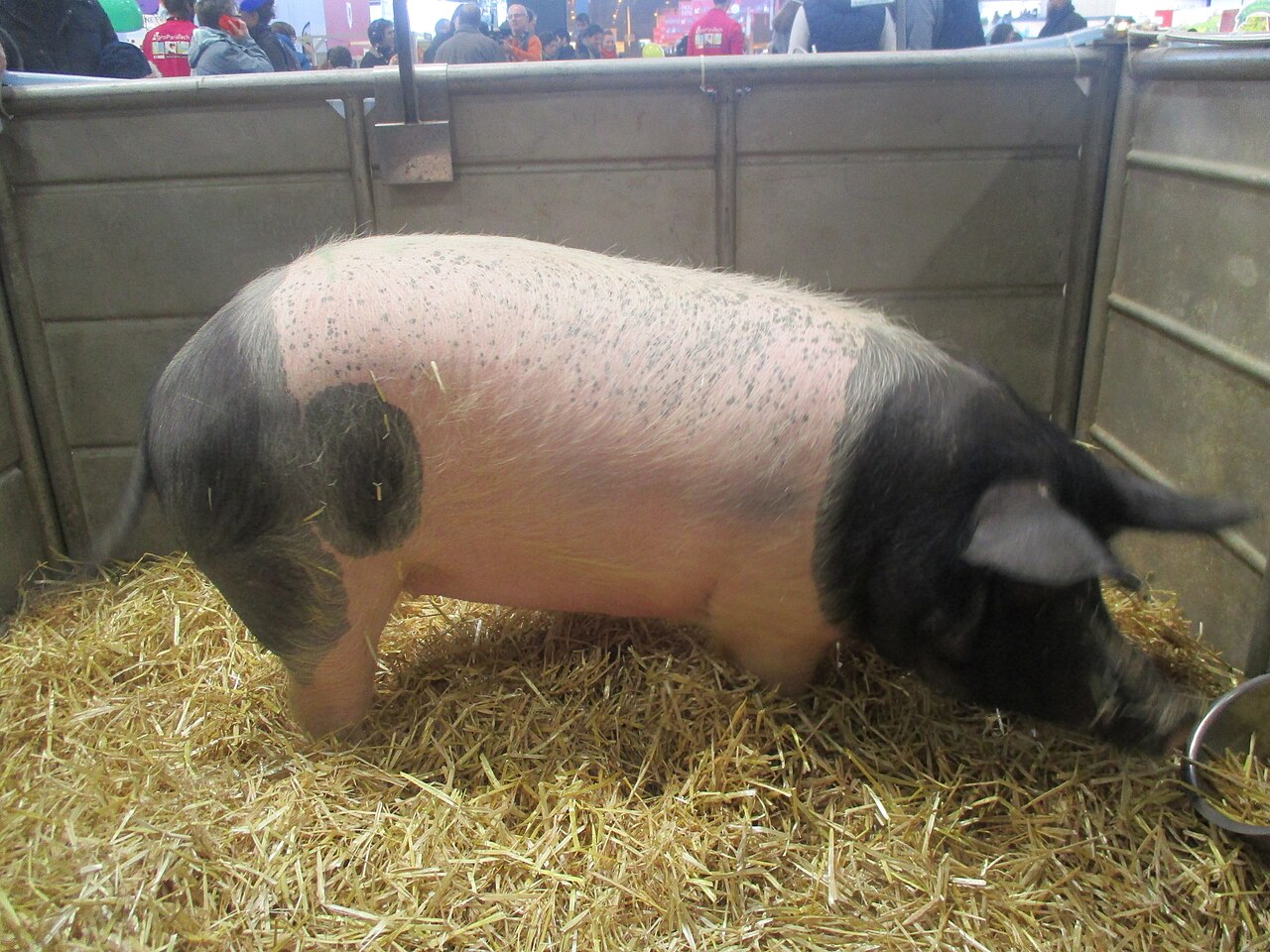
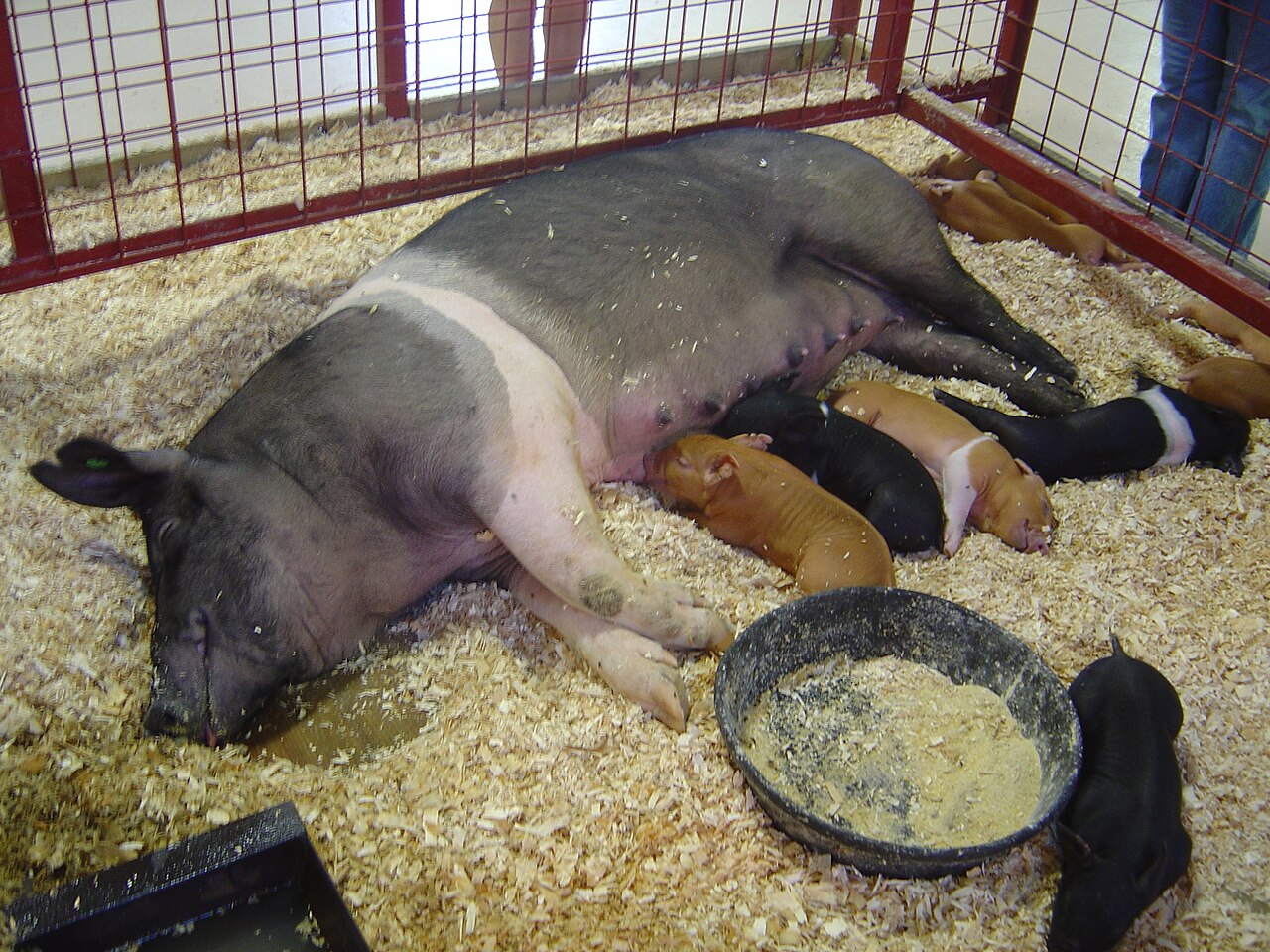
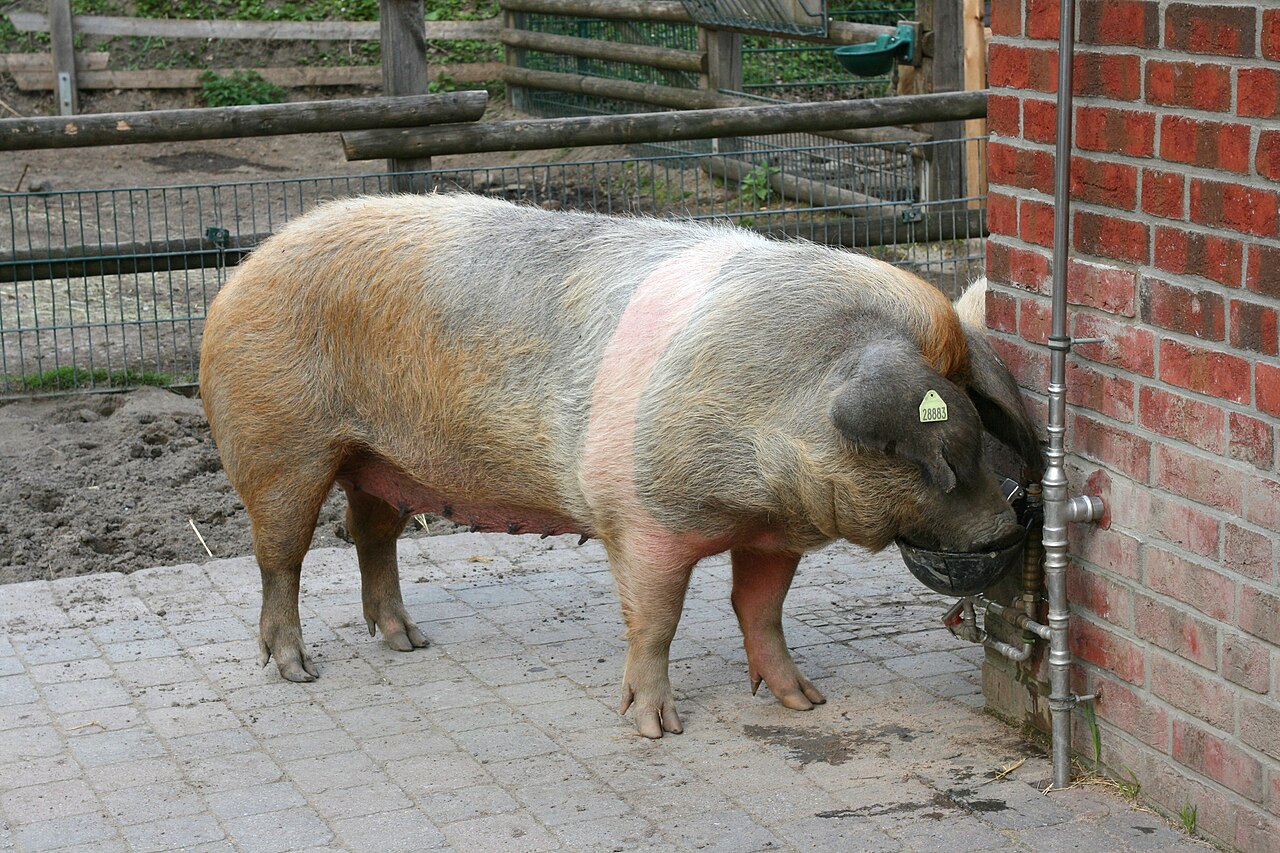
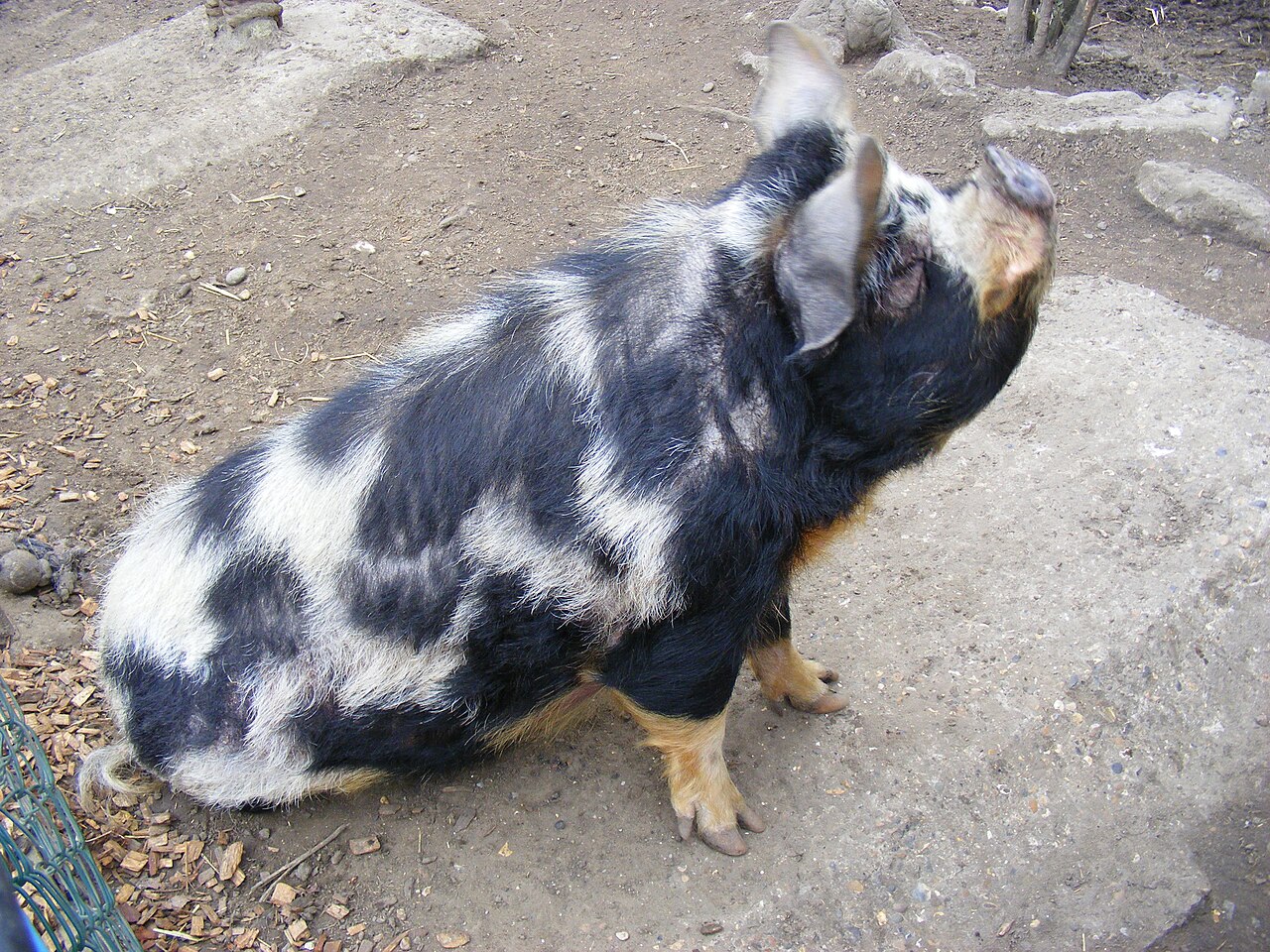
The Swabian-Hall or Schwäbisch-Hällisches, also known as the Mohrenköpfle ('little moor's head'), is a German breed of lard pig originating in the city of Schwäbisch Hall, in Baden-Württemberg in south-western Germany. It is a large pig, white in the centre with a black head and rear and narrow grey bands at the transition from white to black skin. They have large litters averaging more than nine piglets.
The Swabian Hall, nicknamed the 'Mohrenköpfle' due to its colouring, traces its origin to 1820 when King William I of Württemberg initiated a breeding program aimed at producing a new breed with an improved fat content. He imported Meishan pigs from China to crossbreed with the German Landrace, a strategy that proved particularly successful in the Hohenlohe region, and around the town of Schwäbisch Hall. This hybridisation led to the creation of a robust breed that became renowned for its superior quality, especially in terms of fat production, a prized trait in traditional German agriculture. The breed enjoyed widespread popularity, and by 1959, it accounted for 90% of the pigs in Baden-Württemberg. However, its prominence waned in the 1960s as market preferences shifted toward leaner pork with lower fat content, making the breed less commercially viable. Despite this decline, a small group of dedicated farmers in the Hohenlohe district continued to preserve the breed, though by 1984, only seven breeding sows and two boars remained. Since 1998, Swabian-Hall pork (Schwäbisch-Hällisches Qualitätsschweinfleisch) has been recognised with Protected Geographical Status in the European Union. Only pigs raised in Schwäbisch Hall, Hohenlohe, and some neighbouring districts may be sold under that name. Currently, there are around 1,500 sows registered to this breed. All of these pigs are raised on farms belonging to the Farmer Producer Association of Swabian Hall (Bäuerliche Erzeugergemeinschaft Schwäbisch Hall), which enforces a strict inspection regime to control the quality of feed provided to the animals. The Swabian-Hall Breeders Association (Züchtervereinigung Schwäbisch Hällisches Schwein) was established in 1977, predating the Producers Association, which was formed in 2007. Today, the Breeders Association operates as a subsidiary of the Producers Association. Today, the Swabian-Hall pig is highly esteemed among gourmets for its darker, richly flavoured meat and distinctive taste, which sets it apart from leaner varieties.
Gallery
Ajouter des photos
Partagez vos photos de cette espèce (jusqu'à 20 à la fois) : elles sont vérifiées automatiquement, puis publiées.
Autres races de l'espèce (136)
Espèce : Porc
Voir les 124 autres races
- Landrace français
- Large white
- Meishan
- Pie noir de Bentheim
- Pie noir du Pays basque
- Piétrain
- Poland china
- Porc blanc de l'Ouest
- Porc celte
- Porc craonnais
- Porc de Bayeux
- Porc de Corse
- Porc gascon
- Porc laineux
- Porc noir de Bigorre
- Porc normand
- Race Normande
- Red Wattle
- Tamworth
- American Landrace
- Australian Yorkshire
- Beijing Black
- Belgian Landrace
- British Saddleback
- Cochon créole
- Cochon nain
- Cochon sarde
- Danish Landrace pig
- Dutch Landrace pig
- Essex pig
- Forest Mountain pig
- Gloucestershire Old Spots
- Guinea Hog
- Göttingen Minipig
- Italian Landrace
- Jeju Black pig
- Krškopolje pig
- Large Black
- Latvian White pig
- Lincolnshire Curly Coat
- Lithuanian Native pig
- Lithuanian White
- Middle White
- Nero Siciliano
- Nero di Parma
- Ossabaw Island Hog
- Porc ibérique
- Porc tibétain
- Siberian Black Pied
- Swedish Landrace pig
- Turopolje pig
- Wessex Saddleback
- Ankamali pig
- Irish Greyhound Pig
- Agū
- Black Alpine Pig
- Bressane race
- Canarian Black
- Deutsches Sattelschwein
- Lanyu pig
- Meissner hog
- Perigord race
- Přeštické černostrakaté prase
- Mora Romagnola
- Mulefoot
- Porc d'Ourjoum
- Porc de Miélan
- Porc pie danois
- Aksai Black Pied
- American Yorkshire
- Apulo-Calabrese
- Ba Xuyen
- Bazna pig
- Belarus Black Pied pig
- British Lop
- Casertana pig
- Chato Murciano
- Choctaw Hog
- Cumberland pig
- Dorset Gold Tip
- Duroc Italiana
- Estonian Bacon
- Fengjing pig
- Kagoshima Berkshire
- Kakhetian pig
- Korean Native pig
- Lacombe pig
- Large White Italiana
- Large White Ulster pig
- Minnesota Miniature
- Mukota
- Myrhorod pig
- Porc bagnérais
- Porc de Breïtovo
- Porc de Kemerovo
- Porc de Livny
- Porc de Sibérie du Nord
- Porc du Caucase du Nord
- Semirechensk
- Small Black pig
- Small White pig
- Taihu pig
- Tokyo-X
- Tsivilsk pig
- Ukrainian Spotted Steppe
- Ukrainian White Steppe
- Welsh pig
- Yorkshire Blue and White
- Baudin pig
- Bulgarian White
- Meidam
- Ashanti Dwarf
- Baztango txerria
- Deutsche Landrasse
- Erhualian pig
- Estonian Large White
- Gasteizko muturmotz txerria
- Gochu Asturcelta
- Hitachi no kagayaki
- Jinhua pigs
- Mong Cai pig
- Nakijin agū
- Rose pork
- Yorkshire pig
Sources et crédits
Informations provenant de plusieurs sources vérifiées. Dernière mise à jour : .
Crédits photos (10)
- Photo : Flominator · CC BY-SA 3.0 · via Wikimedia Commons
- Photo : Flominator · CC BY-SA 3.0 · via Wikimedia Commons
- Photo : Daniel Bülow · Domaine public · via Wikimedia Commons
- Photo : marsupium photography · CC BY-SA 2.0 · via Wikimedia Commons
- Photo : Bäuerliche Erzeugergemeinschaft Schwäbisch Hall · CC BY-SA 4.0 · via Wikimedia Commons
- Photo : Bäuerliche Erzeugergemeinschaft Schwäbisch Hall · CC BY-SA 4.0 · via Wikimedia Commons
- Photo : Baden de · CC BY 3.0 · via Wikimedia Commons
- Photo : Magnus Hagdorn from UK · CC BY-SA 2.0 · via Wikimedia Commons
- Photo : Helge Klaus Rieder · CC0 (domaine public) · via Wikimedia Commons
- Photo : Ermell · CC BY-SA 4.0 · via Wikimedia Commons
Mentions de licence
Texte disponible sous licence CC BY-SA 4.0. Il adapte notamment Wikipedia (CC BY-SA): Swabian-Hall (Wikipédia, auteurs dans l’historique de l’article).
- Taxonomie : GBIF Backbone Taxonomy (CC BY 4.0)
Détail : Sources et licences.
Discussion (0)
Aucun message pour l’instant. Lancez la discussion sur cette fiche (sources, précisions, débats éditoriaux).
Connectez-vous pour participer à la discussion.