
- Kingdom
- Animalia
- Phylum
- Chordata
- Class
- Aves
- Order
- Galliformes
- Family
- Phasianidae
- Genus
- Gallus
- Species
- Gallus gallus domesticus
Overview
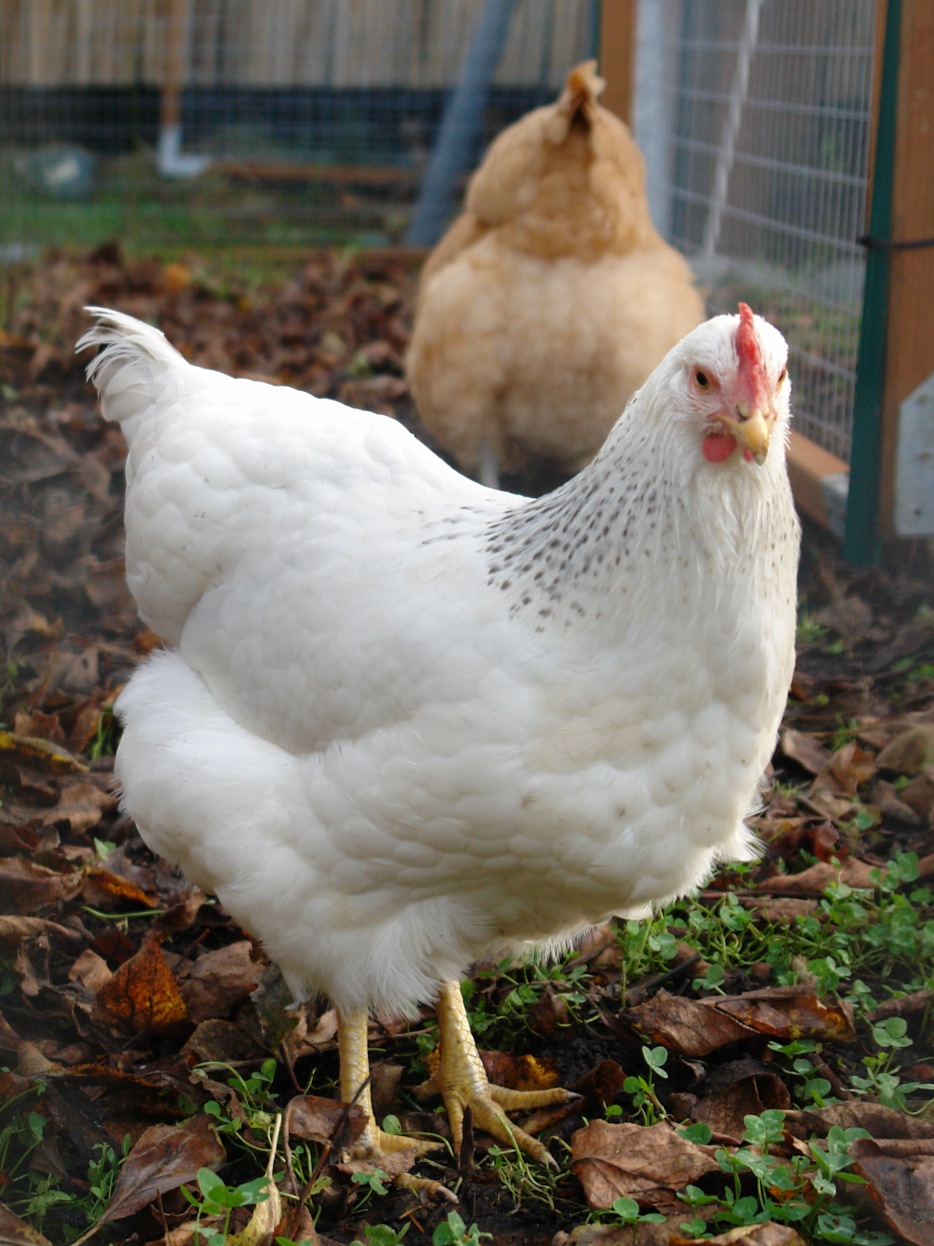
The Delaware is an American breed of chicken with an unusual plumage pattern. It was developed in the state of Delaware in the mid-twentieth century, and was initially known as the Indian River. It was briefly of some importance in the American chicken industry, until it was superseded by the common industrial Cornish Rock cross.
In the twenty-first century it is an endangered breed. It may be kept for meat, for eggs or for showing.
History
In the early twentieth century, the cross of a Barred Plymouth Rock rooster on a New Hampshire hen was a common choice for producing broilers. Occasionally, this mating produces sports with light coloration. George Ellis of Delaware selectively bred these light-colored birds, which led to the creation of the breed in 1940. He first chose to call them Indian Rivers, but later the name was switched to match its state of origin. At the time, the Delmarva Peninsula, where the breed was created, supplied chicken to the entirety of the East Coast of the United States through companies such as Perdue Farms.• The Delaware rapidly became the principal broiler fowl in use in the region,• thus affecting the industry at large.• It was added to the Standard of Perfection of the American Poultry Association in 1952; the bantam version was added in 1960.•
Beginning in the mid-1950s, commercial farms began to use the White Cornish-Rock cross that would come to dominate the chicken industry into the next century. The speedy adoption of the Cornish-Rock saw the decline of the Delaware, though it persisted in some areas into the 1960s.
In the twenty-first century it is an endangered breed. In 2010 its conservation status was listed by the American Livestock Breeds Conservancy (later called the Livestock Conservancy) as 'critical', its highest level of concern.• In 2013 it was listed as 'threatened', the second level; by 2021 it had been moved to the third level, 'watch', and in 2024 was listed as 'recovering'.• A breed census in 2015 found a total population of 4692 birds.• The Delaware is included in the Ark of Taste of the international Slow Food Foundation.• It is reported only from the United States, and is not recognized by the Entente Européenne or the Poultry Club of Great Britain.•
Characteristics
The Delaware is of medium size; average weight for cock birds is approximately 3.5 kg, and some 2.8 kg for hens. There is only one plumage variety, sometimes called 'barred Columbian': it resembles the Columbian pattern, but the primaries, secondaries, hackles and tail feathers are barred rather than solid black.• The comb is single and five-pointed; it, the wattles and the earlobes are all bright red. The beak is a reddish horn color, the eyes a reddish bay, and the shanks and feet yellow.•
Use
Also of note is that all feathers have a white quill and shaft, which, combined with yellow skin, makes for a cleaner appearing carcass.• Like most standard breeds of chicken, the Delaware has a miniaturized bantam version; however, these are rarely seen.
Delawares are hardy birds that mature quickly. Hens are good layers of large to jumbo brown eggs and will go broody. Unlike the most common commercial meat birds in use today, the Delaware does well in free range operations. In temperament, it is a calm, but not a typically friendly bird although in some cases can be.•
Gallery
Ajouter des photos
Partagez vos photos de cette espèce (jusqu'à 20 à la fois) : elles sont vérifiées automatiquement, puis publiées.
Autres races de l'espèce (311)
Espèce : Poule domestique
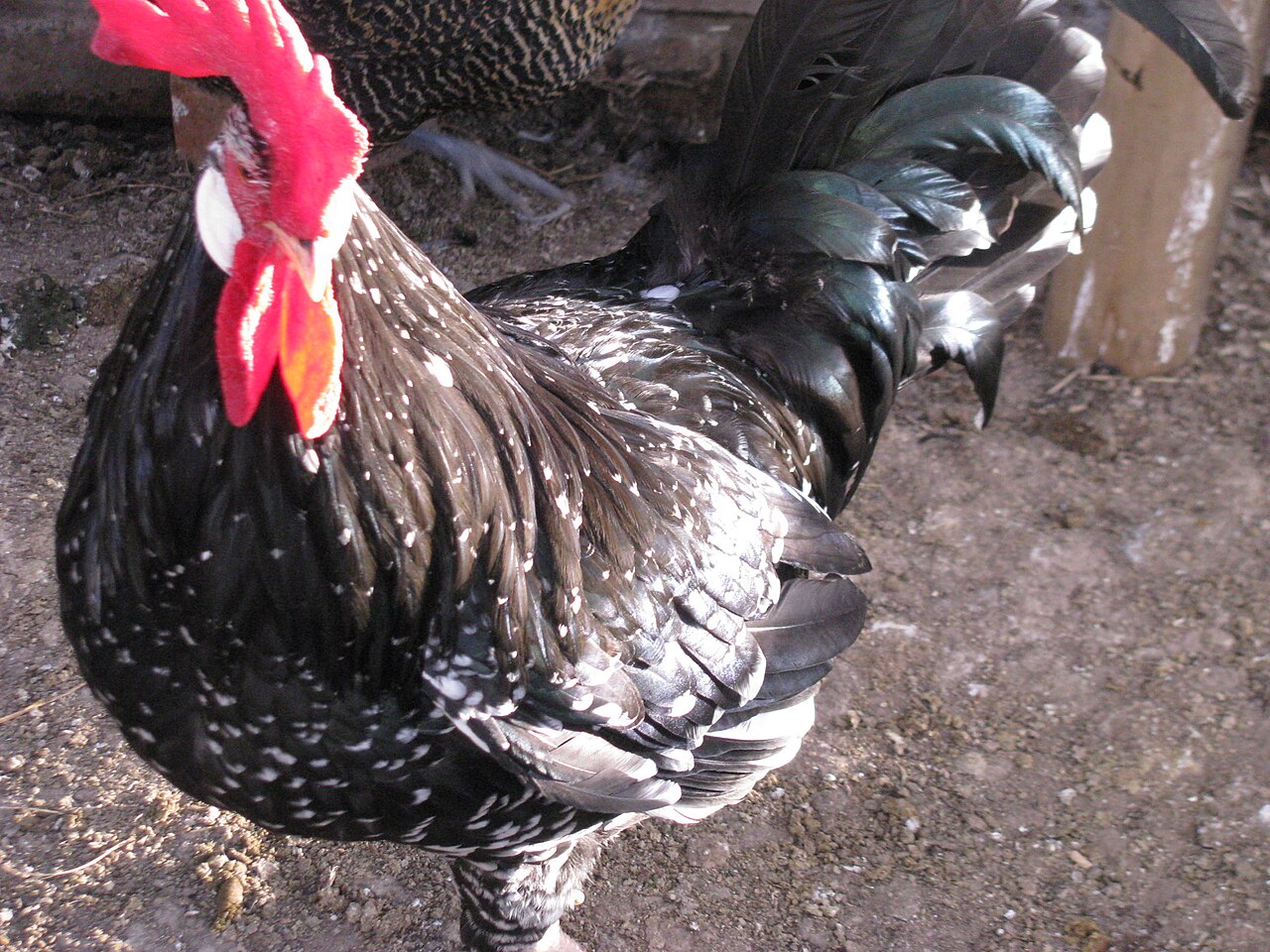
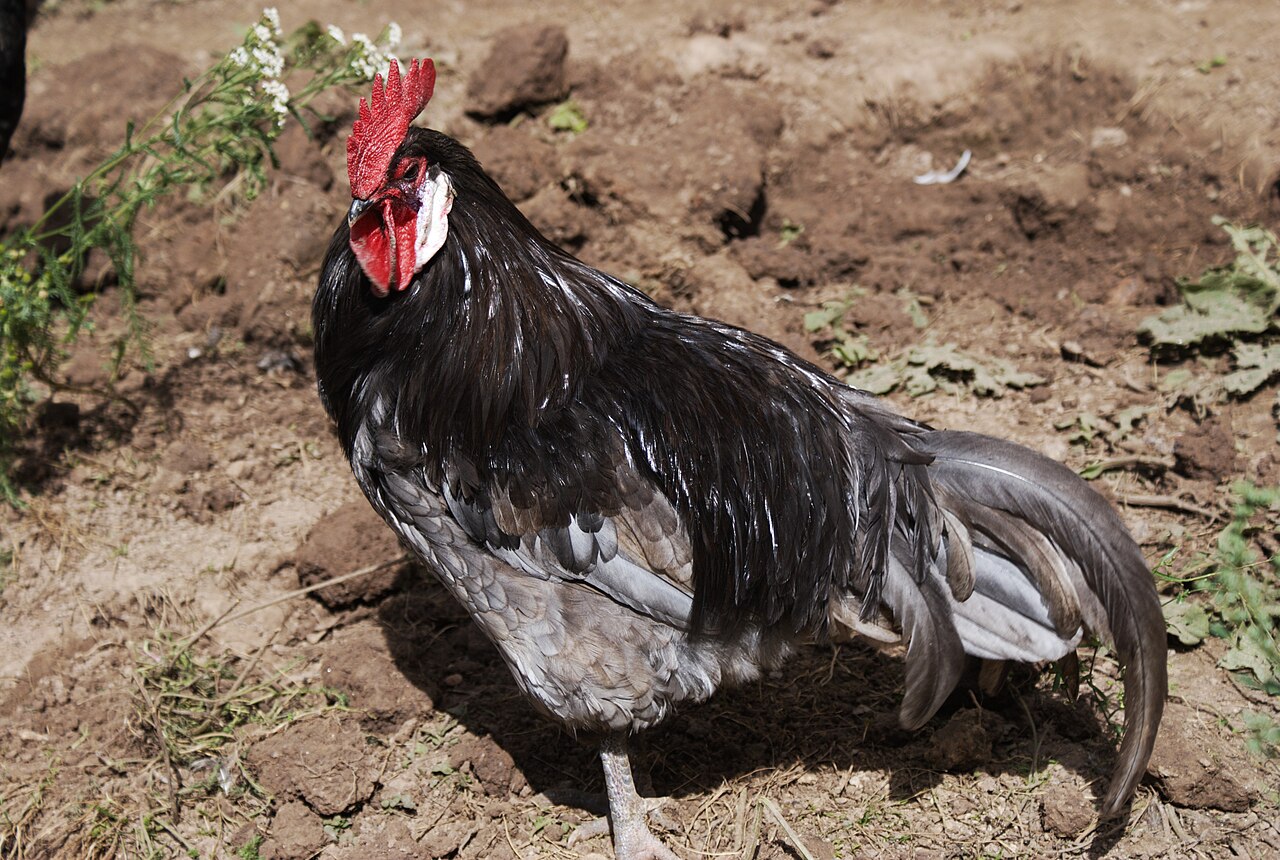
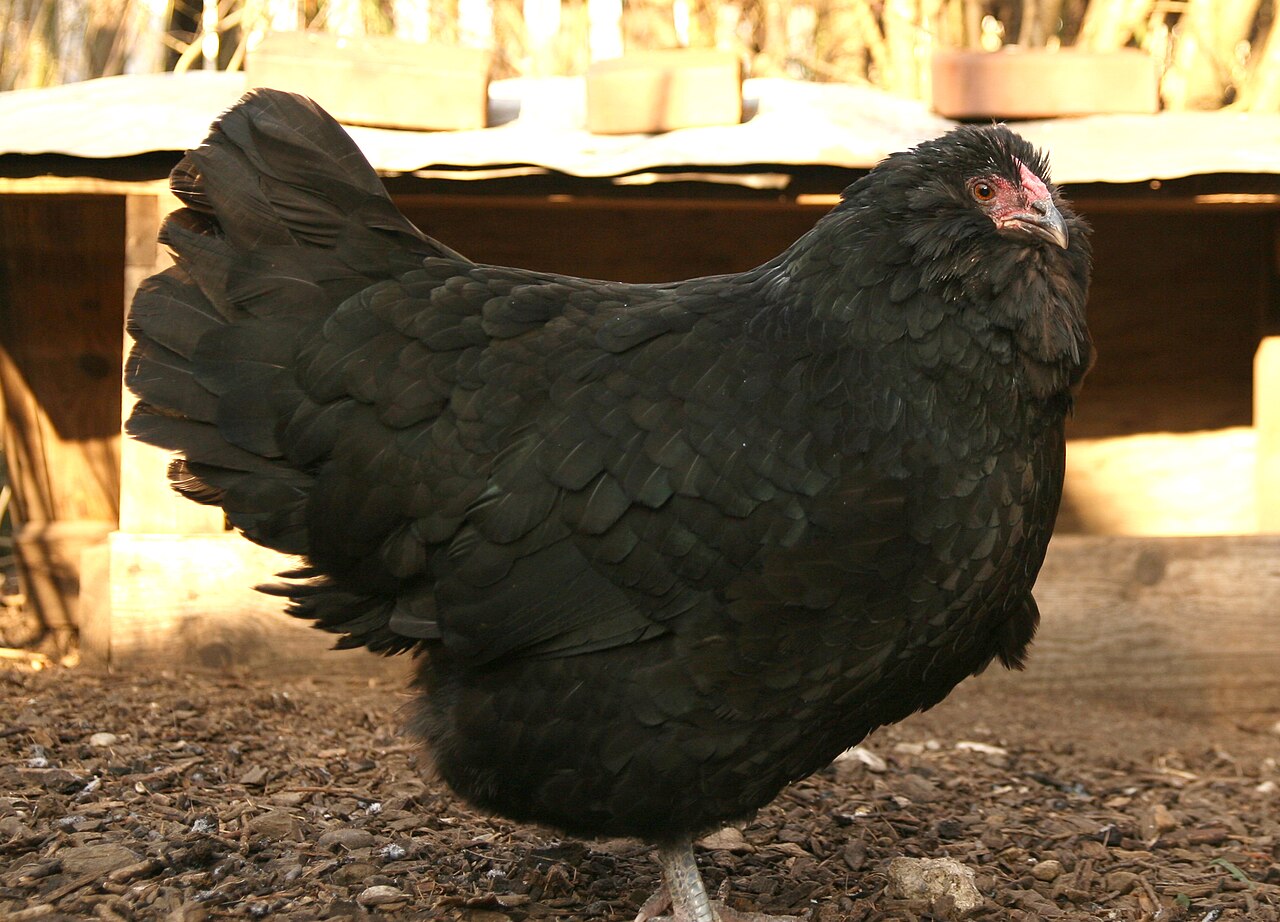
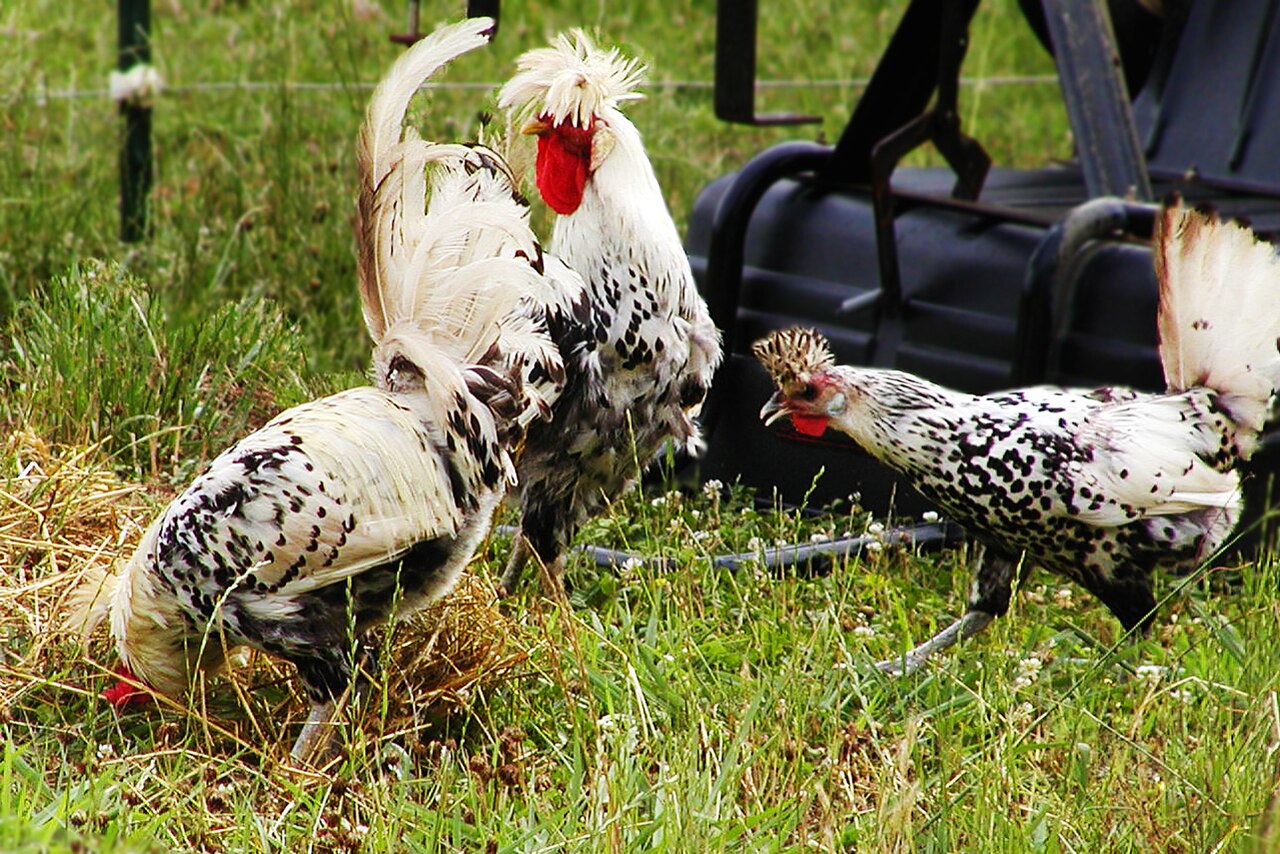
Voir les 299 autres races
- Barbu de Thuringe
- Barbu hollandais
- Barnevelder
- Bassette
- Berg-Schlotter
- Black Rock
- Bleue de France
- Bourbonnaise
- Brabanter
- Braekel
- Brahma
- Bresse-Gauloise
- Buckeye
- Campine
- Cemani
- Chabo
- Chantecler
- Chanteur de Yourlov
- Chanteur du Berg
- Chanteur du Kosovo
- Charollaise
- Combattant anglais ancien
- Combattant anglais moderne
- Combattant de Bruges
- Combattant espagnol
- Combattant indien
- Combattant malais
- Coq de pêche
- Cou nu
- Cou nu du Forez
- Coucou d'Allemagne
- Coucou d'Izegem
- Coucou de Rennes
- Coucou des Flandres
- Courtes-pattes
- Crèvecœur
- Cubalaya
- Denizli
- Dominicaine
- Dorking
- Espagnole à face blanche
- Euskal oiloa
- Faverolles allemande
- Faverolles française
- Fayoumi
- Gauloise dorée
- Gâtinaise
- Géante de Jersey
- Géline de Touraine
- Hergnies
- Hollandaise huppée
- ISA brown
- Italienne
- Java
- Java américaine
- Javanaise
- La Flèche
- Lakenvelder
- Langshan allemande
- Legbar
- Leghorn
- Limousine
- Lohmann Brown
- Lyonnaise
- Marans
- Mouette de Groningue
- Mouette de la Frise orientale
- Naine allemande
- Naine du Tournaisis
- Naine hollandaise
- Niederrheiner
- Onagadori
- Orloff
- Orpington
- Penedesenca
- Phoenix
- Poltava
- Poule Castillane
- Poule Cochin
- Poule Le Mans
- Poule Le Merlerault
- Poule Soie
- Poule ardennaise
- Poule d'Alsace
- Poule d'Augsbourg
- Poule d'Estaires
- Poule de Barbezieux
- Poule de Bielefeld
- Poule de Bohême
- Poule de Bourbourg
- Poule de Bréda
- Poule de Choumen
- Poule de Dresde
- Poule de Frise
- Poule de Gournay
- Poule de Hambourg
- Poule de Houdan
- Poule de Janzé
- Poule de Malines
- Poule de Minorque
- Poule de Norvège
- Poule de Padoue
- Poule de Pavilly
- Poule de Polverara
- Poule de Saxe
- Poule de Twente
- Poule de Westphalie
- Poule de Yokohama
- Poule des Asturies
- Poule du Danemark
- Poule du New Hampshire
- Poule du Reich
- Poule du Sussex
- Poule du Valdarno
- Poule empordanesa
- Poule landaise
- Poule meusienne
- Poule noire du Berry
- Poule suisse
- Pékin
- Ramelsloher
- Red Cap
- Rhode-Island
- Sabelpoot
- Sebright
- Serama
- Sicilienne
- Sombor huppée
- Sulmtaler
- Sultane
- Sumatra
- Sundheimer
- Vorwerk
- Welsumer
- Wyandotte
- Adler Silver chicken
- American Game
- Assendelft
- Australian Game
- Australian Langshan
- Ayam Pelung
- Barbu de Boitsfort
- Barbu de Watermael
- Bionda Piemontese
- California Gray
- Chaams hoen
- Dong Tao chicken
- Eikenburger
- Frisée
- Gallina mallorquina
- Gilyan
- Giriraja
- Harco
- Hijazi chicken
- Hinaidori
- Hrvatica chicken
- Icelandic chicken
- Kadaknath
- Ko Shamo
- Mugellese
- Nagoya Cochin
- Naine croate
- Norfolk Grey
- Ohiki
- Old English Pheasant Fowl
- Oxford Old English Game
- Plymouth
- Polbar
- Posavska kukmasta kokoš
- Poule au long chant
- Poule de Drente
- Poule de Hollande du Nord
- Poule de Pavlovo
- Poule de Prat
- Poule polonaise à pattes vertes
- Poulet de chair
- Rhode Island White
- Robusta Lionata
- Satsumadori
- Scots Dumpy
- Shamo
- Sicilian Buttercup
- Silverudd Blue
- Stara Zagora Red
- Svarthöna
- Thai Game
- Tomaru
- Valdarnese
- Índio Gigante
- Combattant du Nord
- American Long Crower
- Easter egger
- Sindhi Aseel
- Barred Plymouth Rock
- Boschvelder
- Hedemorahöna
- Indio de León
- Schijndelaar
- Totenko
- Öländsk dvärghöna
- Brabançonne
- Combattant de Liège
- Combattant de Tirlemont
- Combattant du Palatinat
- Coucou de France
- Croad Langshan
- Frisée et huppée d'Annaberg
- Millefleurs de Lonigo
- Orava
- Pictave
- Pondeuse de Zingem
- Poule d'Aquitaine
- Poule d'Écosse
- Poule de Caumont
- Poule de Caussade
- Poule de Caux
- Poule de Challans
- Poule de Contres
- Poule de Dampierre
- Poule de Herve
- Poule de Mantes
- Poule de Rhénanie
- Poule de Zottegem
- Poule gasconne
- Poulet de chair de Zingem
- Ross 308
- Wassachiè
- Amarela
- Australian Pit Game fowl
- Ayam Kedu
- Ayam Ketawa
- Barbu d'Everberg
- Barbu de Grubbe
- Belgian Bantam
- Bianca di Saluzzo
- Burmese Bantam
- Cobb 500
- Ermellinata di Rovigo
- Famennoise
- Finnish Landrace Chicken
- Ga Noi
- Gijang Ogolgye
- Gramapriya
- Gà ri
- Holland chicken
- Hồ chicken
- Ingie
- Iowa Blue
- Iwate jidori
- Ixworth chicken
- Jangmigye
- Kaunayen chicken
- Kinpa
- Kuroiler
- Lamona
- Marsh Daisy chicken
- Mericanel della Brianza
- Modern Langshan
- Nankin Bantam
- Noire de Moscou
- Ogye chicken
- Potchefstroom Koekoek
- Pyncheon
- Pépoi
- Robusta Maculata
- Romagnola chicken
- Rumpless Game
- Slovenian Barred Hen
- Slovenian Brown Hen
- Slovenian Silver Hen
- Taiwanese Game
- Tuzo
- Vanaraja
- Yakido
- Yeonsan Ogye
- Burford Brown
- Daisy Belle
- Dekalb Amberlink
- Miss Pepperpot
- Nixi chicken
- RSL chicken
- Red Shaver
- Sentul chicken
- Winnebago chicken
- Fauve de Hesbaye
- Bantam wyandotte
- Brazilian long crower
- Collonca
- Game hen
- Gueomdak
- Jitokko
- Kokochiè
- Modenese chicken
- O-Shamo
- Svensk dvärg
- Venda chicken
- Welbar
- White Rock
- White Rocks
Sources et crédits
Informations provenant de plusieurs sources vérifiées. Dernière mise à jour : .
Crédits photos (7)
- Photo : Josh Larios from Seattle, US · CC BY-SA 2.0 · via Wikimedia Commons
- Photo : Josh Larios from Seattle, US · CC BY-SA 2.0 · via Wikimedia Commons
- Photo : Josh Larios from Seattle, US · CC BY-SA 2.0 · via Wikimedia Commons
- Photo : Josh Larios from Seattle, US · CC BY-SA 2.0 · via Wikimedia Commons
- Photo : Bobjgalindo · CC BY 4.0 · via Wikimedia Commons
- Photo : Bobjgalindo · CC BY 4.0 · via Wikimedia Commons
- Photo : Bobjgalindo · CC BY 4.0 · via Wikimedia Commons
Mentions de licence
Texte disponible sous licence CC BY-SA 4.0. Il adapte notamment Wikipedia (CC BY-SA): Delaware chicken (Wikipédia, auteurs dans l’historique de l’article).
- Taxonomie : GBIF Backbone Taxonomy (CC BY 4.0)
Détail : Sources et licences.
Discussion (0)
Aucun message pour l’instant. Lancez la discussion sur cette fiche (sources, précisions, débats éditoriaux).
Connectez-vous pour participer à la discussion.