
- Kingdom
- Animalia
- Phylum
- Chordata
- Class
- Aves
- Order
- Galliformes
- Family
- Phasianidae
- Genus
- Gallus
- Species
- Gallus gallus domesticus
Overview
There are hundreds of chicken breeds in existence. Domesticated for thousands of years, distinguishable breeds of chicken have been present since the combined factors of geographical isolation and selection for desired characteristics created regional types with distinct physical and behavioral traits passed on to their offspring.
The physical traits used to distinguish chicken breeds are size, plumage color, comb type, skin color, number of toes, amount of feathering, egg color, and place of origin. They are also roughly divided by primary use, whether for eggs, meat, or ornamental purposes, and with some considered to be dual-purpose.
In the 21st century, chickens are frequently bred according to predetermined breed standards set down by governing organizations. The first of such standards was the British Poultry Standard, which is still in publication today. Other standards include the Standard of Perfection, the Australian Poultry Standard, and the standard of the American Bantam Association, which deals exclusively with bantam fowl. Only some of the known breeds are included in these publications, and only those breeds are eligible to be shown competitively. There are additionally a few hybrid strains which are common in the poultry world, especially in large poultry farms. These types are first generation crosses of true breeds. Hybrids do not reliably pass on their features to their offspring, but are highly valued for their producing abilities.
By place of origin
Afghanistan
- Ingriido
- Khasaki
- Kulangi
- Pusty
- Sabzwari
Albania
- Commune hen
- Black Tropoja Lekbibaj
- Tirana
- Tropoja Pac
- Yerevanian
Australia
- Australorp
- Australian Langshan
- Australian Game
- Australian Pit Game
Austria
- Altsteirer
- Sulmtaler
Belgium
- Ardennaise or Ardenner (both large and bantam)
- Ardenner Bolstaart
- Belgian Bearded d'Anvers, Antwerp Belgian, Barbu d'Anvers or Antwerpse baardkriel (bantam)
- Barbu de Boitsfort or Bosvoordse baardkriel (bantam)
- Barbu de Grubbe or Grubbe baardkriel (bantam)
- Belgian d'Everberg, Barbu d'Everberg or Everbergse baardkriel (bantam)
- Barbu de Watermael or Watermaalse baardkriel (bantam)
- Bearded d'Uccle, Barbu d'Uccle or Ukkelse baardkriel (bantam)
- Bassette Liégeoise (bantam)
- Brabanter, Brabançonne or Brabants hoen (large and bantam)
- Braekel or Brakel (large and bantam)
- Campine
- Combattant de Bruges or Brugse vechter (large and bantam)
- Combattant de Liège or Luikse vechter (large and bantam)
- Combattant de Tirlemont or Tiense vechter (large and bantam)
- Coucou d'Izegem or Izegemse koekoek
- Coucou des Flandres or Vlaanderse koekoek
- Famennoise or Famennehoen (large and bantam)
- Fauve de Hesbaye or Gele van Haspengouw
- Fauve de Mehaigne or Gele van Mehaigne (bantam)
- Herve or Hervehoen (large and bantam)
- Huttegem
- Malines or Mechels hoen (large and bantam)
- Mechelse kalkoenkop
- Naine belge or Belgische kriel (bantam)
- Naine de Waes or Waasse kriel (bantam)
- Naine du Tournaisis or Doornikse kriel (bantam)
- Pondeuse de Zingem or Zingems leghoen
- Poule d'Aarschot or Aarschots hoen
- Poule de la vallée de la Zwalm or Hoen van de Zwalmvallei
- Poule de Zottegem or Zottegems hoen
- Zingems vleeshoen
Brazil
- Índio Gigante
Bulgaria
- Black Shumen
- Starozagorska Red
Canada
- Chantecler
- Red Shaver
Chile
- Araucana
China
Breeds listed in DAD-IS:•
- Anyi Grey
- Baicheng You
- Baier Buff
- Baier Yellow
- Bashing Long-tail
- Beijing White
- Beijing You
- Bian
- Bian – Nei-Mong
- Chahua
- Changshun Blue-eggshell
- Chengkou Mountain
- Chongren Partridge
- Dagu
- Daninghe
- Dawei Shan Mini
- Dehua Black
- Dongxiang Green
- Dong'an
- Dulong
- Dwarf Small Buff
- Emei Black
- Erh-Mei
- Fuyun Black
- Guangxi Black-bone
- Guangxi Partridge
- Guangxi Sanhuang
- Guangyuan Gray
- Guping
- Gushi
- Haidong
- Henan Fighting
- Hetian
- Hetian Black
- Hongshan
- Hua-Tung
- Huaibei Partridge
- Huainan Sanhuang
- Huaixiang
- Huanglang
- Huangshan Black
- Huiyang Bearded
- Jiangcun Buff
- Jianghan
- Jiangshan Silkie
- Jingmen Black-feather and Blue-eggshell
- Jingxin Buff
- Jingyang
- Jingyuan
- Jinhu Black-bone
- Jining Bairi
- Jinyang Silkie
- Jiujin Yellow
- Jiuyuan Black
- Kangdar Buff
- Kangle
- Langshan
- Langyu
- Lanping Silkie
- Liangshanya Ying
- Lindian
- Lingkun
- Linnan Buff
- Lintao
- Liyang
- Long-leg
- Longsheng Feng
- Lueyang
- Luning
- Lushi
- Luxi Fighting
- Luyuan
- Macheng Blue-eggshell
- Minqing Booted
- Miyi
- Muchuan Black Silkie
- Nandanyao
- New Langshan
- New Pudong
- New Yangzhou
- Ningdu Sanhuang
- Nixi
- Pengxian Buff
- Piao
- Pudong
- Qiandongnan Xiao Xiang
- Qingyuan Partridge
- Rugao Yellow
- Shanbei
- Shimian Caoke
- Short-leg
- Shouguang
- Shuanglian
- Silkie
- Silkie – Ju-Chi
- Taibai
- Taihang
- Taihu
- Taiwan Country Breed
- Taliu Black-bone
- Taoyuan
- Tengchong Snow
- Theen-Yee
- Tianchang Yellow
- Tibetan
- Turpan
- Wanbei Game
- Weining
- Wenchang
- Wenshang Patterned
- Wuding
- Wuhua
- Wuliangshang Black–bone
- Wumeng Silkie
- Wuwei
- Xiangdong
- Xianju
- Xiaoshan
- Xiayan
- Xichuan Black-bone
- Xinghua
- Xingwen Silkie
- Xinxin Dwarf Buff
- Xinxing Buff
- Xinyang Brown Egg
- Xishuangbanna Fighting
- Xuanzhou
- Xuefeng Black-bone
- Yangshan
- Yanjin Silkie
- Yantai Sankang
- Yugan Silkie
- Yunlong Short-leg
- Yunyang Large
- Yunyang Silkie
- Zhangzhou Fighting
- Zhengyang Sanhuang
- Zhongshan Shalan
- Zhuxiang
Croatia
- Hrvatica (Croatian Hen, Kokoš Hrvatica)
- Međimurska kokoš (Međimurje Chicken, Međimurje Hen)
Cuba
- Cubalaya
Cyprus
- Cypriot chicken[citation needed]
Czech Republic
- Czech gold brindle chicken
- Šumava chicken or Šumavanka
Egypt
- Alexandria
- Arbrikers
- Bahig
- Bandara
- Boffen
- Dandarawi
- Dokki 4
- Baladi Beheri
- Fayoumi…
By primary use
All chickens lay eggs, have edible meat, and possess a unique appearance. However, distinct breeds are the result of selective breeding to emphasize certain traits. Any breed may be used for general agricultural purposes, and all breeds are shown to some degree. But each chicken breed is known for a primary use.
Eggs
Many breeds were selected and are used primarily for producing eggs, these are mostly light-weight birds whose hens do not go broody often.
- Ancona
- Andalusian
- Asturian Painted Hen
- Barnevelder
- Campine
- Catalana
- Easter egger
- Egyptian Fayoumi
- Norwegian Jærhøne
- Kraienköppe (Twentse)
- Lakenvelder
- Leghorn
- Marans
- Minorca
- Orloff
- Penedesenca
- Sicilian Buttercup
- White-Faced Black Spanish
- Welsummer
- Sombor Kaporka (Somborska kaporka)
Meat
Most farms and homesteads use dual-purpose breeds for meat production. Some breeds are raised mainly for meat:
- Bresse
- Cornish (a.k.a. Indian Game)
- Ixworth
- Jersey Giant
Dual-purpose
The generalist breeds used in barnyards worldwide are adaptable utility birds good at producing both meat and eggs. Though some may be slightly better for one of these purposes, they are usually called dual-purpose breeds.
- Australorp
- Barnevelder
- Brahma
- Braekel (Brakel)
- Buckeye
- California Gray
- Chantecler
- Cubalaya
- Derbyshire Redcap
- Dominique
- Dorking
- Faverolles
- Holland
- Iowa Blue
- Java
- Jersey Giant
- Marans
- Marsh Daisy
- Naked-neck
- New Hampshire
- Norfolk Grey
- Orpington
- Plymouth Rock
- Poltava
- Red Shaver
- Rhode Island Red
- Rhode Island White
- Sombor Kaporka (Somborska kaporka)
- Scots Dumpy
- Scots Grey
- Sussex
- Winnebago
- Wyandotte
Exhibition
Since the 19th century, poultry fancy, the breeding and competitive exhibition of poultry as a hobby, has grown to be a huge influence on chicken breeds. Many breeds have always been kept for ornamental purposes, and others have been shifted from their original use to become first and foremost exhibition fowl, even if they may retain some inherent utility. Since the sport of cockfighting has been outlawed in the developed world, most breeds first developed for this purpose, called game fowl, are now seen principally in the show ring rather than the cock pit as fighting cocks.
- American Game G
- Asil G
- Appenzeller Barthuhn U
- Appenzeller Spitzhauben U
- Barbu de Watermael
- Belgian Bearded d'Anvers
- Bearded d'Uccle
- Belgian d'Everberg
- Blue Hen of Delaware G
- Booted Bantam
- Cochin
- Crèvecœur U
- Croad Langshan U
- Dragon Chicken U
- Dutch Bantam
- Frizzle
- Ga NoiG
- Hamburg U
- Houdan U
- Japanese Bantam
- Jangmigye
- La Flèche U
- Malay G
- Modern Game
- Nankin
- Old English Game G
- Pekin
- Phoenix
- Polish U
- Rosecomb
- Sebright
- Serama
- Shamo G
- Silkie
- Sultan
- Sumatra
- Vorwerk U
- Yokohama
Bantams
Most large chicken breeds have a bantam counterpart, sometimes referred to as a miniature. Miniatures are usually one-fifth to one-quarter the size of the standard breed, but they are expected to exhibit all of the standard breed's characteristics. A true bantam has no large counterpart, and is naturally small. The true bantams include:
- Bantam
- Belgian Bearded d'Anvers
- Belgian Bearded d'Uccle
- Belgian d'Everberg
- Booted Bantam
- Dutch Bantam
- Japanese Bantam
- Nankin
- Pekin Bantam
- Rosecomb
- Sebright
- Serama
Crossbreeds
- See also: Category:Chicken crossbreeds
Many common strains of crossbred chickens exist, but none breed true or are recognized by poultry breed standards; thus, though they are extremely common in flocks focusing on high productivity, crossbreeds do not technically meet the definition of a breed. Most crossbreed strains are sex linked, allowing for easy chick sexing.
- Black Sex Link (also called Black Stars or Black Rock in the UK)
- Red Sex Link (also called Golden Comet)
- ISA Brown
- Kuroiler
- Lohmann Brown
- Daisy Belle
- Dekalb Amberlink
- Columbian Rock
- Easter egger
- Broiler
- Cobb 500
- Ross 308
- Chunggye
- Delaware Blue Hen
See also
Wikimedia Commons has media related to Chicken breeds.
- List of birds
- List of duck breeds
- List of goose breeds
- List of turkey breeds
- Chickens as pets
Footnotes
- ^ Czech language names Czech gold brindle chicken include Česká slepice zlatě kropenatá, Česká zlatá kropenka, and Češka.
- ^ The original breed of bantam chicken is ancestor to all "bantam" breeds. It originated in Indonesia and there is called Ayam Kate.
Ajouter des photos
Partagez vos photos de cette espèce (jusqu'à 20 à la fois) : elles sont vérifiées automatiquement, puis publiées.
Autres races de l'espèce (311)
Espèce : Poule domestique
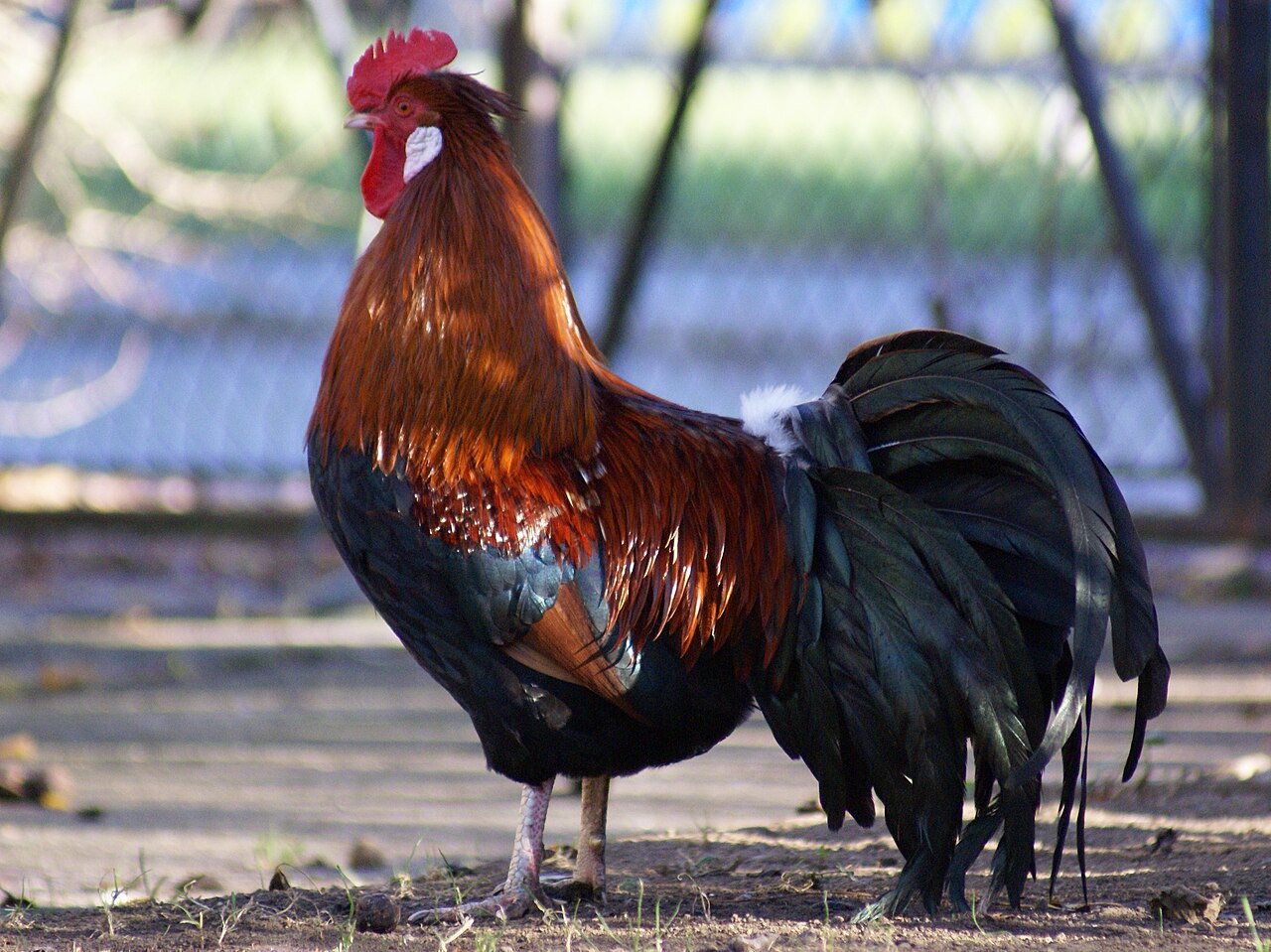
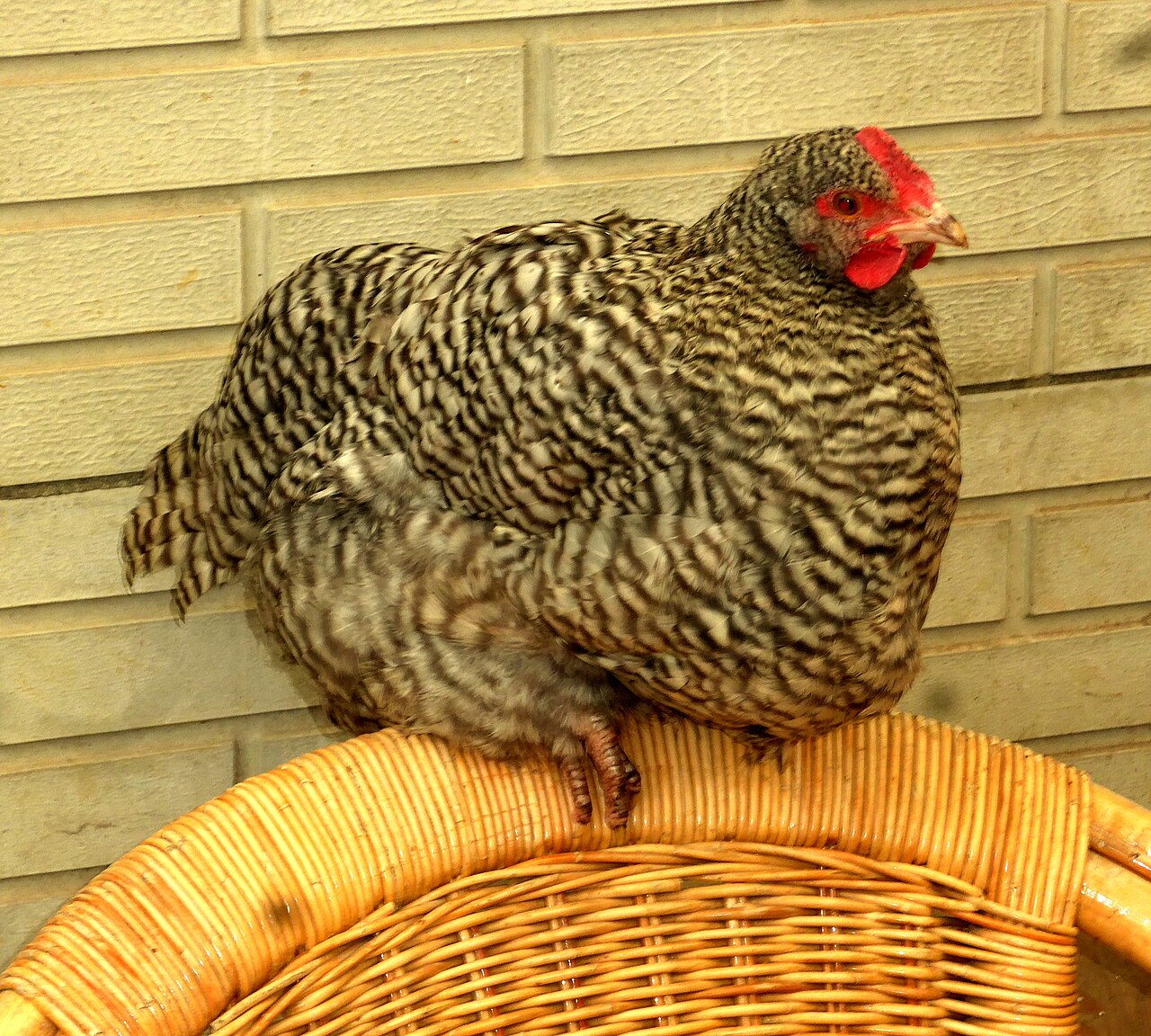
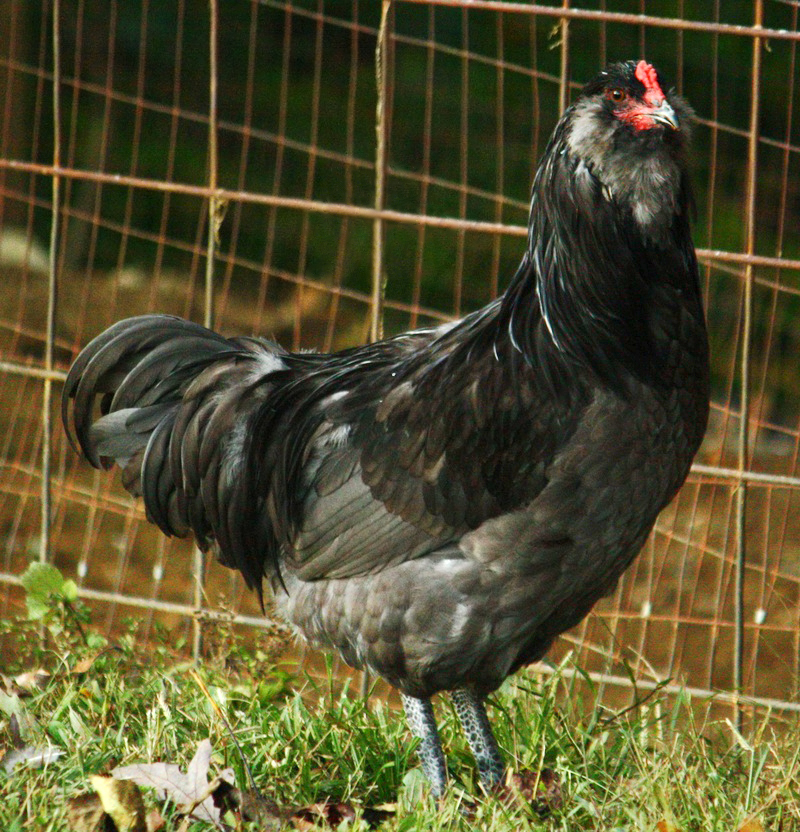
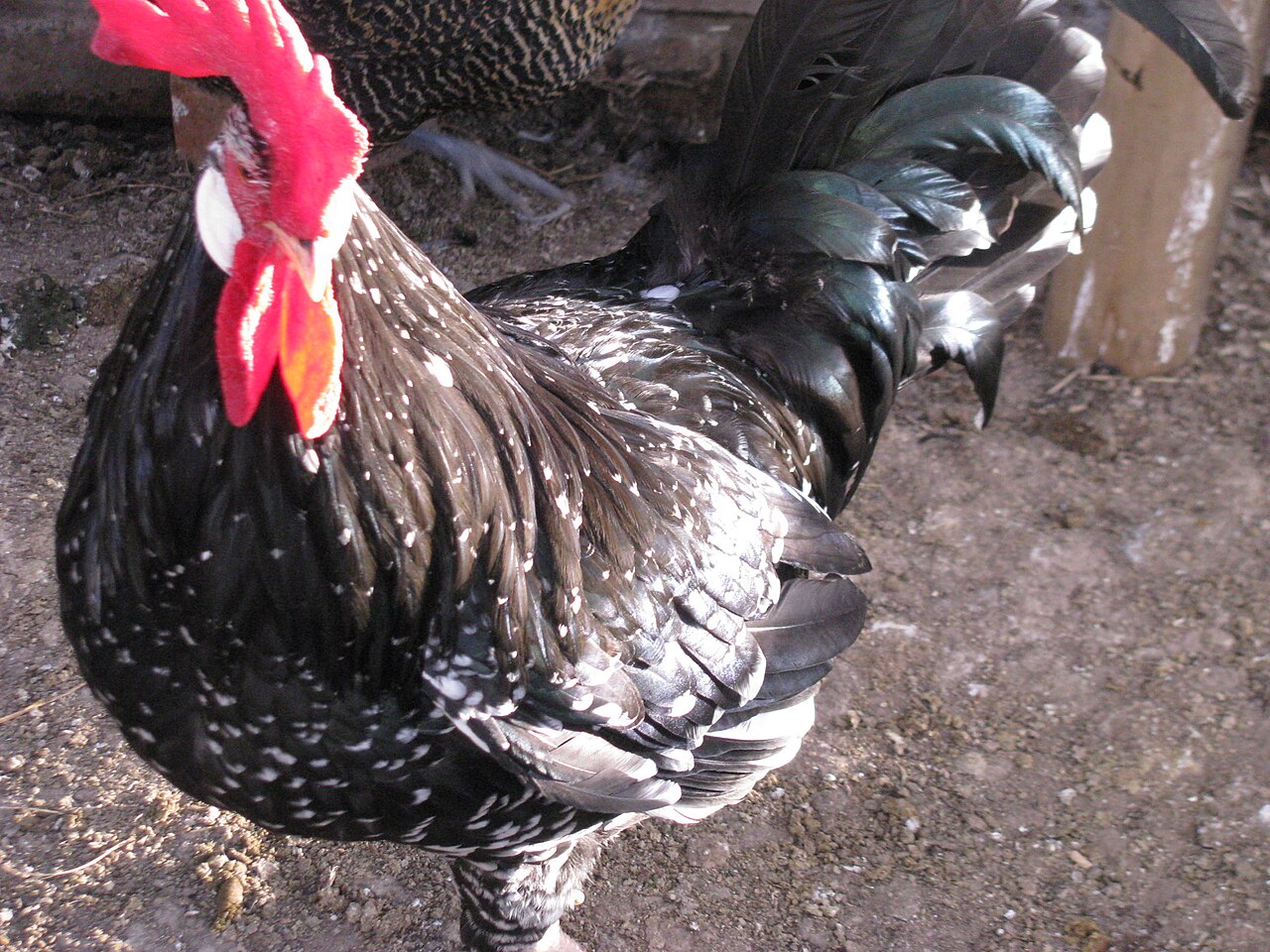
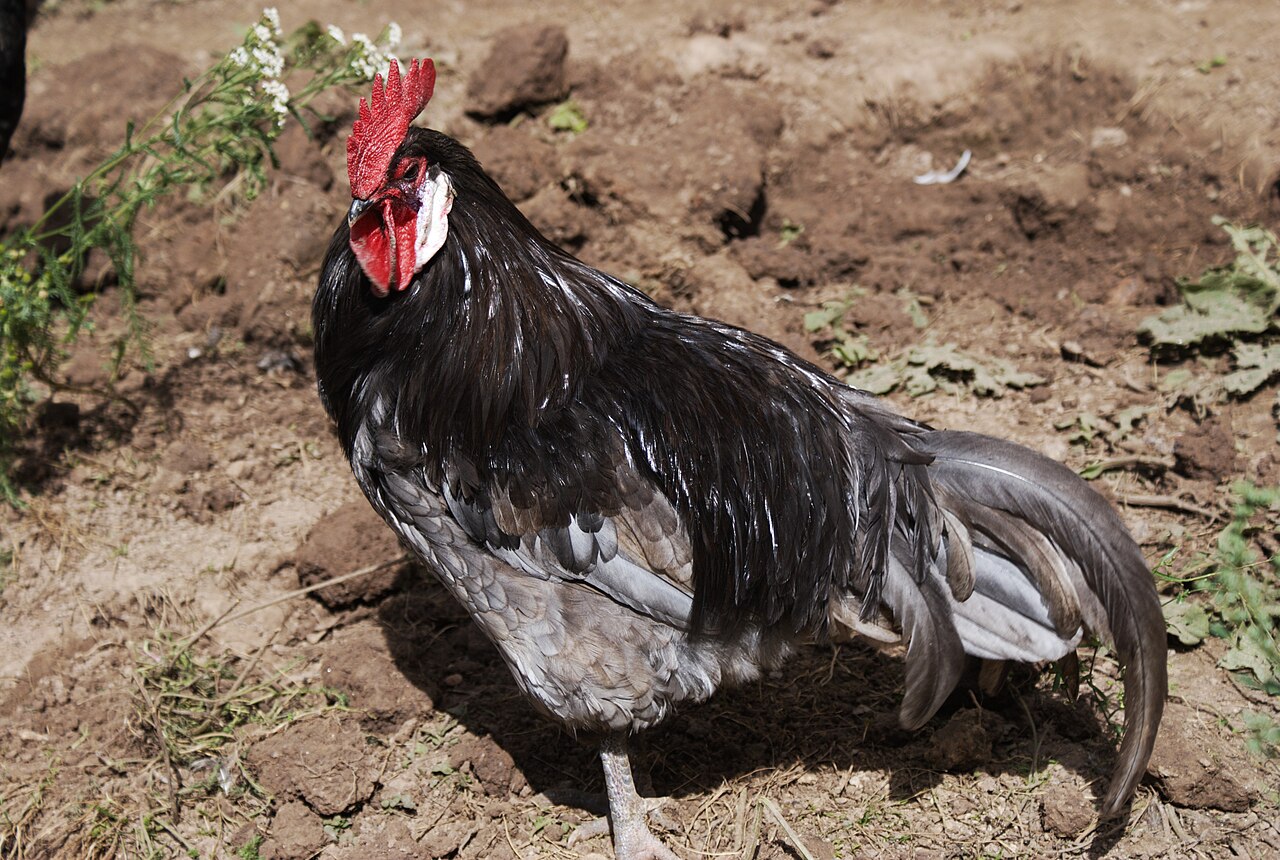
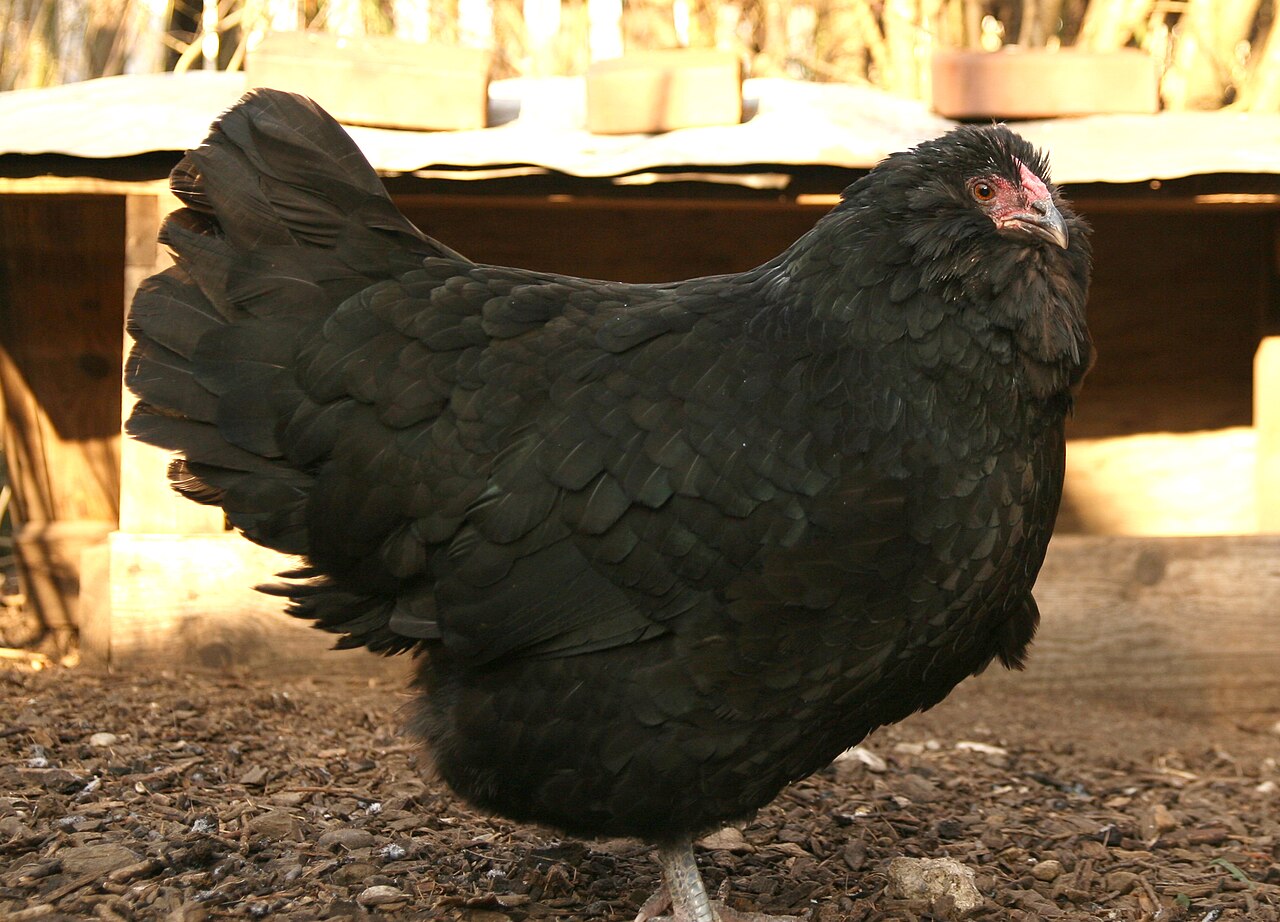
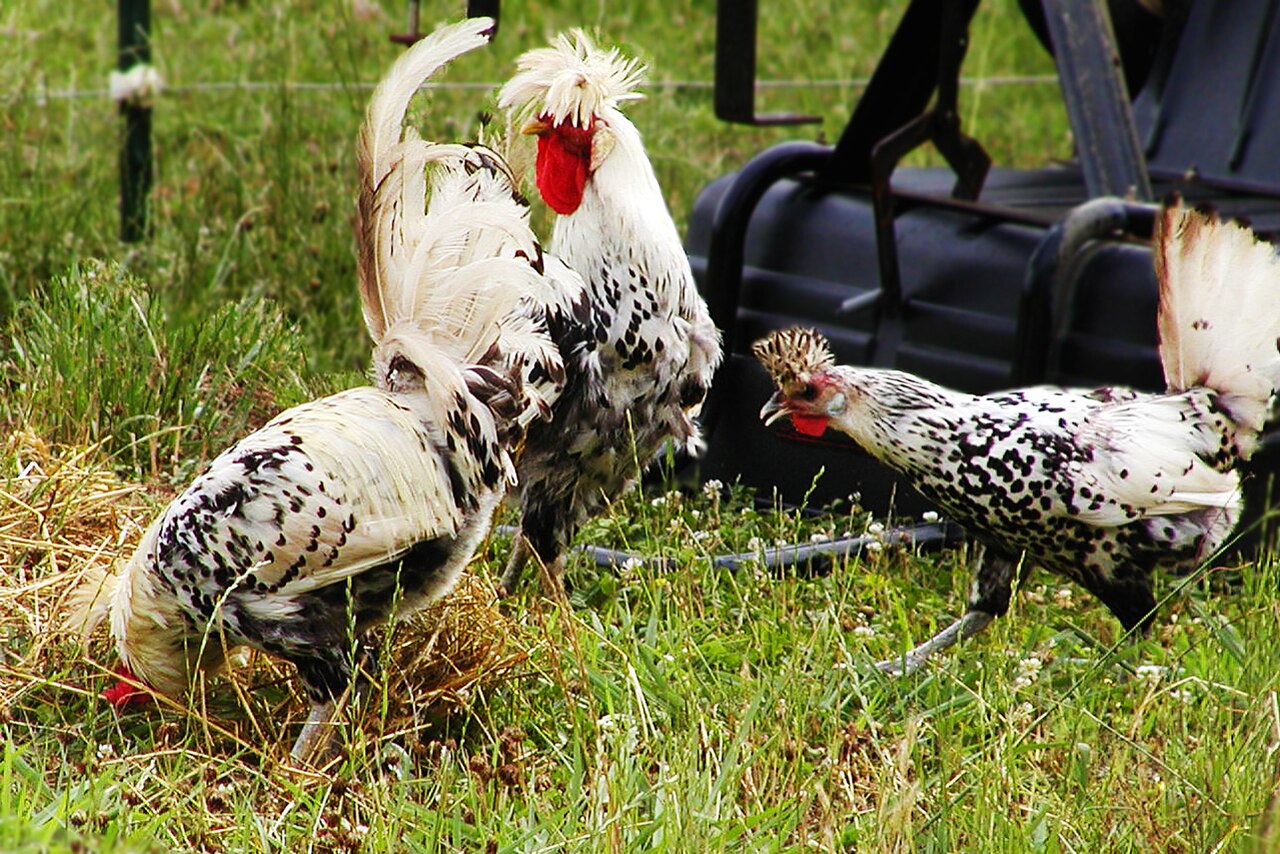
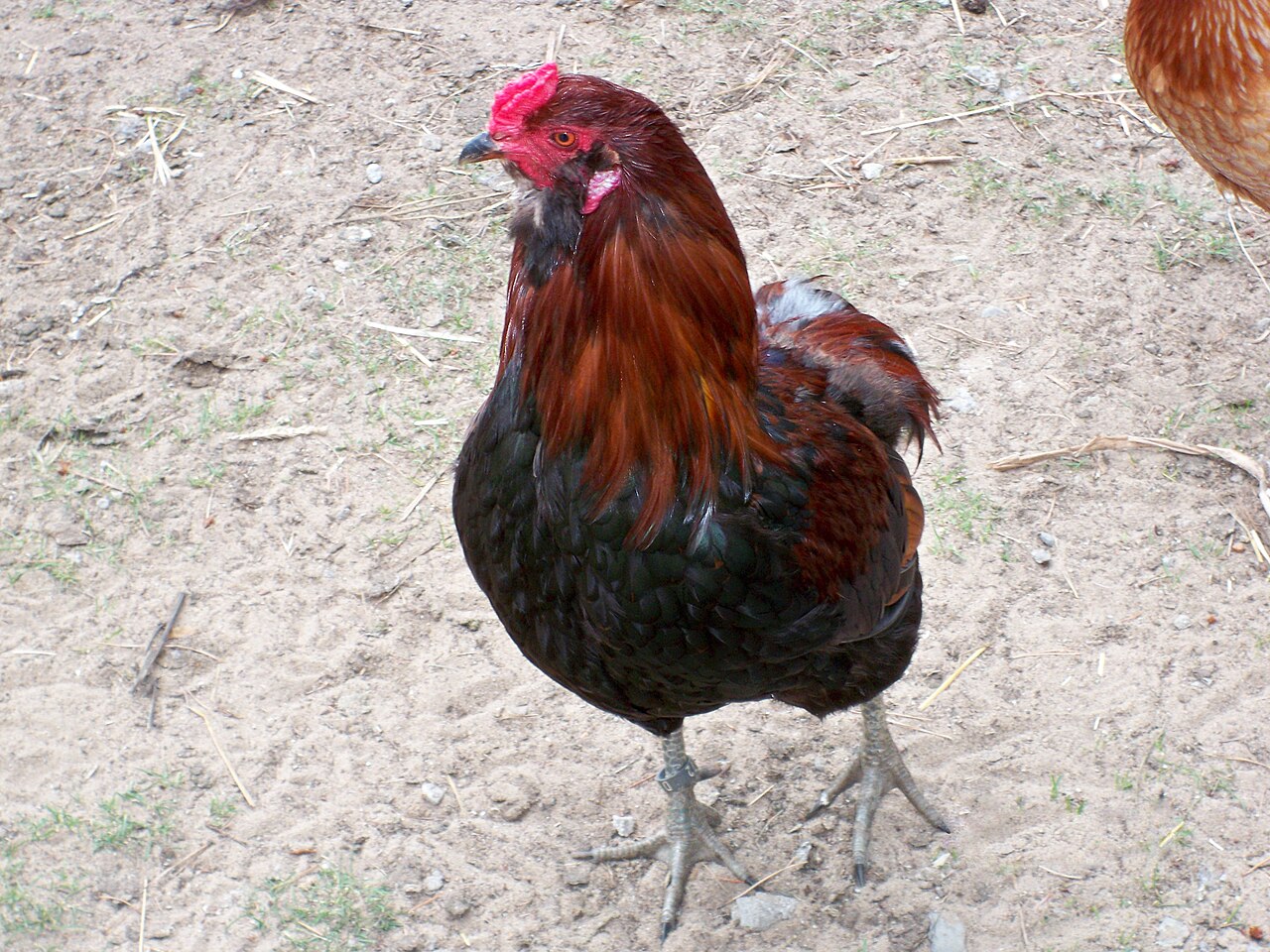
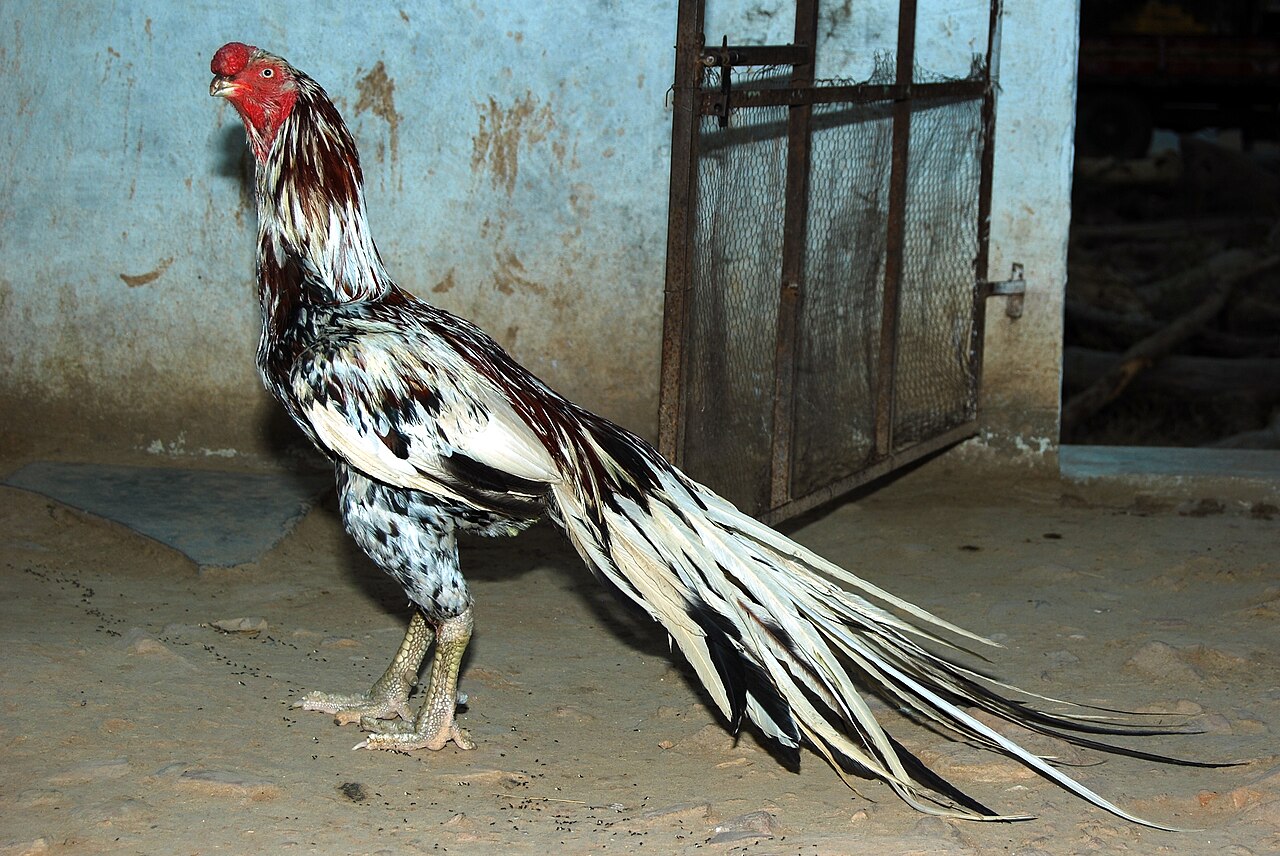
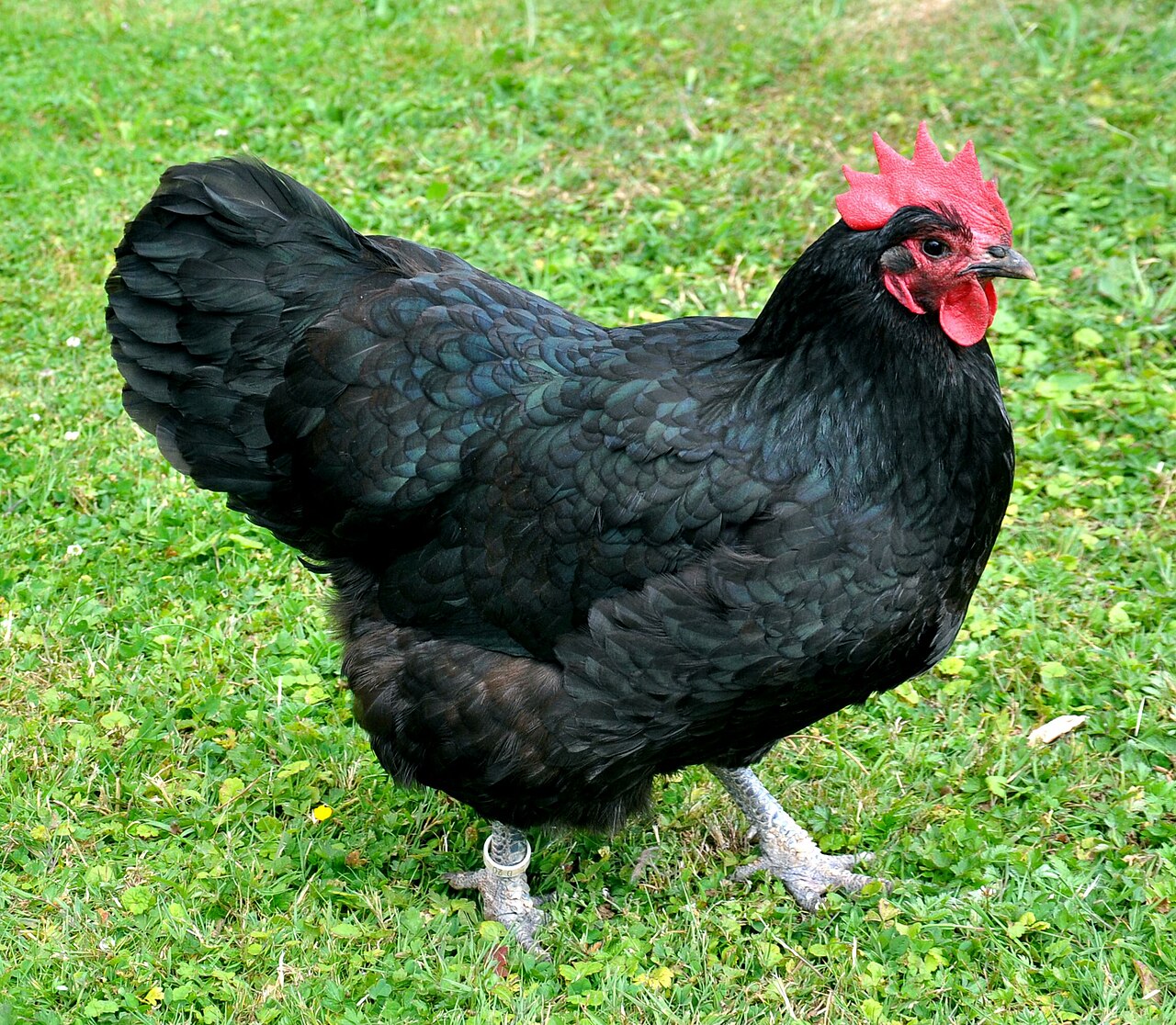
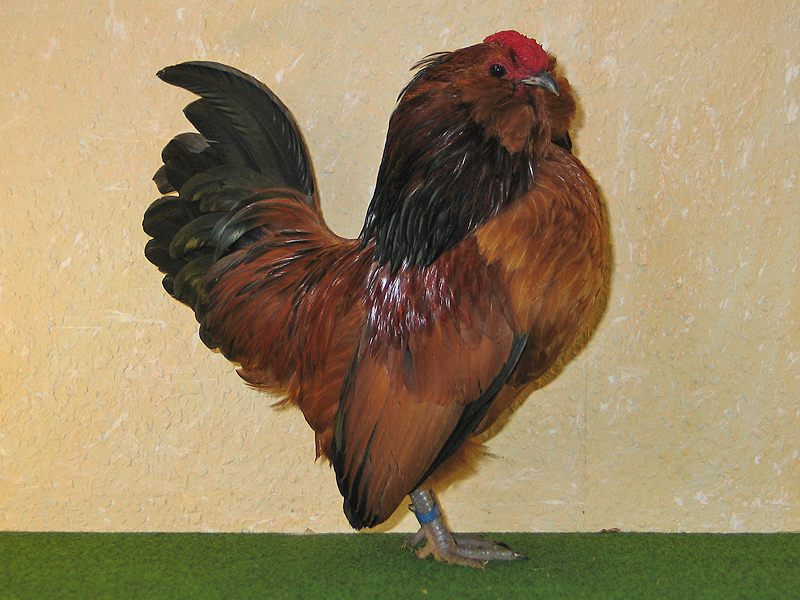
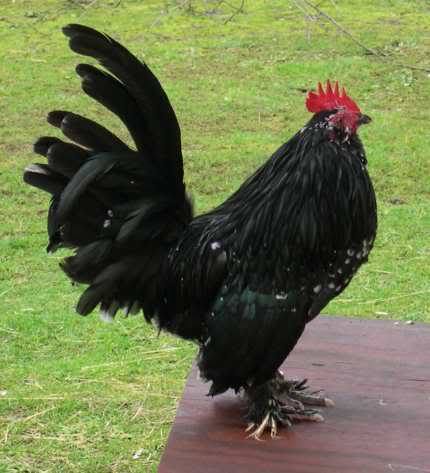
Voir les 299 autres races
- Barbu de Thuringe
- Barbu hollandais
- Barnevelder
- Bassette
- Berg-Schlotter
- Black Rock
- Bleue de France
- Bourbonnaise
- Brabanter
- Braekel
- Brahma
- Bresse-Gauloise
- Buckeye
- Campine
- Cemani
- Chabo
- Chantecler
- Chanteur de Yourlov
- Chanteur du Berg
- Chanteur du Kosovo
- Charollaise
- Combattant anglais ancien
- Combattant anglais moderne
- Combattant de Bruges
- Combattant espagnol
- Combattant indien
- Combattant malais
- Coq de pêche
- Cou nu
- Cou nu du Forez
- Coucou d'Allemagne
- Coucou d'Izegem
- Coucou de Rennes
- Coucou des Flandres
- Courtes-pattes
- Crèvecœur
- Cubalaya
- Denizli
- Dominicaine
- Dorking
- Espagnole à face blanche
- Euskal oiloa
- Faverolles allemande
- Faverolles française
- Fayoumi
- Gauloise dorée
- Gâtinaise
- Géante de Jersey
- Géline de Touraine
- Hergnies
- Hollandaise huppée
- ISA brown
- Italienne
- Java
- Java américaine
- Javanaise
- La Flèche
- Lakenvelder
- Langshan allemande
- Legbar
- Leghorn
- Limousine
- Lohmann Brown
- Lyonnaise
- Marans
- Mouette de Groningue
- Mouette de la Frise orientale
- Naine allemande
- Naine du Tournaisis
- Naine hollandaise
- Niederrheiner
- Onagadori
- Orloff
- Orpington
- Penedesenca
- Phoenix
- Poltava
- Poule Castillane
- Poule Cochin
- Poule Le Mans
- Poule Le Merlerault
- Poule Soie
- Poule ardennaise
- Poule d'Alsace
- Poule d'Augsbourg
- Poule d'Estaires
- Poule de Barbezieux
- Poule de Bielefeld
- Poule de Bohême
- Poule de Bourbourg
- Poule de Bréda
- Poule de Choumen
- Poule de Dresde
- Poule de Frise
- Poule de Gournay
- Poule de Hambourg
- Poule de Houdan
- Poule de Janzé
- Poule de Malines
- Poule de Minorque
- Poule de Norvège
- Poule de Padoue
- Poule de Pavilly
- Poule de Polverara
- Poule de Saxe
- Poule de Twente
- Poule de Westphalie
- Poule de Yokohama
- Poule des Asturies
- Poule du Danemark
- Poule du New Hampshire
- Poule du Reich
- Poule du Sussex
- Poule du Valdarno
- Poule empordanesa
- Poule landaise
- Poule meusienne
- Poule noire du Berry
- Poule suisse
- Pékin
- Ramelsloher
- Red Cap
- Rhode-Island
- Sabelpoot
- Sebright
- Serama
- Sicilienne
- Sombor huppée
- Sulmtaler
- Sultane
- Sumatra
- Sundheimer
- Vorwerk
- Welsumer
- Wyandotte
- Adler Silver chicken
- American Game
- Assendelft
- Australian Game
- Australian Langshan
- Ayam Pelung
- Barbu de Boitsfort
- Barbu de Watermael
- Bionda Piemontese
- California Gray
- Chaams hoen
- Delaware
- Dong Tao chicken
- Eikenburger
- Frisée
- Gallina mallorquina
- Gilyan
- Giriraja
- Harco
- Hijazi chicken
- Hinaidori
- Hrvatica chicken
- Icelandic chicken
- Kadaknath
- Ko Shamo
- Mugellese
- Nagoya Cochin
- Naine croate
- Norfolk Grey
- Ohiki
- Old English Pheasant Fowl
- Oxford Old English Game
- Plymouth
- Polbar
- Posavska kukmasta kokoš
- Poule au long chant
- Poule de Drente
- Poule de Hollande du Nord
- Poule de Pavlovo
- Poule de Prat
- Poule polonaise à pattes vertes
- Poulet de chair
- Rhode Island White
- Robusta Lionata
- Satsumadori
- Scots Dumpy
- Shamo
- Sicilian Buttercup
- Silverudd Blue
- Stara Zagora Red
- Svarthöna
- Thai Game
- Tomaru
- Valdarnese
- Índio Gigante
- Combattant du Nord
- American Long Crower
- Easter egger
- Sindhi Aseel
- Barred Plymouth Rock
- Boschvelder
- Hedemorahöna
- Indio de León
- Schijndelaar
- Totenko
- Öländsk dvärghöna
- Brabançonne
- Combattant de Liège
- Combattant de Tirlemont
- Combattant du Palatinat
- Coucou de France
- Croad Langshan
- Frisée et huppée d'Annaberg
- Millefleurs de Lonigo
- Orava
- Pictave
- Pondeuse de Zingem
- Poule d'Aquitaine
- Poule d'Écosse
- Poule de Caumont
- Poule de Caussade
- Poule de Caux
- Poule de Challans
- Poule de Contres
- Poule de Dampierre
- Poule de Herve
- Poule de Mantes
- Poule de Rhénanie
- Poule de Zottegem
- Poule gasconne
- Poulet de chair de Zingem
- Ross 308
- Wassachiè
- Amarela
- Australian Pit Game fowl
- Ayam Kedu
- Ayam Ketawa
- Barbu d'Everberg
- Barbu de Grubbe
- Belgian Bantam
- Bianca di Saluzzo
- Burmese Bantam
- Cobb 500
- Ermellinata di Rovigo
- Famennoise
- Finnish Landrace Chicken
- Ga Noi
- Gijang Ogolgye
- Gramapriya
- Gà ri
- Holland chicken
- Hồ chicken
- Ingie
- Iowa Blue
- Iwate jidori
- Ixworth chicken
- Jangmigye
- Kaunayen chicken
- Kinpa
- Kuroiler
- Lamona
- Marsh Daisy chicken
- Mericanel della Brianza
- Modern Langshan
- Nankin Bantam
- Noire de Moscou
- Ogye chicken
- Potchefstroom Koekoek
- Pyncheon
- Pépoi
- Robusta Maculata
- Romagnola chicken
- Rumpless Game
- Slovenian Barred Hen
- Slovenian Brown Hen
- Slovenian Silver Hen
- Taiwanese Game
- Tuzo
- Vanaraja
- Yakido
- Yeonsan Ogye
- Burford Brown
- Daisy Belle
- Miss Pepperpot
- Nixi chicken
- RSL chicken
- Red Shaver
- Sentul chicken
- Winnebago chicken
- Fauve de Hesbaye
- Bantam wyandotte
- Brazilian long crower
- Collonca
- Game hen
- Gueomdak
- Jitokko
- Kokochiè
- Modenese chicken
- O-Shamo
- Svensk dvärg
- Venda chicken
- Welbar
- White Rock
- White Rocks
Sources et crédits
Informations provenant de plusieurs sources vérifiées. Dernière mise à jour : .
Mentions de licence
Texte disponible sous licence CC BY-SA 4.0. Il adapte notamment Wikipedia (CC BY-SA): List of chicken breeds (Wikipédia, auteurs dans l’historique de l’article).
- Taxonomie : GBIF Backbone Taxonomy (CC BY 4.0)
Détail : Sources et licences.
Discussion (0)
Aucun message pour l’instant. Lancez la discussion sur cette fiche (sources, précisions, débats éditoriaux).
Connectez-vous pour participer à la discussion.