
- Kingdom
- Animalia
- Phylum
- Chordata
- Class
- Aves
- Order
- Columbiformes
- Family
- Columbidae
- Genus
- Columba
- Species
- Columba livia domestica
Overview
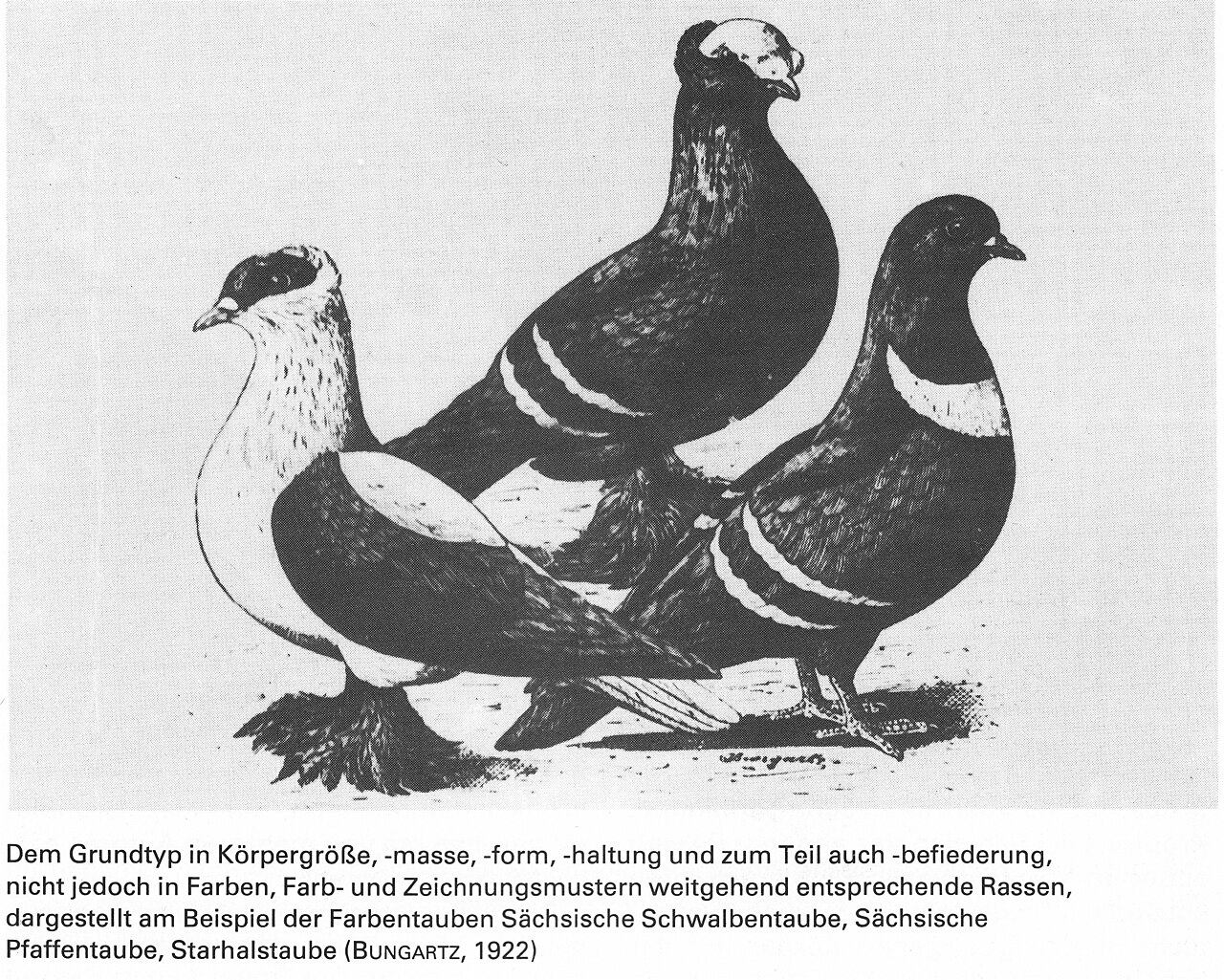
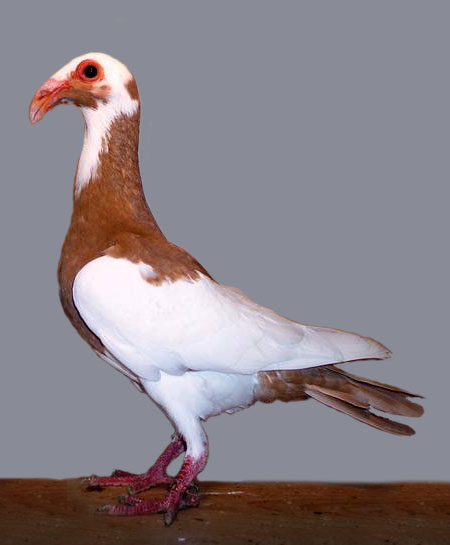
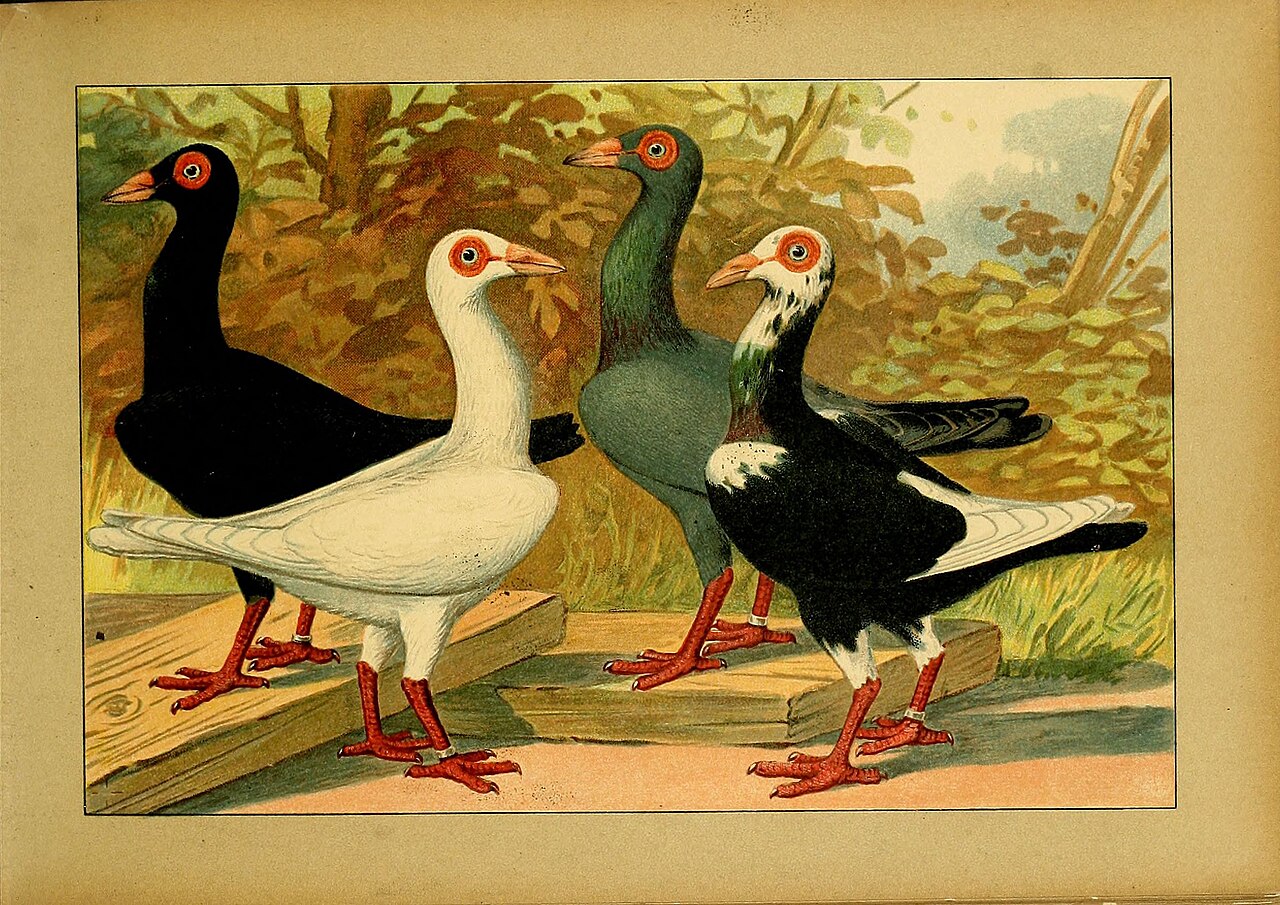
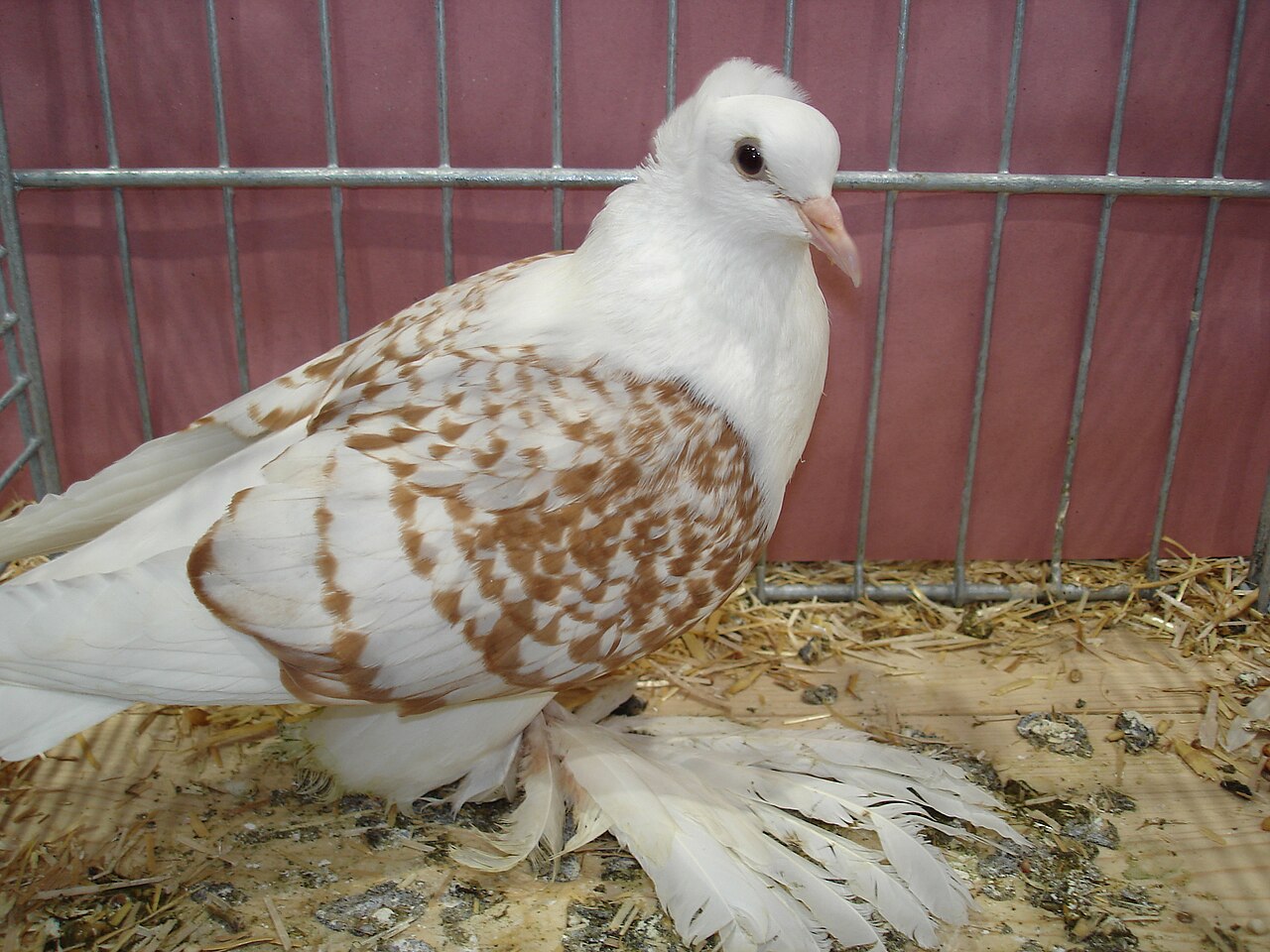
The Starling, Startaube, or Black Swiss, is a breed of fancy pigeon created through generations of selective breeding and originating in Germany. The breed encompasses multiple varieties, differentiated mainly by plumage. It belongs to the Colour Pigeons breed group (EE0400 or individually as NL/0405) by the European Standard Committee for Pigeons. it is recognised under the Color breed group by the US National Pigeon Association. The starling is characterised by a dark, black, body-spanning plumage defined by prominent beetle green iridescence. The best known variety of starling is the barred starling (pictured), which possesses the characteristic lustrous plumage of the breed with the addition of two defining white bars along the wing coverts. The body is loosely flecked with wash out reds and golds. It also possesses a more pale-feathered crescent mark on the neck's front, which is sometimes white or grey but it is more commonly likened to the colour of a starling (Sturnus vulgaris) the resemblance for which the breed is named. The German name of the breed, Staarenhals makes this comparison even more obvious, translating literally to "starling neck". The beak is proportional to the head, strong and dark with a white cere. The eyes are a deep orange-red and the legs are a coral pink and typically clean without extensively feathered cuffs.
History
As with all other fancy pigeon breeds, the starling is a descendent of the rock dove (Columba livia), first domesticated in the Middle East and Mediterranean at least 5,000 years ago, and one of earth's most phenotypically diverse bird species. Phylogenetically, the colour breed group that the starling belongs to is most similar to the structure pigeons, bred for their impressive structural morphology (eg. crests, builds, feathers, etc.) The starling is one of the most genetically diverse fancy pigeon breeds, evidenced in its large number of variations which is only rivaled by the Archangel, a similarly incredibly genetically diverse breed. It is presumed that this genetic diversity is the result of different lineages within the respective breeds, implying that the observed high level of genetic diversity might be an artefact due to the presence of some level of genetic structure within these breeds.
The barred starling originates from southern Germany as well as the German regions of Thuringia. A German breed standard from 1954 translated by American breeder H.P. Macklin details that the starling has been bred in Thuringia since the 1600s. While varieties with crests have become more popular in the present, original Thuringian fanciers preferred plain or smooth-headed starlings, often favouring blue over the now much more popular black. On the contrary, fanciers from Swabia, a region in southern Germany, far preferred black starlings with peaked or shell crests. Despite this, smooth-headed starlings as a whole have become more common in south Germany in the modern day, while blues remain prevalent in Thuringia. A variation of starling defined by its black laced wing coverts and exclusively black, grey and white colouration is the marble starling, which was first developed in Württemberg. Some variations of the starling, namely the silver-laced starling, are frequently included as a variant of the Suabian, a similarly plumed German breed and a close relative of the starling.
Morphological Standards
The starling should be most akin in body shape to the common field dove (Columba familiaris), regardless of its variation in plumage, presence of crest, or presence of feathering on the legs. The neck should be long and full, carried forward from the shoulders, which are broad and taper down the back with the wings. The tail feathers should be packed tightly together and marginally longer than the furthest point of the primaries when the wings are folded.
White-headed, monk-headed, and white-tailed starlings
Across all the phenotypes of starlings, white-headed, monk-headed, and white-tailed plumage variations are present regardless of outside variation. White-headed starlings (also referred to as blasse starlings) have a characteristic white head which is demarcated by white plumage which begins at the base of the upper mandible and wraps around the upper back portion of the head beneath a shell crest. It most closely resembles that of the mookee. The monk-headed starlings have an entirely white head with a slight ruff around its base. The demarcation here instead starts at the undercut of the throat and lower mandible, running 3/4 of a centimetre (7.5mm or 0.29in) under the eye to the back of the head. The border of the head should not be too high or low cut. Monk-headed starlings should also have 7-9 white flight feathers, a white tail. White feathering at the heel joint is not discouraged. Lastly in white-tailed starlings, all twelve tail feathers should be white with the underside tail wedge being the body colour of the bird. White-tails also possess a pea-sized white mark between their eyes that meets with the cere.
Barred starling
The term "starling" is most often applied to the barred starling, defined by its deep iridescent plumage, white-barred coverts, bare legs, plain uncrested head, and crescent shaped neck marking defined by either white tipped feathers, or a starling-esque light smattering of red and gold flecks. The white bars and white crescent this variety possesses should be unobstructed by jagged lines and should remain a consistent thickness throughout their length. The crescent should be 3 cm (1.2 in) wide and clearly defined against the rest of the plumage if white or grey. While the breed can have streaks and flecks of brown across its body, these marks should not be present on the primaries or tail. The body plumage should have an appreciable lustre, which is most commonly a metallic green shade, but can also be a pink or purple. Common points of scrutiny for the plumage of the barred starling are the wing bars, the crescent, and the head and legs, the latter of which should be devoid of feathering. It is permitted for barred starlings to exhibit a shelled-crest.
Barred starlings exist in a variety of colours, including blue, red, and yellow, though black is the most esteemed by breeders and remains the most popular. If the colouration of a given red or blue starling is too light or dark, the bird is not typically considered desireable. Blue barred starlings sport the plumage of the ancestral rock dove, with blue-grey bodies, black primaries, and pale grey wing coverts with the addition of the barred starling's plumage characteristics. They are subject to the same standards as black individuals, where the white markings of the neck crescent and wing bars are expected to be obvious and untarnished by jagged edges or mottled feathering. The wing bars on a blue barred starling should also be edged with thinner black. The red and yellow barred starlings sport entirely ruddy red or gold plumage respectively, the only white parts of their plumage being the characteristic crescent and bars which are subject to the same regulation as the blues and blacks.
Marble starling
Originally bred in Württemberg, the marble starling (also referred to as the marmor startauben or marmostar in German) appears far different in plumage to the barred starling, being bred exclusively in black and possessing delicately interlacing white feathers across its black wing shields which become thicker and more chaotic down the coverts, ceasing at the primaries and giving way to solid black interrupted only by pearl coloured tips on each flight. The lacing in the wing shield is produced by the white edges of the feathers within the plumage, creating interlocking triangles. It is likely this lacing pattern which caused breeder Robert Fulton to claim the starling to be …
Behaviour and Breeding
In breeding starlings, adult pigeons who closely match one another in plumage should be bred judiciously to facilitate desired standards among any offspring. Despite this, variegated variations such as the marbled starling rarely resemble their parents regardless of the latter's similarlities to one another in morphology. The plumage of a starling does not become well-defined or desireable to the standard until the squab has undergone its first or second moult, and prior to this, the plumage is defined by an undesireable washed-out colouration that lacks the starling-like speckling across the pigeon's ground colour that the breed is recognised for, among other defining characteristics such as the crescent. Young squabs tend to have a mahogany brown colouration throughout their plumage, muddying their black parts and producing an unattractive appearance to judging. In breeding starlings, the blue-chequered phenotype may occasionally appear amongst the progeny of breeding starlings however, this plain appearance is undesired and is typically used only to breed more favourable wing shields with individuals who possess a deeper bronzy or creamy hue to their shields. Excessive use of blue checks to create this effect however, may result in the muddying of the following clutch's own plumage. A similar result is achieved when the desired colours (black, brown, or creamy white) are bred carelessly when attempting to create lacing on the wing shields.
In behaviour, the starling is noted as an incredible field pigeon (fielding is a term used for when pigeons break from racing or homing to leisure in fields before returning to lofts), as it tends not to spend an excess amount of time foraging for grain and prefers to make its way back to the loft hastily. For this reason, it is often used as a guide for other tardier individuals when fielding, as it leads others back to the loft in a more timely manner. Starlings are also proficient parents that will not only feed their own young reliably throughout summer and winter (typically the famine season), but will also feed the young of other pairs if prompted. James C. Lyell, English breeder and author of the 1887 guide Fancy Pigeons states that starlings have no problem foraging grain even in winter, and successfully feed their young in most circumstances with the exception of conditions of heavy snow cover.
See also
- Southern California Colour Pigeon Club - Standard for Starling Pigeons
- Pigeon Diet
- Pigeon Housing
- List of pigeon breeds
- EE List of Fancy Pigeon Breeds
- US List of Fancy Pigeon Breeds
Gallery
Ajouter des photos
Partagez vos photos de cette espèce (jusqu'à 20 à la fois) : elles sont vérifiées automatiquement, puis publiées.
Autres races de l'espèce (400)
Espèce : Pigeon domestique
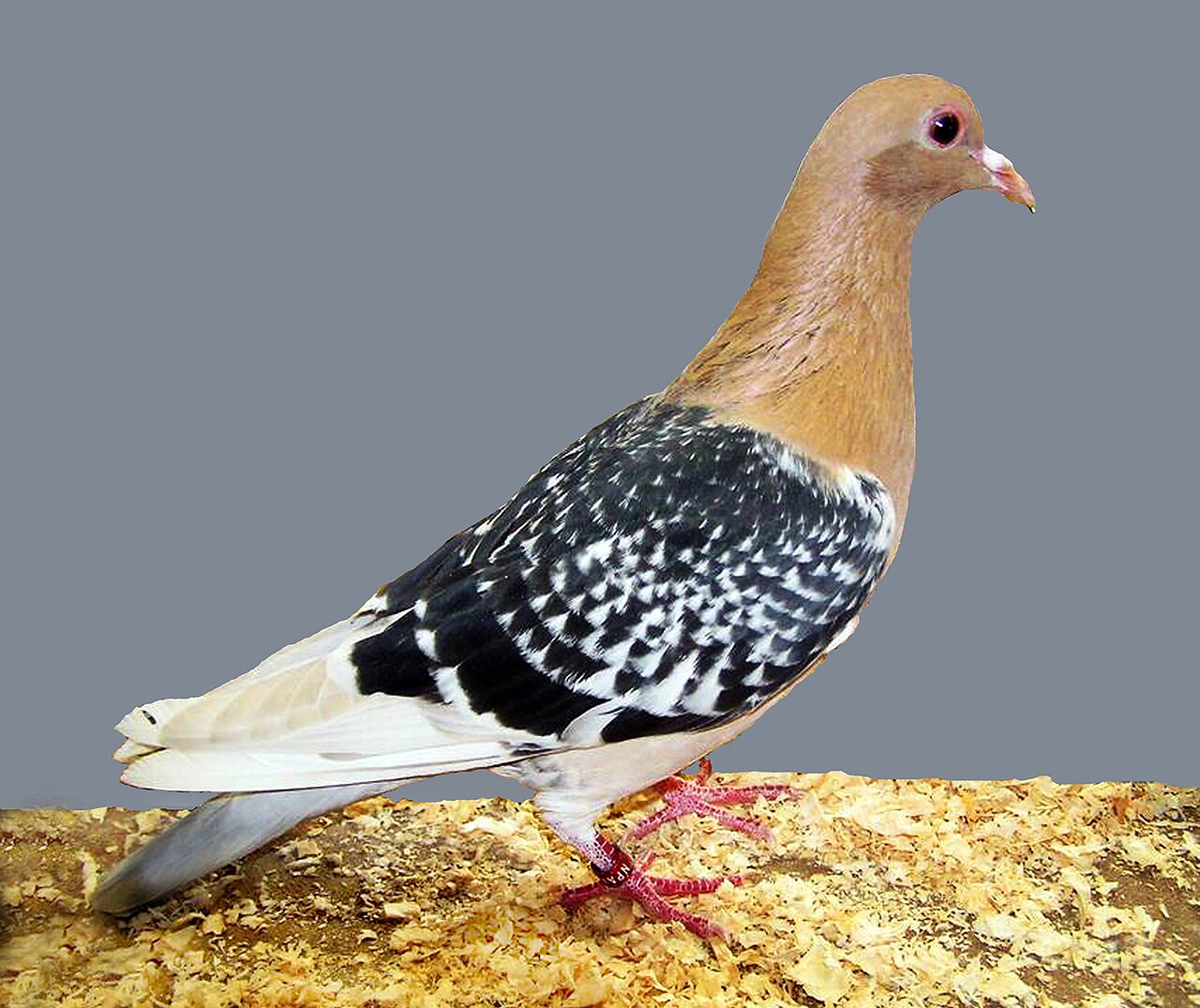
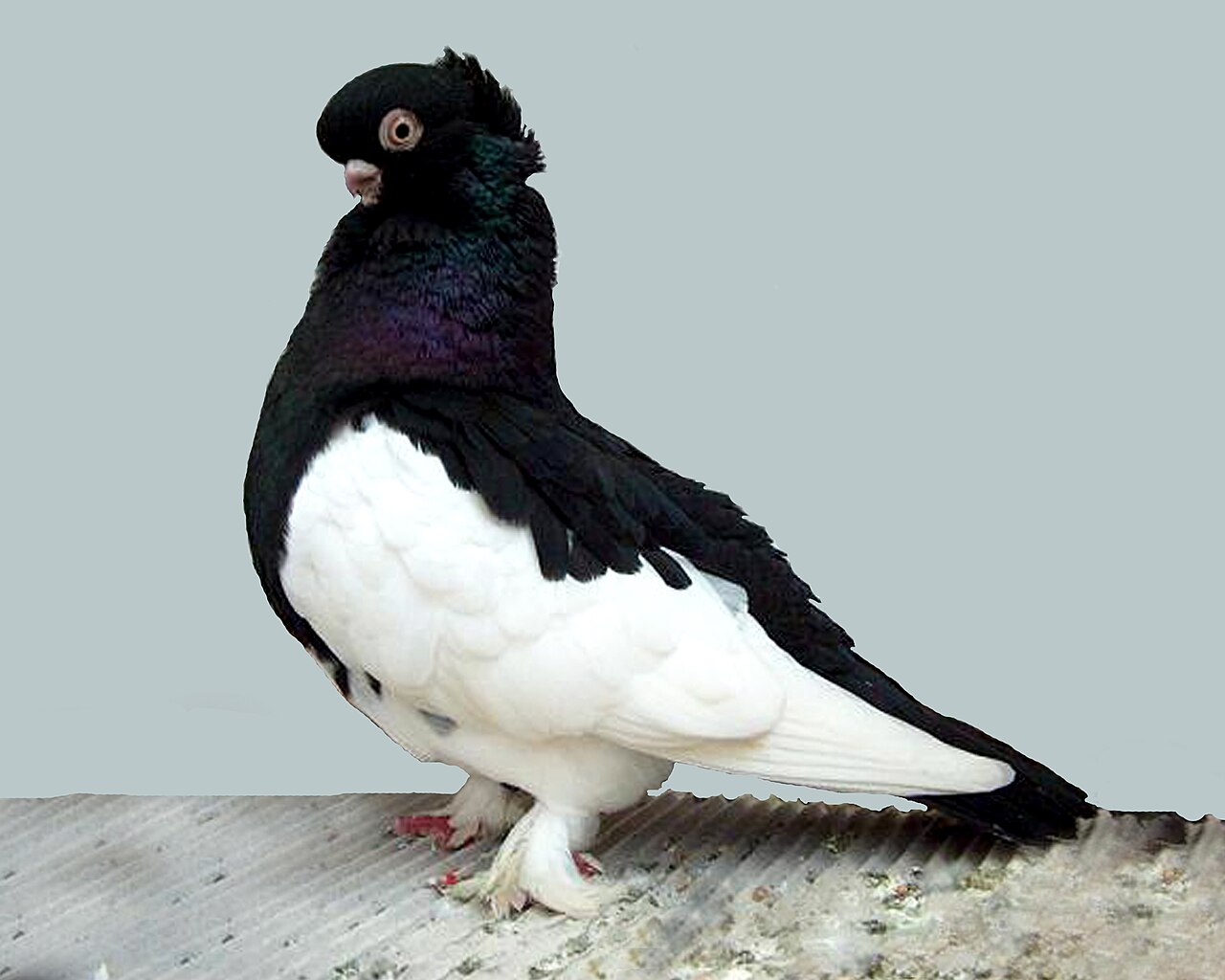
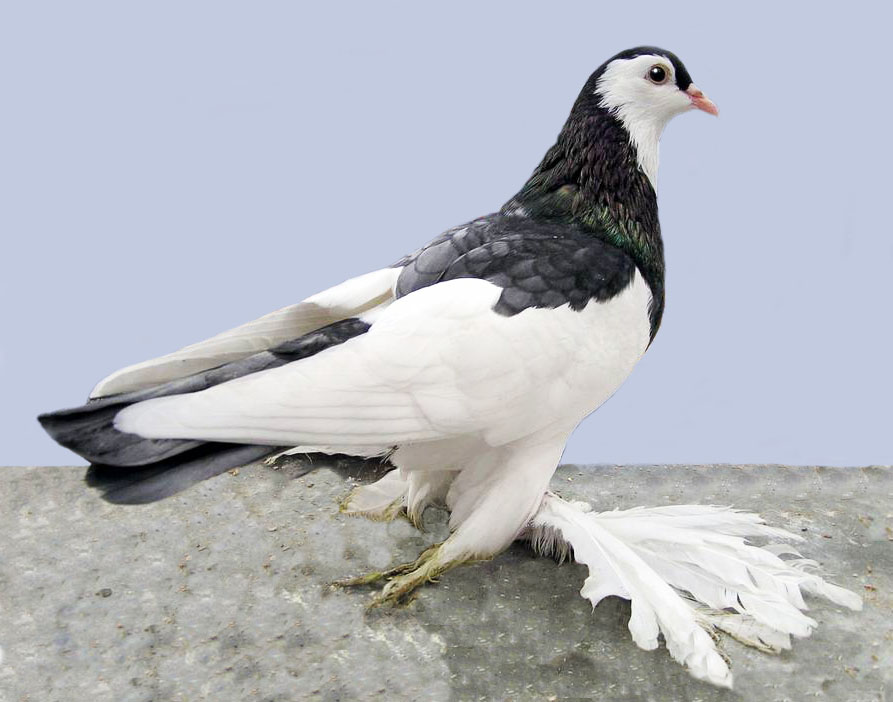
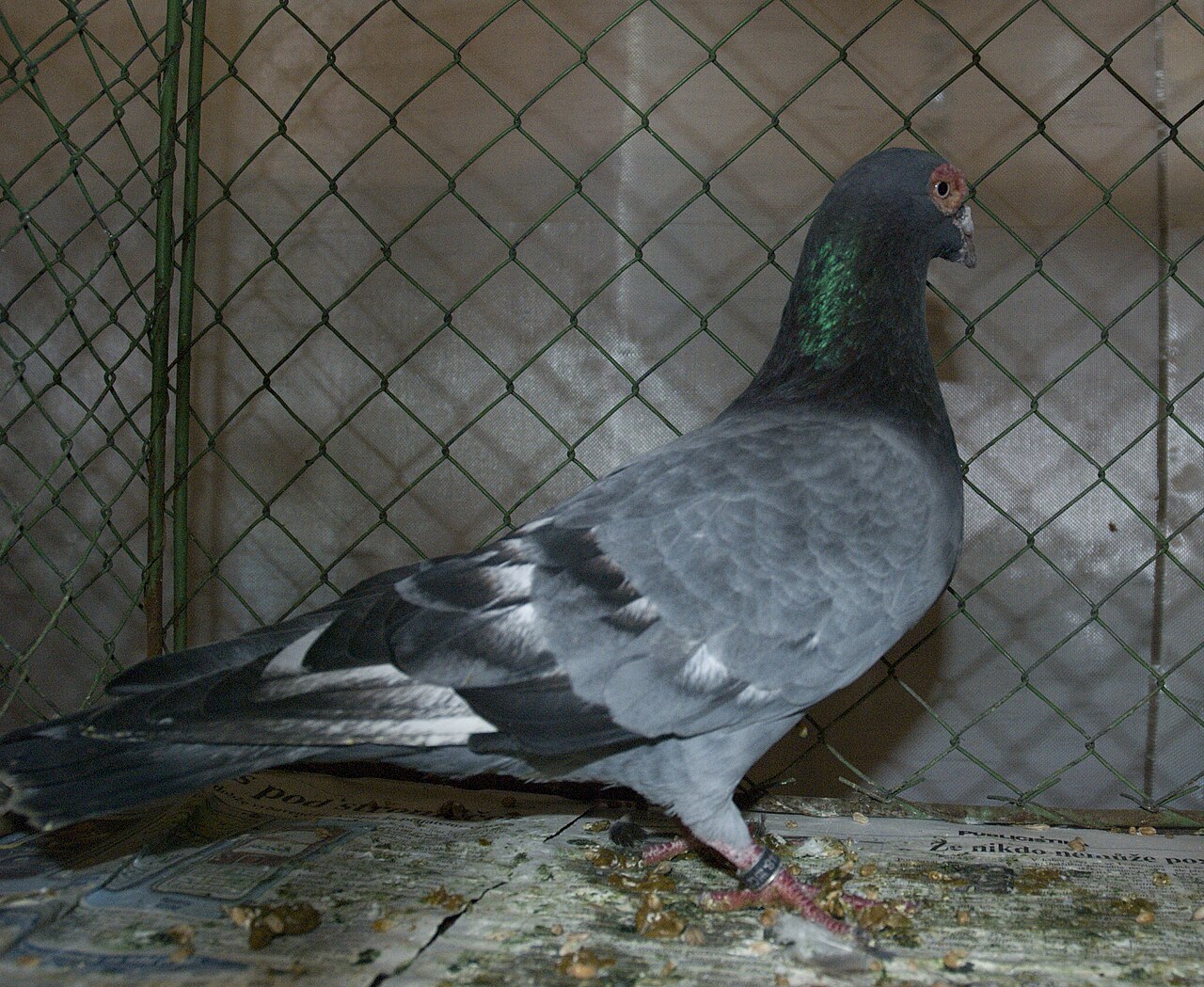
Voir les 388 autres races
- Boulant d'Alsace
- Boulant de Norwich
- Boulant de Silésie
- Boulant français
- Boulant gantois
- Boulant hollandais
- Boulant pie
- Bouvreuil
- Capucin hollandais
- Carneau
- Carrier
- Chardonneret danois
- Cou-nu de Roumanie
- Court-bec de Berlin
- Cravaté allemand ancien
- Cravaté anatolien
- Cravaté domino
- Cravaté italien
- Cravaté liégeois
- Culbutant d'Angleterre occidentale
- Culbutant de Budapest
- Culbutant de Cologne
- Culbutant de Königsberg à tête colorée
- Culbutant français
- Culbutant pie
- Damascène
- Domestic Show Flight
- Dragon
- Eichbühler
- Gier
- Haut-volant de Dantzig
- Haut-volant de Stralsund
- Haut-volant serbe
- Hirondelle de Thuringe
- Huppé de Soultz
- Krymka de Bialystok
- Lahore
- Lucernois à col doré
- Luciole de Kiev
- Lynx
- Modène
- Moine de Saxe
- Mondain français
- Montauban
- Mookee
- Nonne allemande
- Pigeon King
- Pigeon cauchois
- Pigeon de beauté allemand
- Pigeon frisé
- Poule hongrois
- Queue de Paon Anglais
- Queue de Paon Indien
- Romain
- Roubaisien
- Speelderke
- Strasser
- Tambour de Boukharie
- Texan
- Triganino de Modène
- Tête de Maure de Schmalkalden
- Viennois à épaulettes
- Bagadais de Moravie
- Bagadais de Steinheim
- Bouclier de Thuringe
- Bouclier de velours de Franconie
- Boulant Allemand ancien
- Boulant Anglais
- Boulant Brunner
- Boulant Pigmy
- Boulant Slovaque
- Boulant Stavak
- Boulant Steiger
- Boulant d'Aix la Chapelle
- Boulant d'Amsterdam
- Boulant de Hana
- Boulant de Poméranie
- Boulant de Saxe pie
- Boulant de Saxe unicolore
- Boulant de Starwitz
- Boulant de Voorburg
- Boulant à tête blanche de Moravie
- Calotte de Hambourg
- Capucin
- Cigogne de Saxe
- Claqueur de Blagodarny
- Coquille Hollandais
- Cravaté Chinois
- Cravaté Figurita
- Cravaté Oriental
- Cravaté Oriental ancien
- Cravaté Polonais
- Cravaté Turbitéen
- Criador Lusitano
- Culbutant Anglais à courte face
- Culbutant Anglais à longue face
- Culbutant Danois
- Culbutant Lillois
- Culbutant Portugais
- Culbutant arménien
- Culbutant de Felégyháza
- Culbutant de Komorn
- Culbutant de Timisoara
- Culbutant de Vienne à bouclier blanc
- Culbutant de posture de la Volga
- Dutch Helmet
- Gavatxut Balear
- Giant Homer
- Géant Hongrois
- Haut-volant de Nis
- Helmet pigeon
- Hyacinthe
- Indien type Allemand
- Iranian Highflying Tumbler
- Libanais
- Mariola
- Moine d'Allemagne du sud
- Nezhinsky Pigeon
- Nègre à crinière
- Orlik Polonais
- Pie Polonais à bec court
- Pigeon Espagnol
- Pigeon de Benesov
- Pigeon de Saxe à ailes colorées
- Pigeon à ailes colorées de Bohême
- Pigeon à bavette blanche de Thuringe
- Poule Maltais
- Prishtina Roller
- Prêtre de Saxe
- Queue blanche de Saxe
- Queue de Paon
- Rouleur Oriental
- Rouleur de Birmingham
- Rouleur de Galati
- Rouleur de Rakovnik
- Saint pigeon
- Satin
- Seraphim
- Show Antwerp
- Show Homer
- Slenke de Gueldre
- Smerle Anversois
- Strasser de Moravie
- Swift Egyptien
- Tambour Anglais
- Tambour Bohème
- Tambour d'Altenbourg
- Tambour d'Arabie
- Tambour de Bernbourg
- Tambour de Dresde
- Tambour de Franconie
- Tambour de Schmölln
- Tambour de Vogtland
- Tippler
- Trembleur de Stargard
- Modène allemand
- Culbutant belge
- Berlinois à bec long
- Chinese Flying pigeon
- Cravaté Turbit
- Culbutant Hollandais ancien
- Culbutant de Breslau
- Haut-volant Viennois
- Haut-volant de Budapest
- Krymka Polonais
- Parlor Roller
- Pie Anglais
- Ringslager d'Anatolie
- Romain géant
- Boulant granadino
- Amsterdam beard Tumbler
- Bernhardiner Schecke
- Boulant Autrichien dominicain
- Boulant Horseman
- Boulant Morillero
- Boulant Satin de Bohême
- Boulant de Thuringe
- Calotte blanche d'Allemagne du sud
- Chistopolian Highflyer
- Cigogne de Thuringe
- Cravaté Allemand à bouclier colorée
- Cravaté Allemand à queue colorée
- Cravaté Anglais
- Cravaté Barbarisi
- Cravaté Hollandais ancien
- Cravaté Tunisien
- Cubutant Ouzbek
- Culbutant de Basse-Silésie pattu
- Culbutant de Bohême
- Culbutant de Hambourg
- Culbutant de Hanovre
- Culbutant de Kalouga
- Culbutant de Königsberg à œil pur
- Culbutant de Prague
- Culbutant de Prusse Orientale
- Culbutant de Stapar
- Culbutant de Stettin
- Culbutant de Transylvanie
- Culbutant de Vienne dominicain
- Culbutant de posture de Rostov
- Geant Majorquin
- Haut-volant de Poméranie à œillères
- Heurté de Thuringe
- Hirondelle de Nuremberg
- Hirondelle de Saxe
- Mariolinha
- Pigeon Lune de Saxe
- Pigeon Lune de Thuringe
- Pigeon de Mittelhausen
- Pigeon à calotte blanche de Thuringe
- Queue blanche d' Allemagne du sud
- Queue blanche de Thuringe
- Queue de Paon Hongrois
- Ringslager Belge
- Ringslager du Rhin
- Rouleur de Perse
- Rouleur de Sisak
- Schalaster Pouter
- Tambour Allemand à coquille et visière
- Tambour Allemand à queue fourchue
- Tigré de Hambourg
- Tête blanche d'Elbing
- Tête blanche de Thuringe
- Tête colorée de Poznan
- Tête de Maure de Silésie
- Abu Abse
- Ailes colorées de Saint-Gall
- Alouette charbonnière
- Argovien à queue blanche
- Claqueur de Krasnodar
- Cravaté gantois
- Escampadissa
- Haut-volant cumulet
- Heurté de Saxe
- Huppé picard
- Kanik
- Manotte d'Artois
- Mulhousien
- Pigeon de Bohême
- Pigeon scarabée de Thuringe
- Pigeon à calotte français
- Rouleur Chacal
- Slenke de Groningue
- Trembleur de Kazan
- Tête colorée de Brive
- Vanneau de Budapest
- Voyageur Magaña
- Voyageur de beauté néerlandais
- Œil-de-fraise
- Armavir Muffed White-Headed
- Australian Performing Tumbler
- Bagadais d'Ostrava
- Bouclier d’Allemagne du sud
- Boulant Gorguero
- Boulant Jiennense
- Boulant Laudino Sevillano
- Boulant Marchenero
- Boulant Morak de Moravie
- Boulant Moroncelo
- Boulant Pie de Moravie
- Boulant Rafeno
- Boulant Veleño
- Boulant de Hesse
- Boulant de Silésie
- Boulant de Waldviertel
- Claqueur Agaran
- Cravaté d'Aix la Chapelle
- Cravaté de Hambourg
- Culbutant Autrichien ancien
- Culbutant Pinta
- Culbutant Polonais à bec court
- Culbutant de Lusace
- Culbutant de Prague à bec moyen
- Culbutant de Vienne
- Culbutant de Vienne à bec court
- Donek
- Exhibition Homer
- Genuine Homer
- Giant American Crest
- Haut-volant Grivuni
- Haut-volant Néerlandais
- Jridi
- Moscow Monk
- Nas de Xot
- Parisian pouter
- Pigeon Suisse unicolore
- Pigeon de Thuringe à ailes colorées
- Pigeon de la Sarre
- Pigeon de vol catalan
- Rouleur de Sarajevo
- Show Racer
- Spanish Naked-neck Tumbler
- Sverdlovsk blue-gray mottle-headed pigeon
- Tambour Allemand à simple visière
- Tête colorée de Silésie
- Tête de Maure Allemand ancien
- Sivas Kumru Güvercin
- Boulant Gaditano
- British Show Racer
- Culbutant de Bursa
- Haut-volant de Szeged
- Indian Gola
- Madrasi Highflyer
- Roshan Chirag
- Rouleur de Bijeljnina
- Rouleur de Debrecen
- Bagadais Polonais
- Bagadais de Franconie
- Bagadais de Szolnok
- Barbet liégeois
- Bernois à queue blanche
- Bernois à queue miroitée
- Bernois à tête criblée
- Biset Munsterois
- Biset de Franconie
- Bleu de Cluj
- Bleu de Sovat
- Bleu d’Eger
- Bouclier Lucernois
- Bouclier Thurgovien
- Boulant Canario
- Boulant Colillano
- Boulant Danois
- Boulant Hongrois
- Boulant Lillois
- Boulant Néerlandais frisé
- Boulant Steller
- Boulant Suisse
- Boulant de Basse Bavière
- Boulant de Bavière
- Boulant de Louvain
- Boulant de Valence
- Boulant de Valence ; type Hollandais
- Boulant marteño
- Chorrera
- Coucou Bernois
- Culbutant Allemand à bec long
- Culbutant Maure de Pologne
- Culbutant Polonais à bec long
- Culbutant de Berlin pattu
- Culbutant de Rjev
- Culbutant de Rostock
- Culbutant de Schöneberg
- Culbutant de Sofia
- Culbutant de posture du Caucase
- Demi Bec bernois
- Frisé Syrien
- Géant Piestanois
- Haut-volant de Budapest à vols blanche
- Haut-volant de Memel
- Haut-volant de Nikolaïev
- Heurte d'Allemagne du sud
- Heurte à queue blanche
- Messager de Bassorah
- Moine de Thuringe
- Nonnain Limbourgeois
- Oryol white tumbler
- Papillon de Varsovie
- Piacentino
- Pie de Cracovie
- Pigeon Fischer Autrichien
- Pigeon Musafer
- Pigeon caronculé Polonais
- Pigeon caronculé des Basses Carpathes
- Pigeon caronculé ‘d Ostrowiec
- Pigeon de Buga
- Pigeon de Nis
- Poule Florentin
- Poule de Vukovar
- Refilador
- Renaisien
- Revellois
- Shérazie
- Smijter
- Sottobanca Francais
- Sottobanca Italien
- Swift Syrien
- Tambour de Harzbourg
- Tête blanche de Gumbinnen
- Tête blanche de Slovénie
- Tête de Maure de Wurtemberg
- Unicolore de Thuringe
- Ural striped maned pigeon
- Voyageur Belge d'exposition
- Voyageur Roumain d’exposition
- Voyageur beauté Hongrois
- Voyageur de beauté Polonais
- Voyageur liégeois
Sources et crédits
Informations provenant de plusieurs sources vérifiées. Dernière mise à jour : .
Crédits photos (4)
- Photo : Jean Bungartz · Domaine public · via Wikimedia Commons
- Photo : Emil Schachtzabel / Anton Schöner · Domaine public · via Wikimedia Commons
- Photo : Emil Schachtzabel / Anton Schöner · Domaine public · via Wikimedia Commons
- Photo : JohnVerburg · CC0 (domaine public) · via Wikimedia Commons
Mentions de licence
Texte disponible sous licence CC BY-SA 4.0. Il adapte notamment Wikipedia (CC BY-SA): Starling pigeon (Wikipédia, auteurs dans l’historique de l’article).
- Taxonomie : GBIF Backbone Taxonomy (CC BY 4.0)
Détail : Sources et licences.
Discussion (0)
Aucun message pour l’instant. Lancez la discussion sur cette fiche (sources, précisions, débats éditoriaux).
Connectez-vous pour participer à la discussion.