
- Kingdom
- Animalia
- Phylum
- Chordata
- Class
- Aves
- Order
- Columbiformes
- Family
- Columbidae
- Genus
- Columba
- Species
- Columba livia domestica
Overview
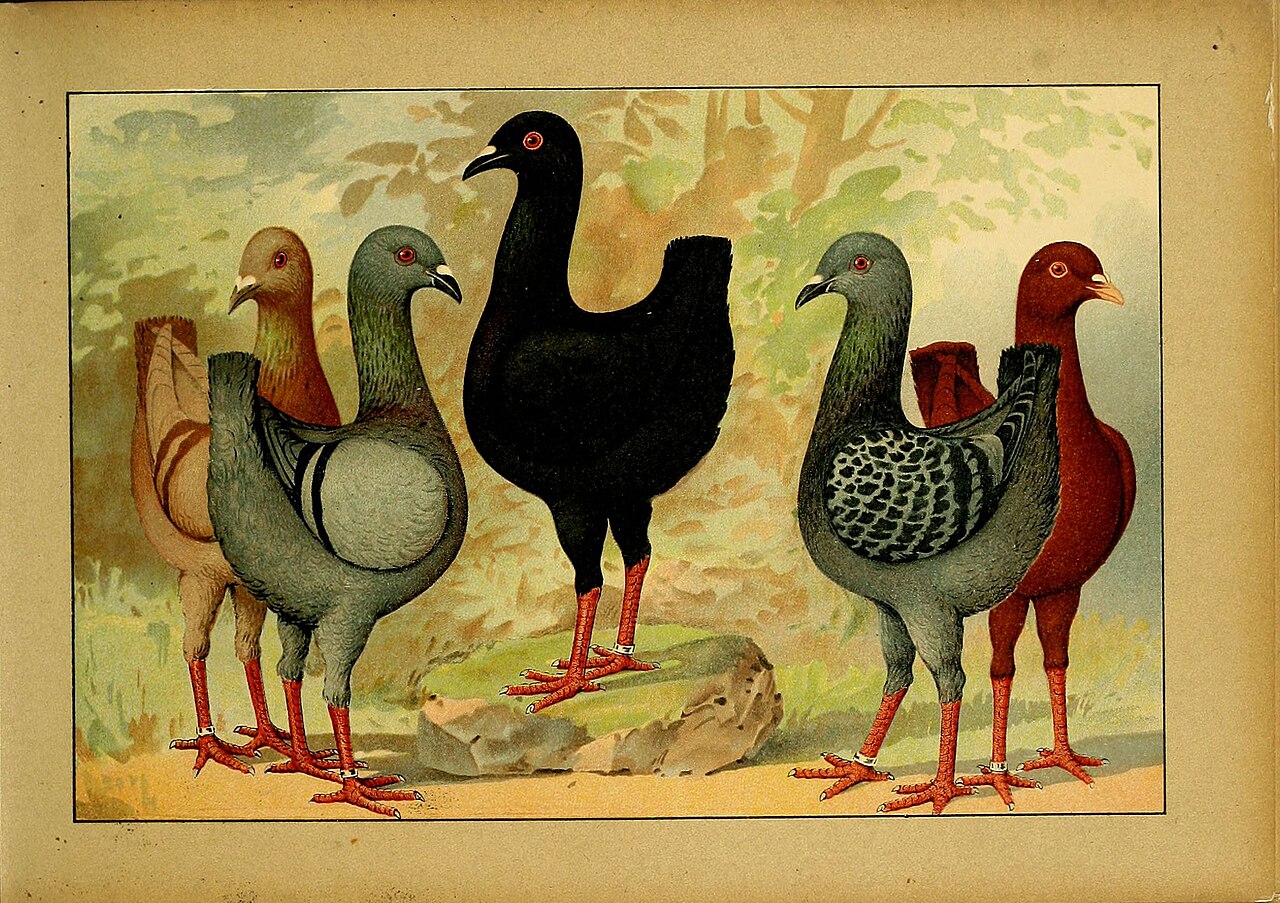
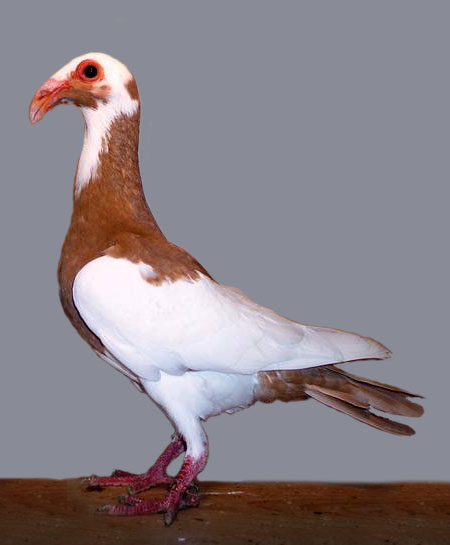
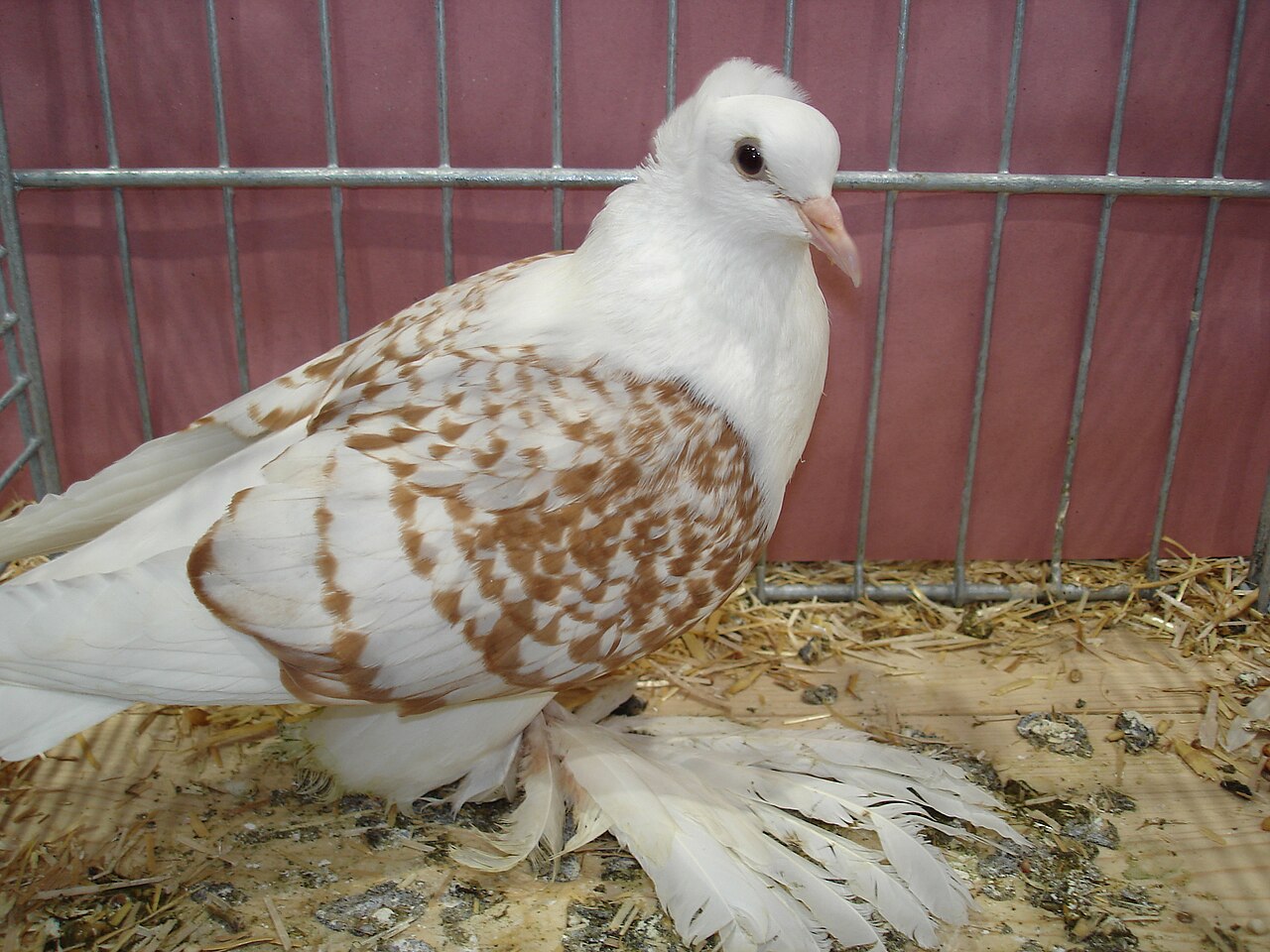
The Maltese pigeon is a breed of fancy pigeon developed over many years of selective breeding. The Maltese, along with other varieties of domesticated pigeons, are all descendants from the rock pigeon (Columba livia). It is a radical departure from the common type of pigeon, in that it stands high on very long straight legs and has a long slender neck, making a "U" shape with its short tucked up body. An ideal specimen should stand sixteen (16) or more inches (almost 41 centimeters) in height. It is a rather poor flyer and likes to nest close to the ground.
It was used extensively as a squab producer in the early 20th century. The Maltese is a splendid feeder, healthy, and takes good care of its young. As squab producers, they have few equals as to the size of the squab and especially the amount of meat on the breast. In this respect, the Maltese squab is more like a quail, only much larger. Squabs range in dressed weight from twelve to eighteen pounds to the dozen.
Colors
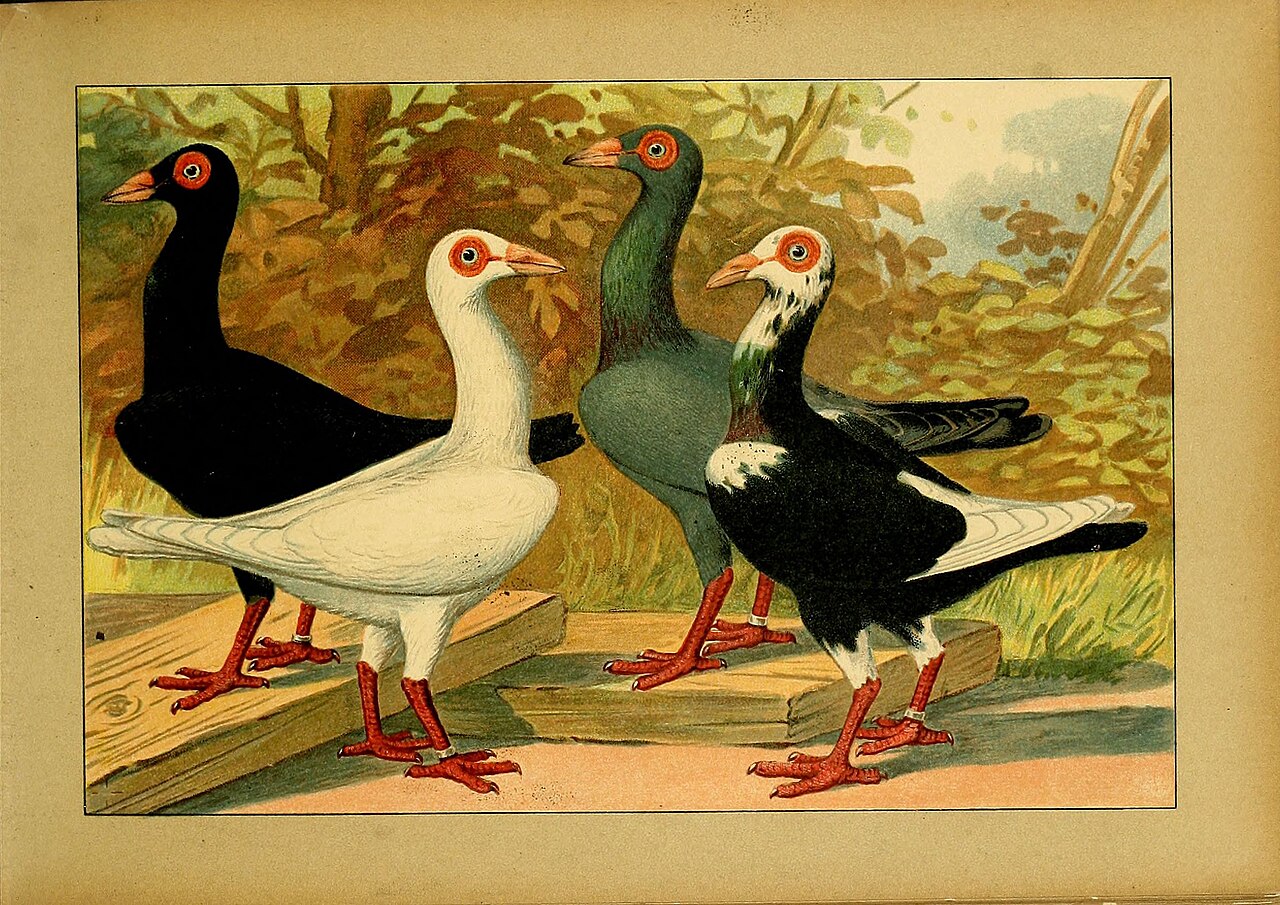
The Maltese comes in a variety of colors. They were classed as Black, Blue, Silver, Dun, Red, Yellow, White & A. O. C. at the National Pigeon Association (NPA) 1928 show. These classes remain the same into this century.
Status
It is indeed a very rare pigeon breed in the United States. It is promoted by the Rare Breeds Pigeon club, but has not been shown in any large show in recent years.
Origin
The origin of the Maltese like many other varieties appears to have no exact starting point. But because of its historic name -Maltese Hen.- it is attributed to Malta, an island in the Mediterranean just off Italy. They found their way into Germany through Italy by 1850, and became a popular squabbing breed in the U.S. around 1900. Wendell Levi, author of many pigeon related books and articles and owner of one of the largest squab producing plants in the U.S., believes that the Maltese is of recent origin, being developed in Austria around 1890. His view is by all means not universally accepted. William Corb imported the first Maltese into the U.S. in 1889 from Germany, which may explain Levi's belief. Several writers in the American Pigeon Journal have traced the breed back even further. The most extensive article traces it back to India.
Basic needs
Pigeons are fed either a raw whole grain or a pellet mix designed specifically for pigeons. There are mixes on the market designed specifically for pigeons. Inorganic materials are also needed in their diets, including salts, minerals, and calcium. Mixes made specifically for pigeons are readily available, called pigeon grit. Clean water is naturally also required. Pigeons suck water to drink, as you do with a straw. A container with at least one inch or more of free standing water is perfect.
See also
- List of pigeon breeds
- American Pigeon Journal 1938 01
- American Pigeon Journal 1938 05
- American Pigeon Journal January 1941
- American Pigeon Journal September 1951
Gallery
Ajouter des photos
Partagez vos photos de cette espèce (jusqu'à 20 à la fois) : elles sont vérifiées automatiquement, puis publiées.
Autres races de l'espèce (400)
Espèce : Pigeon domestique
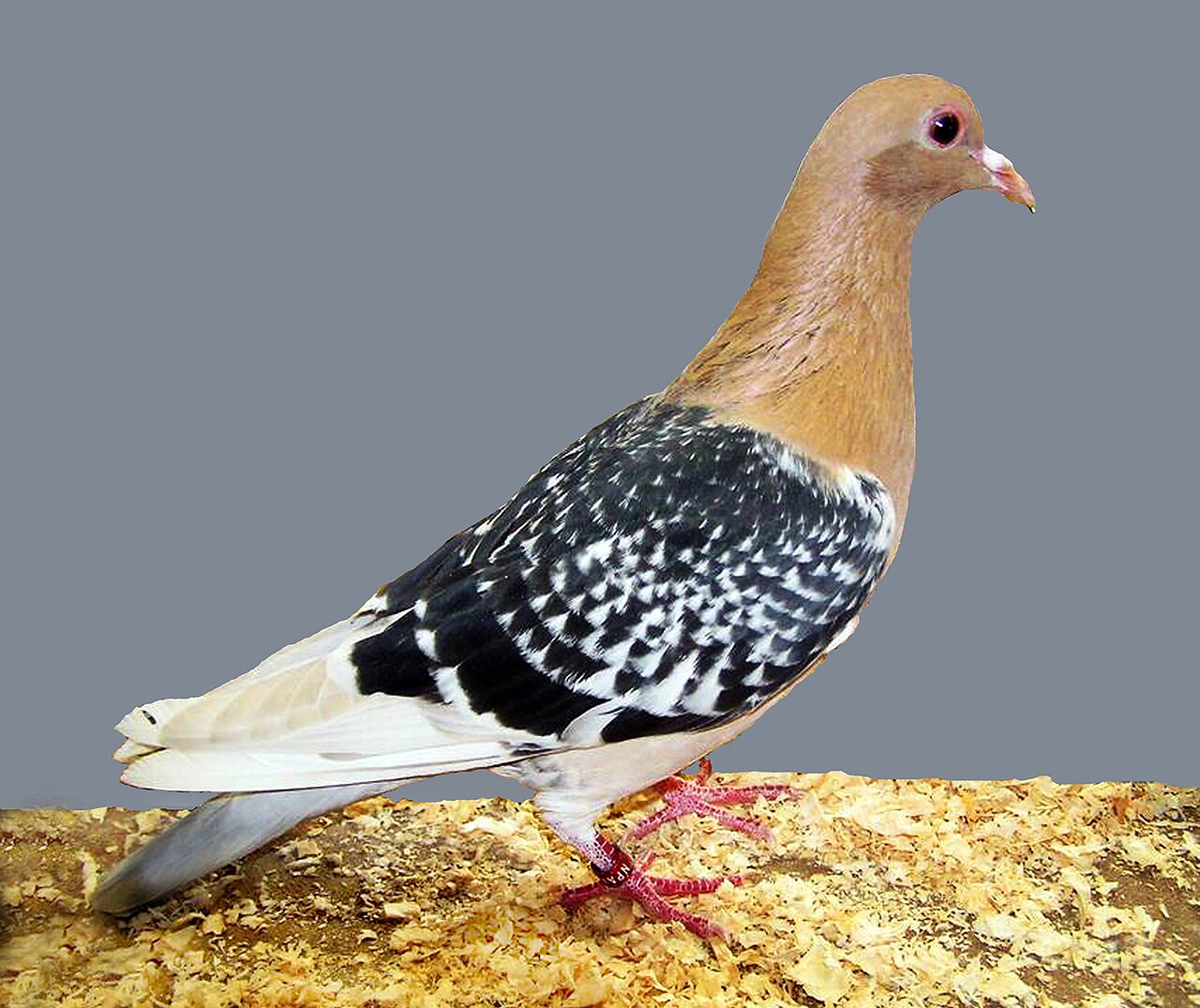
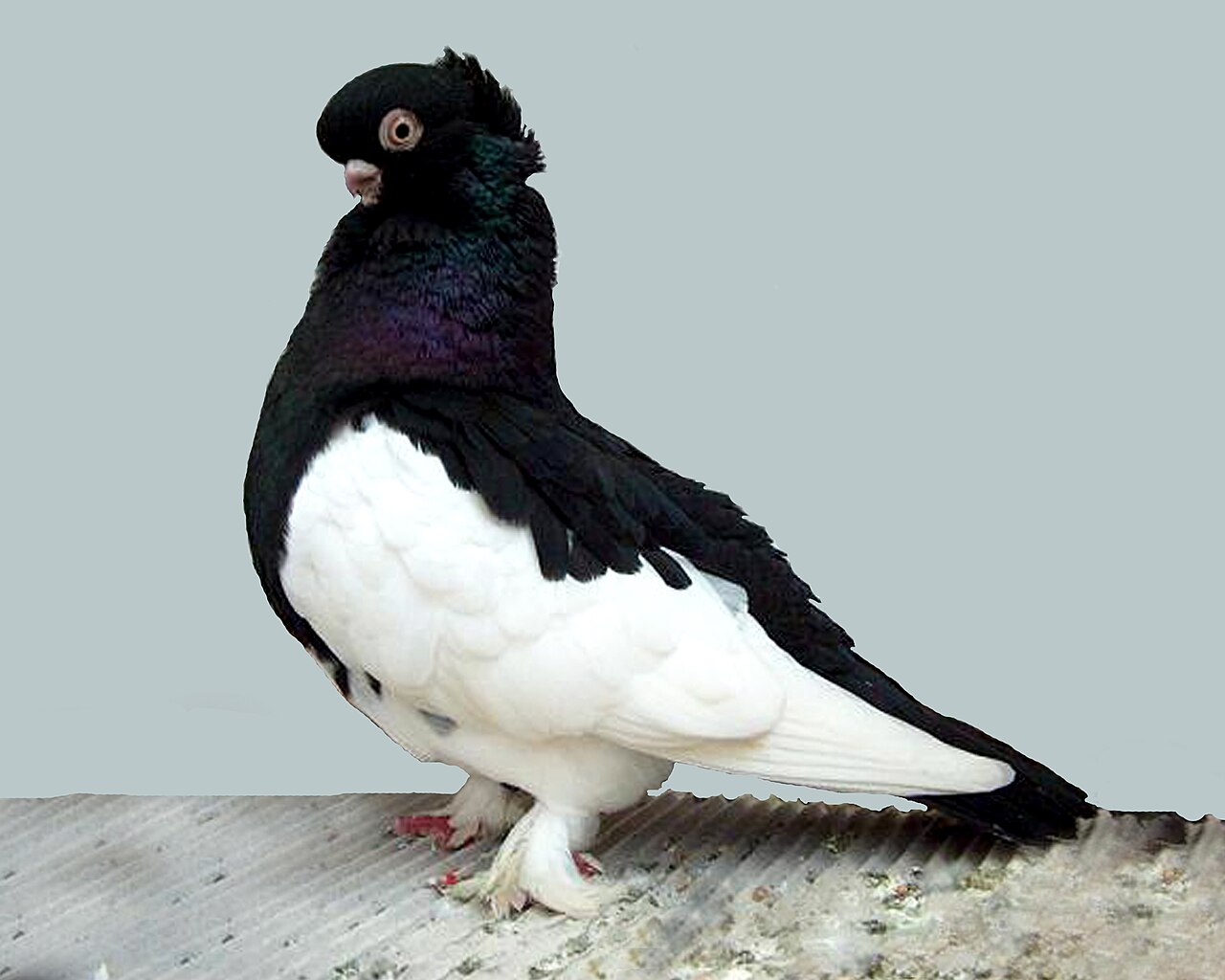
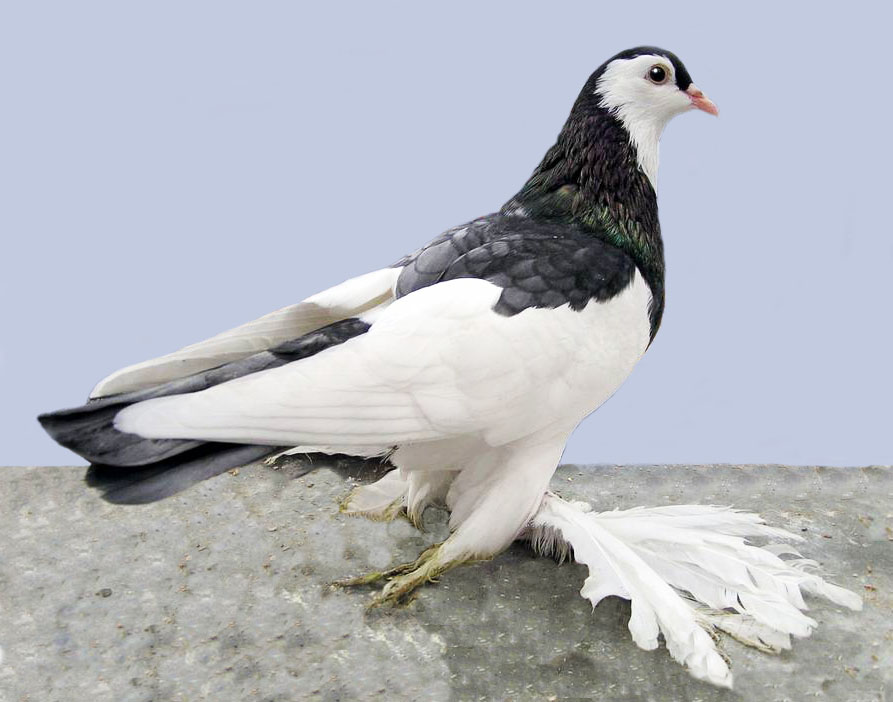
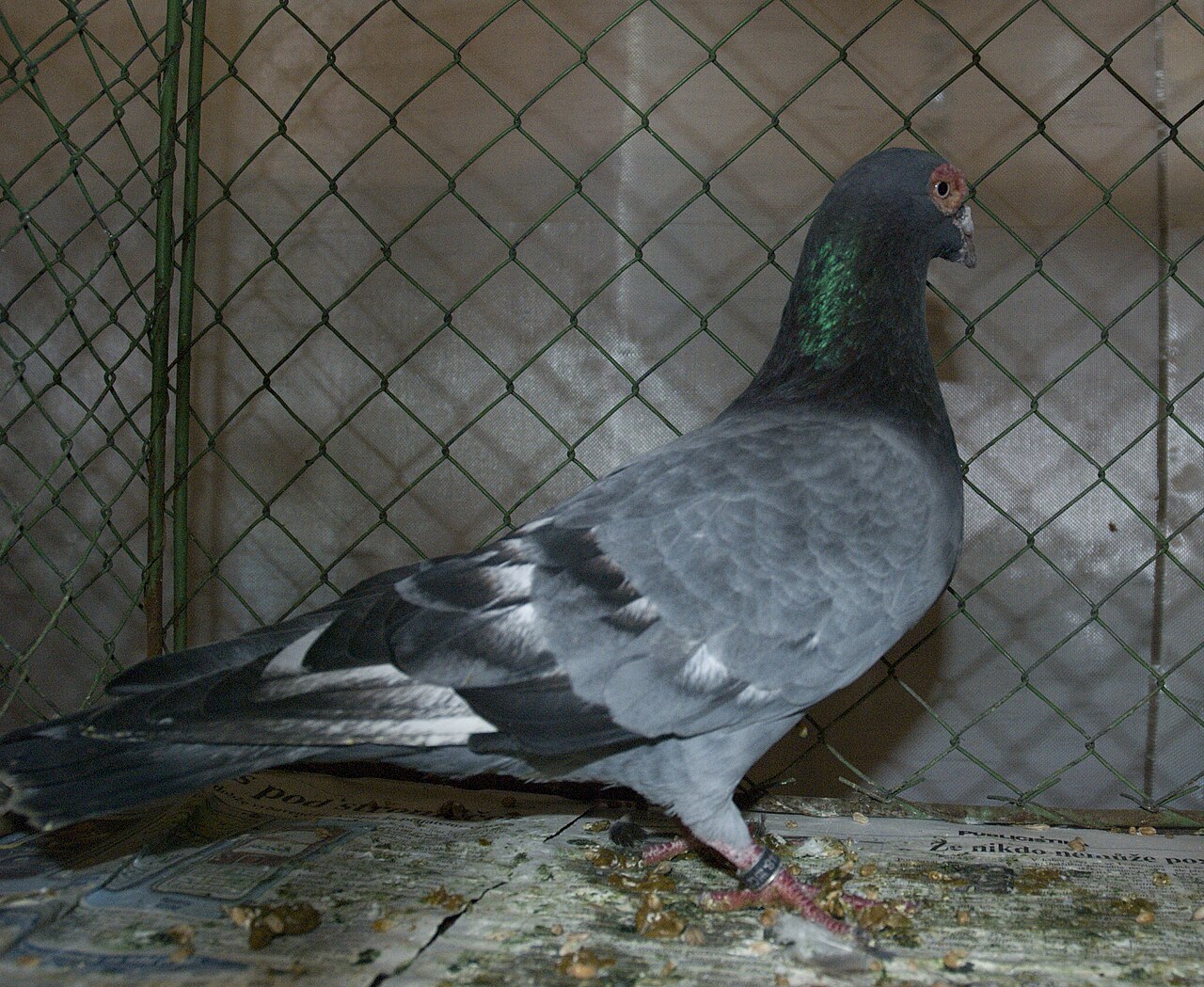
Voir les 388 autres races
- Boulant d'Alsace
- Boulant de Norwich
- Boulant de Silésie
- Boulant français
- Boulant gantois
- Boulant hollandais
- Boulant pie
- Bouvreuil
- Capucin hollandais
- Carneau
- Carrier
- Chardonneret danois
- Cou-nu de Roumanie
- Court-bec de Berlin
- Cravaté allemand ancien
- Cravaté anatolien
- Cravaté domino
- Cravaté italien
- Cravaté liégeois
- Culbutant d'Angleterre occidentale
- Culbutant de Budapest
- Culbutant de Cologne
- Culbutant de Königsberg à tête colorée
- Culbutant français
- Culbutant pie
- Damascène
- Domestic Show Flight
- Dragon
- Eichbühler
- Gier
- Haut-volant de Dantzig
- Haut-volant de Stralsund
- Haut-volant serbe
- Hirondelle de Thuringe
- Huppé de Soultz
- Krymka de Bialystok
- Lahore
- Lucernois à col doré
- Luciole de Kiev
- Lynx
- Modène
- Moine de Saxe
- Mondain français
- Montauban
- Mookee
- Nonne allemande
- Pigeon King
- Pigeon cauchois
- Pigeon de beauté allemand
- Pigeon frisé
- Poule hongrois
- Queue de Paon Anglais
- Queue de Paon Indien
- Romain
- Roubaisien
- Speelderke
- Strasser
- Tambour de Boukharie
- Texan
- Triganino de Modène
- Tête de Maure de Schmalkalden
- Viennois à épaulettes
- Bagadais de Moravie
- Bagadais de Steinheim
- Bouclier de Thuringe
- Bouclier de velours de Franconie
- Boulant Allemand ancien
- Boulant Anglais
- Boulant Brunner
- Boulant Pigmy
- Boulant Slovaque
- Boulant Stavak
- Boulant Steiger
- Boulant d'Aix la Chapelle
- Boulant d'Amsterdam
- Boulant de Hana
- Boulant de Poméranie
- Boulant de Saxe pie
- Boulant de Saxe unicolore
- Boulant de Starwitz
- Boulant de Voorburg
- Boulant à tête blanche de Moravie
- Calotte de Hambourg
- Capucin
- Cigogne de Saxe
- Claqueur de Blagodarny
- Coquille Hollandais
- Cravaté Chinois
- Cravaté Figurita
- Cravaté Oriental
- Cravaté Oriental ancien
- Cravaté Polonais
- Cravaté Turbitéen
- Criador Lusitano
- Culbutant Anglais à courte face
- Culbutant Anglais à longue face
- Culbutant Danois
- Culbutant Lillois
- Culbutant Portugais
- Culbutant arménien
- Culbutant de Felégyháza
- Culbutant de Komorn
- Culbutant de Timisoara
- Culbutant de Vienne à bouclier blanc
- Culbutant de posture de la Volga
- Dutch Helmet
- Etourneau
- Gavatxut Balear
- Giant Homer
- Géant Hongrois
- Haut-volant de Nis
- Helmet pigeon
- Hyacinthe
- Indien type Allemand
- Iranian Highflying Tumbler
- Libanais
- Mariola
- Moine d'Allemagne du sud
- Nezhinsky Pigeon
- Nègre à crinière
- Orlik Polonais
- Pie Polonais à bec court
- Pigeon Espagnol
- Pigeon de Benesov
- Pigeon de Saxe à ailes colorées
- Pigeon à ailes colorées de Bohême
- Pigeon à bavette blanche de Thuringe
- Prishtina Roller
- Prêtre de Saxe
- Queue blanche de Saxe
- Queue de Paon
- Rouleur Oriental
- Rouleur de Birmingham
- Rouleur de Galati
- Rouleur de Rakovnik
- Saint pigeon
- Satin
- Seraphim
- Show Antwerp
- Show Homer
- Slenke de Gueldre
- Smerle Anversois
- Strasser de Moravie
- Swift Egyptien
- Tambour Anglais
- Tambour Bohème
- Tambour d'Altenbourg
- Tambour d'Arabie
- Tambour de Bernbourg
- Tambour de Dresde
- Tambour de Franconie
- Tambour de Schmölln
- Tambour de Vogtland
- Tippler
- Trembleur de Stargard
- Modène allemand
- Culbutant belge
- Berlinois à bec long
- Chinese Flying pigeon
- Cravaté Turbit
- Culbutant Hollandais ancien
- Culbutant de Breslau
- Haut-volant Viennois
- Haut-volant de Budapest
- Krymka Polonais
- Parlor Roller
- Pie Anglais
- Ringslager d'Anatolie
- Romain géant
- Boulant granadino
- Amsterdam beard Tumbler
- Bernhardiner Schecke
- Boulant Autrichien dominicain
- Boulant Horseman
- Boulant Morillero
- Boulant Satin de Bohême
- Boulant de Thuringe
- Calotte blanche d'Allemagne du sud
- Chistopolian Highflyer
- Cigogne de Thuringe
- Cravaté Allemand à bouclier colorée
- Cravaté Allemand à queue colorée
- Cravaté Anglais
- Cravaté Barbarisi
- Cravaté Hollandais ancien
- Cravaté Tunisien
- Cubutant Ouzbek
- Culbutant de Basse-Silésie pattu
- Culbutant de Bohême
- Culbutant de Hambourg
- Culbutant de Hanovre
- Culbutant de Kalouga
- Culbutant de Königsberg à œil pur
- Culbutant de Prague
- Culbutant de Prusse Orientale
- Culbutant de Stapar
- Culbutant de Stettin
- Culbutant de Transylvanie
- Culbutant de Vienne dominicain
- Culbutant de posture de Rostov
- Geant Majorquin
- Haut-volant de Poméranie à œillères
- Heurté de Thuringe
- Hirondelle de Nuremberg
- Hirondelle de Saxe
- Mariolinha
- Pigeon Lune de Saxe
- Pigeon Lune de Thuringe
- Pigeon de Mittelhausen
- Pigeon à calotte blanche de Thuringe
- Queue blanche d' Allemagne du sud
- Queue blanche de Thuringe
- Queue de Paon Hongrois
- Ringslager Belge
- Ringslager du Rhin
- Rouleur de Perse
- Rouleur de Sisak
- Schalaster Pouter
- Tambour Allemand à coquille et visière
- Tambour Allemand à queue fourchue
- Tigré de Hambourg
- Tête blanche d'Elbing
- Tête blanche de Thuringe
- Tête colorée de Poznan
- Tête de Maure de Silésie
- Abu Abse
- Ailes colorées de Saint-Gall
- Alouette charbonnière
- Argovien à queue blanche
- Claqueur de Krasnodar
- Cravaté gantois
- Escampadissa
- Haut-volant cumulet
- Heurté de Saxe
- Huppé picard
- Kanik
- Manotte d'Artois
- Mulhousien
- Pigeon de Bohême
- Pigeon scarabée de Thuringe
- Pigeon à calotte français
- Rouleur Chacal
- Slenke de Groningue
- Trembleur de Kazan
- Tête colorée de Brive
- Vanneau de Budapest
- Voyageur Magaña
- Voyageur de beauté néerlandais
- Œil-de-fraise
- Armavir Muffed White-Headed
- Australian Performing Tumbler
- Bagadais d'Ostrava
- Bouclier d’Allemagne du sud
- Boulant Gorguero
- Boulant Jiennense
- Boulant Laudino Sevillano
- Boulant Marchenero
- Boulant Morak de Moravie
- Boulant Moroncelo
- Boulant Pie de Moravie
- Boulant Rafeno
- Boulant Veleño
- Boulant de Hesse
- Boulant de Silésie
- Boulant de Waldviertel
- Claqueur Agaran
- Cravaté d'Aix la Chapelle
- Cravaté de Hambourg
- Culbutant Autrichien ancien
- Culbutant Pinta
- Culbutant Polonais à bec court
- Culbutant de Lusace
- Culbutant de Prague à bec moyen
- Culbutant de Vienne
- Culbutant de Vienne à bec court
- Donek
- Exhibition Homer
- Genuine Homer
- Giant American Crest
- Haut-volant Grivuni
- Haut-volant Néerlandais
- Jridi
- Moscow Monk
- Nas de Xot
- Parisian pouter
- Pigeon Suisse unicolore
- Pigeon de Thuringe à ailes colorées
- Pigeon de la Sarre
- Pigeon de vol catalan
- Rouleur de Sarajevo
- Show Racer
- Spanish Naked-neck Tumbler
- Sverdlovsk blue-gray mottle-headed pigeon
- Tambour Allemand à simple visière
- Tête colorée de Silésie
- Tête de Maure Allemand ancien
- Sivas Kumru Güvercin
- Boulant Gaditano
- British Show Racer
- Culbutant de Bursa
- Haut-volant de Szeged
- Indian Gola
- Madrasi Highflyer
- Roshan Chirag
- Rouleur de Bijeljnina
- Rouleur de Debrecen
- Bagadais Polonais
- Bagadais de Franconie
- Bagadais de Szolnok
- Barbet liégeois
- Bernois à queue blanche
- Bernois à queue miroitée
- Bernois à tête criblée
- Biset Munsterois
- Biset de Franconie
- Bleu de Cluj
- Bleu de Sovat
- Bleu d’Eger
- Bouclier Lucernois
- Bouclier Thurgovien
- Boulant Canario
- Boulant Colillano
- Boulant Danois
- Boulant Hongrois
- Boulant Lillois
- Boulant Néerlandais frisé
- Boulant Steller
- Boulant Suisse
- Boulant de Basse Bavière
- Boulant de Bavière
- Boulant de Louvain
- Boulant de Valence
- Boulant de Valence ; type Hollandais
- Boulant marteño
- Chorrera
- Coucou Bernois
- Culbutant Allemand à bec long
- Culbutant Maure de Pologne
- Culbutant Polonais à bec long
- Culbutant de Berlin pattu
- Culbutant de Rjev
- Culbutant de Rostock
- Culbutant de Schöneberg
- Culbutant de Sofia
- Culbutant de posture du Caucase
- Demi Bec bernois
- Frisé Syrien
- Géant Piestanois
- Haut-volant de Budapest à vols blanche
- Haut-volant de Memel
- Haut-volant de Nikolaïev
- Heurte d'Allemagne du sud
- Heurte à queue blanche
- Messager de Bassorah
- Moine de Thuringe
- Nonnain Limbourgeois
- Oryol white tumbler
- Papillon de Varsovie
- Piacentino
- Pie de Cracovie
- Pigeon Fischer Autrichien
- Pigeon Musafer
- Pigeon caronculé Polonais
- Pigeon caronculé des Basses Carpathes
- Pigeon caronculé ‘d Ostrowiec
- Pigeon de Buga
- Pigeon de Nis
- Poule Florentin
- Poule de Vukovar
- Refilador
- Renaisien
- Revellois
- Shérazie
- Smijter
- Sottobanca Francais
- Sottobanca Italien
- Swift Syrien
- Tambour de Harzbourg
- Tête blanche de Gumbinnen
- Tête blanche de Slovénie
- Tête de Maure de Wurtemberg
- Unicolore de Thuringe
- Ural striped maned pigeon
- Voyageur Belge d'exposition
- Voyageur Roumain d’exposition
- Voyageur beauté Hongrois
- Voyageur de beauté Polonais
- Voyageur liégeois
Sources et crédits
Informations provenant de plusieurs sources vérifiées. Dernière mise à jour : .
Crédits photos (4)
- Photo : Emil Schachtzabel / Anton Schöner · Domaine public · via Wikimedia Commons
- Photo : Emil Schachtzabel / Anton Schöner · Domaine public · via Wikimedia Commons
- Photo : Emil Schachtzabel / Anton Schöner · Domaine public · via Wikimedia Commons
- Photo : Karl Wagner · Domaine public · via Wikimedia Commons
Mentions de licence
Texte disponible sous licence CC BY-SA 4.0. Il adapte notamment Wikipedia (CC BY-SA): Maltese pigeon (Wikipédia, auteurs dans l’historique de l’article).
- Taxonomie : GBIF Backbone Taxonomy (CC BY 4.0)
Détail : Sources et licences.
Discussion (0)
Aucun message pour l’instant. Lancez la discussion sur cette fiche (sources, précisions, débats éditoriaux).
Connectez-vous pour participer à la discussion.