
- Kingdom
- Animalia
- Phylum
- Chordata
- Class
- Aves
- Order
- Columbiformes
- Family
- Columbidae
- Genus
- Columba
- Species
- Columba livia domestica
Overview
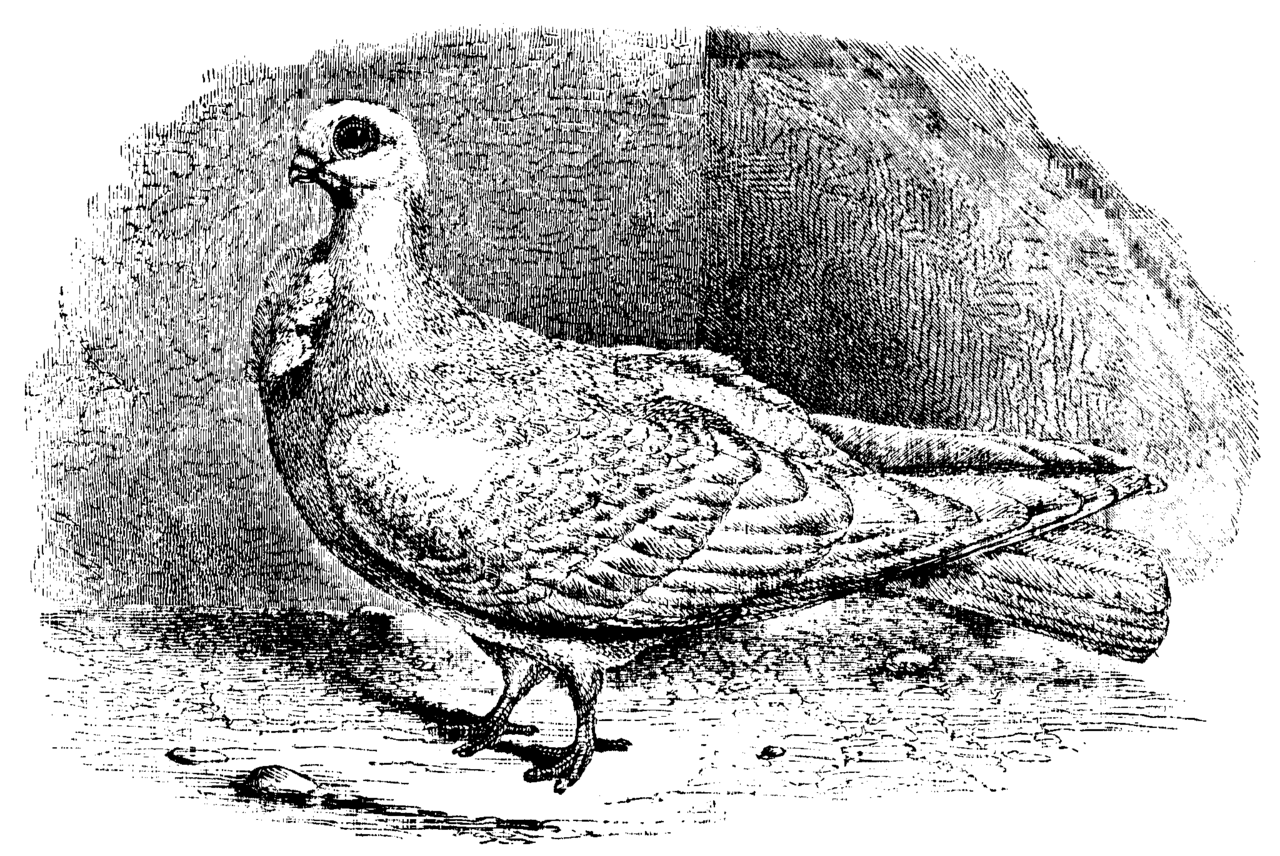
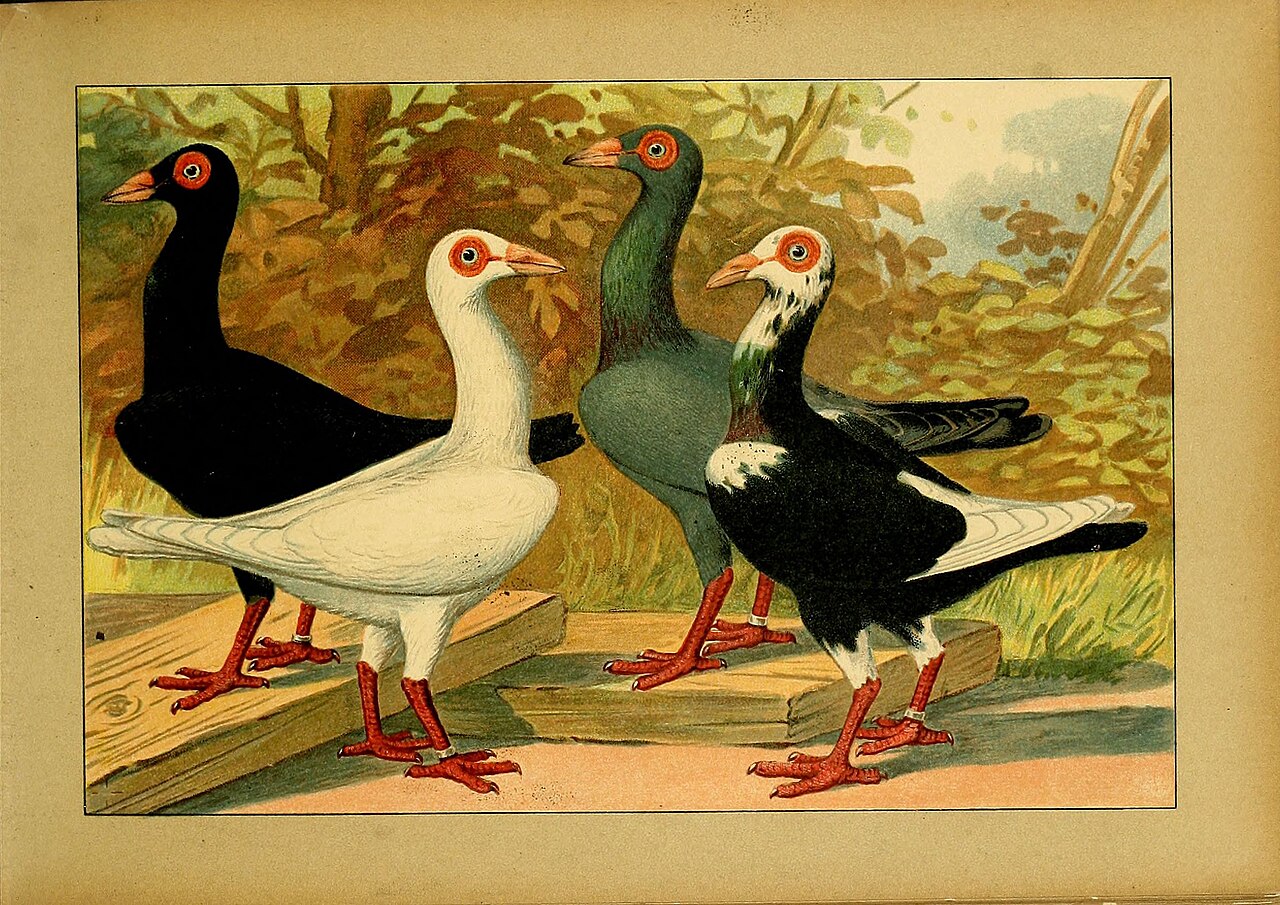
The Parisian pouter, interchangeably referred to as the Parisian cropper, historically spelled as the Parisian powter, and informally referred to as the Parazence pouter, was a domestic breed of fancy pigeon descended from the rock dove (Columba livia) created through generations of selective breeding. It is considered to now be extinct. The Parisian pouter is described throughout historic accounts as having a long crop, being short in stature with proportionately short legs, a wide or "thick" body, and a general stockiness. These traits differed significantly from modern and even historic phenotypical characteristics of pouters, and were widely considered to be undesirable as a result of their estrangement from published breed standards regarding the rest of the group. The perceived inferiority of the breed likely contributed to its extinction, as it was discouraged to breed it with breeds that were considered to be morphologically superior. American fancier John Matthew Eaton considered the traits of the Parisian pouter to be far less desirable than that of the English pouter, which he noted as being "infinitely superior for elegance and style" in his 1858 breed guide; A treatise on the art of breeding and managing tame, domesticated, foreign, and fancy pigeons.
Morphology
The Parisian pouter is unanimously described across historic breed standards as being a small, thick, short-bodied, short-legged breed possessing a long crop. Some sources describe it as being "relatively large" or low-set, though these descriptors likely relate more to its heft and girth rather than height.
The breed was wholly unique among pouters for its striking chequered plumage, noted across historic accounts as being similar in appearance to that of "Irish stitch". The chequered appearance was once regarded to have encompassed the whole body of the Parisian pouter, however, fancier James C. Lyell, author of the 1881 breed guide Fancy Pigeons corrects this description and clarifies that the chequering was likely exclusive to the wing shields (coverts) and occasionally the tail. He notes that the similarities in pattern may signify that the Parisian pouter is genetically similar to hyacinth pigeons and their consanguineous varieties. The Irish stitch has been compared to the patterns of the Cauchois pigeon, and fancier Dr. Hans Schingen of the French pouter specialty club notes this patterning to be a direct result of crossbreeding between the two breeds. The chequering was said to be more valuable to breeders proportionately to the amount of red colouration within the feathers, suggesting that an idyllic Parisian pouter likely sported entirely red chequered plumage. Mottled spread patterning as described in the Parisian pouter is present within modern breeds, though it is more commonly referred to by contemporary authors such as American fancier Wendell M. Levi as "tigering" or "grizzling" rather than "chequering".
The breed also possessed characteristically white flights, though Lyell notes they and the tail feathers could also exhibit spangling in a similar manner to the chequered patterns of the body.
Modern pouter breeds such as the Dutch cropper or English pouter are bred chiefly for their tall stature, lightweight, long, thin legs, erect posture, and their disproportionately inflated crop. Levi addresses the English varieties of pouter as possessing a "stately appearance" and "royal presence" close to being "perfect". The Parisian pouter, with its generally distinct and unique traits among pouters, was seemingly highly unpopular with breeders and fanciers.
History and extinction
Pouters and croppers are mentioned as a breed group as early as 1678 in ornithologist Francis Willughby's compendium; Ornithology.
The first instance of the Parisian pouter's differentiation and identification comes from fancier John Moore's 1735 breed standard; Columbarium, where he offers the first notable description of the breed. His description was quickly parroted to a near identical extent by his successors, Lyell, Eaton, and William Bernhard Tegetmeier. Moore also initially noted that the breed was bred in Paris, after which it was circulated in Brussels, before arriving in Britain sometime after. He neglects to include specific years of its inception or emigration from France.
Dr. Schingen notes that the Parisian pouter did not undergo much phenotypical or morphological alteration if any in the hundred years proceeding Moore's initial description of the breed. This would suggest the breed becoming reproductively isolated due to not being bred with more pure-bred pouters such as the Dutch cropper, however, Tegetmeier contradicts this claim by noting that the English pouter was likely crossbred with the Parisian pouter, alongside the uploper and pouting horseman. The Parisian pouter is considered by Schingen to be the sole member of a "side group" in pouter lineage rather than the direct ancestor to modern breeds such as the French or English pouter, the former of which he rules out entirely as being a direct descendant of the Parisian simply due to its chequered colouration, which the French pouter lacks entirely. Tegetmeier proposes that modern pouters may have been created through crossbreeding Parisian pouters with more idyllic longer-limbed birds.
Dr. Schingen notes that "the trail of the Parisian pouter disappears around 1850.", a vague claim that likely refers to a loss of phenotypic definition rather than a total extinction yet. The breed likely became lost around the late 19th century as a result of dilution from crossbreeding with other more viable pouters.
Ajouter des photos
Partagez vos photos de cette espèce (jusqu'à 20 à la fois) : elles sont vérifiées automatiquement, puis publiées.
Autres races de l'espèce (400)
Espèce : Pigeon domestique
Voir les 388 autres races
- Boulant d'Alsace
- Boulant de Norwich
- Boulant de Silésie
- Boulant français
- Boulant gantois
- Boulant hollandais
- Boulant pie
- Bouvreuil
- Capucin hollandais
- Carneau
- Carrier
- Chardonneret danois
- Cou-nu de Roumanie
- Court-bec de Berlin
- Cravaté allemand ancien
- Cravaté anatolien
- Cravaté domino
- Cravaté italien
- Cravaté liégeois
- Culbutant d'Angleterre occidentale
- Culbutant de Budapest
- Culbutant de Cologne
- Culbutant de Königsberg à tête colorée
- Culbutant français
- Culbutant pie
- Damascène
- Domestic Show Flight
- Dragon
- Eichbühler
- Gier
- Haut-volant de Dantzig
- Haut-volant de Stralsund
- Haut-volant serbe
- Hirondelle de Thuringe
- Huppé de Soultz
- Krymka de Bialystok
- Lahore
- Lucernois à col doré
- Luciole de Kiev
- Lynx
- Modène
- Moine de Saxe
- Mondain français
- Montauban
- Mookee
- Nonne allemande
- Pigeon King
- Pigeon cauchois
- Pigeon de beauté allemand
- Pigeon frisé
- Poule hongrois
- Queue de Paon Anglais
- Queue de Paon Indien
- Romain
- Roubaisien
- Speelderke
- Strasser
- Tambour de Boukharie
- Texan
- Triganino de Modène
- Tête de Maure de Schmalkalden
- Viennois à épaulettes
- Bagadais de Moravie
- Bagadais de Steinheim
- Bouclier de Thuringe
- Bouclier de velours de Franconie
- Boulant Allemand ancien
- Boulant Anglais
- Boulant Brunner
- Boulant Pigmy
- Boulant Slovaque
- Boulant Stavak
- Boulant Steiger
- Boulant d'Aix la Chapelle
- Boulant d'Amsterdam
- Boulant de Hana
- Boulant de Poméranie
- Boulant de Saxe pie
- Boulant de Saxe unicolore
- Boulant de Starwitz
- Boulant de Voorburg
- Boulant à tête blanche de Moravie
- Calotte de Hambourg
- Capucin
- Cigogne de Saxe
- Claqueur de Blagodarny
- Coquille Hollandais
- Cravaté Chinois
- Cravaté Figurita
- Cravaté Oriental
- Cravaté Oriental ancien
- Cravaté Polonais
- Cravaté Turbitéen
- Criador Lusitano
- Culbutant Anglais à courte face
- Culbutant Anglais à longue face
- Culbutant Danois
- Culbutant Lillois
- Culbutant Portugais
- Culbutant arménien
- Culbutant de Felégyháza
- Culbutant de Komorn
- Culbutant de Timisoara
- Culbutant de Vienne à bouclier blanc
- Culbutant de posture de la Volga
- Dutch Helmet
- Etourneau
- Gavatxut Balear
- Giant Homer
- Géant Hongrois
- Haut-volant de Nis
- Helmet pigeon
- Hyacinthe
- Indien type Allemand
- Iranian Highflying Tumbler
- Libanais
- Mariola
- Moine d'Allemagne du sud
- Nezhinsky Pigeon
- Nègre à crinière
- Orlik Polonais
- Pie Polonais à bec court
- Pigeon Espagnol
- Pigeon de Benesov
- Pigeon de Saxe à ailes colorées
- Pigeon à ailes colorées de Bohême
- Pigeon à bavette blanche de Thuringe
- Poule Maltais
- Prishtina Roller
- Prêtre de Saxe
- Queue blanche de Saxe
- Queue de Paon
- Rouleur Oriental
- Rouleur de Birmingham
- Rouleur de Galati
- Rouleur de Rakovnik
- Saint pigeon
- Satin
- Seraphim
- Show Antwerp
- Show Homer
- Slenke de Gueldre
- Smerle Anversois
- Strasser de Moravie
- Swift Egyptien
- Tambour Anglais
- Tambour Bohème
- Tambour d'Altenbourg
- Tambour d'Arabie
- Tambour de Bernbourg
- Tambour de Dresde
- Tambour de Franconie
- Tambour de Schmölln
- Tambour de Vogtland
- Tippler
- Trembleur de Stargard
- Modène allemand
- Culbutant belge
- Berlinois à bec long
- Chinese Flying pigeon
- Cravaté Turbit
- Culbutant Hollandais ancien
- Culbutant de Breslau
- Haut-volant Viennois
- Haut-volant de Budapest
- Krymka Polonais
- Parlor Roller
- Pie Anglais
- Ringslager d'Anatolie
- Romain géant
- Boulant granadino
- Amsterdam beard Tumbler
- Bernhardiner Schecke
- Boulant Autrichien dominicain
- Boulant Horseman
- Boulant Morillero
- Boulant Satin de Bohême
- Boulant de Thuringe
- Calotte blanche d'Allemagne du sud
- Chistopolian Highflyer
- Cigogne de Thuringe
- Cravaté Allemand à bouclier colorée
- Cravaté Allemand à queue colorée
- Cravaté Anglais
- Cravaté Barbarisi
- Cravaté Hollandais ancien
- Cravaté Tunisien
- Cubutant Ouzbek
- Culbutant de Basse-Silésie pattu
- Culbutant de Bohême
- Culbutant de Hambourg
- Culbutant de Hanovre
- Culbutant de Kalouga
- Culbutant de Königsberg à œil pur
- Culbutant de Prague
- Culbutant de Prusse Orientale
- Culbutant de Stapar
- Culbutant de Stettin
- Culbutant de Transylvanie
- Culbutant de Vienne dominicain
- Culbutant de posture de Rostov
- Geant Majorquin
- Haut-volant de Poméranie à œillères
- Heurté de Thuringe
- Hirondelle de Nuremberg
- Hirondelle de Saxe
- Mariolinha
- Pigeon Lune de Saxe
- Pigeon Lune de Thuringe
- Pigeon de Mittelhausen
- Pigeon à calotte blanche de Thuringe
- Queue blanche d' Allemagne du sud
- Queue blanche de Thuringe
- Queue de Paon Hongrois
- Ringslager Belge
- Ringslager du Rhin
- Rouleur de Perse
- Rouleur de Sisak
- Schalaster Pouter
- Tambour Allemand à coquille et visière
- Tambour Allemand à queue fourchue
- Tigré de Hambourg
- Tête blanche d'Elbing
- Tête blanche de Thuringe
- Tête colorée de Poznan
- Tête de Maure de Silésie
- Abu Abse
- Ailes colorées de Saint-Gall
- Alouette charbonnière
- Argovien à queue blanche
- Claqueur de Krasnodar
- Cravaté gantois
- Escampadissa
- Haut-volant cumulet
- Heurté de Saxe
- Huppé picard
- Kanik
- Manotte d'Artois
- Mulhousien
- Pigeon de Bohême
- Pigeon scarabée de Thuringe
- Pigeon à calotte français
- Rouleur Chacal
- Slenke de Groningue
- Trembleur de Kazan
- Tête colorée de Brive
- Vanneau de Budapest
- Voyageur Magaña
- Voyageur de beauté néerlandais
- Œil-de-fraise
- Armavir Muffed White-Headed
- Australian Performing Tumbler
- Bagadais d'Ostrava
- Bouclier d’Allemagne du sud
- Boulant Gorguero
- Boulant Jiennense
- Boulant Laudino Sevillano
- Boulant Marchenero
- Boulant Morak de Moravie
- Boulant Moroncelo
- Boulant Pie de Moravie
- Boulant Rafeno
- Boulant Veleño
- Boulant de Hesse
- Boulant de Silésie
- Boulant de Waldviertel
- Claqueur Agaran
- Cravaté d'Aix la Chapelle
- Cravaté de Hambourg
- Culbutant Autrichien ancien
- Culbutant Pinta
- Culbutant Polonais à bec court
- Culbutant de Lusace
- Culbutant de Prague à bec moyen
- Culbutant de Vienne
- Culbutant de Vienne à bec court
- Donek
- Exhibition Homer
- Genuine Homer
- Giant American Crest
- Haut-volant Grivuni
- Haut-volant Néerlandais
- Jridi
- Moscow Monk
- Nas de Xot
- Pigeon Suisse unicolore
- Pigeon de Thuringe à ailes colorées
- Pigeon de la Sarre
- Pigeon de vol catalan
- Rouleur de Sarajevo
- Show Racer
- Spanish Naked-neck Tumbler
- Sverdlovsk blue-gray mottle-headed pigeon
- Tambour Allemand à simple visière
- Tête colorée de Silésie
- Tête de Maure Allemand ancien
- Sivas Kumru Güvercin
- Boulant Gaditano
- British Show Racer
- Culbutant de Bursa
- Haut-volant de Szeged
- Indian Gola
- Madrasi Highflyer
- Roshan Chirag
- Rouleur de Bijeljnina
- Rouleur de Debrecen
- Bagadais Polonais
- Bagadais de Franconie
- Bagadais de Szolnok
- Barbet liégeois
- Bernois à queue blanche
- Bernois à queue miroitée
- Bernois à tête criblée
- Biset Munsterois
- Biset de Franconie
- Bleu de Cluj
- Bleu de Sovat
- Bleu d’Eger
- Bouclier Lucernois
- Bouclier Thurgovien
- Boulant Canario
- Boulant Colillano
- Boulant Danois
- Boulant Hongrois
- Boulant Lillois
- Boulant Néerlandais frisé
- Boulant Steller
- Boulant Suisse
- Boulant de Basse Bavière
- Boulant de Bavière
- Boulant de Louvain
- Boulant de Valence
- Boulant de Valence ; type Hollandais
- Boulant marteño
- Chorrera
- Coucou Bernois
- Culbutant Allemand à bec long
- Culbutant Maure de Pologne
- Culbutant Polonais à bec long
- Culbutant de Berlin pattu
- Culbutant de Rjev
- Culbutant de Rostock
- Culbutant de Schöneberg
- Culbutant de Sofia
- Culbutant de posture du Caucase
- Demi Bec bernois
- Frisé Syrien
- Géant Piestanois
- Haut-volant de Budapest à vols blanche
- Haut-volant de Memel
- Haut-volant de Nikolaïev
- Heurte d'Allemagne du sud
- Heurte à queue blanche
- Messager de Bassorah
- Moine de Thuringe
- Nonnain Limbourgeois
- Oryol white tumbler
- Papillon de Varsovie
- Piacentino
- Pie de Cracovie
- Pigeon Fischer Autrichien
- Pigeon Musafer
- Pigeon caronculé Polonais
- Pigeon caronculé des Basses Carpathes
- Pigeon caronculé ‘d Ostrowiec
- Pigeon de Buga
- Pigeon de Nis
- Poule Florentin
- Poule de Vukovar
- Refilador
- Renaisien
- Revellois
- Shérazie
- Smijter
- Sottobanca Francais
- Sottobanca Italien
- Swift Syrien
- Tambour de Harzbourg
- Tête blanche de Gumbinnen
- Tête blanche de Slovénie
- Tête de Maure de Wurtemberg
- Unicolore de Thuringe
- Ural striped maned pigeon
- Voyageur Belge d'exposition
- Voyageur Roumain d’exposition
- Voyageur beauté Hongrois
- Voyageur de beauté Polonais
- Voyageur liégeois
Sources et crédits
Informations provenant de plusieurs sources vérifiées. Dernière mise à jour : .
Mentions de licence
Texte disponible sous licence CC BY-SA 4.0. Il adapte notamment Wikipedia (CC BY-SA): Parisian pouter (Wikipédia, auteurs dans l’historique de l’article).
- Taxonomie : GBIF Backbone Taxonomy (CC BY 4.0)
Détail : Sources et licences.
Discussion (0)
Aucun message pour l’instant. Lancez la discussion sur cette fiche (sources, précisions, débats éditoriaux).
Connectez-vous pour participer à la discussion.