
- Kingdom
- Animalia
- Phylum
- Chordata
- Class
- Aves
- Order
- Columbiformes
- Family
- Columbidae
- Genus
- Columba
- Species
- Columba livia domestica
Overview
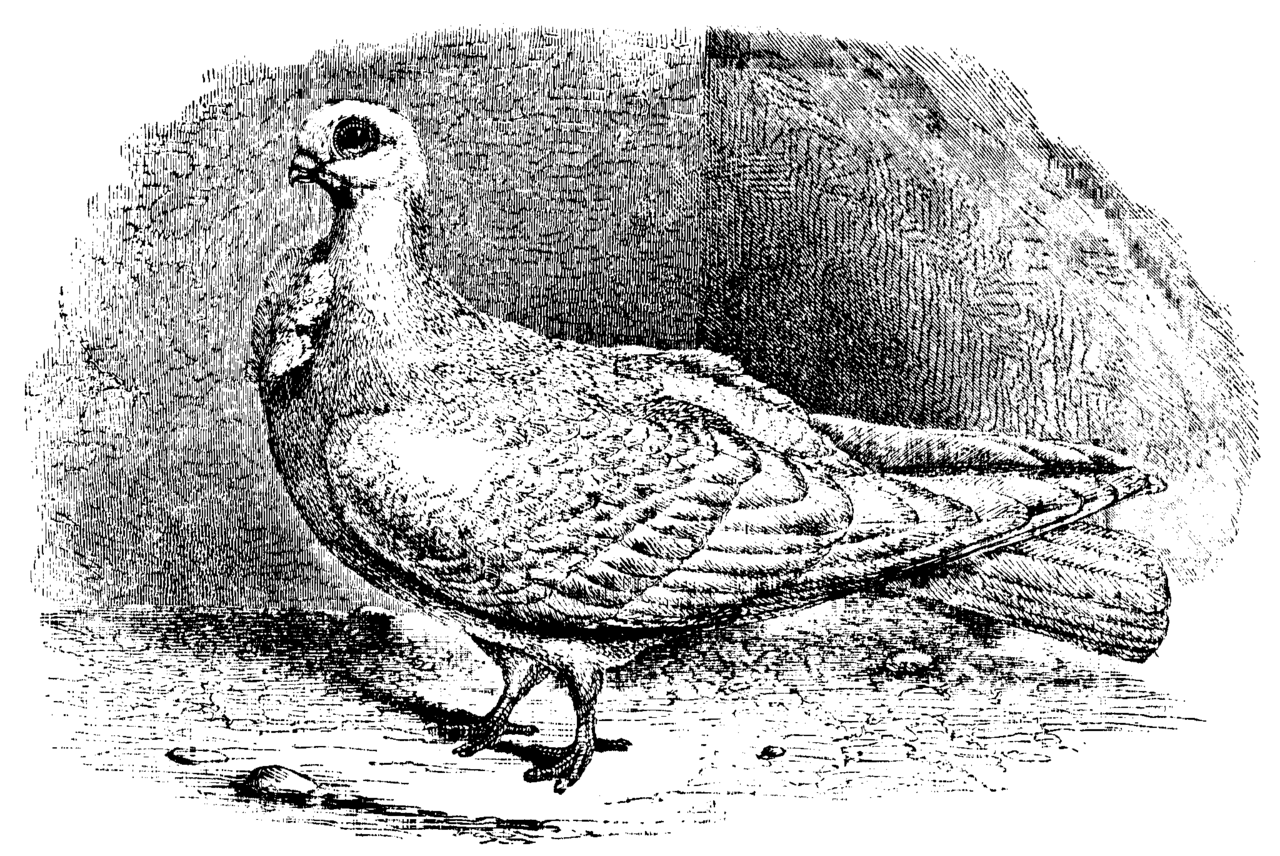
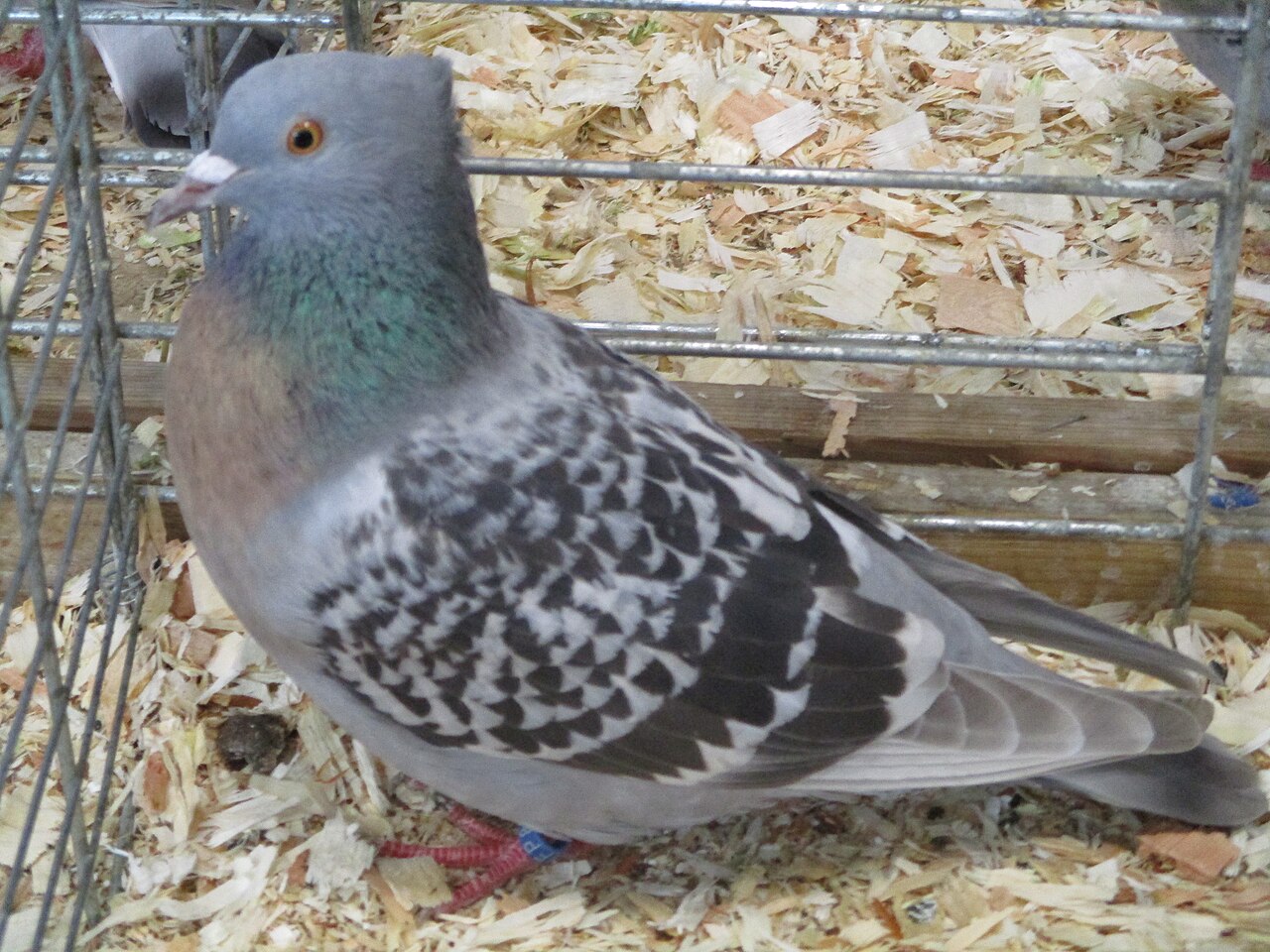
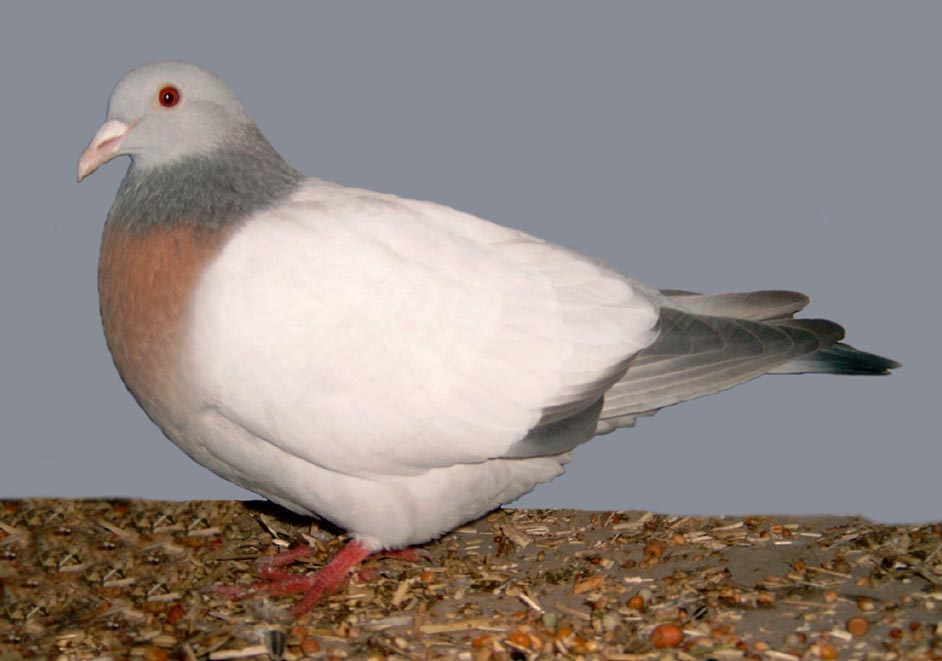
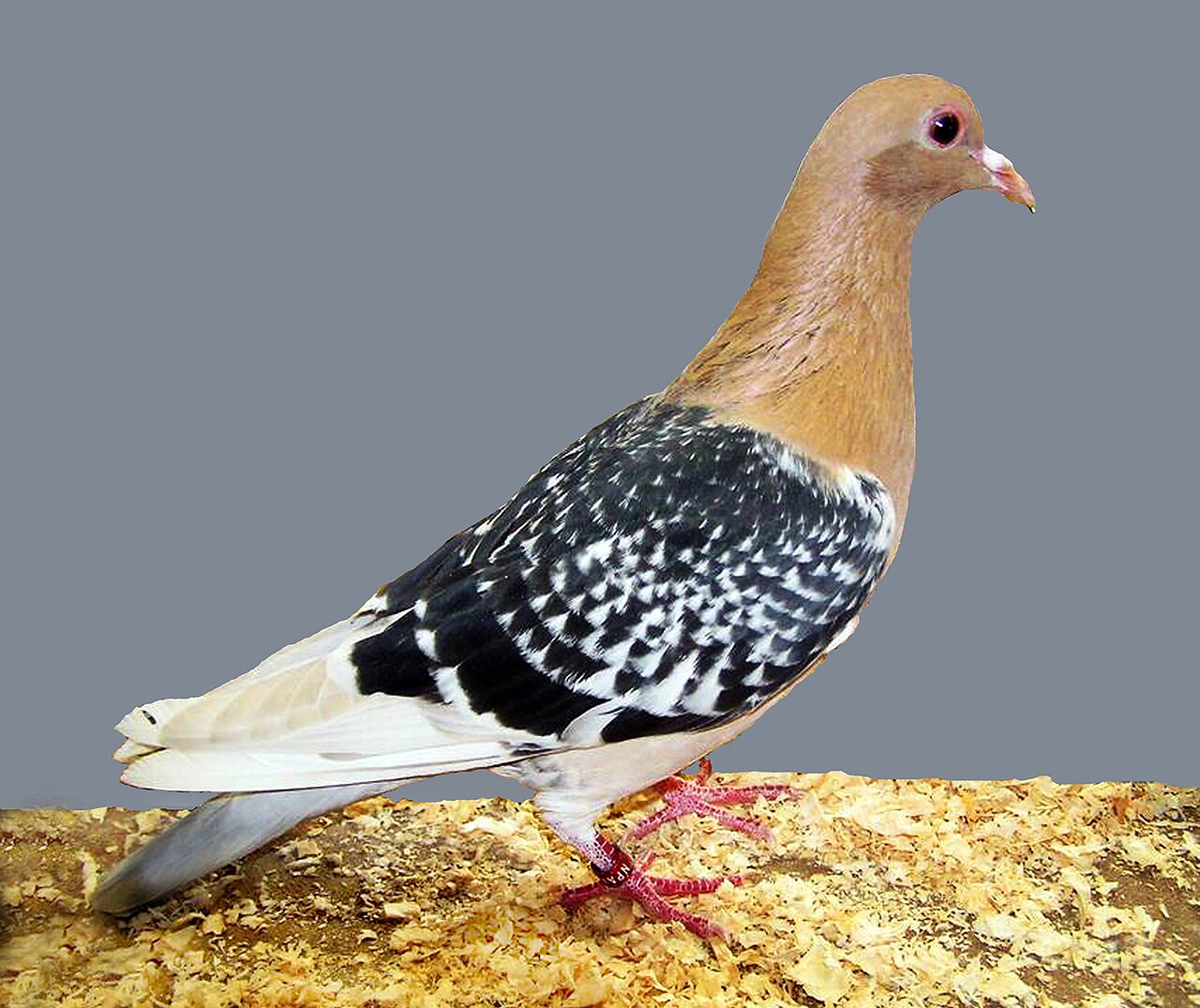
The Dutch highflyer, sometimes called the Dutch tumbler, or the Nederlandse hoogvlieger in Dutch, is a breed of fancy pigeon created through generations of selective breeding originating from the Netherlands. It is recognised as a member of the Tumblers and Highflyers breed group (EE0800 or individually as NL/0824) by the European Standard Committee for Pigeons and is recognised under the Tumblers, Rollers, and Highflyers breed group by the US National Pigeon Association. Dutch highflyers are heavily built medium-sized pigeons with stocky builds and thick necks. They are clean-legged and plain-headed, lacking any muffs/cuffs on the feet and any crest on the head. It is not to be confused with the old Dutch tumbler, a similar breed of fancy pigeon that possesses defined muffs and a similar body type. Due to their lack of muffs, Dutch highflyers are sometimes nicknamed kaalpoot pigeons, with kaalpoot meaning "barefoot" in Dutch. Dutch highflyers occur in reds, browns, yellows, blacks, greys, and silvers/blues, while the wing shields are almost always white as is judging standard within the fancying hobby. The plumage is iridescent and shines a metallic green or pink in light.
The pure bred Dutch highflyer is considered a heritage breed by the Foundation for Rare Domestic Animal Breeds (or Stichting voor Zeldzame Huisdierrassen (SZH) in Dutch), and is classed as being at "Critical" risk of being totally lost, with only fifty hens remaining. While the breed as a whole is far more plentiful than this estimate, Dutch highflyers have historically been crossbred thoroughly with other breeds, exasperating the rarity of exemplary or standard individuals. SZH also notes that the highflyer is increasing in population as per the population trend of the last fifteen years.
History
As with all fancy pigeons, the Dutch highflier is a descendant of the wild rock dove (Columba livia), one of earth's most phenotypically diverse bird species. Rock doves were first domesticated at least 5,000 years ago in the Middle East and Mediterranean region likely as a result of the birds nesting near human settlements. Phylogenetically, the Dutch highflyer belongs to the genetic group of tumblers, rollers, and highflyers, which is closest phylogenetically to structure pigeons, bred for their impressive structural morphology (eg. crests).
The Dutch highflyer is said to originate from North Holland, and is more specifically attributed to Amsterdam, where it began as a racing breed. Initially bred to standard in 1920-25, since the 1930s it has been seen as a popular show breed at exhibitions. Before its standardised description, the Dutch highflyer was commonly flown recreationally or in races in rural Amsterdam, often accompanied by the related old Dutch tumbler and Hague highflyer. The breed was initially bred not only for show but for its flying proficiency however, after around 1980, the standardised characteristics of the modern Dutch highflyer were created via crossbreeding with heavy breeds like the Modena, owing to a severe degradation in the flight capabilities of the breed. Within this initial lineage, the Dutch highflyer was defined by a deep ornamental red plumage, though this has been mostly muddied into more washed out reds and browns in the modern lineage as a result of crossbreeding. Some breeders have preserved this old lineage via crossbreeding modern highflyers with individuals who share the morphology of the idyllic racing variety that preserves the original vision of the breed.
Multiple specialty clubs for the Dutch highflyer have been established. The most prominent specialty club -the Special club of Breeders of the Dutch Highflyer, was formed by a Dr. Fritz Fröhlich on 28 April 1984 in Leopoldshöhe-Asemissen, Germany following a 1983 presentation of 60 birds at the VDT show in Münster. The club's first special show took place in Verden an der Aller, Germany on the 8th and 9th of December, 1984 where eight breeders showcased 86 birds of various colours. The club has accrued a consistent following of around 40 breeders throughout its existence. Another specialty club, the Dutch High Flyer - Tumbler Club, has since been established and encompasses the showcase of various Dutch tumbler breeds including the Dutch helmet and Amsterdam tippler. This specialty club compiles the modern breed standards of the Dutch highflyer and last had a recorded club show in 2022.
Morphological Standard
The Dutch highflyer is subject to a variety of morphological standards outlined by clubs for their exhibition. Some regular points of scrutiny are the head, forehead, neck, eyes, and beak. Some defining characteristics of the standard Dutch highflyer are its pearl-coloured eyes and bare-legs, the latter of which distinguishes it from the old Dutch tumbler, a breed defined by prominent leg muffs. Standard Dutch highflyers possess slender necks which broaden towards the base, medium length, pink or flesh coloured straight beaks, and elongated heads with minimal forehead slopes. They sport a slightly sloped stance with a modrately prominent breast and fairly broad back. The tail feathers are held closely together.
Plumage
Dutch highflyers exhibit six prominent plumage colours; red, yellow, black, blue, silver, and grey. Highflyers most often possess white wing shields, however, a much wider variety of colour combinations are recognised, with some lacking white wing shields entirely. Red, yellow, and black highflyers for instance, can occur in combinations with white or alternatively as entirely solid colours. During the era of crossbreeding between this breed and others, the prominence of these red and yellow plumage varieties is said to have declined in frequency or have even been temporarily lost until revisionary breeding. Interestingly, red and yellow highflyers hatch in a uniform colour, and only gain additional white markings or wing shields proceeding the first moult. Additionally, tiger-marked and white-shielded black highflyers do not hatch dark in plumage, and gain their solid colouration as they age.
Blue, silver (also referred to as blue-silver), and grey highflyers are almost exclusively exhibited alongside white plumage.
Other markings and plumage varieties
While solid white sing shields are the most commonly exhibited amongst highflyers, "tiger-marked" plumage -defined by rosette patterns, is also occasionally exhibited. White-tails and white flights are also rarely expressed amongst red, black, and yellow highflyers.
One additional plumage variation, the chimney sweep, is a very distinct variant, characterised by deep chestnut-coloured plumage, a prominent iridescent sheen across the throat and neck, and an apparent lateral black bar across the tail feathers. Due to its unique appearance, it is sometimes differentiated from the Dutch highflyer as a wholely unique breed.
Flying and general behaviour
As with most tumblers, the Dutch highflyer is known for its distinctive tumbling flight patterns. They fly in tight knit flocks at incredibly high altitudes, sometimes becoming invisible from the ground. Flocks are highly maneuverable and coordinated. It is also noted that a well-trained flock can withstand and escape attacks from sparrowhawks, common predators of domestic pigeon flocks. Flight durations typically last 1-2 hours, and even young pigeons are known to easily return to their loft after voluntary flights.
Dutch highflyers are not particularly personable in nature, and the lack of docility is sometimes attributed to historic crossbreeding with less-trusting breeds and varieties.
External links
- EE-List of the breeds of fancy pigeons ELFP
- National Pigeon Association Breeds
Ajouter des photos
Partagez vos photos de cette espèce (jusqu'à 20 à la fois) : elles sont vérifiées automatiquement, puis publiées.
Autres races de l'espèce (400)
Espèce : Pigeon domestique
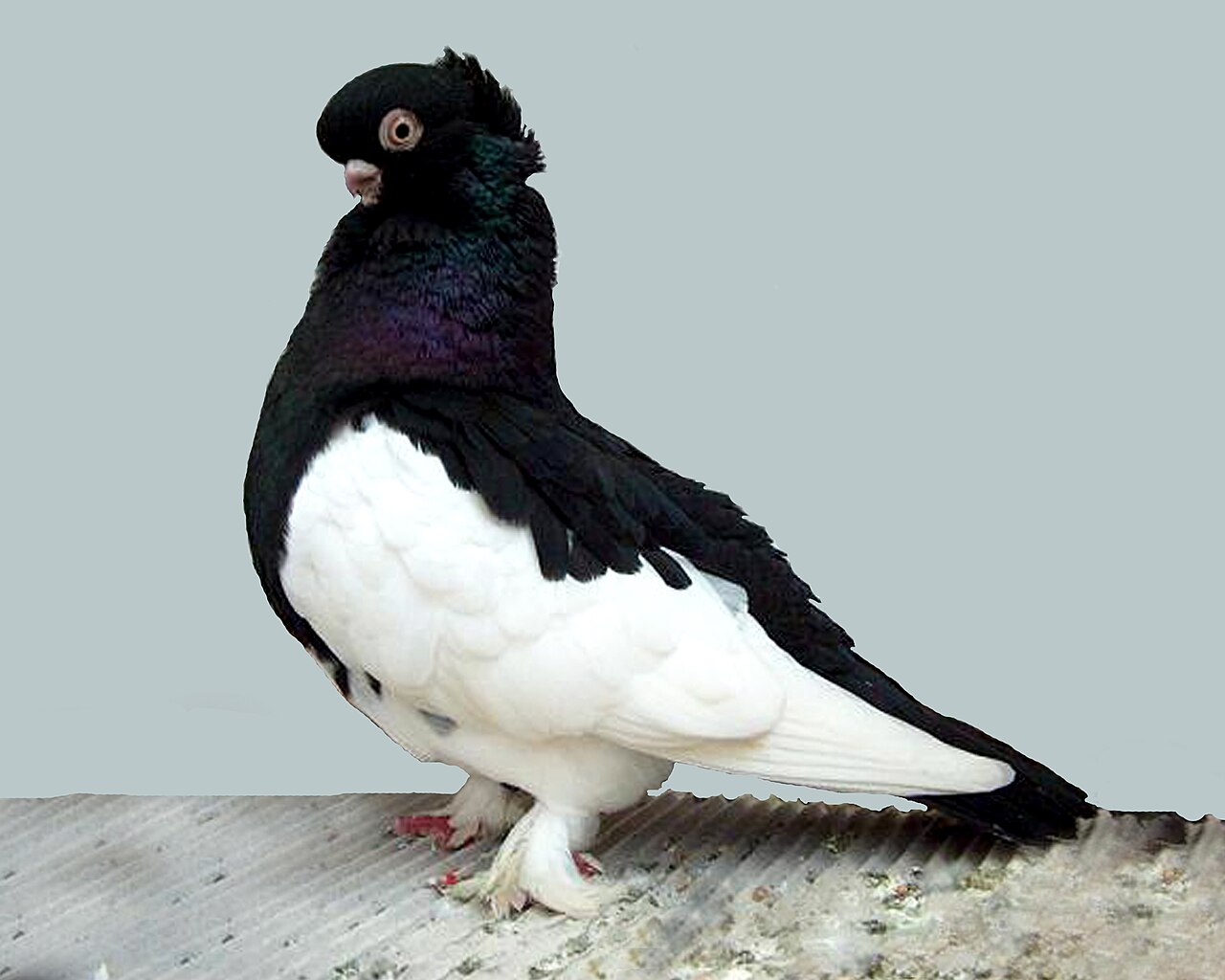
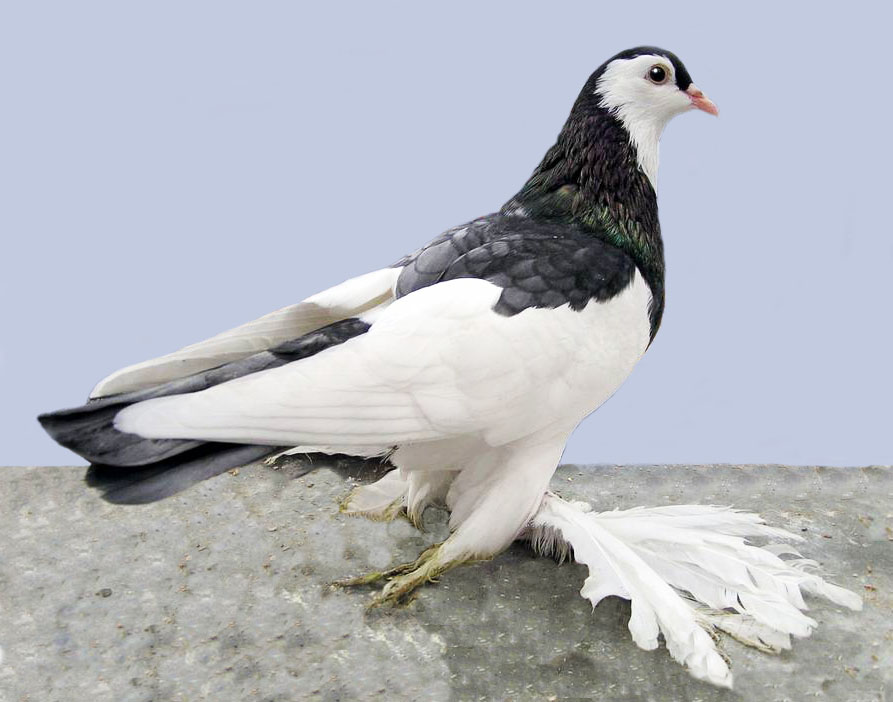
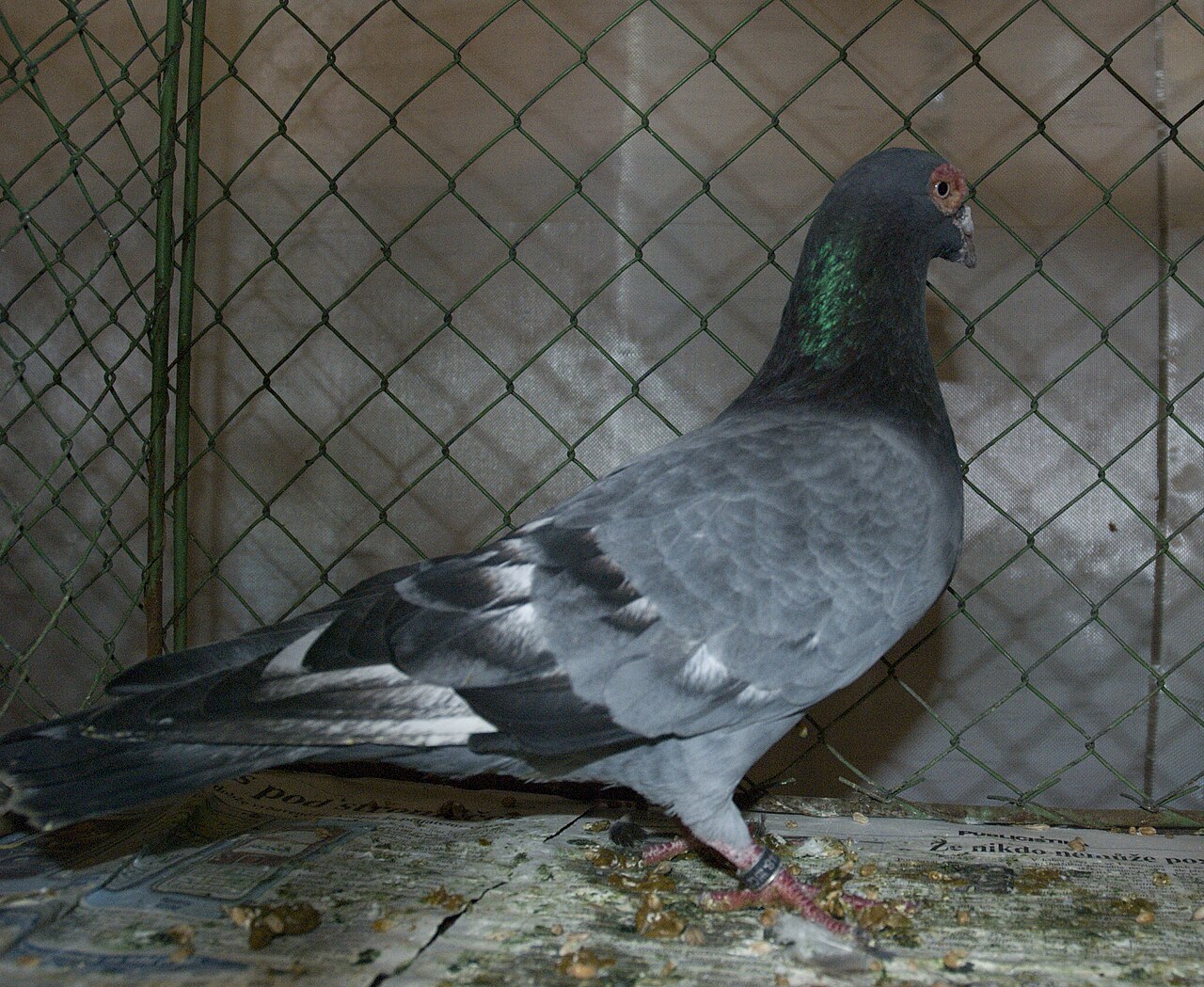
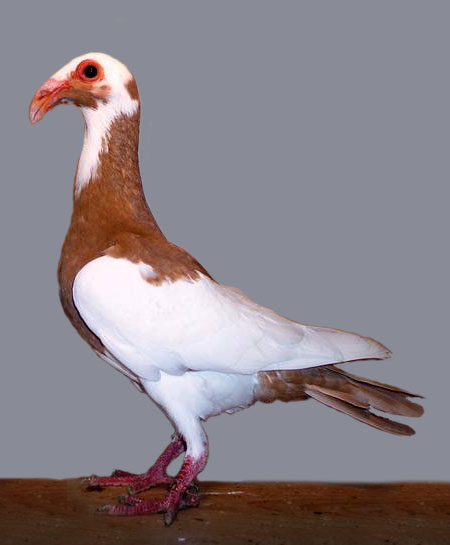
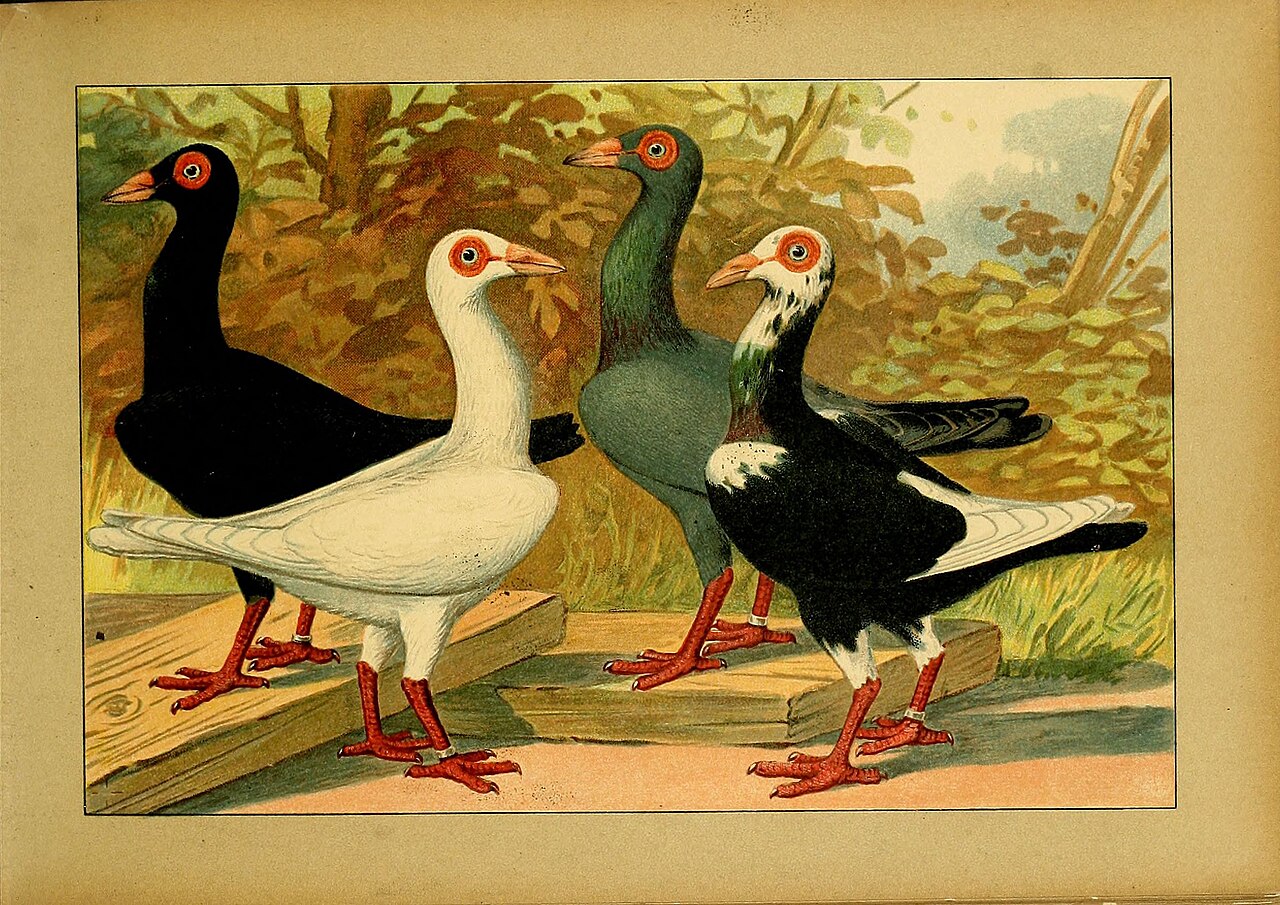
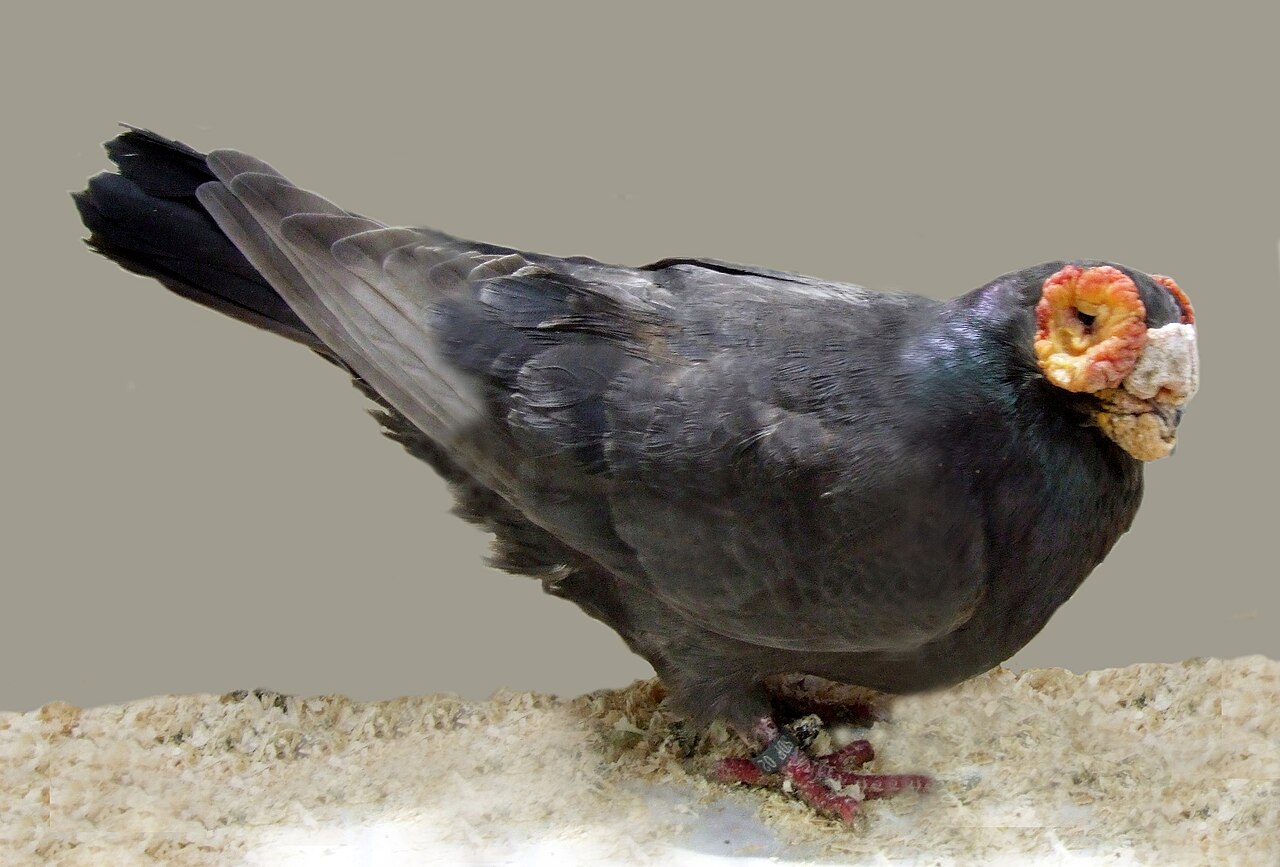
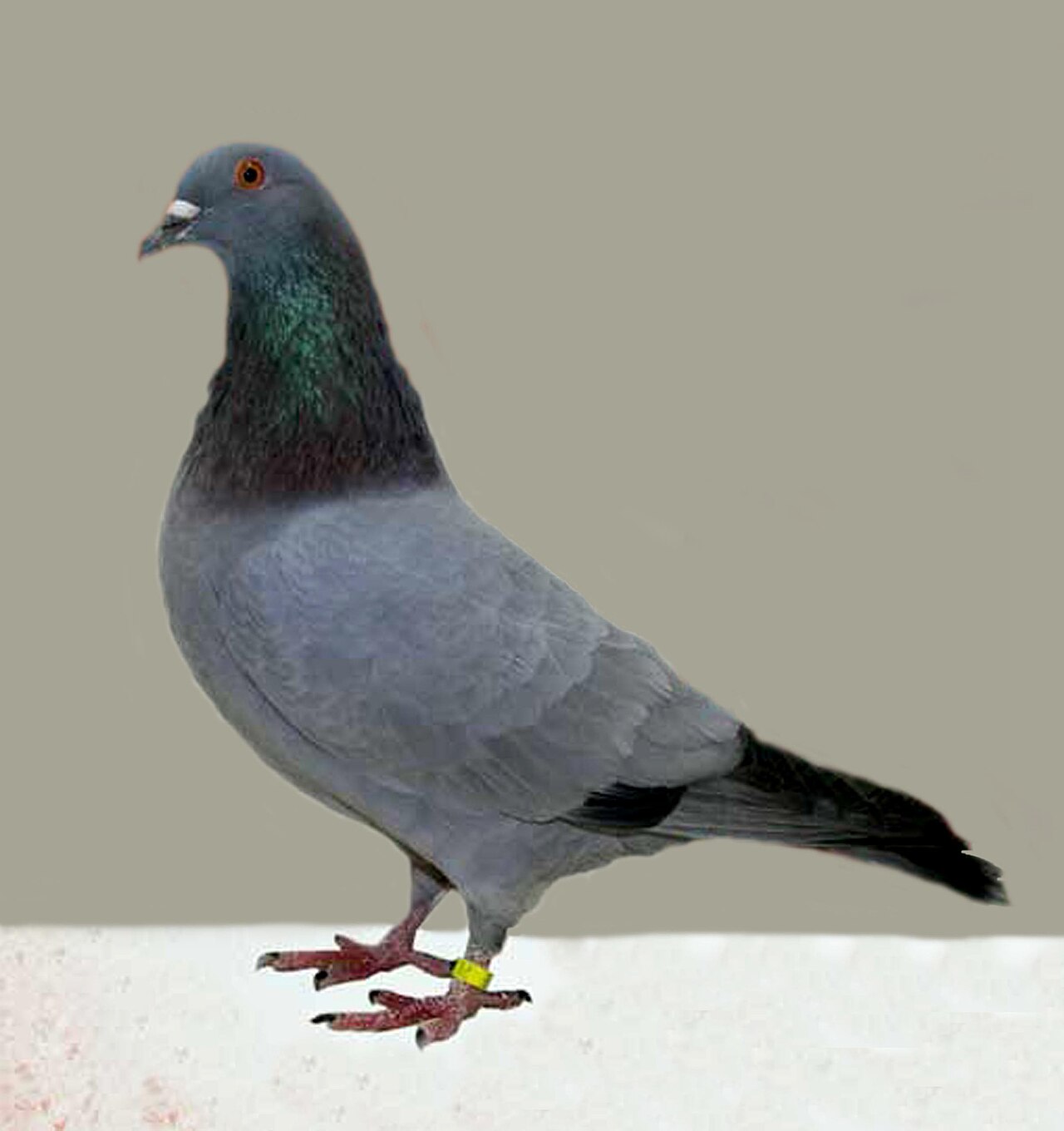
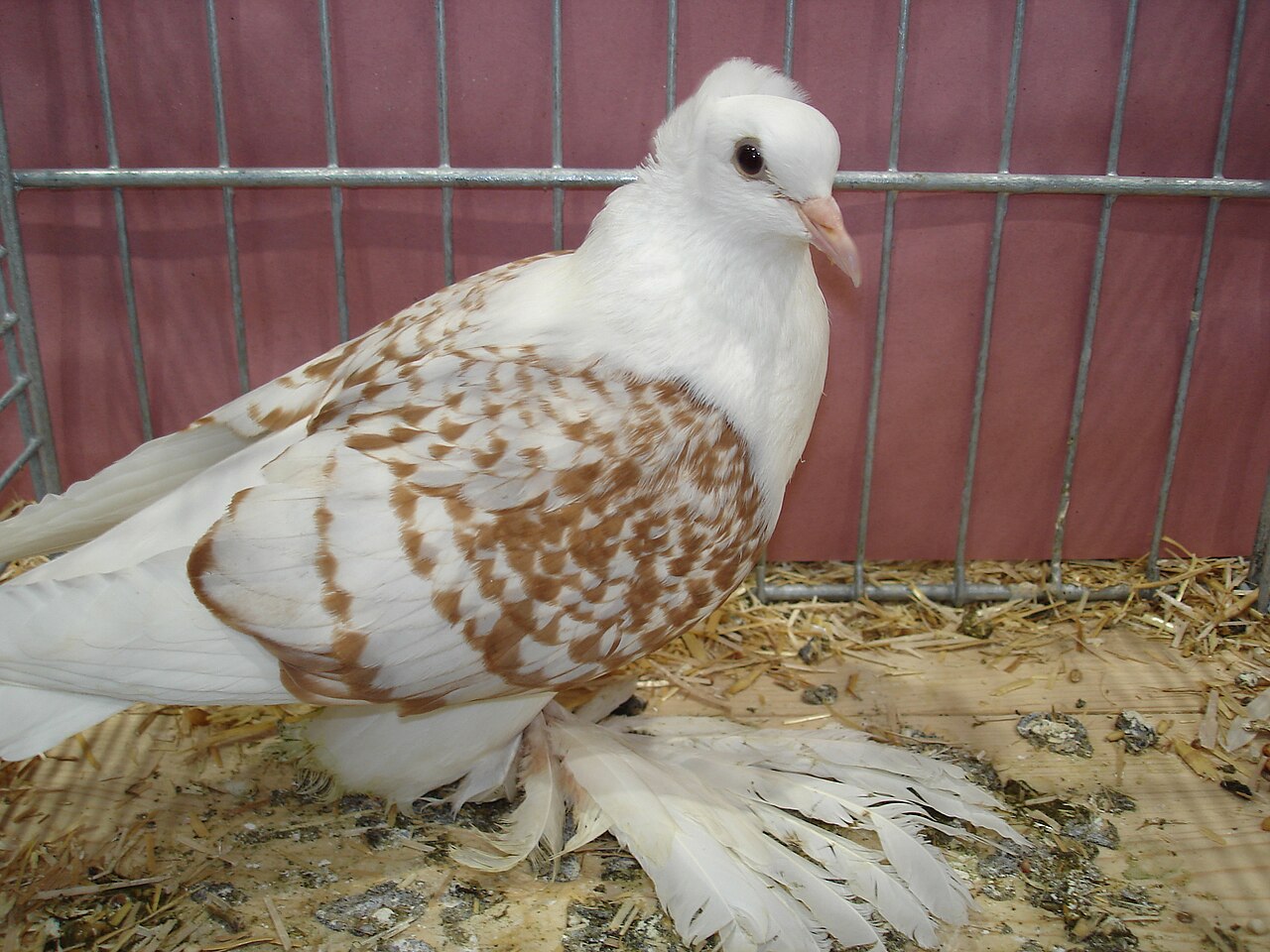
Voir les 388 autres races
- Boulant d'Alsace
- Boulant de Norwich
- Boulant de Silésie
- Boulant français
- Boulant gantois
- Boulant hollandais
- Boulant pie
- Bouvreuil
- Capucin hollandais
- Carneau
- Carrier
- Chardonneret danois
- Cou-nu de Roumanie
- Court-bec de Berlin
- Cravaté allemand ancien
- Cravaté anatolien
- Cravaté domino
- Cravaté italien
- Cravaté liégeois
- Culbutant d'Angleterre occidentale
- Culbutant de Budapest
- Culbutant de Cologne
- Culbutant de Königsberg à tête colorée
- Culbutant français
- Culbutant pie
- Damascène
- Domestic Show Flight
- Dragon
- Eichbühler
- Gier
- Haut-volant de Dantzig
- Haut-volant de Stralsund
- Haut-volant serbe
- Hirondelle de Thuringe
- Huppé de Soultz
- Krymka de Bialystok
- Lahore
- Lucernois à col doré
- Luciole de Kiev
- Lynx
- Modène
- Moine de Saxe
- Mondain français
- Montauban
- Mookee
- Nonne allemande
- Pigeon King
- Pigeon cauchois
- Pigeon de beauté allemand
- Pigeon frisé
- Poule hongrois
- Queue de Paon Anglais
- Queue de Paon Indien
- Romain
- Roubaisien
- Speelderke
- Strasser
- Tambour de Boukharie
- Texan
- Triganino de Modène
- Tête de Maure de Schmalkalden
- Viennois à épaulettes
- Bagadais de Moravie
- Bagadais de Steinheim
- Bouclier de Thuringe
- Bouclier de velours de Franconie
- Boulant Allemand ancien
- Boulant Anglais
- Boulant Brunner
- Boulant Pigmy
- Boulant Slovaque
- Boulant Stavak
- Boulant Steiger
- Boulant d'Aix la Chapelle
- Boulant d'Amsterdam
- Boulant de Hana
- Boulant de Poméranie
- Boulant de Saxe pie
- Boulant de Saxe unicolore
- Boulant de Starwitz
- Boulant de Voorburg
- Boulant à tête blanche de Moravie
- Calotte de Hambourg
- Capucin
- Cigogne de Saxe
- Claqueur de Blagodarny
- Coquille Hollandais
- Cravaté Chinois
- Cravaté Figurita
- Cravaté Oriental
- Cravaté Oriental ancien
- Cravaté Polonais
- Cravaté Turbitéen
- Criador Lusitano
- Culbutant Anglais à courte face
- Culbutant Anglais à longue face
- Culbutant Danois
- Culbutant Lillois
- Culbutant Portugais
- Culbutant arménien
- Culbutant de Felégyháza
- Culbutant de Komorn
- Culbutant de Timisoara
- Culbutant de Vienne à bouclier blanc
- Culbutant de posture de la Volga
- Dutch Helmet
- Etourneau
- Gavatxut Balear
- Giant Homer
- Géant Hongrois
- Haut-volant de Nis
- Helmet pigeon
- Hyacinthe
- Indien type Allemand
- Iranian Highflying Tumbler
- Libanais
- Mariola
- Moine d'Allemagne du sud
- Nezhinsky Pigeon
- Nègre à crinière
- Orlik Polonais
- Pie Polonais à bec court
- Pigeon Espagnol
- Pigeon de Benesov
- Pigeon de Saxe à ailes colorées
- Pigeon à ailes colorées de Bohême
- Pigeon à bavette blanche de Thuringe
- Poule Maltais
- Prishtina Roller
- Prêtre de Saxe
- Queue blanche de Saxe
- Queue de Paon
- Rouleur Oriental
- Rouleur de Birmingham
- Rouleur de Galati
- Rouleur de Rakovnik
- Saint pigeon
- Satin
- Seraphim
- Show Antwerp
- Show Homer
- Slenke de Gueldre
- Smerle Anversois
- Strasser de Moravie
- Swift Egyptien
- Tambour Anglais
- Tambour Bohème
- Tambour d'Altenbourg
- Tambour d'Arabie
- Tambour de Bernbourg
- Tambour de Dresde
- Tambour de Franconie
- Tambour de Schmölln
- Tambour de Vogtland
- Tippler
- Trembleur de Stargard
- Modène allemand
- Culbutant belge
- Berlinois à bec long
- Chinese Flying pigeon
- Cravaté Turbit
- Culbutant Hollandais ancien
- Culbutant de Breslau
- Haut-volant Viennois
- Haut-volant de Budapest
- Krymka Polonais
- Parlor Roller
- Pie Anglais
- Ringslager d'Anatolie
- Romain géant
- Boulant granadino
- Amsterdam beard Tumbler
- Bernhardiner Schecke
- Boulant Autrichien dominicain
- Boulant Horseman
- Boulant Morillero
- Boulant Satin de Bohême
- Boulant de Thuringe
- Calotte blanche d'Allemagne du sud
- Chistopolian Highflyer
- Cigogne de Thuringe
- Cravaté Allemand à bouclier colorée
- Cravaté Allemand à queue colorée
- Cravaté Anglais
- Cravaté Barbarisi
- Cravaté Hollandais ancien
- Cravaté Tunisien
- Cubutant Ouzbek
- Culbutant de Basse-Silésie pattu
- Culbutant de Bohême
- Culbutant de Hambourg
- Culbutant de Hanovre
- Culbutant de Kalouga
- Culbutant de Königsberg à œil pur
- Culbutant de Prague
- Culbutant de Prusse Orientale
- Culbutant de Stapar
- Culbutant de Stettin
- Culbutant de Transylvanie
- Culbutant de Vienne dominicain
- Culbutant de posture de Rostov
- Geant Majorquin
- Haut-volant de Poméranie à œillères
- Heurté de Thuringe
- Hirondelle de Nuremberg
- Hirondelle de Saxe
- Mariolinha
- Pigeon Lune de Saxe
- Pigeon Lune de Thuringe
- Pigeon de Mittelhausen
- Pigeon à calotte blanche de Thuringe
- Queue blanche d' Allemagne du sud
- Queue blanche de Thuringe
- Queue de Paon Hongrois
- Ringslager Belge
- Ringslager du Rhin
- Rouleur de Perse
- Rouleur de Sisak
- Schalaster Pouter
- Tambour Allemand à coquille et visière
- Tambour Allemand à queue fourchue
- Tigré de Hambourg
- Tête blanche d'Elbing
- Tête blanche de Thuringe
- Tête colorée de Poznan
- Tête de Maure de Silésie
- Abu Abse
- Ailes colorées de Saint-Gall
- Alouette charbonnière
- Argovien à queue blanche
- Claqueur de Krasnodar
- Cravaté gantois
- Escampadissa
- Haut-volant cumulet
- Heurté de Saxe
- Huppé picard
- Kanik
- Manotte d'Artois
- Mulhousien
- Pigeon de Bohême
- Pigeon scarabée de Thuringe
- Pigeon à calotte français
- Rouleur Chacal
- Slenke de Groningue
- Trembleur de Kazan
- Tête colorée de Brive
- Vanneau de Budapest
- Voyageur Magaña
- Voyageur de beauté néerlandais
- Œil-de-fraise
- Armavir Muffed White-Headed
- Australian Performing Tumbler
- Bagadais d'Ostrava
- Bouclier d’Allemagne du sud
- Boulant Gorguero
- Boulant Jiennense
- Boulant Laudino Sevillano
- Boulant Marchenero
- Boulant Morak de Moravie
- Boulant Moroncelo
- Boulant Pie de Moravie
- Boulant Rafeno
- Boulant Veleño
- Boulant de Hesse
- Boulant de Silésie
- Boulant de Waldviertel
- Claqueur Agaran
- Cravaté d'Aix la Chapelle
- Cravaté de Hambourg
- Culbutant Autrichien ancien
- Culbutant Pinta
- Culbutant Polonais à bec court
- Culbutant de Lusace
- Culbutant de Prague à bec moyen
- Culbutant de Vienne
- Culbutant de Vienne à bec court
- Donek
- Exhibition Homer
- Genuine Homer
- Giant American Crest
- Haut-volant Grivuni
- Jridi
- Moscow Monk
- Nas de Xot
- Parisian pouter
- Pigeon Suisse unicolore
- Pigeon de Thuringe à ailes colorées
- Pigeon de la Sarre
- Pigeon de vol catalan
- Rouleur de Sarajevo
- Show Racer
- Spanish Naked-neck Tumbler
- Sverdlovsk blue-gray mottle-headed pigeon
- Tambour Allemand à simple visière
- Tête colorée de Silésie
- Tête de Maure Allemand ancien
- Sivas Kumru Güvercin
- Boulant Gaditano
- British Show Racer
- Culbutant de Bursa
- Haut-volant de Szeged
- Indian Gola
- Madrasi Highflyer
- Roshan Chirag
- Rouleur de Bijeljnina
- Rouleur de Debrecen
- Bagadais Polonais
- Bagadais de Franconie
- Bagadais de Szolnok
- Barbet liégeois
- Bernois à queue blanche
- Bernois à queue miroitée
- Bernois à tête criblée
- Biset Munsterois
- Biset de Franconie
- Bleu de Cluj
- Bleu de Sovat
- Bleu d’Eger
- Bouclier Lucernois
- Bouclier Thurgovien
- Boulant Canario
- Boulant Colillano
- Boulant Danois
- Boulant Hongrois
- Boulant Lillois
- Boulant Néerlandais frisé
- Boulant Steller
- Boulant Suisse
- Boulant de Basse Bavière
- Boulant de Bavière
- Boulant de Louvain
- Boulant de Valence
- Boulant de Valence ; type Hollandais
- Boulant marteño
- Chorrera
- Coucou Bernois
- Culbutant Allemand à bec long
- Culbutant Maure de Pologne
- Culbutant Polonais à bec long
- Culbutant de Berlin pattu
- Culbutant de Rjev
- Culbutant de Rostock
- Culbutant de Schöneberg
- Culbutant de Sofia
- Culbutant de posture du Caucase
- Demi Bec bernois
- Frisé Syrien
- Géant Piestanois
- Haut-volant de Budapest à vols blanche
- Haut-volant de Memel
- Haut-volant de Nikolaïev
- Heurte d'Allemagne du sud
- Heurte à queue blanche
- Messager de Bassorah
- Moine de Thuringe
- Nonnain Limbourgeois
- Oryol white tumbler
- Papillon de Varsovie
- Piacentino
- Pie de Cracovie
- Pigeon Fischer Autrichien
- Pigeon Musafer
- Pigeon caronculé Polonais
- Pigeon caronculé des Basses Carpathes
- Pigeon caronculé ‘d Ostrowiec
- Pigeon de Buga
- Pigeon de Nis
- Poule Florentin
- Poule de Vukovar
- Refilador
- Renaisien
- Revellois
- Shérazie
- Smijter
- Sottobanca Francais
- Sottobanca Italien
- Swift Syrien
- Tambour de Harzbourg
- Tête blanche de Gumbinnen
- Tête blanche de Slovénie
- Tête de Maure de Wurtemberg
- Unicolore de Thuringe
- Ural striped maned pigeon
- Voyageur Belge d'exposition
- Voyageur Roumain d’exposition
- Voyageur beauté Hongrois
- Voyageur de beauté Polonais
- Voyageur liégeois
Sources et crédits
Informations provenant de plusieurs sources vérifiées. Dernière mise à jour : .
Mentions de licence
Texte disponible sous licence CC BY-SA 4.0. Il adapte notamment Wikipedia (CC BY-SA): Dutch highflyer (Wikipédia, auteurs dans l’historique de l’article).
- Taxonomie : GBIF Backbone Taxonomy (CC BY 4.0)
Détail : Sources et licences.
Discussion (0)
Aucun message pour l’instant. Lancez la discussion sur cette fiche (sources, précisions, débats éditoriaux).
Connectez-vous pour participer à la discussion.