
- Kingdom
- Animalia
- Phylum
- Chordata
- Class
- Mammalia
- Order
- Artiodactyla
- Family
- Bovidae
- Genus
- Bos
- Species
- Bos taurus
Overview
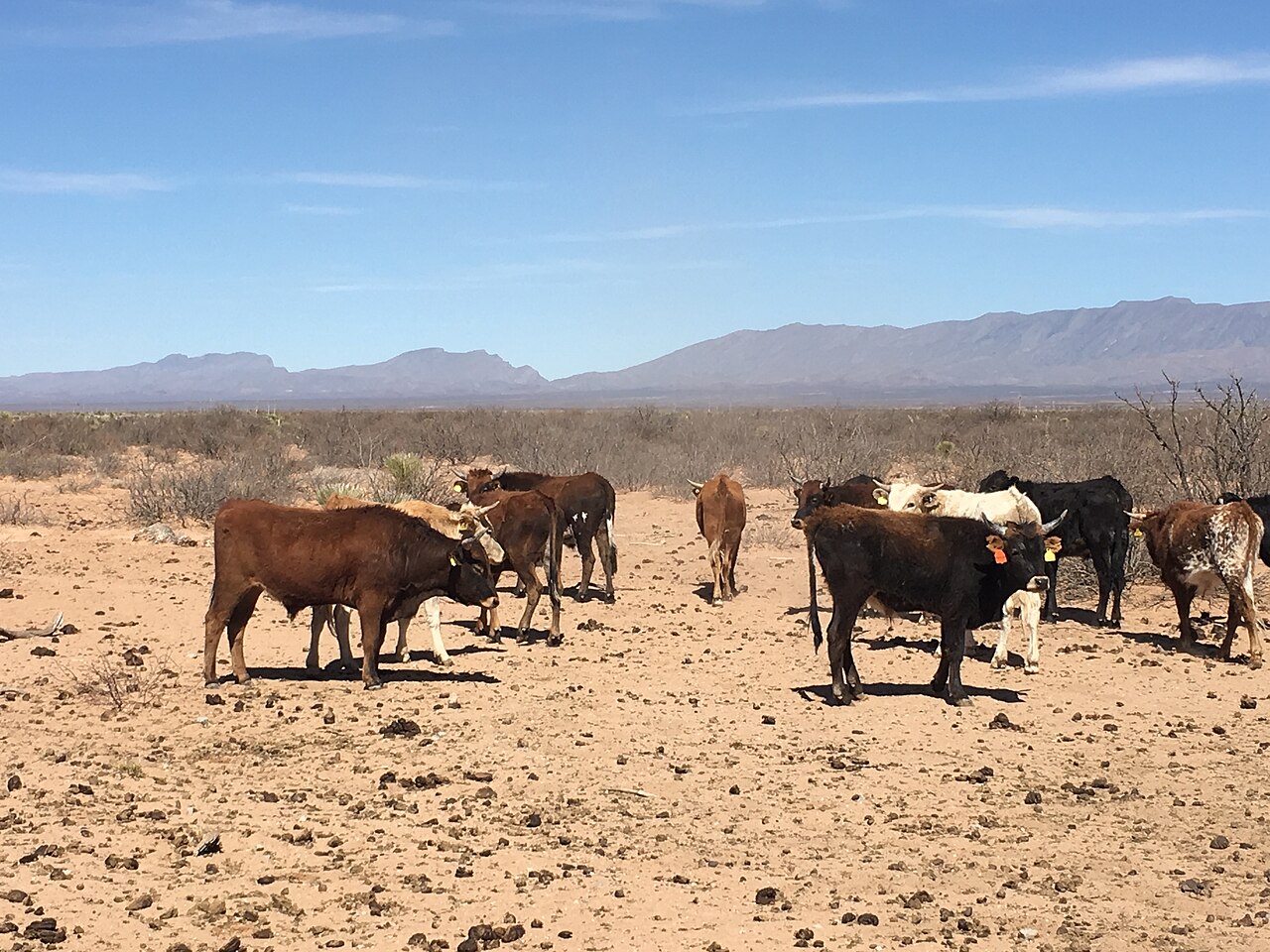
The Rarámuri Criollo is a landrace biotype of Criollo cattle indigenous to the Sierra Tarahumara region of the Copper Canyon, Mexico. In 2005 a small group was introduced to the Jornada Experimental Range (JER) in New Mexico, in the United States for scientific study.
History
Rarámuri Criollo cattle are descendants of the first cattle brought to Mexico by Hernán Cortés and Villalobos. Until recently, this biotype was geographically isolated between Chínipas and Témoris, Chihuahua in the remote Rio Oteros region of the Copper Canyon, home to the Tarahumara. The Tarahumara, who also call themselves Rarámuri, meaning "fleet foot", have raised this biotype for over 500 years. The Rarámuri typically used the cattle for milk and companionship, wherein animals were often kept indoors adjacent to the house as a source of winter heat. The Rarámuri Criollo experienced little-to-no artificial selection and is suspected to have little-to-no genetic introgression from outside breeds, therefore scientists consider it important to preserve their unique genetic and behavioral characteristics.
Characteristics
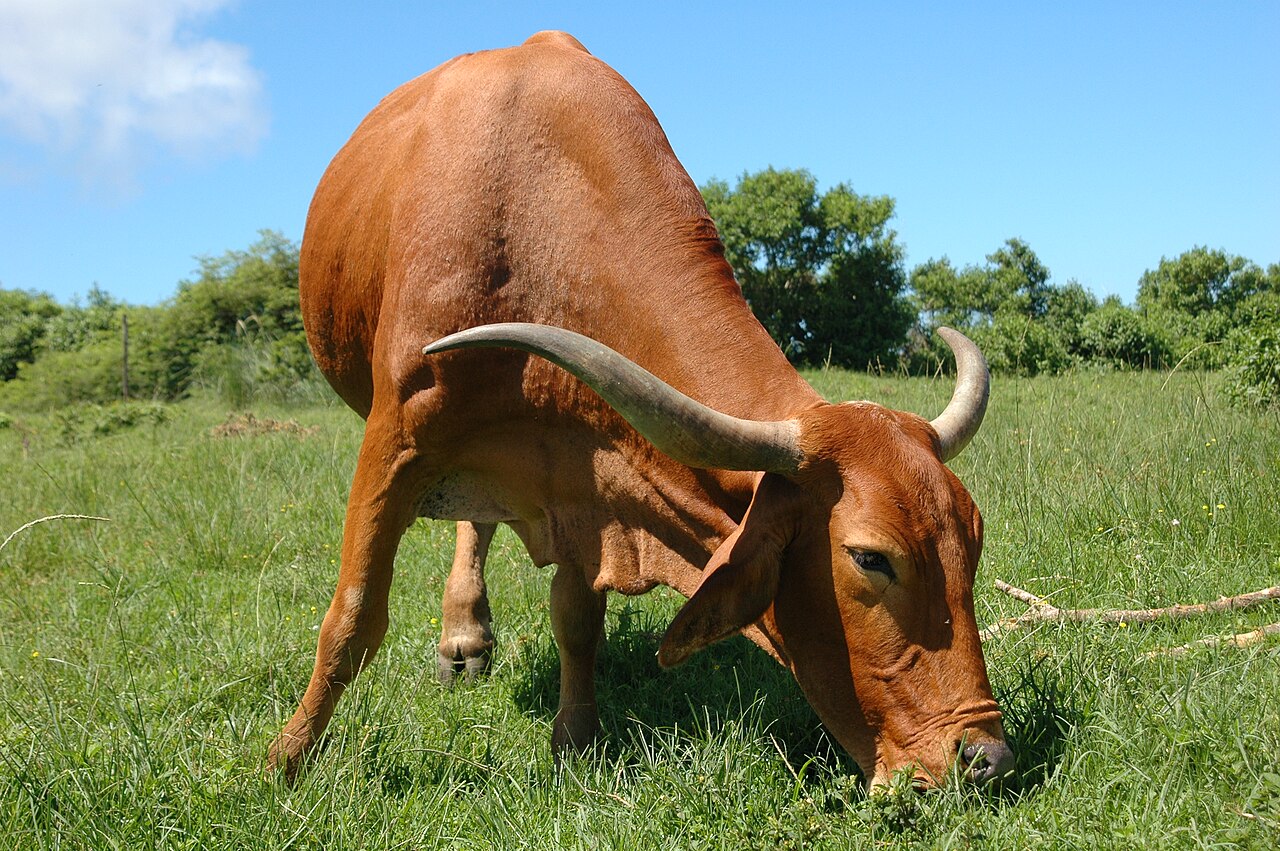
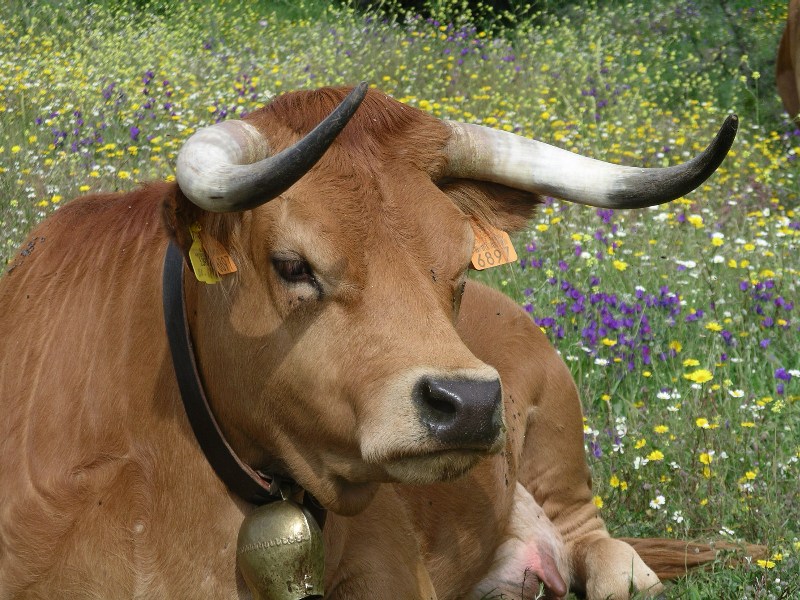
The Rarámuri Criollo has characteristic lyrate horns like those of its ancestors and exhibits a wide variety of coat colors, which include solid black, white, gray, dun, blonde, gold, red-brown, red, and dark red, as well as brindle and spotted variations of those colors. The biotype is generally smaller than other beef breeds, but is large among North American Criollo cattle relatives like closely related Corriente and other Mexican biotype counterparts (e.g., Mixteco, Fronterizo, etc.). Rarámuri Criollo are sexually dimorphic and typically cows weigh ~370 kg (816 lbs), while bulls can weigh more than 620 kg (1367 lbs). Bull horns are often curved down and out around their head, and cow horns are typically lyrate and in an upward direction. Currently, no registered breed association exists for the biotype, but they are regarded as an individual among other Criollo cattle.
Behavior
In collaborative ethological scientific studies between the USDA-ARS's JER, New Mexico State University, and Universidad Autónoma de Chihuahua, Rarámuri Criollo cows have consistently exhibited unique behavioral traits when compared to traditional British breeds. For instance, they tend to explore larger areas and travel further distances per day, especially in the harsh dry seasons of the American southwest.
These animals have also been shown to exhibit a different mothering style during early infantile calf stages, wherein cows and calves act as "followers" (young are kept closer to the mother) as opposed to "hiders" (young are hidden or kept with a guardian cow during foraging bouts) as do British crossbreds (eg. Black Baldies).
These cattle are under continuous scientific study because these behavioral traits are suspected to be more environmentally sustainable, especially under the impending threat of climate change, than those exhibited by more traditional breeds as increased exploration, reduced water dependency, and spatial non-constraints by calving mean that cows are less likely to overuse patches of vulnerable desert vegetation thus ensuring resilience of those biological rangeland resources.
Uses
The ancestors of Rarámuri Criollo were initially used by early Spanish explorers and the Tarahumara for milk, draught, and companionship, but the biotypes is now considered a novel beef breed, which could be used for climate change adaptation and conservation grazing management strategies . Some preliminary analyses show that Rarámuri Criollo have an exceptionally long reproductive lifespan (> 22 years). Other baseline data indicates that grass-finished steers will weigh 800 - 1000 lbs at 30 months of age and yield extremely tender meat, suggesting that they may be a viable alternative for producers seeking to raise grass-fed cattle in arid environments with limited resources.
See also
Wikimedia Commons has media related to Rarámuri Criollo cattle.
- Rarámuri people
- Criollo Cattle
- Rangeland management
Gallery
Ajouter des photos
Partagez vos photos de cette espèce (jusqu'à 20 à la fois) : elles sont vérifiées automatiquement, puis publiées.
Autres races de l'espèce (521)
Espèce : Bovin domestique
Voir les 509 autres races
- Asturiana de la montaña
- Asturiana de los Valles
- Aubrac
- Aure-et-Saint-Girons
- Aurochs de Heck
- Avilena
- Ayrshire
- Azawak
- Bargur
- Barrosã
- Bazadaise
- Beefalo
- Beefmaster
- Berrenda en colorado
- Betizu
- Blaarkop
- Black baldy
- Blanc bleu belge
- Bleue de Lettonie
- Bleue du Nord
- Blonde d'Aquitaine
- Blonde de Carinthie
- Bohuskulla
- Bonsmara
- Bordelaise
- Boškarin
- Brahmane
- Brangus
- Braunvieh
- Brava
- Bretonne Pie Noir
- British White
- Brown swiss
- Brune
- Brune de Lettonie
- Brune de l'Atlas
- Burlina
- Buša
- Béarnaise
- Bœuf Moka
- Bœuf gris de Hongrie
- Cachena
- Caldelà
- Calvana
- Camargue
- Canaria
- Caracu
- Charbray
- Charolaise
- Cheurfa
- Chianina
- Cikasto govedo
- Cinisara
- Corriente
- Corse
- Cotentine
- Coursière
- Créole
- Dangi
- Deoni
- Deutsches schwarzbunte
- Devon
- Dexter
- Drakensberg
- Droughtmaster
- Dølafe
- Eesti Punane
- Ennstaler bergschecken
- Ferrandaise
- Fjall
- Fjord de l'ouest
- Fleckvieh
- Fribourgeoise
- Frieiresa
- Frisonne
- Frisonne-sahiwal australienne
- Froment du Léon
- Fémeline
- Galloway
- Galloway ceinturée
- Gangatiri
- Gaolao
- Garfagnina
- Garonnaise
- Gasconne des Pyrénées
- Gelbvieh
- Gessienne
- Gir
- Glamorgan
- Glan rind
- Grigio alpina
- Gris ukrainien
- Grise de Murray
- Grise rhétique
- Guernesey
- Hallikar
- Hanu
- Hariana
- Harzer rotvieh
- Hereford
- Highland
- Hinterwälder
- Holstein
- INRA 95
- Iakoute
- Iaroslavl
- Illawarra
- Inyambo
- Irish moiled
- Islandaise
- Itäsuomenkarja
- Japanese black
- Japanese poll
- Jersiaise
- Kangayam
- Kankrej
- Kerry
- Khillari
- Kiwi
- Kostroma
- Kouri
- Lakenvelder
- Limia
- Limousine
- Limpurg
- Lincoln red
- Lineback
- Longhorn
- Lourdaise
- Luing
- M'bororo
- Mallorquina
- Malnad Gidda
- Malvi
- Maraîchine
- Marchigiana
- Maremmana
- Marine landaise
- Marismeña
- Maronesa
- Menorquina
- Mertolenga
- Meuse-Rhin-Yssel
- Milking devon
- Minhota
- Mirandaise
- Mirandesa
- Modenese
- Montbéliarde
- Morucha
- Murboden
- Murnau-werdenfels
- Mézine
- Nantaise
- Ndama
- Nguni
- Nimari
- Nordland
- Normande
- Nélore
- Ongole
- Pajuna
- Parthenaise
- Pie rouge de Carhaix
- Pie rouge de Norvège
- Pie rouge de Suède
- Pie rouge des plaines
- Pinzgauer
- Pirenaica
- Piémontaise
- Podolica
- Ponwar
- Prim'Holstein
- Punganur
- Pustertaler
- Race bovine canadienne
- Ramo grande
- Randall
- Razzetta d'Oropa
- Red Poll
- Red holstein
- Red kandhari
- Reggiana
- Rendena
- Retinta
- Rhodope
- Ringamala
- Romagnola
- Romosinuano
- Rouge Belmont
- Rouge danoise
- Rouge de Belgique
- Rouge de Pologne
- Rouge de Suède
- Rouge des prés
- Rouge flamande
- Rubia galega
- Sahiwal
- Salers
- Santa Gertrudis
- Saosnoise
- Sarlabot
- Sayaguesa
- Saïnata
- Shetland
- Shorthorn
- Simmental
- Simmental française
- South Devon
- Speckle park
- Sussex
- Sénépol
- Tarentaise
- Taureau blanc de Chillingham
- Taureau de combat
- Terreña
- Texas Longhorn
- Tharparkar
- Tiroler Grauvieh
- Touli
- Tudanca
- Tux-zillertal
- Télémark
- Uckermärker
- Vache d'Hérens
- Vache de Floride
- Valdostaine pie noire
- Valdostaine pie rouge
- Vaynol
- Vechur
- Vianesa
- Villard-de-Lans
- Vogelsberger
- Vorderwälder
- Vosgienne
- Wagyu
- Wakwa
- Waldviertler Blondvieh
- Watusi
- Welsh black
- White park
- Zébu mahorais
- Alderney cattle
- American Angus
- Anatolian Black
- Arado cattle
- Australian Braford
- Australian Brangus
- Beef Shorthorn
- Braford
- Bruna dels Pirineus
- Chinese Black and White
- Criollo argentin
- Dairy Shorthorn
- Deutsche Rotbunte
- Dutch Belted
- Finnish Ayrshire
- German Angus
- Greyman
- Japanese Shorthorn
- Jarmelista
- Javari
- Kasaragod Dwarf
- Kazakh Whiteheaded
- Kherigarh
- Krishna Valley
- Kuchinoshima cattle
- Länsisuomenkarja
- Madura cattle
- Mishima cattle
- Morucho
- Murrah
- Niata cattle
- North American Piedmontese
- Palmera cattle
- Philippine Native
- Pohjoissuomenkarja
- Rameau podolique
- Red Angus
- Red Brangus
- Red Fulani
- Sanga
- Swedish Friesian
- Taurus
- Tswana cattle
- Umblachery
- Vache à viande
- Valdostaine châtaine
- Whitebred Shorthorn
- Zébu nain
- Africangus
- Ankole
- Belarus Red
- Black Hereford
- Blue Grey cattle
- Rameau ibérique
- Avileña-Negra ibérica bociblanca
- Casta Navarra
- Clavel cattle
- Czech Fleckvieh
- Mantequera leonesa
- Pasundan
- Pezzata Rossa Italiana
- Tajima cattle
- West African dwarf cattle of Lagune
- Morvandelle
- Adaptaur Belmont
- Agerolese
- Alistana sanabresa
- Allmogekor
- American
- Amerifax
- Australian lowline
- Bachaur
- Baladi
- Barzona
- Beefmaker
- Bengali
- Berrenda en negro
- Blanca Cacereña
- Blanco Orejinegro
- Bleue de Bazougers
- Blue Albion
- Boran
- Brahmousin
- Bressanne
- Brune de Guingamp
- Brune italienne
- BueLingo
- Cabannina
- Canchim
- Caqueteño
- Cardena andaluza
- Casanareño
- Channi
- Chiangus
- Chittagong rouge
- D'jakoré
- Deutsches Braunvieh
- Eesti maatõug
- Garvonesa
- Gloucester
- Gorbatov rouge
- Grise de Lituanie
- Grise du nord Bengale
- Guelmoise
- Harton del valle
- Hays converter
- Indubrasil
- Istobensk
- Jutland
- Kalmouk
- Lucerna
- Mancelle
- Mandalong
- Marinhoa
- Modicana
- Monchina
- Murciana levantina
- Negra andaluza
- Pabna
- Pasiega
- Pasturina
- Pie noire du Danemark
- Pie noire russe
- Pie rouge belge
- Pineywoods
- Pisana
- Pontremolese
- Rahaji
- Rouge de Lituanie
- Rouge de Norvège de l'est
- Rouge de Norvège de l'ouest
- Rouge sicilienne
- Rénitello
- Sanganer
- Sarda
- Sardo-modicana
- Sindhi rouge
- Square Meater
- Sytchiovka
- Tambov rouge
- Tourache
- Tswana
- Tulim
- Twinner
- Varzese
- Velasquez
- Vänekor
- Wittgensteiner Blazed
- Zébu laitier australien
- Évolène
- Abergele cattle
- Achham cattle
- Afar cattle
- Alatau cattle
- Algarvia
- Andalusian Black cattle
- Aulie-Ata cattle
- Baggara cattle
- Baoulé
- Bestuzhev cattle
- Bhagnari
- Brown Carpathian cattle
- Bushuyev cattle
- Bœuf tacheté de Hongrie
- Caucasian Brown
- Cholistani
- Crioulo Lageano
- Dajal cattle
- Danish Jersey
- Dhanni
- Djelli
- Droimeann
- Dutch Improved Red Pied
- Frankeston
- Georgian Mountain cattle
- German Black Pied Dairy
- Girolando
- Holando-Argentino
- Jamaica Hope
- Japanese Brown
- Jeju Black
- Kenkatha
- Kurgan cattle
- La Reina cattle
- Lebedyn cattle
- Lohani cattle
- Mocho Nacional
- Mongolian cattle
- Nagpuri
- Original Braunvieh
- Pembroke cattle
- Poda Thurpu
- Preta
- Pulikulam
- Red Mingrelian
- Romanian Bălțata
- Siboney de Cuba
- Siri cattle
- Swedish Red Pied
- Swiss Holstein
- Tabapuã
- Tasmanian Grey
- Tipo Carora
- Vache de l'île Amsterdam
- Vache horro
- Volinian Beef
- Yanbian cattle
- Yuanxing
- Yurino cattle
- Zenga
- Chino santandereano
- Doayo cattle
- Mateba
- Abruzzese cattle
- Aceh cattle
- Adamawa cattle
- Albanian Prespa cattle
- American White Park
- Baherie cattle
- Bakosi cattle
- Balancer
- Begayt cattle
- Brachykeratiki
- Criollo
- Fogera cattle
- Junqueira cattle
- Latvian Danish Red
- Mehsana buffalo
- Mewati cattle
- Miniature Texas Longhorn
- Mirkadim
- Preta cattle
- Sarda cattle
- Sardo Bruna
- Selembu
- Sunandini
- Tory Island Cattle
- Brangus beef cattle
- Cabrera's Breed
- Central Plains Yellow
- Chikso
- Dwarf Lulu
- Encaste Albaserrada
- Encaste Atanasio Fernández
- Encaste Juan Pedro Domecq
- Encaste Santa Coloma
- Encaste Urcola
- Gallardo's Breed
- Granemåla cow
- Gulya
- Hybridmaster
- Jijona's Breed
- Northern Dairy Shorthorn
- Northern Yellow
- Pallaresa
- Portuguese Cattle
- Rode geus
- Rögnarödsko
- Saltillo's Breed
- Sykia
- Traditional Hereford
- Vache de Gotō
- Vistahermosa Caste
- Vistahermosa's breed
- Vogelsberger Rind
- Vázquez Breed
- Évolénarde
Sources et crédits
Informations provenant de plusieurs sources vérifiées. Dernière mise à jour : .
Crédits photos (2)
- Photo : Mmontanamcintosh · CC BY-SA 4.0 · via Wikimedia Commons
- Photo : Mmontanamcintosh · CC BY-SA 4.0 · via Wikimedia Commons
Mentions de licence
Texte disponible sous licence CC BY-SA 4.0. Il adapte notamment Wikipedia (CC BY-SA): Raramuri Criollo (Wikipédia, auteurs dans l’historique de l’article).
- Taxonomie : GBIF Backbone Taxonomy (CC BY 4.0)
Détail : Sources et licences.
Discussion (0)
Aucun message pour l’instant. Lancez la discussion sur cette fiche (sources, précisions, débats éditoriaux).
Connectez-vous pour participer à la discussion.