
- Kingdom
- Animalia
- Phylum
- Chordata
- Class
- Mammalia
- Order
- Artiodactyla
- Family
- Bovidae
- Genus
- Bos
- Species
- Bos taurus
Overview
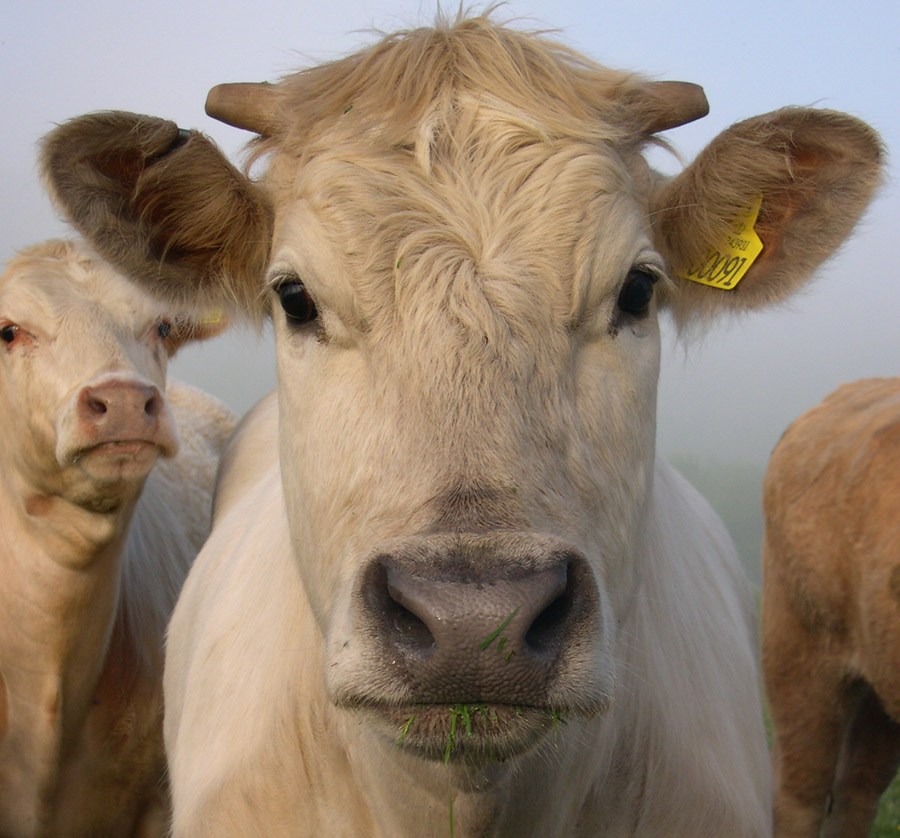
The Jarmelista is a rare Portuguese breed of cattle. It originated in – and is named for – the former concelho of Jarmelo, now within the concelho of Guarda. In the twentieth century it came close to extinction. A small number of surviving examples were identified in 2006, and in 2007 a breed society was formed and a herd-book started, in which 44 cows were registered the next year.
History
The Jarmelista originated in the former concelho of Jarmelo [pt], which in 1855 was merged into the concelho of Guarda and from which its name derives.• It is documented from the second half of the nineteenth century. In 1870 the agronomist Silvestre Bernardo de Lima remarked on the good dairy qualities of the 'Jarmella' cattle of Jarmelo.• He also tentatively suggested that the Jarmella might be considered to fall within the grouping of cattle of Mirandesa type
of Beira, while also noting its similarities to the Raiano cattle of the area of the border of Beira with the Spanish province of Salamanca;• this hypothesis was presented as definitive by some later authors.• In 1904 João Tierno proposed that the Jarmelista should be considered a separate breed not closely related to any other.•
By the mid-twentieth century it was considered extinct. A small number of surviving examples were identified in 2006,• , and in 2007 a breed society – the Associação de Criadores de Ruminantes do Concelho da Guarda• – was formed and a herd-book started, in which 44 cows were registered in the following year.• In 2026 the total number of the cattle was estimated at 700–775 head, distributed in 42 herds, with 373 breeding cows and 60 active bulls; the conservation status of the breed was listed as 'at risk/endangered-maintained'.•
Characteristics
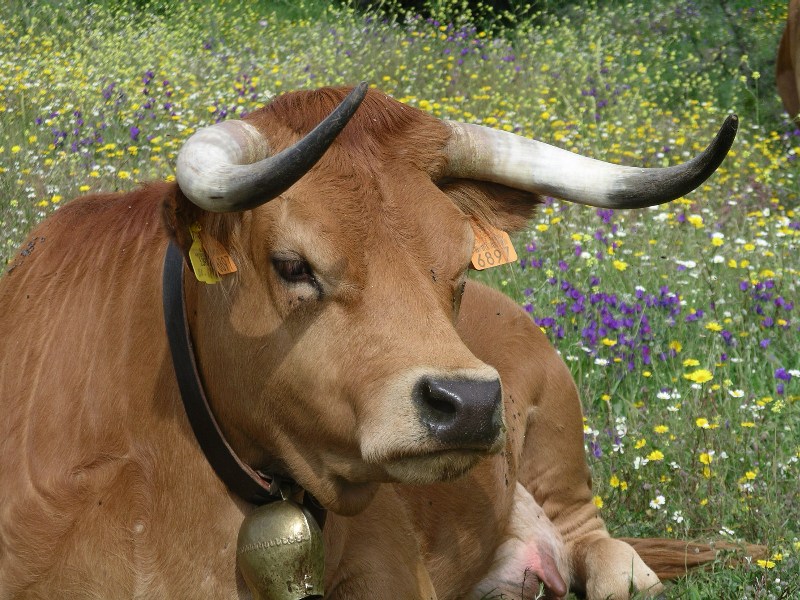
The Jarmelista is of medium to large size.• It is usually pale brown or fawn-coloured, either with or without patches of white, and may have a pale ring round the muzzle; bulls may be darker than cows.• The mucosae are usually unpigmented in cows but may be darker in bulls.• The horns are long and curve forwards.•
Use
The cattle of Beira were formerly triple-purpose, used principally for draught work, but also as dairy animals and for meat.•
Ajouter des photos
Partagez vos photos de cette espèce (jusqu'à 20 à la fois) : elles sont vérifiées automatiquement, puis publiées.
Autres races de l'espèce (521)
Espèce : Bovin domestique
Voir les 509 autres races
- Asturiana de la montaña
- Asturiana de los Valles
- Aubrac
- Aure-et-Saint-Girons
- Aurochs de Heck
- Avilena
- Ayrshire
- Azawak
- Bargur
- Barrosã
- Bazadaise
- Beefalo
- Beefmaster
- Berrenda en colorado
- Betizu
- Blaarkop
- Black baldy
- Blanc bleu belge
- Bleue de Lettonie
- Bleue du Nord
- Blonde d'Aquitaine
- Blonde de Carinthie
- Bohuskulla
- Bonsmara
- Bordelaise
- Boškarin
- Brahmane
- Brangus
- Braunvieh
- Brava
- Bretonne Pie Noir
- British White
- Brown swiss
- Brune
- Brune de Lettonie
- Brune de l'Atlas
- Burlina
- Buša
- Béarnaise
- Bœuf Moka
- Bœuf gris de Hongrie
- Cachena
- Caldelà
- Calvana
- Camargue
- Canaria
- Caracu
- Charbray
- Charolaise
- Cheurfa
- Chianina
- Cikasto govedo
- Cinisara
- Corriente
- Corse
- Cotentine
- Coursière
- Créole
- Dangi
- Deoni
- Deutsches schwarzbunte
- Devon
- Dexter
- Drakensberg
- Droughtmaster
- Dølafe
- Eesti Punane
- Ennstaler bergschecken
- Ferrandaise
- Fjall
- Fjord de l'ouest
- Fleckvieh
- Fribourgeoise
- Frieiresa
- Frisonne
- Frisonne-sahiwal australienne
- Froment du Léon
- Fémeline
- Galloway
- Galloway ceinturée
- Gangatiri
- Gaolao
- Garfagnina
- Garonnaise
- Gasconne des Pyrénées
- Gelbvieh
- Gessienne
- Gir
- Glamorgan
- Glan rind
- Grigio alpina
- Gris ukrainien
- Grise de Murray
- Grise rhétique
- Guernesey
- Hallikar
- Hanu
- Hariana
- Harzer rotvieh
- Hereford
- Highland
- Hinterwälder
- Holstein
- INRA 95
- Iakoute
- Iaroslavl
- Illawarra
- Inyambo
- Irish moiled
- Islandaise
- Itäsuomenkarja
- Japanese black
- Japanese poll
- Jersiaise
- Kangayam
- Kankrej
- Kerry
- Khillari
- Kiwi
- Kostroma
- Kouri
- Lakenvelder
- Limia
- Limousine
- Limpurg
- Lincoln red
- Lineback
- Longhorn
- Lourdaise
- Luing
- M'bororo
- Mallorquina
- Malnad Gidda
- Malvi
- Maraîchine
- Marchigiana
- Maremmana
- Marine landaise
- Marismeña
- Maronesa
- Menorquina
- Mertolenga
- Meuse-Rhin-Yssel
- Milking devon
- Minhota
- Mirandaise
- Mirandesa
- Modenese
- Montbéliarde
- Morucha
- Murboden
- Murnau-werdenfels
- Mézine
- Nantaise
- Ndama
- Nguni
- Nimari
- Nordland
- Normande
- Nélore
- Ongole
- Pajuna
- Parthenaise
- Pie rouge de Carhaix
- Pie rouge de Norvège
- Pie rouge de Suède
- Pie rouge des plaines
- Pinzgauer
- Pirenaica
- Piémontaise
- Podolica
- Ponwar
- Prim'Holstein
- Punganur
- Pustertaler
- Race bovine canadienne
- Ramo grande
- Randall
- Razzetta d'Oropa
- Red Poll
- Red holstein
- Red kandhari
- Reggiana
- Rendena
- Retinta
- Rhodope
- Ringamala
- Romagnola
- Romosinuano
- Rouge Belmont
- Rouge danoise
- Rouge de Belgique
- Rouge de Pologne
- Rouge de Suède
- Rouge des prés
- Rouge flamande
- Rubia galega
- Sahiwal
- Salers
- Santa Gertrudis
- Saosnoise
- Sarlabot
- Sayaguesa
- Saïnata
- Shetland
- Shorthorn
- Simmental
- Simmental française
- South Devon
- Speckle park
- Sussex
- Sénépol
- Tarentaise
- Taureau blanc de Chillingham
- Taureau de combat
- Terreña
- Texas Longhorn
- Tharparkar
- Tiroler Grauvieh
- Touli
- Tudanca
- Tux-zillertal
- Télémark
- Uckermärker
- Vache d'Hérens
- Vache de Floride
- Valdostaine pie noire
- Valdostaine pie rouge
- Vaynol
- Vechur
- Vianesa
- Villard-de-Lans
- Vogelsberger
- Vorderwälder
- Vosgienne
- Wagyu
- Wakwa
- Waldviertler Blondvieh
- Watusi
- Welsh black
- White park
- Zébu mahorais
- Alderney cattle
- American Angus
- Anatolian Black
- Arado cattle
- Australian Braford
- Australian Brangus
- Beef Shorthorn
- Braford
- Bruna dels Pirineus
- Chinese Black and White
- Criollo argentin
- Dairy Shorthorn
- Deutsche Rotbunte
- Dutch Belted
- Finnish Ayrshire
- German Angus
- Greyman
- Japanese Shorthorn
- Javari
- Kasaragod Dwarf
- Kazakh Whiteheaded
- Kherigarh
- Krishna Valley
- Kuchinoshima cattle
- Länsisuomenkarja
- Madura cattle
- Mishima cattle
- Morucho
- Murrah
- Niata cattle
- North American Piedmontese
- Palmera cattle
- Philippine Native
- Pohjoissuomenkarja
- Rameau podolique
- Raramuri Criollo
- Red Angus
- Red Brangus
- Red Fulani
- Sanga
- Swedish Friesian
- Taurus
- Tswana cattle
- Umblachery
- Vache à viande
- Valdostaine châtaine
- Whitebred Shorthorn
- Zébu nain
- Africangus
- Ankole
- Belarus Red
- Black Hereford
- Blue Grey cattle
- Rameau ibérique
- Avileña-Negra ibérica bociblanca
- Casta Navarra
- Clavel cattle
- Czech Fleckvieh
- Mantequera leonesa
- Pasundan
- Pezzata Rossa Italiana
- Tajima cattle
- West African dwarf cattle of Lagune
- Morvandelle
- Adaptaur Belmont
- Agerolese
- Alistana sanabresa
- Allmogekor
- American
- Amerifax
- Australian lowline
- Bachaur
- Baladi
- Barzona
- Beefmaker
- Bengali
- Berrenda en negro
- Blanca Cacereña
- Blanco Orejinegro
- Bleue de Bazougers
- Blue Albion
- Boran
- Brahmousin
- Bressanne
- Brune de Guingamp
- Brune italienne
- BueLingo
- Cabannina
- Canchim
- Caqueteño
- Cardena andaluza
- Casanareño
- Channi
- Chiangus
- Chittagong rouge
- D'jakoré
- Deutsches Braunvieh
- Eesti maatõug
- Garvonesa
- Gloucester
- Gorbatov rouge
- Grise de Lituanie
- Grise du nord Bengale
- Guelmoise
- Harton del valle
- Hays converter
- Indubrasil
- Istobensk
- Jutland
- Kalmouk
- Lucerna
- Mancelle
- Mandalong
- Marinhoa
- Modicana
- Monchina
- Murciana levantina
- Negra andaluza
- Pabna
- Pasiega
- Pasturina
- Pie noire du Danemark
- Pie noire russe
- Pie rouge belge
- Pineywoods
- Pisana
- Pontremolese
- Rahaji
- Rouge de Lituanie
- Rouge de Norvège de l'est
- Rouge de Norvège de l'ouest
- Rouge sicilienne
- Rénitello
- Sanganer
- Sarda
- Sardo-modicana
- Sindhi rouge
- Square Meater
- Sytchiovka
- Tambov rouge
- Tourache
- Tswana
- Tulim
- Twinner
- Varzese
- Velasquez
- Vänekor
- Wittgensteiner Blazed
- Zébu laitier australien
- Évolène
- Abergele cattle
- Achham cattle
- Afar cattle
- Alatau cattle
- Algarvia
- Andalusian Black cattle
- Aulie-Ata cattle
- Baggara cattle
- Baoulé
- Bestuzhev cattle
- Bhagnari
- Brown Carpathian cattle
- Bushuyev cattle
- Bœuf tacheté de Hongrie
- Caucasian Brown
- Cholistani
- Crioulo Lageano
- Dajal cattle
- Danish Jersey
- Dhanni
- Djelli
- Droimeann
- Dutch Improved Red Pied
- Frankeston
- Georgian Mountain cattle
- German Black Pied Dairy
- Girolando
- Holando-Argentino
- Jamaica Hope
- Japanese Brown
- Jeju Black
- Kenkatha
- Kurgan cattle
- La Reina cattle
- Lebedyn cattle
- Lohani cattle
- Mocho Nacional
- Mongolian cattle
- Nagpuri
- Original Braunvieh
- Pembroke cattle
- Poda Thurpu
- Preta
- Pulikulam
- Red Mingrelian
- Romanian Bălțata
- Siboney de Cuba
- Siri cattle
- Swedish Red Pied
- Swiss Holstein
- Tabapuã
- Tasmanian Grey
- Tipo Carora
- Vache de l'île Amsterdam
- Vache horro
- Volinian Beef
- Yanbian cattle
- Yuanxing
- Yurino cattle
- Zenga
- Chino santandereano
- Doayo cattle
- Mateba
- Abruzzese cattle
- Aceh cattle
- Adamawa cattle
- Albanian Prespa cattle
- American White Park
- Baherie cattle
- Bakosi cattle
- Balancer
- Begayt cattle
- Brachykeratiki
- Criollo
- Fogera cattle
- Junqueira cattle
- Latvian Danish Red
- Mehsana buffalo
- Mewati cattle
- Miniature Texas Longhorn
- Mirkadim
- Preta cattle
- Sarda cattle
- Sardo Bruna
- Selembu
- Sunandini
- Tory Island Cattle
- Brangus beef cattle
- Cabrera's Breed
- Central Plains Yellow
- Chikso
- Dwarf Lulu
- Encaste Albaserrada
- Encaste Atanasio Fernández
- Encaste Juan Pedro Domecq
- Encaste Santa Coloma
- Encaste Urcola
- Gallardo's Breed
- Granemåla cow
- Gulya
- Hybridmaster
- Jijona's Breed
- Northern Dairy Shorthorn
- Northern Yellow
- Pallaresa
- Portuguese Cattle
- Rode geus
- Rögnarödsko
- Saltillo's Breed
- Sykia
- Traditional Hereford
- Vache de Gotō
- Vistahermosa Caste
- Vistahermosa's breed
- Vogelsberger Rind
- Vázquez Breed
- Évolénarde
Sources et crédits
Informations provenant de plusieurs sources vérifiées. Dernière mise à jour : .
Crédits photos (1)
- Photo : Pikaluk · CC BY 2.0 · via Wikimedia Commons
Mentions de licence
Texte disponible sous licence CC BY-SA 4.0. Il adapte notamment Wikipedia (CC BY-SA): Jarmelista (Wikipédia, auteurs dans l’historique de l’article).
- Taxonomie : GBIF Backbone Taxonomy (CC BY 4.0)
Détail : Sources et licences.
Discussion (0)
Aucun message pour l’instant. Lancez la discussion sur cette fiche (sources, précisions, débats éditoriaux).
Connectez-vous pour participer à la discussion.