
- Kingdom
- Animalia
- Phylum
- Chordata
- Class
- Mammalia
- Order
- Artiodactyla
- Family
- Bovidae
- Genus
- Bos
- Species
- Bos taurus
Overview
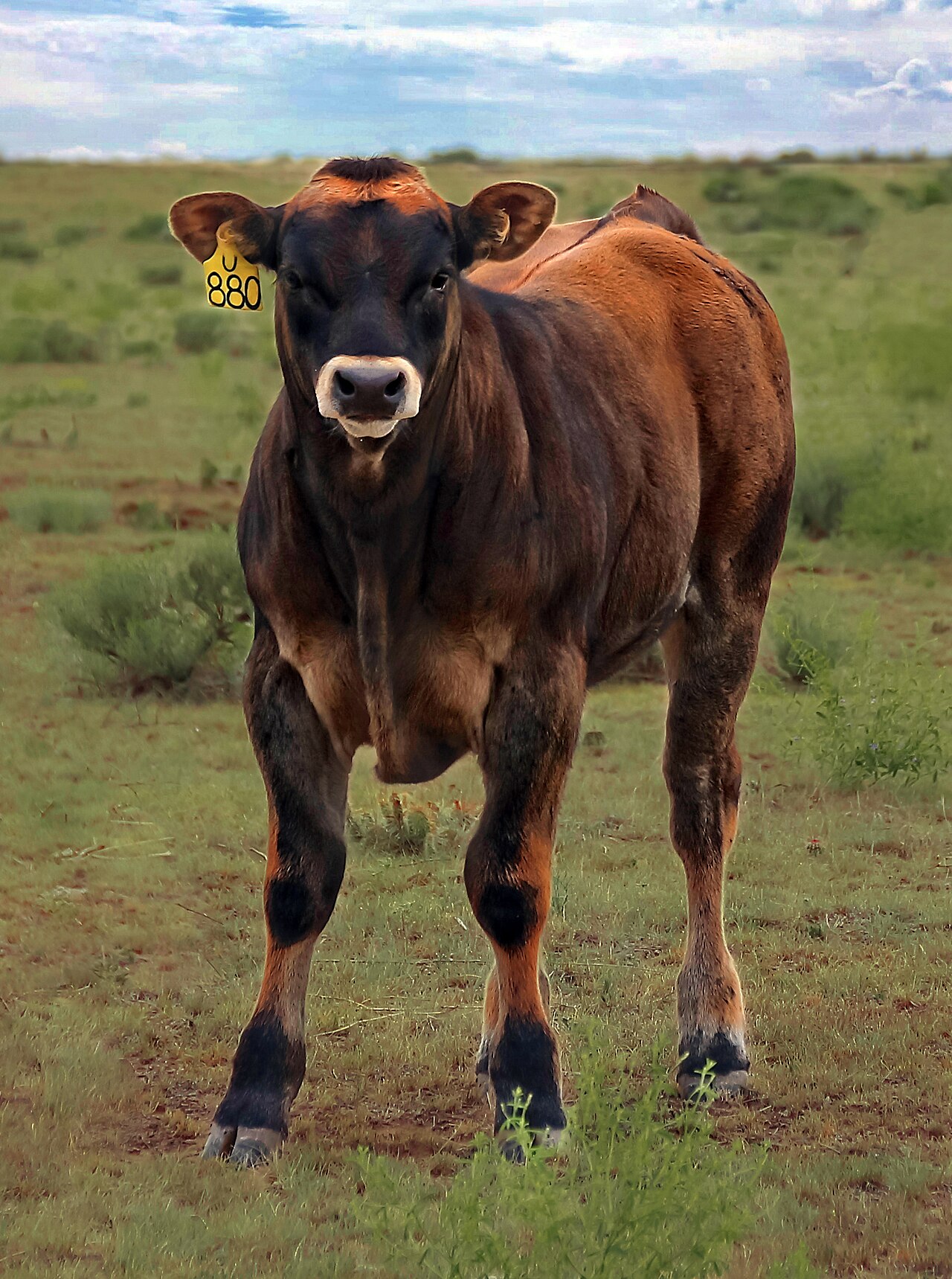
North American Piedmontese cattle are a breed of domestic beef cattle originating from an imported herd of select Italian purebred Piedmontese cattle (Piemontese or razza bovina Piemontese). The foundation line of breeding stock was first imported from Italy into Canada in 1979, and into the United States in the early 1980s. Piedmontese cattle are distinguished by a unique, naturally occurring gene identified as the myostatin allele mutation, or inactive myostatin gene. Myostatin prohibits muscle growth whereas an inactive gene has the opposite effect. Purebred Piedmontese are homozygous, (2 copy), which means they have two identical alleles present for this unique gene. Research indicates the presence of the myostatin allele mutation produces morphological characteristics unique to the breed, such as double-muscling, beef tenderness, reduced fat content and high yield. According to the North American Piedmontese Association (NAPA), they are the first breed registry to base animal registration requirements on the presence of this specific gene which can be easily verified by DNA testing.
Evolution and history
Main article: Piedmontese cattle
North American Piedmontese cattle originated from a line of Italian purebred Piedmontese cattle, (Italian: Piemontese or razza bovina Piemontese), in the region of Piedmont in northwest Italy. They continue to be cultivated in Italy as a "dual-purpose animal...having very rich milk used for specialty cheese production and beef marketed as a premium product." There is much speculation on the breed's evolution, but Italian professor Silvano Maletto theorizes, based on evidence obtained from fossil records and cave writings, that the breed descends from ancient Aurochs cattle and the Pakistan Zebu cattle. Reports of the first historical evidence for breeding Piedmontese cattle dates back only to the late 1800s, and credits the work of another Italian professor, Domenico Vallada.
In 1979, the Piedmontese Breeding Co-operative, Ltd. of Saskatchewan, Canada (PBL Co-op of Canada) began preparations to import the first Piedmontese cattle into North America. There had been prior attempts at importation of the breed by the PBL Co-op of Canada and other cattle breeders, but the Italian Association was reluctant to sell any of their purebred breeding stock. Health protocols also created substantial levels of difficulty. The first successful importation occurred in the fall of 1979 with the arrival of five animals into Canada. Obtaining authorization and transfers to import the first five animals was the culmination of a half decade of effort, the cost of which is estimated at $100,000 per animal based on 2014 values. The following year, Canada received more Italian imports of Piedmontese cattle, including five more bulls. The next year, Italian imports arrived in the US, including three additional sire lines and two cows. It was from that genetic base that the North American breed of Piedmontese cattle began. In 1983, the Canadian Piedmontese Association (CPA) was formed, followed by the Piedmontese Association of the United States (PAUS) in 1984. By the 1990s, imports of semen and embryos were more substantial. Today there are several bloodlines available to cattle raisers in North America.
Genetics and crossbreeding
Like the original Italian Piedmontese, North American Piedmontese cattle are distinguished genetically by the presence of the myostatin allele mutation which causes the breed's hypertrophic muscle growth, or "double muscling". According to an evaluation program at the U.S. Meat Animal Research Center, the birthing and survival rates of half-blood Piedmontese cattle were similar to Hereford x Angus cross calves, producing an average birth weight of 80.2 lbs. with 92.5% unassisted calving. The survival rate to weaning was 91.1%.
Compared with normal breeds of beef cattle, North American Piedmontese cattle are more proficient in converting feed into lean muscle. They also produce a higher percentage of the most desirable cuts of meat. They average 20% more muscle with less bone and fat. Research indicates that there is less connective tissue within the muscle of "double-muscled" cattle; this would imply less background toughness and therefore more tender meat.
Prevalence among United States cattle
There are an estimated 28–30 million head of cattle currently in the United States. Of that total, nearly 70% of all beef cattle are derived from Angus cattle. Less than one-half of one percent are Piedmontese, or bred to Piedmontese cattle. As of 2014, the number of registered Piedmontese pure-blood breeding stock in the United States is estimated to be around 2,900 head.
In the United States Piedmontese beef is regulated by the USDA, which requires that organisations involved in the sale of Piedmontese beef meet labeling and nutritional verification requirements.
Characteristics
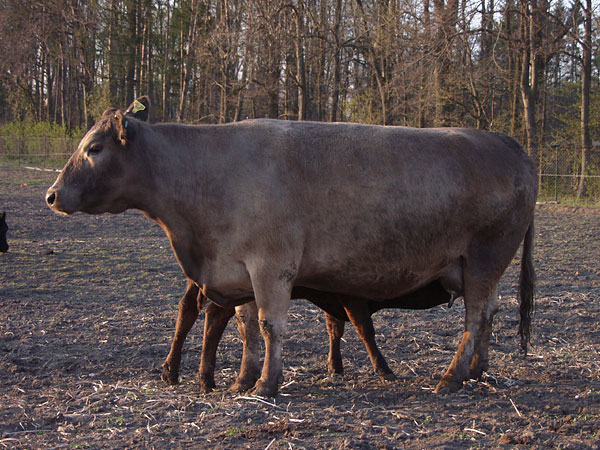
The color of fullblood Piedmontese males is gray-white with a considerable amount of black hairs on the head, most notable around the eyes, neck, shoulders, and on the distal regions of the legs. They occasionally have dark stains or spots on their hind legs or lateral faces of the trunk. The cows are primarily white with varying shades of gray or light red. Calves are born a pale fawn color which changes to gray-white as they mature. Fullbloods are naturally horned, and have black pigmentation on the muzzle, eyelids, ears, tongue, tassel of the tail, anal opening, and on the outer skin of the sexual organs.
The color of Naturalean composites or crossbred cattle can be solid black or solid red with black or reddish pigmentation in the same areas as the pigmentation on fullbloods. They may be horned or polled, and homozygous (2 copy), or heterozygous (1 copy). Fullbloods and Naturalean bulls are often crossed with traditional beef breeds like Black Angus or Hereford cattle because of substantial benefits in the crossbred results, including a higher protein meat that is lower in saturated fat, improved tenderness, and an approximate 7% yield increase in salable carcass. Calving problems are also reduced in the crossbreds.
North American Piedmontese Association (NAPA)
The North American Piedmontese Association (NAPA) was organized in September 2000, and is one of two official breed registry for North American Piedmontese cattle. It is a member-based, nonprofit breed registry headquartered in Washington, U.S., and the first cattle breed registry with mandatory registration requirements based on the presence of the Piedmontese-specific myostatin allele mutation. There are different categories of registration and recordation within the registry. Only homozygous animals (2 copy) can be registered, therefore breed true, and are eligible for registration in either the Fullblood (based on pedigree record), or Naturalean divisions.
The Naturalean division is for Piedmontese cattle that are either crossbred or could have qualified for Fullblood registration but failed to meet the pedigree requirements, perhaps because of unregistered or unverified parentage. Prior to registration or recording, DNA testing is required to confirm the animal carries at least 1 copy of the Piedmontese-specific myostatin gene. Naturalean animals that are DNA tested heterozygous (1-copy) are not registered, rather they are issued a registration number with the prefix "recorded". The 0-copy (non-carriers) cattle are ineligible for registration in any category.
According to the North American Piedmontese Cattle Association, in the last decade of the 20th century, there was a noticeable upsurge in the importation of genetic material (i.e., embryos and semen). Thus, it is said that "there are now a wealth of blood lines" available from which to choose.
External links
Wikimedia Commons has media related to North American Piedmontese.
- North American Piedmontese Cattle Association
- Italian Piedmontese Association
- Piedmontese Association of the United States
Gallery
Ajouter des photos
Partagez vos photos de cette espèce (jusqu'à 20 à la fois) : elles sont vérifiées automatiquement, puis publiées.
Autres races de l'espèce (521)
Espèce : Bovin domestique
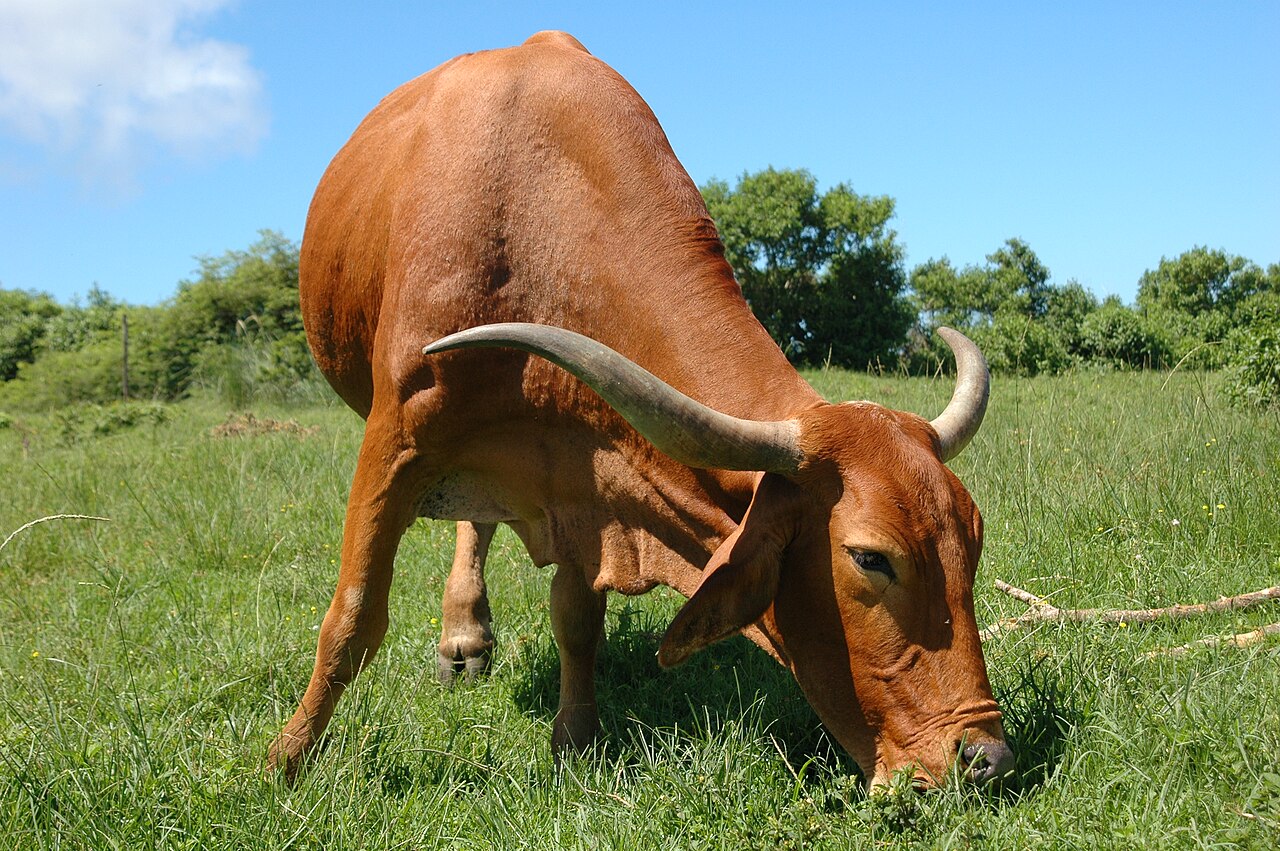
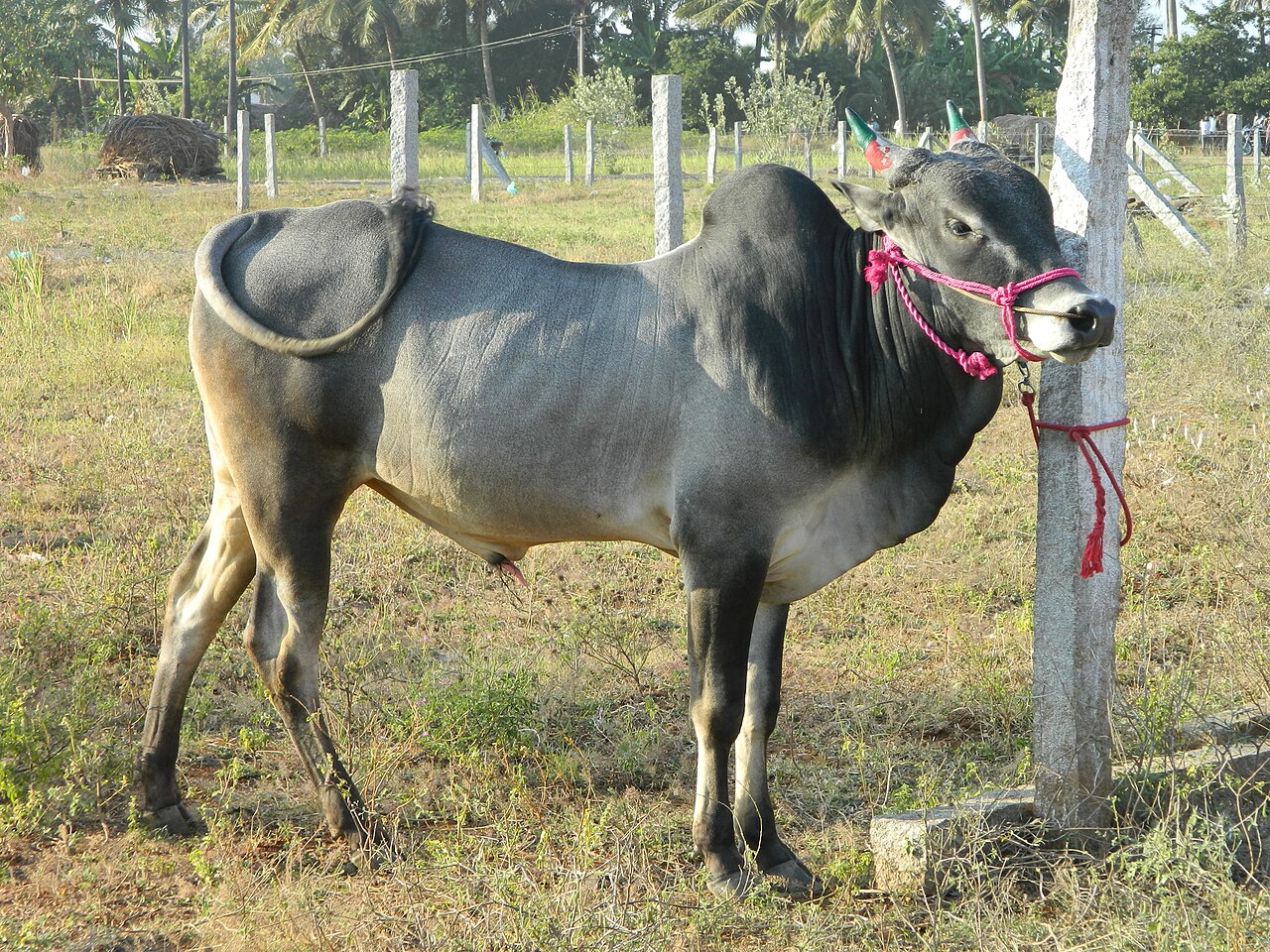
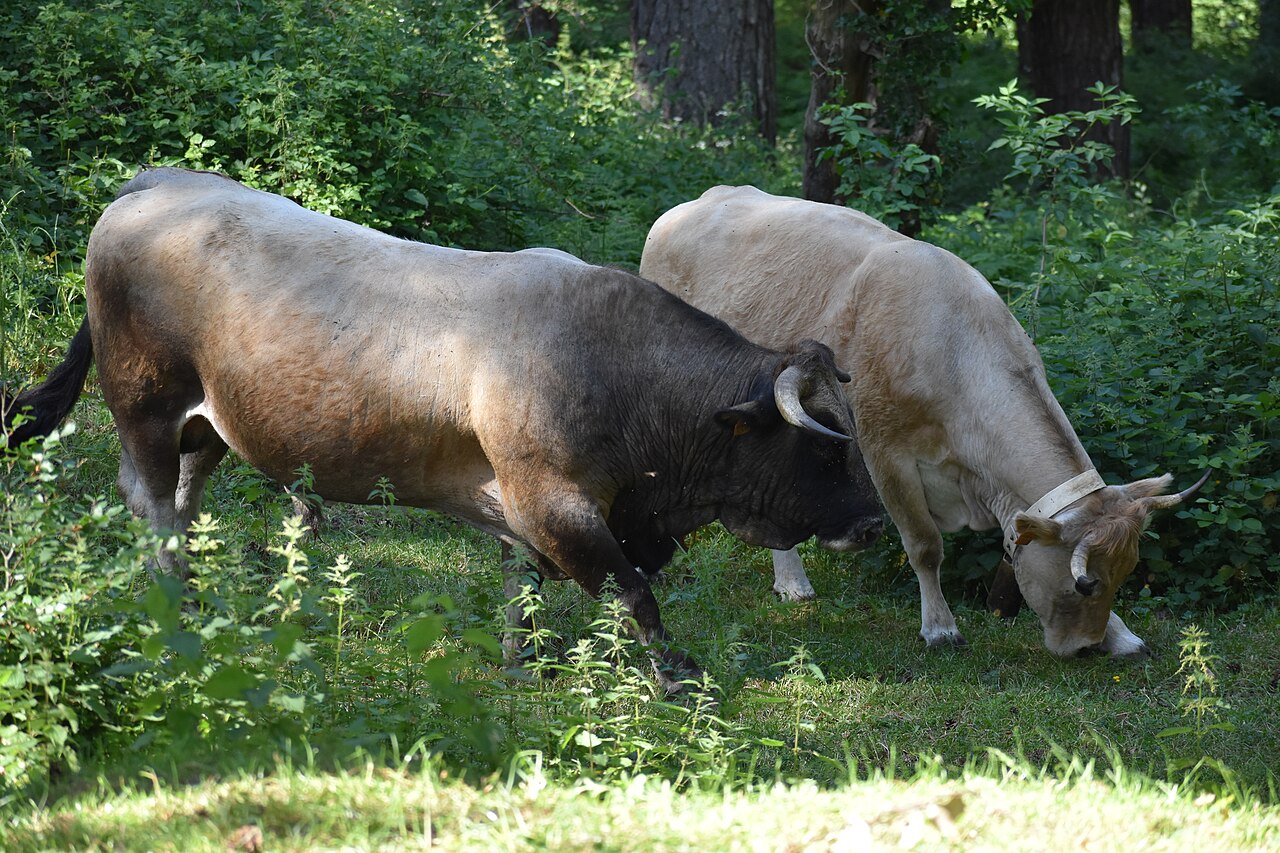
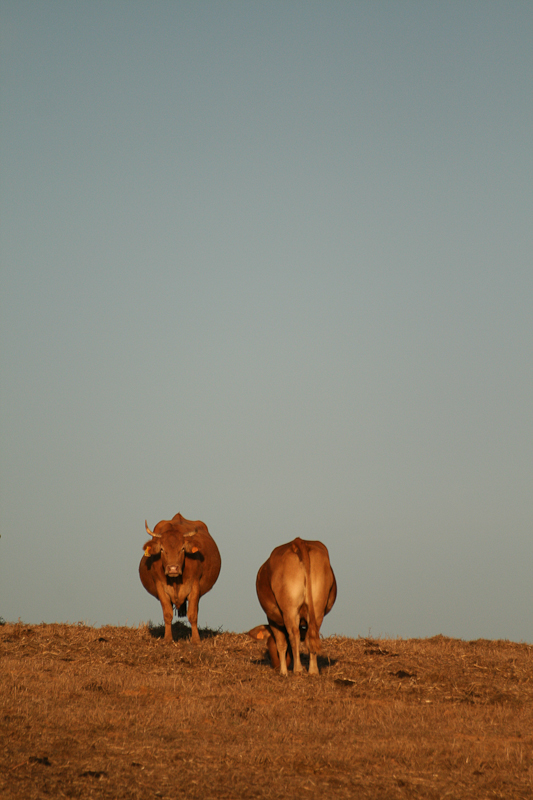
Voir les 509 autres races
- Asturiana de la montaña
- Asturiana de los Valles
- Aubrac
- Aure-et-Saint-Girons
- Aurochs de Heck
- Avilena
- Ayrshire
- Azawak
- Bargur
- Barrosã
- Bazadaise
- Beefalo
- Beefmaster
- Berrenda en colorado
- Betizu
- Blaarkop
- Black baldy
- Blanc bleu belge
- Bleue de Lettonie
- Bleue du Nord
- Blonde d'Aquitaine
- Blonde de Carinthie
- Bohuskulla
- Bonsmara
- Bordelaise
- Boškarin
- Brahmane
- Brangus
- Braunvieh
- Brava
- Bretonne Pie Noir
- British White
- Brown swiss
- Brune
- Brune de Lettonie
- Brune de l'Atlas
- Burlina
- Buša
- Béarnaise
- Bœuf Moka
- Bœuf gris de Hongrie
- Cachena
- Caldelà
- Calvana
- Camargue
- Canaria
- Caracu
- Charbray
- Charolaise
- Cheurfa
- Chianina
- Cikasto govedo
- Cinisara
- Corriente
- Corse
- Cotentine
- Coursière
- Créole
- Dangi
- Deoni
- Deutsches schwarzbunte
- Devon
- Dexter
- Drakensberg
- Droughtmaster
- Dølafe
- Eesti Punane
- Ennstaler bergschecken
- Ferrandaise
- Fjall
- Fjord de l'ouest
- Fleckvieh
- Fribourgeoise
- Frieiresa
- Frisonne
- Frisonne-sahiwal australienne
- Froment du Léon
- Fémeline
- Galloway
- Galloway ceinturée
- Gangatiri
- Gaolao
- Garfagnina
- Garonnaise
- Gasconne des Pyrénées
- Gelbvieh
- Gessienne
- Gir
- Glamorgan
- Glan rind
- Grigio alpina
- Gris ukrainien
- Grise de Murray
- Grise rhétique
- Guernesey
- Hallikar
- Hanu
- Hariana
- Harzer rotvieh
- Hereford
- Highland
- Hinterwälder
- Holstein
- INRA 95
- Iakoute
- Iaroslavl
- Illawarra
- Inyambo
- Irish moiled
- Islandaise
- Itäsuomenkarja
- Japanese black
- Japanese poll
- Jersiaise
- Kangayam
- Kankrej
- Kerry
- Khillari
- Kiwi
- Kostroma
- Kouri
- Lakenvelder
- Limia
- Limousine
- Limpurg
- Lincoln red
- Lineback
- Longhorn
- Lourdaise
- Luing
- M'bororo
- Mallorquina
- Malnad Gidda
- Malvi
- Maraîchine
- Marchigiana
- Maremmana
- Marine landaise
- Marismeña
- Maronesa
- Menorquina
- Mertolenga
- Meuse-Rhin-Yssel
- Milking devon
- Minhota
- Mirandaise
- Mirandesa
- Modenese
- Montbéliarde
- Morucha
- Murboden
- Murnau-werdenfels
- Mézine
- Nantaise
- Ndama
- Nguni
- Nimari
- Nordland
- Normande
- Nélore
- Ongole
- Pajuna
- Parthenaise
- Pie rouge de Carhaix
- Pie rouge de Norvège
- Pie rouge de Suède
- Pie rouge des plaines
- Pinzgauer
- Pirenaica
- Piémontaise
- Podolica
- Ponwar
- Prim'Holstein
- Punganur
- Pustertaler
- Race bovine canadienne
- Ramo grande
- Randall
- Razzetta d'Oropa
- Red Poll
- Red holstein
- Red kandhari
- Reggiana
- Rendena
- Retinta
- Rhodope
- Ringamala
- Romagnola
- Romosinuano
- Rouge Belmont
- Rouge danoise
- Rouge de Belgique
- Rouge de Pologne
- Rouge de Suède
- Rouge des prés
- Rouge flamande
- Rubia galega
- Sahiwal
- Salers
- Santa Gertrudis
- Saosnoise
- Sarlabot
- Sayaguesa
- Saïnata
- Shetland
- Shorthorn
- Simmental
- Simmental française
- South Devon
- Speckle park
- Sussex
- Sénépol
- Tarentaise
- Taureau blanc de Chillingham
- Taureau de combat
- Terreña
- Texas Longhorn
- Tharparkar
- Tiroler Grauvieh
- Touli
- Tudanca
- Tux-zillertal
- Télémark
- Uckermärker
- Vache d'Hérens
- Vache de Floride
- Valdostaine pie noire
- Valdostaine pie rouge
- Vaynol
- Vechur
- Vianesa
- Villard-de-Lans
- Vogelsberger
- Vorderwälder
- Vosgienne
- Wagyu
- Wakwa
- Waldviertler Blondvieh
- Watusi
- Welsh black
- White park
- Zébu mahorais
- Alderney cattle
- American Angus
- Anatolian Black
- Arado cattle
- Australian Braford
- Australian Brangus
- Beef Shorthorn
- Braford
- Bruna dels Pirineus
- Chinese Black and White
- Criollo argentin
- Dairy Shorthorn
- Deutsche Rotbunte
- Dutch Belted
- Finnish Ayrshire
- German Angus
- Greyman
- Japanese Shorthorn
- Jarmelista
- Javari
- Kasaragod Dwarf
- Kazakh Whiteheaded
- Kherigarh
- Krishna Valley
- Kuchinoshima cattle
- Länsisuomenkarja
- Madura cattle
- Mishima cattle
- Morucho
- Murrah
- Niata cattle
- Palmera cattle
- Philippine Native
- Pohjoissuomenkarja
- Rameau podolique
- Raramuri Criollo
- Red Angus
- Red Brangus
- Red Fulani
- Sanga
- Swedish Friesian
- Taurus
- Tswana cattle
- Umblachery
- Vache à viande
- Valdostaine châtaine
- Whitebred Shorthorn
- Zébu nain
- Africangus
- Ankole
- Belarus Red
- Black Hereford
- Blue Grey cattle
- Rameau ibérique
- Avileña-Negra ibérica bociblanca
- Casta Navarra
- Clavel cattle
- Czech Fleckvieh
- Mantequera leonesa
- Pasundan
- Pezzata Rossa Italiana
- Tajima cattle
- West African dwarf cattle of Lagune
- Morvandelle
- Adaptaur Belmont
- Agerolese
- Alistana sanabresa
- Allmogekor
- American
- Amerifax
- Australian lowline
- Bachaur
- Baladi
- Barzona
- Beefmaker
- Bengali
- Berrenda en negro
- Blanca Cacereña
- Blanco Orejinegro
- Bleue de Bazougers
- Blue Albion
- Boran
- Brahmousin
- Bressanne
- Brune de Guingamp
- Brune italienne
- BueLingo
- Cabannina
- Canchim
- Caqueteño
- Cardena andaluza
- Casanareño
- Channi
- Chiangus
- Chittagong rouge
- D'jakoré
- Deutsches Braunvieh
- Eesti maatõug
- Garvonesa
- Gloucester
- Gorbatov rouge
- Grise de Lituanie
- Grise du nord Bengale
- Guelmoise
- Harton del valle
- Hays converter
- Indubrasil
- Istobensk
- Jutland
- Kalmouk
- Lucerna
- Mancelle
- Mandalong
- Marinhoa
- Modicana
- Monchina
- Murciana levantina
- Negra andaluza
- Pabna
- Pasiega
- Pasturina
- Pie noire du Danemark
- Pie noire russe
- Pie rouge belge
- Pineywoods
- Pisana
- Pontremolese
- Rahaji
- Rouge de Lituanie
- Rouge de Norvège de l'est
- Rouge de Norvège de l'ouest
- Rouge sicilienne
- Rénitello
- Sanganer
- Sarda
- Sardo-modicana
- Sindhi rouge
- Square Meater
- Sytchiovka
- Tambov rouge
- Tourache
- Tswana
- Tulim
- Twinner
- Varzese
- Velasquez
- Vänekor
- Wittgensteiner Blazed
- Zébu laitier australien
- Évolène
- Abergele cattle
- Achham cattle
- Afar cattle
- Alatau cattle
- Algarvia
- Andalusian Black cattle
- Aulie-Ata cattle
- Baggara cattle
- Baoulé
- Bestuzhev cattle
- Bhagnari
- Brown Carpathian cattle
- Bushuyev cattle
- Bœuf tacheté de Hongrie
- Caucasian Brown
- Cholistani
- Crioulo Lageano
- Dajal cattle
- Danish Jersey
- Dhanni
- Djelli
- Droimeann
- Dutch Improved Red Pied
- Frankeston
- Georgian Mountain cattle
- German Black Pied Dairy
- Girolando
- Holando-Argentino
- Jamaica Hope
- Japanese Brown
- Jeju Black
- Kenkatha
- Kurgan cattle
- La Reina cattle
- Lebedyn cattle
- Lohani cattle
- Mocho Nacional
- Mongolian cattle
- Nagpuri
- Original Braunvieh
- Pembroke cattle
- Poda Thurpu
- Preta
- Pulikulam
- Red Mingrelian
- Romanian Bălțata
- Siboney de Cuba
- Siri cattle
- Swedish Red Pied
- Swiss Holstein
- Tabapuã
- Tasmanian Grey
- Tipo Carora
- Vache de l'île Amsterdam
- Vache horro
- Volinian Beef
- Yanbian cattle
- Yuanxing
- Yurino cattle
- Zenga
- Chino santandereano
- Doayo cattle
- Mateba
- Abruzzese cattle
- Aceh cattle
- Adamawa cattle
- Albanian Prespa cattle
- American White Park
- Baherie cattle
- Bakosi cattle
- Balancer
- Begayt cattle
- Brachykeratiki
- Criollo
- Fogera cattle
- Junqueira cattle
- Latvian Danish Red
- Mehsana buffalo
- Mewati cattle
- Miniature Texas Longhorn
- Mirkadim
- Preta cattle
- Sarda cattle
- Sardo Bruna
- Selembu
- Sunandini
- Tory Island Cattle
- Brangus beef cattle
- Cabrera's Breed
- Central Plains Yellow
- Chikso
- Dwarf Lulu
- Encaste Albaserrada
- Encaste Atanasio Fernández
- Encaste Juan Pedro Domecq
- Encaste Santa Coloma
- Encaste Urcola
- Gallardo's Breed
- Granemåla cow
- Gulya
- Hybridmaster
- Jijona's Breed
- Northern Dairy Shorthorn
- Northern Yellow
- Pallaresa
- Portuguese Cattle
- Rode geus
- Rögnarödsko
- Saltillo's Breed
- Sykia
- Traditional Hereford
- Vache de Gotō
- Vistahermosa Caste
- Vistahermosa's breed
- Vogelsberger Rind
- Vázquez Breed
- Évolénarde
Sources et crédits
Informations provenant de plusieurs sources vérifiées. Dernière mise à jour : .
Crédits photos (5)
- Photo : Atsme · CC BY-SA 4.0 · via Wikimedia Commons
- Photo : Atsme · CC BY-SA 4.0 · via Wikimedia Commons
- Photo : Atsme · CC BY-SA 4.0 · via Wikimedia Commons
- Photo : Vicki Johnson · CC BY-SA 4.0 · via Wikimedia Commons
- Photo : Vicki Johnson · CC BY-SA 4.0 · via Wikimedia Commons
Mentions de licence
Texte disponible sous licence CC BY-SA 4.0. Il adapte notamment Wikipedia (CC BY-SA): North American Piedmontese (Wikipédia, auteurs dans l’historique de l’article).
- Taxonomie : GBIF Backbone Taxonomy (CC BY 4.0)
Détail : Sources et licences.
Discussion (0)
Aucun message pour l’instant. Lancez la discussion sur cette fiche (sources, précisions, débats éditoriaux).
Connectez-vous pour participer à la discussion.