
- Kingdom
- Animalia
- Phylum
- Chordata
- Class
- Aves
- Order
- Anseriformes
- Family
- Anatidae
- Genus
- Anser
- Species
- Anser anser domesticus
Overview
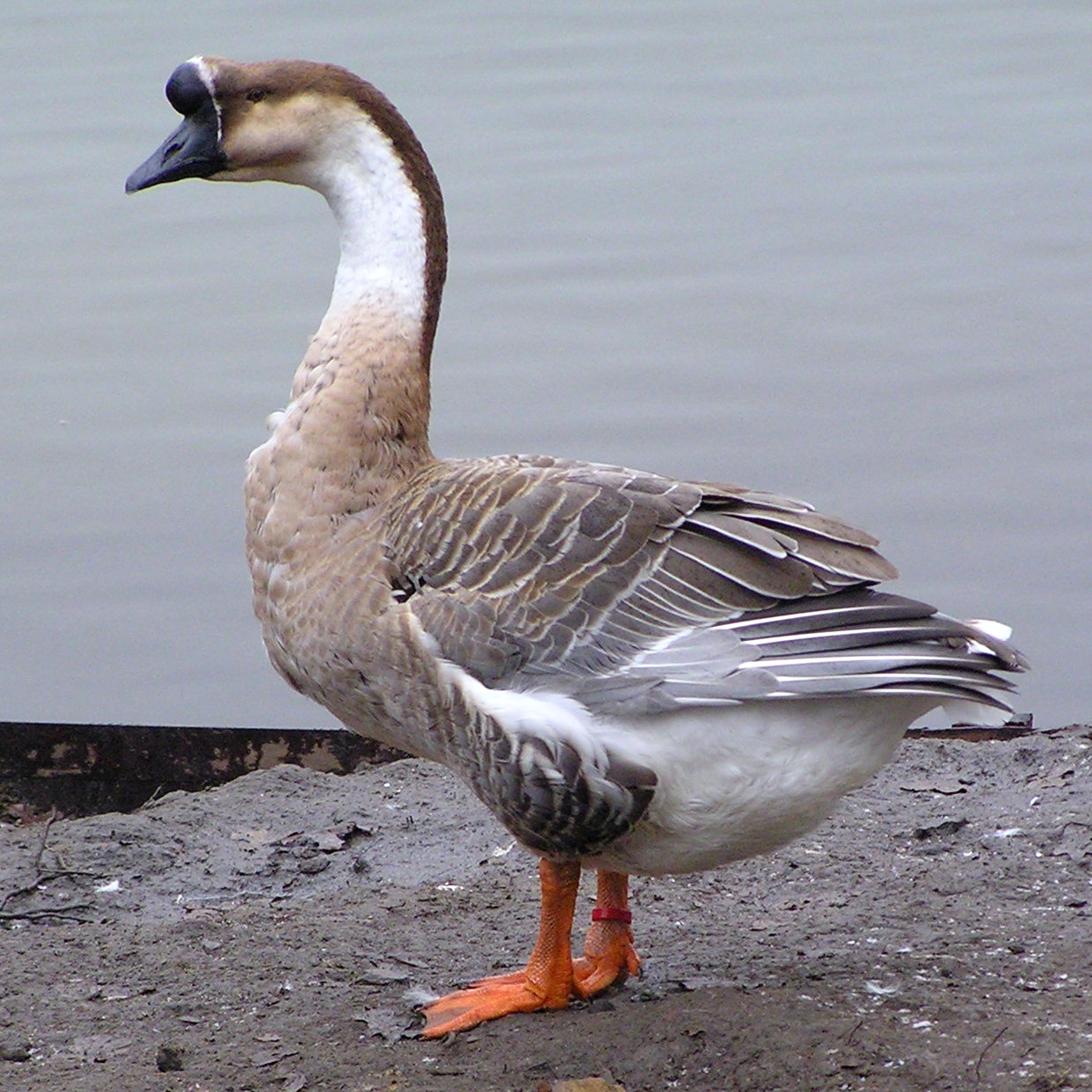
The Chinese Goose is an international breed of domestic goose, known by this name in Europe and in North America. Unlike the majority of goose breeds, it belongs to the knob geese, which derive from Anser cygnoides and are characterised by a prominent basal knob on the upper side of the bill. It originates in China, where there are more than twenty breeds of knob goose.
History
Unlike the majority of goose breeds, which derive from the greylag goose, Anser anser, the Chinese belongs to the knob geese, which derive from the swan goose, Anser cygnoides, and are characterised by a prominent basal knob on the upper side of the bill. As the name suggests, it is believed to have originated in China, where there are more than twenty breeds of knob goose.•
It was seen in Britain from the early eighteenth century if not before,• and was present in the United States in the latter part of that century – George Washington is believed to have kept some on his plantation at Mount Vernon.•
It was included in the revised 1873 edition of The Poultry Book by William Bernhard Tegetmeier,• and was added to the Standard of Perfection of the American Poultry Association in 1874.•
In the twenty-first century it is an endangered breed: it is reported to DAD-IS by seven countries – Australia, Lithuania, Moldova, the Russian Federation, Slovenia, Suriname and the UK – but none of them report population data.• Population data was last reported by the United Kingdom in 2002, when there were between 150 and 1000 birds.• The Livestock Conservancy in the United States lists it as watch, its third level of concern.•
Characteristics
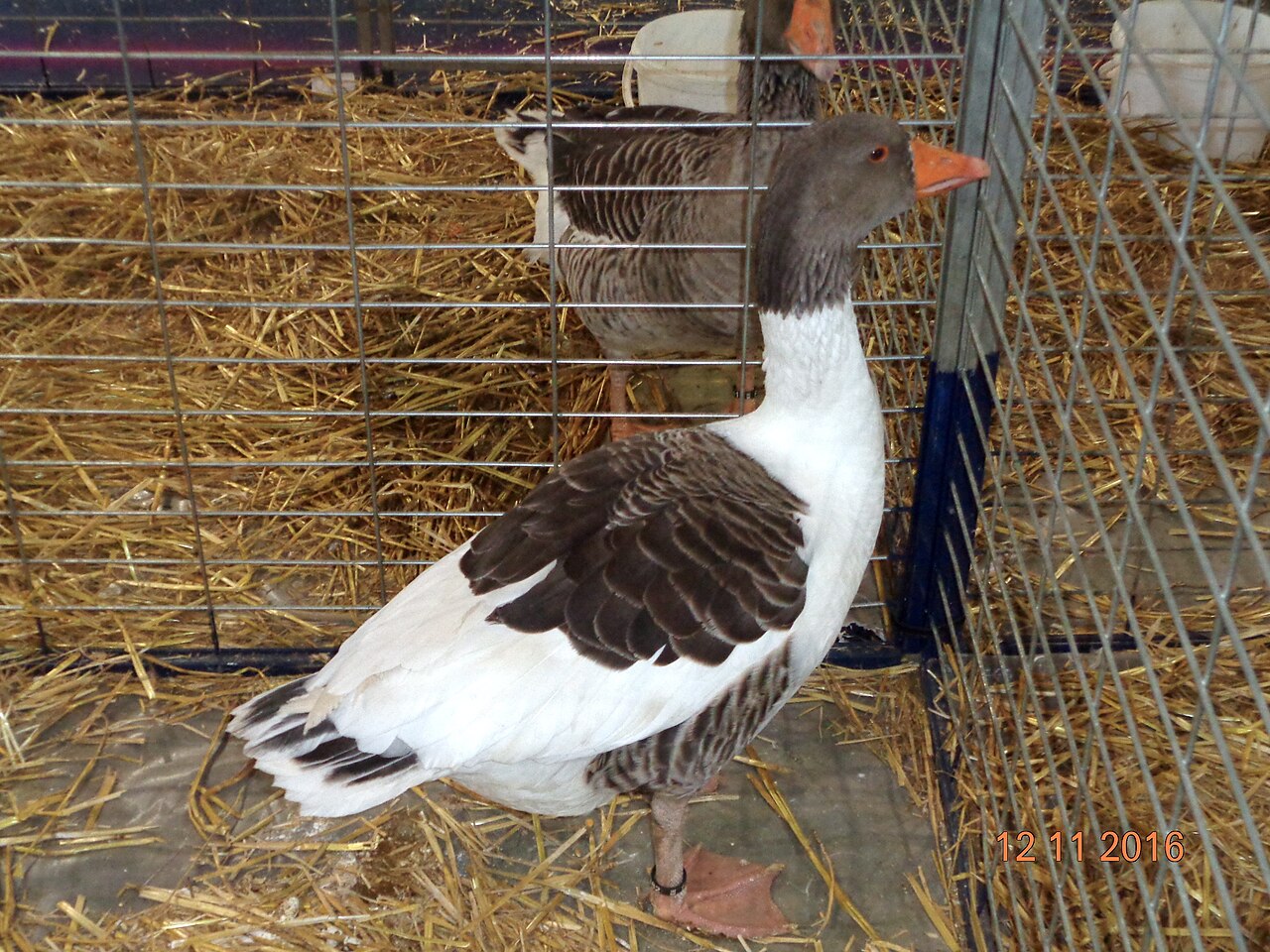
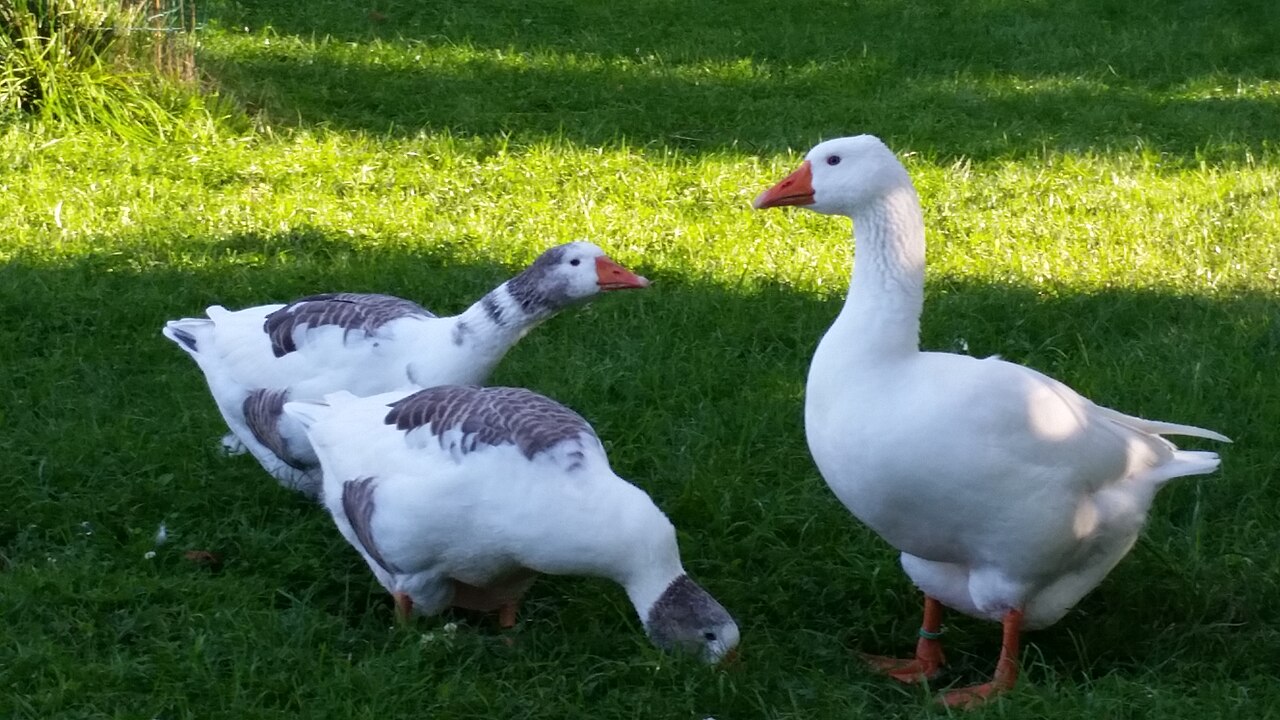
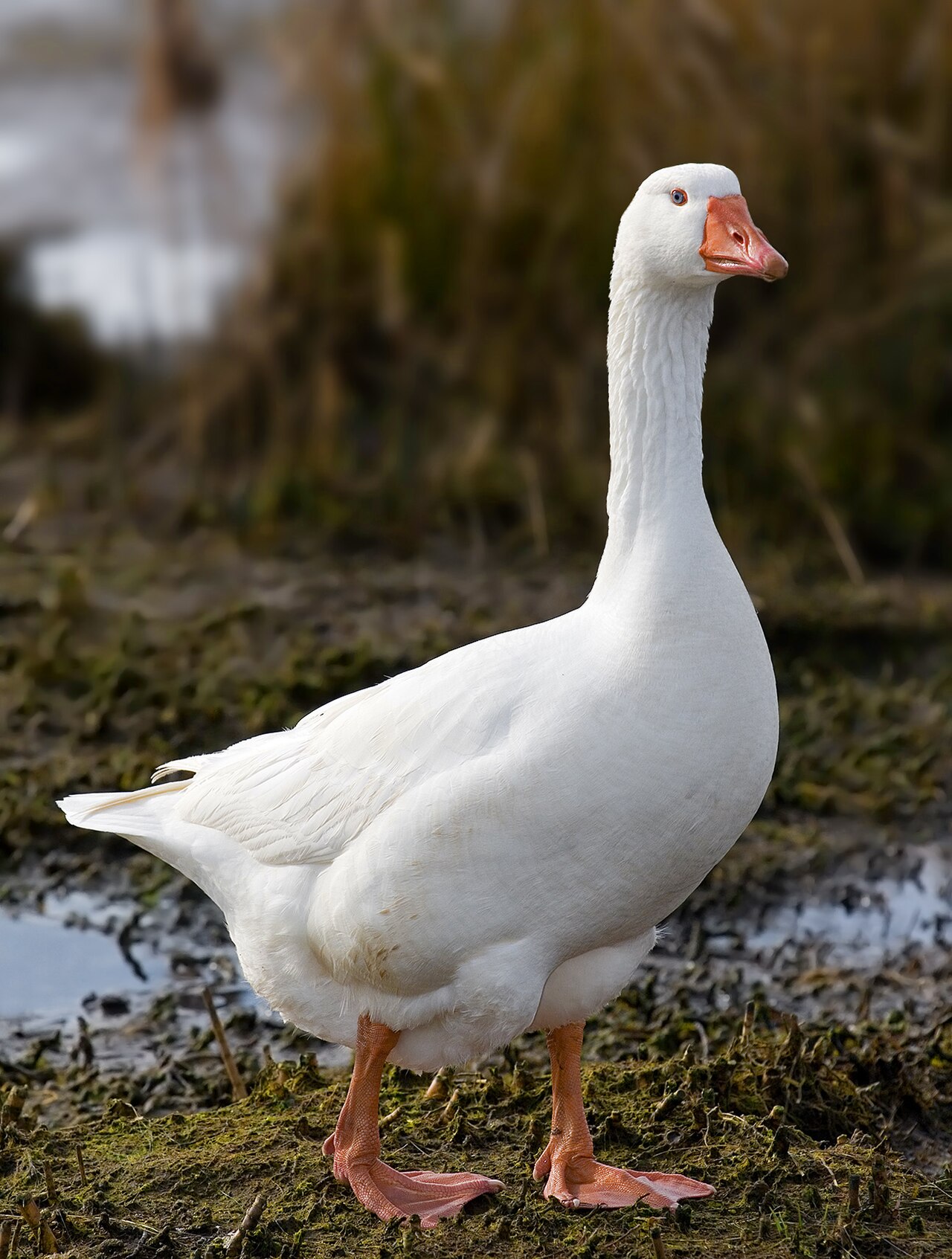
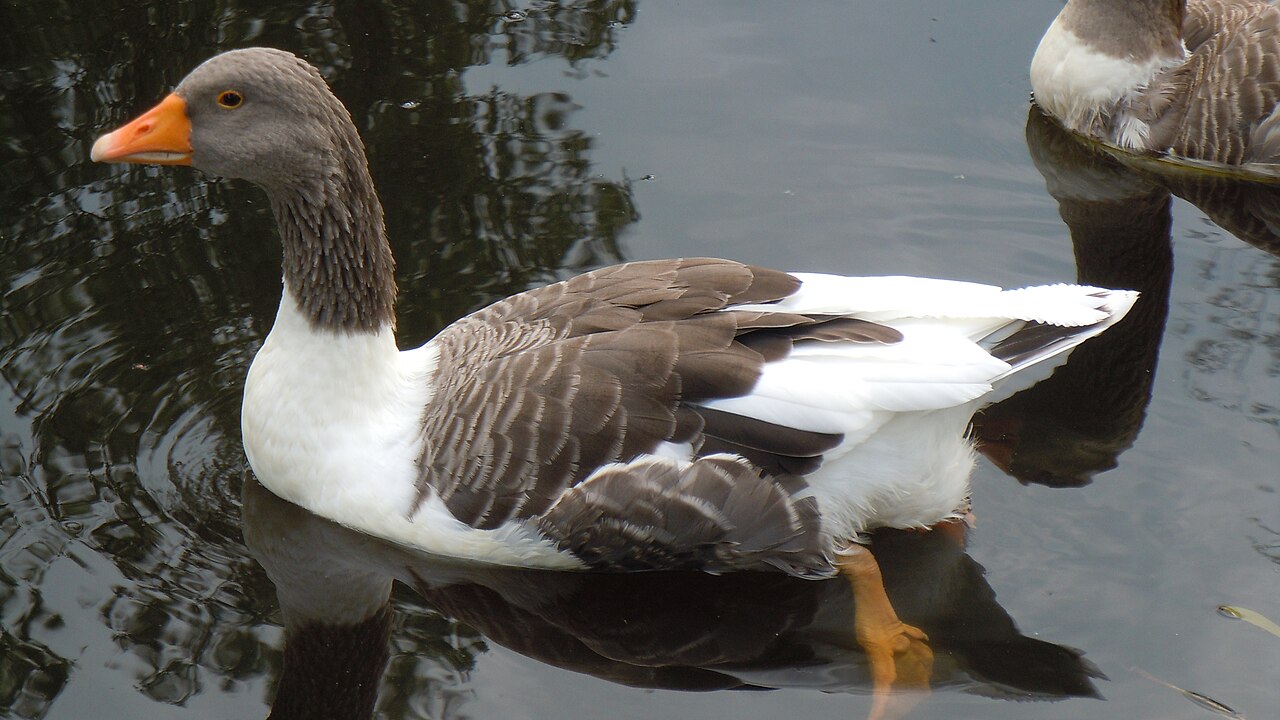
It appears in two varieties: the grey or brown, with colouring similar to that of the wild Anser cygnoides, and the white.• The bill and the knob are black in the grey-brown variety, and orange in the white; the shanks and feet are always orange.• In birds bred for showing the neck is long and slender.•
Use
As a layer of eggs it is the most prolific of any breed of goose, usually laying some 50–60 eggs in a season of about five months, but sometimes reaching 100 eggs during that time.• The eggs weigh about 120 g, rather less than those of other geese.• Flocks of the geese may be used to guard property or to keep down weeds.•
Gallery
Ajouter des photos
Partagez vos photos de cette espèce (jusqu'à 20 à la fois) : elles sont vérifiées automatiquement, puis publiées.
Autres races de l'espèce (56)
Espèce : Oie domestique
Voir les 44 autres races
- Oie de Scanie
- Oie de Toulouse
- Oie de Twente
- Oie de la Leine
- Oie du Danube
- Oie fermière danoise
- Oie flamande
- Oie féroïenne
- Oie italienne
- Oie normande
- Oie tchèque
- American Buff
- Brecon Buff
- Emporda geese
- Oie de Hong Kong
- Pilgrim goose
- Ölandgans
- German laying goose
- Grande oie grise de Russie
- Oie blanche du Bourbonnais
- Oie blanche du Poitou
- Oie d'Arzamas
- Oie de Chadrinsk
- Oie de Linda
- Oie de Shetland
- Oie de Suchá
- Oie grise de Padoue
- Oie grise du Marais poitevin
- Oie pie vénitienne
- Arzamas goose
- Cotton Patch
- Euskal Antzara
- Huoyan
- Kuban
- Oie de Kholmogory
- Oie de combat de Tula
- Rhenish goose
- Romanian goose
- Vištinės
- Oie de Castres
- Oie de Bresse
- Oie de Benkov
- Oie grise des Landes
- Steinbacher Kampfgans
Sources et crédits
Informations provenant de plusieurs sources vérifiées. Dernière mise à jour : .
Crédits photos (10)
- Photo : Daniel Ullrich, Threedots · CC BY-SA 3.0 · via Wikimedia Commons
- Photo : Daniel Ullrich, Threedots · CC BY-SA 3.0 · via Wikimedia Commons
- Photo : Daniel Ullrich, Threedots · CC BY-SA 3.0 · via Wikimedia Commons
- Photo : Georges Jansoone · CC BY 2.5 · via Wikimedia Commons
- Photo : Nino Barbieri · CC BY-SA 2.5 · via Wikimedia Commons
- Photo : Nino Barbieri · CC BY 2.5 · via Wikimedia Commons
- Photo : Alpsdake · CC BY-SA 4.0 · via Wikimedia Commons
- Photo : Nivas Shende · CC BY 4.0 · via Wikimedia Commons
- Photo : Green Mostaza · CC BY 4.0 · via Wikimedia Commons
- Photo : Flocci Nivis · CC BY-SA 4.0 · via Wikimedia Commons
Mentions de licence
Texte disponible sous licence CC BY-SA 4.0. Il adapte notamment Wikipedia (CC BY-SA): Chinese goose (Wikipédia, auteurs dans l’historique de l’article).
- Taxonomie : GBIF Backbone Taxonomy (CC BY 4.0)
Détail : Sources et licences.
Discussion (0)
Aucun message pour l’instant. Lancez la discussion sur cette fiche (sources, précisions, débats éditoriaux).
Connectez-vous pour participer à la discussion.