
- Kingdom
- Animalia
- Phylum
- Chordata
- Class
- Aves
- Order
- Anseriformes
- Family
- Anatidae
- Genus
- Anser
- Species
- Anser anser domesticus
Overview
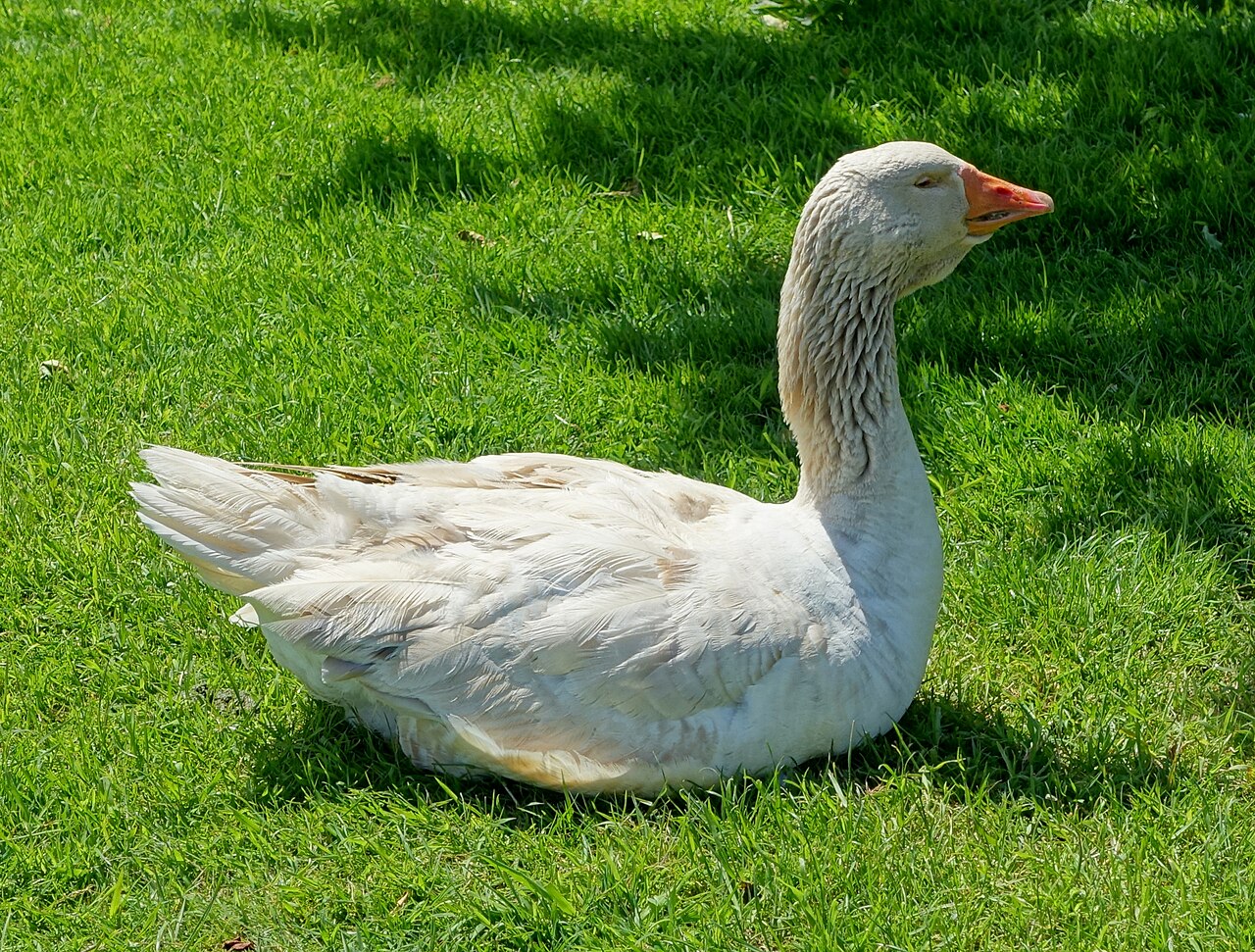
The American Buff is an American breed of domestic goose. It was accepted by the American Poultry Association in 1947. It is named for its single plumage variety, which is a pale buff or apricot-fawn in color.
History
Like almost all breeds of domestic goose, the American Buff derives from Anser anser, the wild Greylag goose of Europe and northern Asia. Its origins are obscure, and various theories have been put forward; it is not known if it was bred from local grey farm geese, or from existing buff geese imported from Europe.• The modern breed is the result of work done in the 1930s and 1940s by a Missouri breeder named Oscar Grow.• The American Buff was admitted to the Standard of Perfection of the American Poultry Association in 1947, in the 'medium' group.• It was added to the British Poultry Standards of the United Kingdom in 1982; there it has become a much heavier bird, and is classed by the Poultry Club of Great Britain as a heavy breed.•
It is a rare breed, and is listed as 'watch' on the conservation priority list of the Livestock Conservancy (formerly the American Livestock Breeds Conservancy).• Neither it nor any other breed of goose is reported by the United States Department of Agriculture to the DAD-IS database of the Food and Agriculture Organization of the United Nations.• It is listed in the Ark of Taste of the Slow Food Foundation.•
Characteristics
The American Buff is characterized by its pale yellow-buff plumage, sometimes described as apricot-fawn; the abdomen is white or nearly so.• It differs from other buff-colored geese such as the Brecon Buff of the United Kingdom and the Celler Gans [de] of Germany in its vivid orange beak, shanks and feet.•
Use
It is a dual-purpose bird, providing both meat and eggs.• The meat is dark and rich.• Geese lay some 10–25 large white eggs per year. They sit well, and may be used to hatch the eggs of other geese.•
Gallery
Ajouter des photos
Partagez vos photos de cette espèce (jusqu'à 20 à la fois) : elles sont vérifiées automatiquement, puis publiées.
Autres races de l'espèce (56)
Espèce : Oie domestique
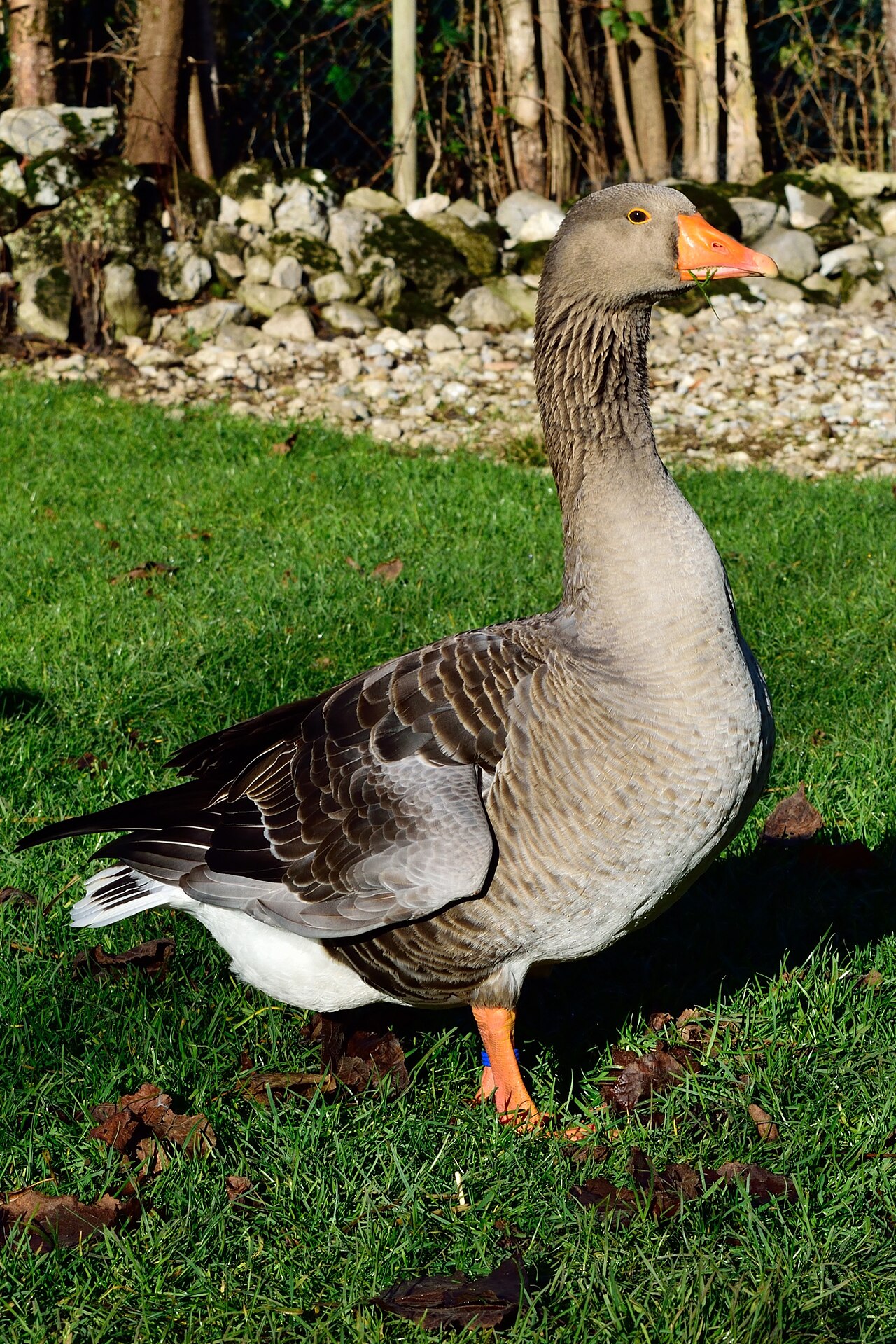
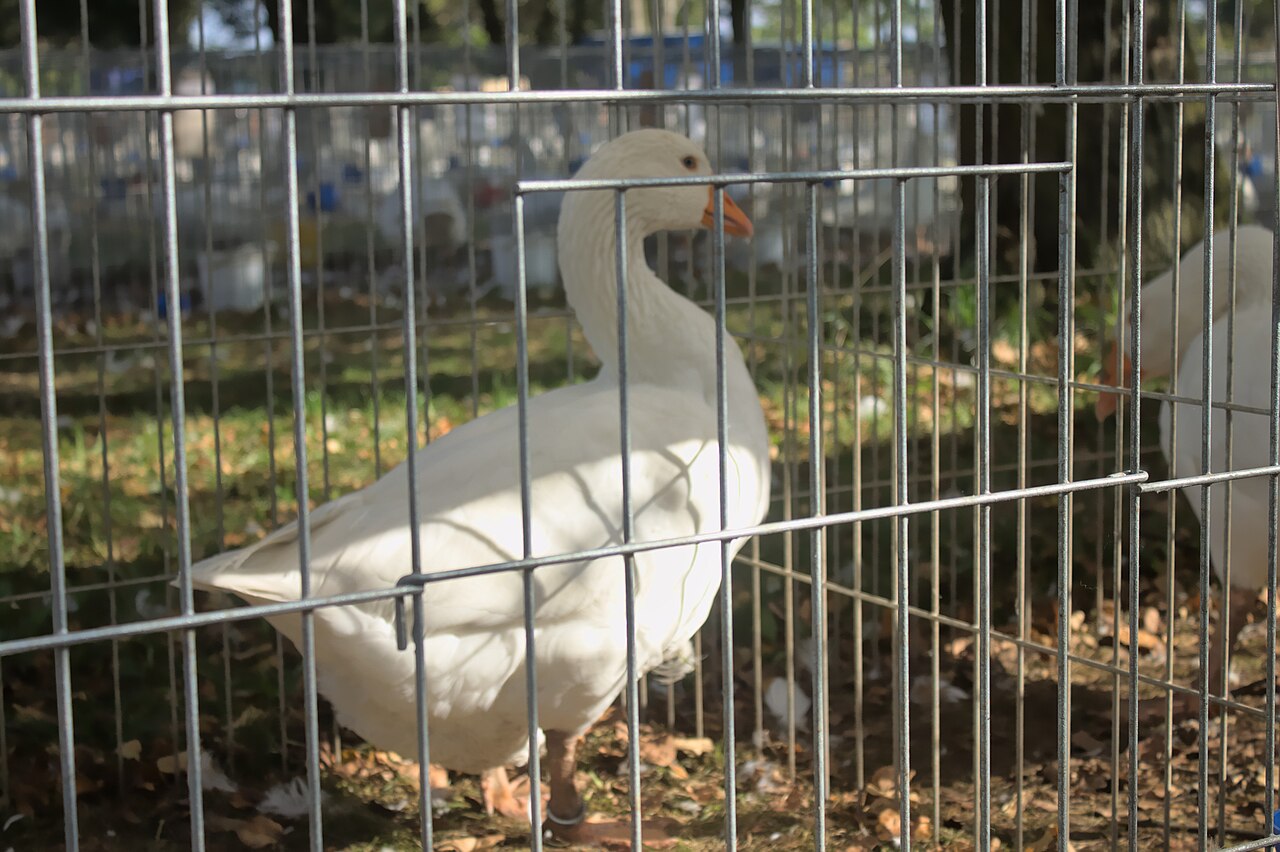
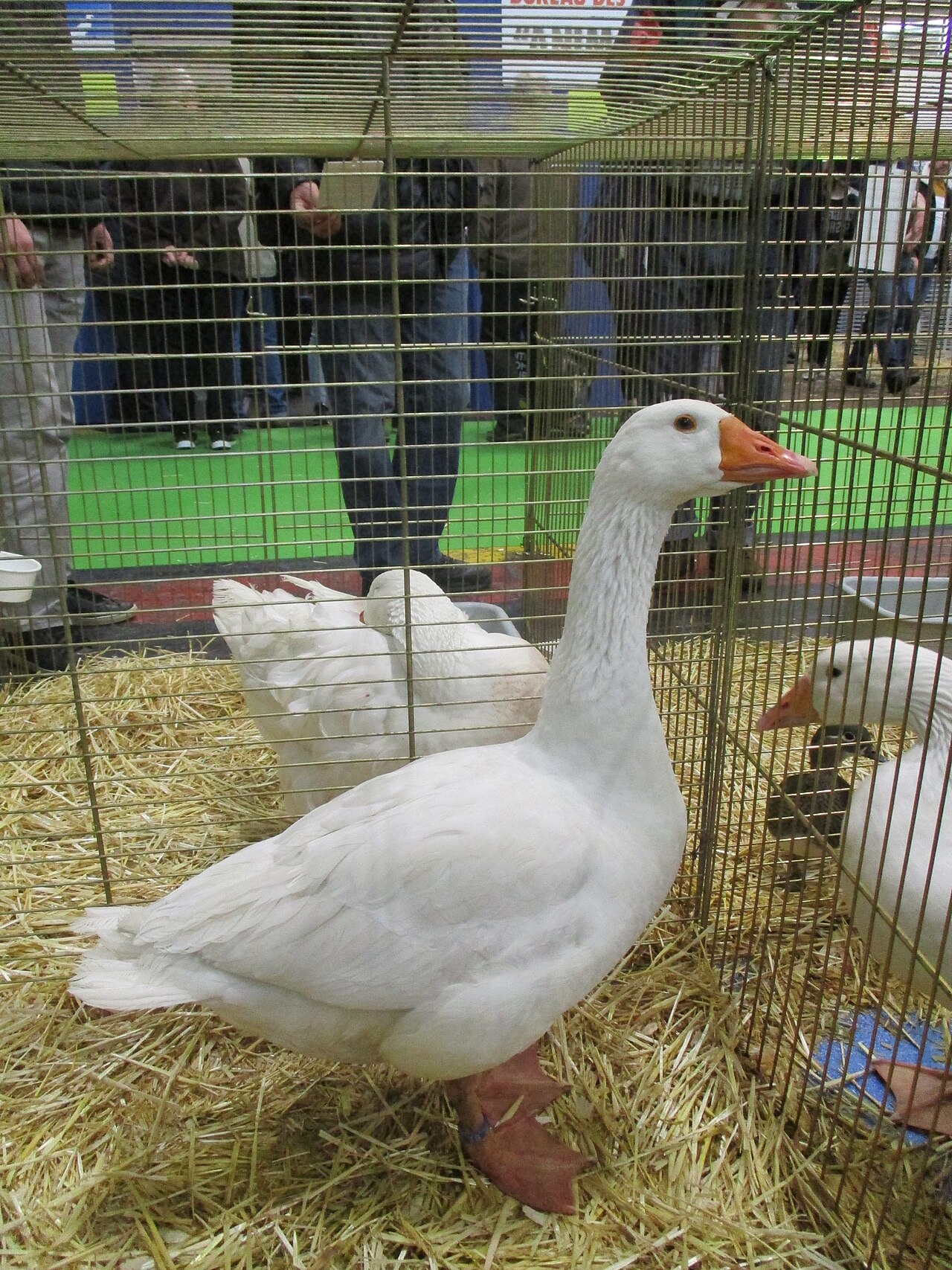
Voir les 44 autres races
- Oie de Scanie
- Oie de Toulouse
- Oie de Twente
- Oie de la Leine
- Oie du Danube
- Oie fermière danoise
- Oie flamande
- Oie féroïenne
- Oie italienne
- Oie normande
- Oie tchèque
- Brecon Buff
- Emporda geese
- Oie carronculée de Chine
- Oie de Hong Kong
- Pilgrim goose
- Ölandgans
- German laying goose
- Grande oie grise de Russie
- Oie blanche du Bourbonnais
- Oie blanche du Poitou
- Oie d'Arzamas
- Oie de Chadrinsk
- Oie de Linda
- Oie de Shetland
- Oie de Suchá
- Oie grise de Padoue
- Oie grise du Marais poitevin
- Oie pie vénitienne
- Arzamas goose
- Cotton Patch
- Euskal Antzara
- Huoyan
- Kuban
- Oie de Kholmogory
- Oie de combat de Tula
- Rhenish goose
- Romanian goose
- Vištinės
- Oie de Castres
- Oie de Bresse
- Oie de Benkov
- Oie grise des Landes
- Steinbacher Kampfgans
Sources et crédits
Informations provenant de plusieurs sources vérifiées. Dernière mise à jour : .
Crédits photos (3)
- Photo : Daderot · CC0 (domaine public) · via Wikimedia Commons
- Photo : Daderot · CC0 (domaine public) · via Wikimedia Commons
- Photo : Miller17CU94 at English Wikipedia · Domaine public · via Wikimedia Commons
Mentions de licence
Texte disponible sous licence CC BY-SA 4.0. Il adapte notamment Wikipedia (CC BY-SA): American Buff (Wikipédia, auteurs dans l’historique de l’article).
- Taxonomie : GBIF Backbone Taxonomy (CC BY 4.0)
Détail : Sources et licences.
Discussion (0)
Aucun message pour l’instant. Lancez la discussion sur cette fiche (sources, précisions, débats éditoriaux).
Connectez-vous pour participer à la discussion.