
- Kingdom
- Animalia
- Phylum
- Chordata
- Class
- Mammalia
- Order
- Carnivora
- Family
- Canidae
- Genus
- Canis
- Species
- Canis lupus familiaris
Overview
The German Shepherd, also known in Britain as an Alsatian, is a German breed of working dog of medium to large size. It is characterized by its intelligent and obedient nature.
It was developed in Germany from 1899 by Max von Stephanitz, using various traditional German herding dogs, and gained international recognition after the end of the First World War. It was bred as a herding dog, for herding sheep, but has since been used in many other types of work, including disability assistance, search-and-rescue, police work, and warfare. It is commonly kept as a companion dog, and is among the most frequently registered breeds world-wide.
History
1890s
During the 1890s, attempts were being made to standardise dog breeds. Dogs were being bred to preserve traits that assisted in their job of herding sheep and protecting their flocks from predators. In Germany this was practised within local communities, where shepherds selected and bred dogs. It was recognised that the breed had the necessary skills for herding sheep, such as intelligence, speed, strength and keen sense of smell. The results were dogs that were able to do such things, but that differed significantly, both in appearance and ability, from one locality to another.
To combat these differences, the Phylax Society was formed in 1891 with the intention of creating standardised development plans for native dog breeds in Germany. The society disbanded after only three years due to ongoing internal conflicts regarding the traits in dogs that the society should promote; some members believed dogs should be bred solely for working purposes, while others believed dogs should be bred also for appearance. While unsuccessful in their goal, the Phylax Society had inspired people to pursue standardising dog breeds independently.
With the rise of large, industrialised cities in Germany, the predator population began to decline, rendering sheepdogs unnecessary. At the same time, the awareness of sheepdogs as a versatile, intelligent class of canine began to rise. Max von Stephanitz, an ex-cavalry captain and former student of the Berlin Veterinary College, was an ex-member of the Phylax Society who firmly believed dogs should be bred for working. He admired the intelligence, strength and ability of Germany's native sheepdogs, but could not find any one single breed that satisfied him as the perfect working dog.
1900s
In 1899, von Stephanitz was attending a dog show when he was shown a dog named Hektor Linksrhein. Hektor was the product of a few generations of selective breeding and completely fulfilled what von Stephanitz believed a working dog should be. He was pleased with the strength of the dog and was so taken by the animal's intelligence, loyalty, and beauty, that he purchased him immediately. After purchasing the dog he changed his name to Horand von Grafrath and von Stephanitz founded the Verein für Deutsche Schäferhunde (Society for German Shepherd Dogs). Horand was declared to be the first German Shepherd Dog, and was the first dog added to the society's breed register. In just a few decades of the Verein für Deutsche Schäferhunde's establishment, the breed became one of the world's most popular and numerous, a position it has maintained to this day. By 1923, the Verein für Deutsche Schäferhunde claimed 50,000 dues-paying members in more than 500 branches in Germany alone.
Horand became the center-point of the breeding programs and was bred with dogs belonging to other society members that displayed desirable traits and with dogs from Thuringia, Franconia, and Württemberg. Fathering many pups, Horand's most prolific was Hektor von Schwaben. Hektor was inbred with another of Horand's offspring and produced Heinz von Starkenburg, Beowulf, and Pilot, who later sired a total of 84 pups, mostly through being inbred with Hektor's other offspring. This inbreeding was deemed necessary in order to fix the traits being sought in the breed. Beowulf's progeny also were inbred and it is from these pups that all German Shepherds draw a genetic link. The society is thought to have achieved its goal since von Stephanitz’s leadership is commonly credited as the creator of the German Shepherd Dog.
Twentieth century
During the first half of the twentieth century, the breed came to be strongly identified with Imperial and Nazi Germany, because of its association with purity and militarism. German Shepherds were coveted as "germanische Urhunde," being close to the wolf, and became very fashionable during the Nazi era. Adolf Hitler acquired a German Shepherd named "Prinz" in 1921, during his years of poverty, but he had been forced to lodge the dog elsewhere. However, she managed to escape and return to him. Hitler, who adored the loyalty and obedience of the dog, thereafter developed a great liking for the breed. Hitler kept several more of the breed, including Blondi, who was among several dogs in the 'Führerbunker' during the Battle of Berlin at the end of the Second World War. Dogs played a role in Nazi propaganda by portraying Hitler as an animal lover. Preparing for his suicide, Hitler ordered Dr. Werner H…
Description
German Shepherds are medium to large-sized dogs. The breed standard height at the withers is 60–65 cm (24–26 in) for males, and 55–60 cm (22–24 in) for females. German Shepherds can sprint at speeds of up to 30 miles per hour (48 km/h).
German Shepherds are longer than they are tall, with an ideal proportion of 10 to 8+1⁄2. The AKC official breed standard does not set a standard weight range. They have a domed forehead, a long square-cut muzzle with strong jaws and a black nose. The eyes are medium-sized and brown. The ears are large and stand erect, open at the front and parallel, but they often are pulled back during movement. A German Shepherd has a long neck, which is raised when excited and lowered when moving at a fast pace as well as stalking. The tail is bushy and reaches to the hock.
German Shepherds have a double coat which is close and dense with a thick undercoat. The coat is accepted in two variants: medium and long. The gene for long hair is recessive, and therefore the long-haired variety is rarer. Treatment of the long-haired variation differs across standards; it is accepted but does not compete against standard-coated dogs under the German and UK Kennel Clubs while it can compete with standard-coated dogs, but is considered a fault in the American Kennel Club. The FCI accepted the long-haired type in 2010, listing it as the variety b, while the short-haired type is listed as the variety a.
Most commonly, German Shepherds are either black and tan or black and red. Most colour varieties have black masks and black body markings which can range from a classic "saddle" to an overall "blanket." Rarer colour variations include sable, solid black, white, liver, silver, blue, and panda varieties. The all-black and sable varieties are acceptable according to most standards; however, the blue and liver are considered to be serious faults and the all-white is grounds for instant disqualification from showing in conformation at All Breed and Specialty Shows.
Saddle black-and-tan coat
Black mask and sable
Solid black
Bi-colour
Long-haired black-and-tan
Variants
- The East European Shepherd is a variety of the German Shepherd bred in the former Soviet Union. It was developed to create a larger, more cold-resistant breed. It is more moderate in structure, and has become one of Russia's most popular dog types.
- The King Shepherd is a variety of the German Shepherd bred in the United States. It was developed in hopes to rectify the physical deformities that have been bred into the original breed.
- The Shiloh Shepherd is a variety of the German Shepherd bred in the United States. It was developed in the 1970s and 1980s in response to concerns about behavioral and conformational traits observed in modern German Shepherds, and was bred for its large size, length of back, temperament, and hip structure. It has been recognised since 1990 by the American Rare Breed Association.
- The White Shepherd is a variety of the German Shepherd bred in the United States. White-coated German Shepherds were once banned from registration in their native Germany, but in the United States and Canada the coloration gained a following and a breed club was formed specifically for white German Shepherds, calling their variety the White Shepherd. The variety is recognised as a separate breed by the United Kennel Club.
- The White Swiss Shepherd Dog (French: Berger Blanc Suisse, German: Weisser Schweizer Schäferhund, Italian: Pastore Svizzero Bianco) is a variety of the German Shepherd bred in Switzerland. It descends from the American White Shepherds; the first stud dog of what was to become the breed was an American dog born in 1966 and imported to Switzerland. The variety was recognised by the Fédération Cynologique Internationale as a separate breed in 2003, and it is now recognised by a number of national kennel clubs.
Behavior
German Shepherds are moderately active dogs and are described in breed standards as self assured. The breed is marked by a willingness to learn and an eagerness to have a purpose. The breed standard describes them as curious, a trait desirable in roles like guard dogs and search missions. They can become overprotective of their family and territory, especially if not socialised correctly. They are not inclined to become immediate friends with strangers. German Shepherds are highly intelligent and obedient, as well as protective of the…
Health
Many common ailments of the German Shepherd are a result of the inbreeding practised early in the breed's life. One such common ailment is hip and elbow dysplasia which may cause the dog to experience pain later on in life and may cause arthritis.[citation needed] A study conducted by the University of Zurich found that 45% of the police working dogs were affected by degenerative spinal stenosis, although a small sample size was used. The Orthopedic Foundation for Animals found that 19.1% of German Shepherds are affected by hip dysplasia.
The German Shepherd Dog is one of the breeds more commonly affected by degenerative myelopathy, which is caused by a mutation in the SOD1 gene. A small study in the UK showed 16% of young asymptomatic German Shepherds to be homozygous for the mutation, with a further 38% being carriers.
German Shepherds are among the breeds regularly tested for Von Willebrand disease, an inherited bleeding disorder, and are at risk of exocrine pancreatic insufficiency (EPI), a degenerative disease of the pancreas. It is estimated that 1% of the UK population of German Shepherds has this disease.
German Shepherds are among the breeds with the highest risk of hemangiosarcoma, an aggressive cancer of the lining of blood vessels: a 2025 VetCompass study found the breed had 6.35 times the odds of diagnosis compared with crossbreeds (95% CI 4.86-8.29).
Lifespan
Overall lifespan is approximately 10 years.• Several studies have found the average lifespan to be lower than the average for all dogs: a 2024 UK study found a mean lifespan of 11.3 years, compared to 12 years for crossbreeds and 12.7 years for purebreds; a 2022 UK study using veterinary records found a value of 10.16 years compared to 11.23 overall and 11.82 for crossbreeds; in Italy a 2024 study found an average of 10 years, the same as the overall average; a 2005 study in Sweden based on insurance data found 51% of German Shepherd dogs died by the age of 10, higher than the overall rate of 35%. A 2015 French study found a mean lifespan of 10.08 years.
Musculoskeletal
Musculoskeletal disorders are debilitating conditions that are often associated with genetic makeup, malnutrition, and stress-related events. Some breeds like the German Shepherd, are predisposed to a variety of different skeletal disorders, including but not limited to: canine hip dysplasia, Cauda equina syndrome, and osteoarthritis.
Canine hip dysplasia (CHD) is the abnormal formation of the hip joint and surrounding tissue causing instability and partial dislocation of the hip joint, resulting in pain, inflammation, lameness, and potentially osteoarthritis of the joint. A North American study analysing more than 1,000,000 hip and 250,000 elbow scans in dogs over the age of two found the German Shepherd Dog to have a rate of hip and elbow dysplasia to be 18.9% and 17.8% respectively. The German Shepherd had the 8th highest rate of hip dysplasia and 6th highest rate of elbow dysplasia. Another North American study found 10.26% of German Shepherd Dogs surveyed at teaching hospitals to have hip dysplasia, compared to 3.52% overall.
Pituitary dwarfism
Congenital hyposomatotropism, also known as pituitary dwarfism has been known to be an autosomal recessive disorder in the German Shepherd dog for a long time. The condition causes growth retardation. The puppy coat is retained into adulthood and guard hairs fail to fully develop outside of the distal extremities. Eventually, full alopecia occurs. The degree of growth retardation and other clinical symptoms varies between affected dogs.
Investigations into the genealogy in 1978 found the mutation evolved in 1940 or earlier. Multiple champions have been shown to be carriers of the mutation, explaining the spread and prevalence of the disorder. This condition has been observed in breeds that were crossed with German Shepherd dogs such as the Karelian Bear dog, Saarloos Wolfhound, and the Czechoslovakian Wolfdog. Pituitary dwarfism in other dog breeds (excluding those with German Shepherd ancestry) is extremely rare.
Unlike humans where the POU1F1 and PROP1 genes are responsible for the defect a mutation in the LHX3 gene is responsible for the condition. The University of Utrecht offers a genetic test for this defect.
Untreated dogs usually live between 3-5 years. Dogs that undergo treatment can live healthily for several years but are still unlikely to have a normal life expectancy.
Use
The German Shepherd is commonly kept as a companion dog, and according to the Fédération Cynologique Internationale is among the most frequently registered breeds world-wide.•
It is much used as a working dog. They are known for being easy to train and good for performing tasks and following instructions. They are especially well known for their police work, being used for tracking criminals, patrolling troubled areas and detecting and holding suspects. Additionally, thousands of German Shepherds have been used by the military. These military working dogs (MWD) are usually trained for scout duty, and they are used to warn soldiers of the presence of enemies or of booby traps or other hazards. German Shepherds have also been trained by military groups to parachute from aircraft or as anti-tank weapons. They were used in World War II as messenger dogs, rescue dogs and personal guard dogs.
It is used in a wide variety of scent-work roles. These include search and rescue, cadaver searching, narcotics detection, explosives detection, accelerant detection and mine detection, among others. They are suited for these lines of work because of their keen sense of smell and their ability to work regardless of distractions.
At one time the German Shepherd was the breed chosen almost exclusively to be used as a guide dog for the visually impaired. When formal guide dog training began in Switzerland in the 1920s under the leadership of Dorothy Eustis, all of the dogs trained were German Shepherd females. An experiment in temperament testing of a group of Labrador Retrievers and German Shepherds showed that the Retrievers scored higher on average in emotional stability, ability to recover promptly from frightening situations, cooperative behaviour and friendliness; while the German Shepherds were superior in aggression and defensive behaviour. These results suggested that Labrador Retrievers were more suited to guide dog work while German Shepherds were more suited to police work.
Currently, Labradors and Golden Retrievers are more widely used for this work, although there are still German Shepherds being trained. In 2013, about 15% of the dogs trained by Guide Dogs of America were German Shepherds, while the remainder were Labrador Retrievers and Golden Retrievers. The Guide Dogs for the Blind Association in the United Kingdom trains some German Shepherds, while the comparable organisation in the US only trains Labrador Retrievers, Golden Retrievers and crosses between these breeds.
German Shepherds are still used for herding and tending sheep grazing in meadows next to gardens and crop fields. They are expected to patrol the boundaries to keep sheep from trespassing and damaging the crops. In Germany and other places, these skills are tested in utility dog trials also known as Herdengebrauchshund (HGH) herding utility dog trials.
One Mexican German Shepherd, Zuyaqui, was dissected and his body put on display at the Sedena's "Narco Museum" in Mexico. He is regarded to be the dog who has captured the most drugs in Mexican police and military history.
German night-watchman with dog, 1950
Swedish police dogs, 2007
Rescue dog at the site of the collapsed World Trade Center, 2001
Military dog during training
Controversies
The modern German Shepherd breed is criticised by experts for straying away from Max von Stephanitz's original ideology that German Shepherds should be bred primarily as working dogs and that breeding should be strictly controlled to eliminate defects quickly. He believed that, above all else, German Shepherds should be bred for intelligence and working ability.
The Kennel Club, in the United Kingdom, is involved in a dispute with German Shepherd breed clubs about the issue of soundness in the show strain of the breed. Some show strains have been bred with an extremely roached topline (when the topline is higher than withers) that causes poor gait in the hind legs.
The issue was raised in the BBC documentary, Pedigree Dogs Exposed, which said that critics of the breed describe it as "half dog, half frog." An orthopaedic vet remarked on footage of dogs in a show ring that they were "not normal."
The Kennel Club's position is that "this issue of soundness is not a simple difference of opinion, it is the fundamental issue of the breed's essential conformation and movement." The Kennel Club has decided to retrain judges to penalise dogs with these conditions.
The Kennel Club also recommends testing for haemophilia and hip dysplasia, other common problems with the breed.
In popular culture
German Shepherds have been featured in a wide range of media. In 1921 Strongheart became one of the earliest canine film stars, and was followed in 1922 by Rin Tin Tin. Both have stars on the Hollywood Walk of Fame.
Batman's dog Ace the Bat-Hound appeared in the Batman comic books, initially in 1955, through 1964. From 1964 onwards, his appearances have been sporadic.
A German Shepherd named Inspector Rex is the star of an Austrian police procedural drama program of the same name, which won many awards, where German Shepherd Rex assists the Vienna Kriminalpolizei homicide unit.
Kántor [hu] was a famous and very successful police dog in Hungary in the 1950s and early 1960s. After his death his story was fictionalised by two crime novels by Rudolf Szamos [hu], titled Kántor Investigates [hu] and Kántor in the Big City. A five-part thriller series for television titled Kántor was produced in 1975, which was loosely based on the actual dog's story, setting the events more than a decade after the real Kántor died. It became one of the staple productions of Hungarian television history, making German Shepherds the most popular dog breed in the country ever since. The taxidermy mount of Kántor's body is on display at the Police Museum in Budapest.
Further reading
- • Cree, John (1977). Training the Alsatian, the Obedient Companion or Working Partner. Pelham. ISBN 0-7207-0993-8.
- • "Extended Breed Standard of The German Shepherd Dog" (PDF). German Shepherd Dog Council of Australia in conjunction with Australian National Kennel Council. 26 March 2012 [3 February 2007]. Archived from the original (PDF) on 21 February 2014. Retrieved 10 February 2014.
- • Hart, Ernest H. (1985). The German Shepherd Dog. New Jersey: T. F. H. ISBN 0-86622-031-3.
- • "FCI Standard No 166 Translated by German Shepherd Dog Council of Australia". Australian National Kennel Council. 20 August 2013 [23 March 1991]. Archived from the original on 15 February 2014. Retrieved 10 February 2014.
External links
Wikimedia Commons has media related to German Shepherd Dog.
- Verein für Deutsche Schäferhunde e.V.-The original registrar of the German Shepherd
- • "German Shepherd Dog". Dogs 101. Animal Planet. Archived from the original (Video) on 23 January 2018. Retrieved 22 January 2018.
- •
Portals:• Animals
- Dogs
- Germany
- •
Ajouter des photos
Partagez vos photos de cette espèce (jusqu'à 20 à la fois) : elles sont vérifiées automatiquement, puis publiées.
Autres races de l'espèce (942)
Espèce : Chien
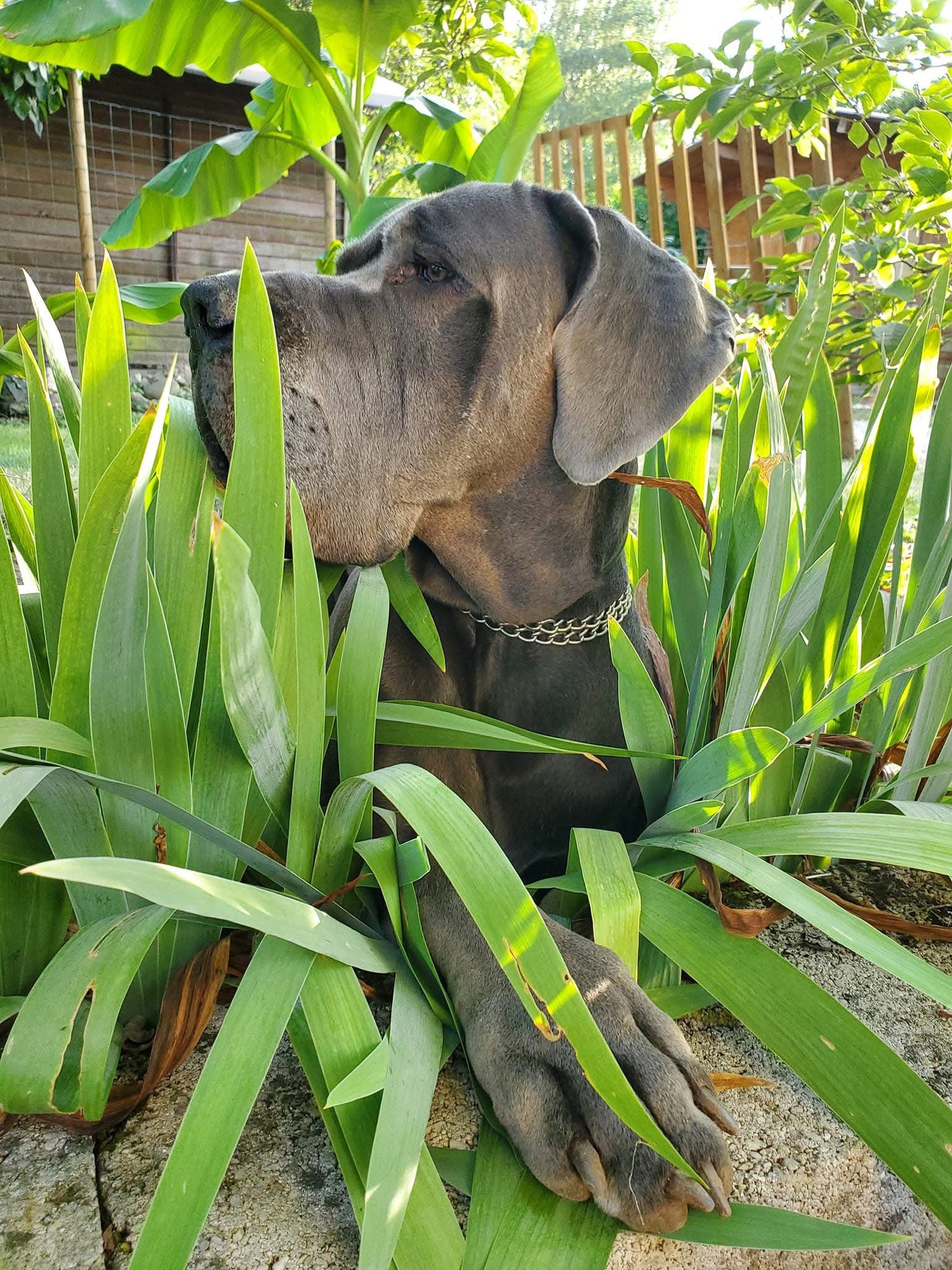
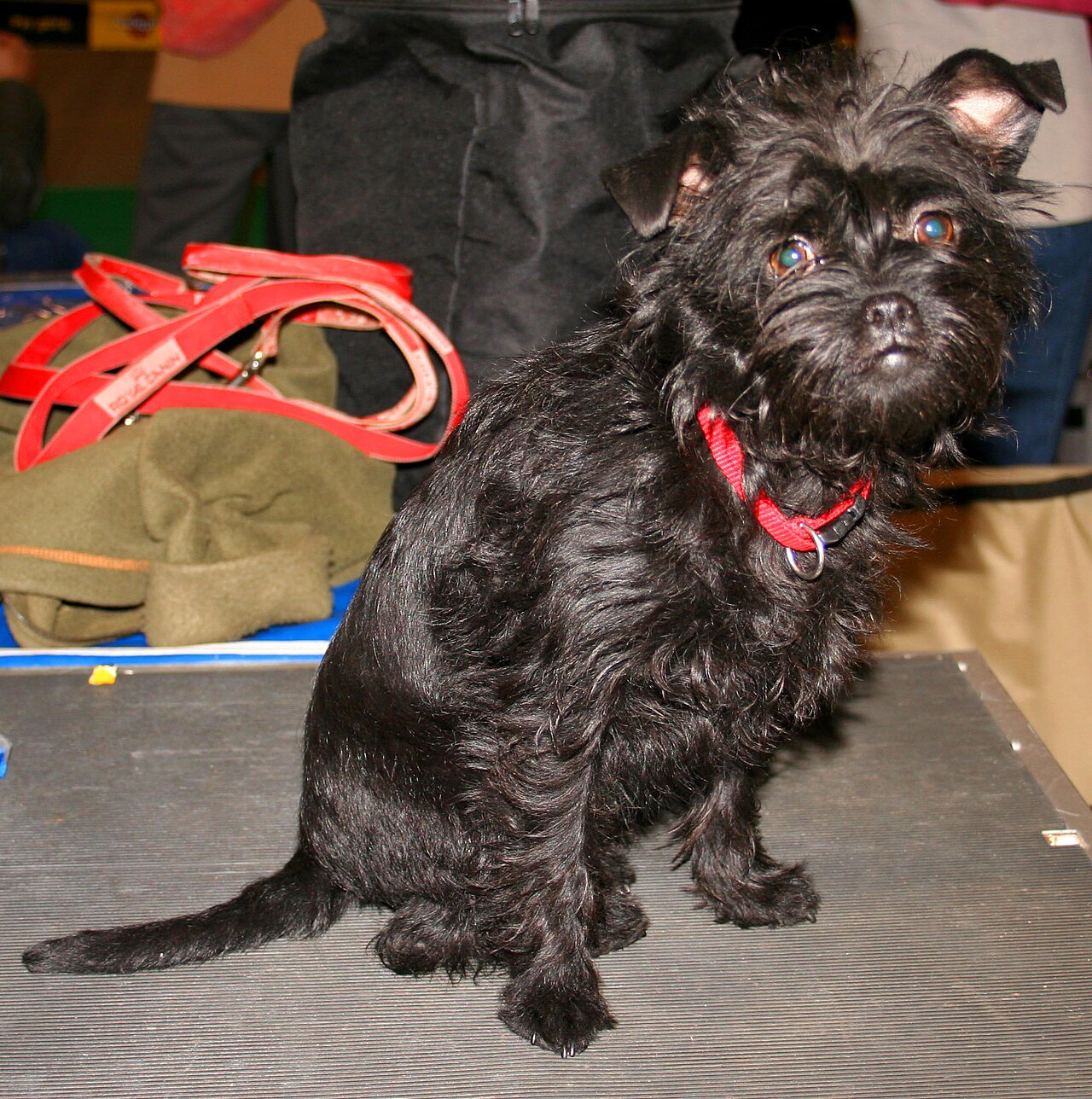
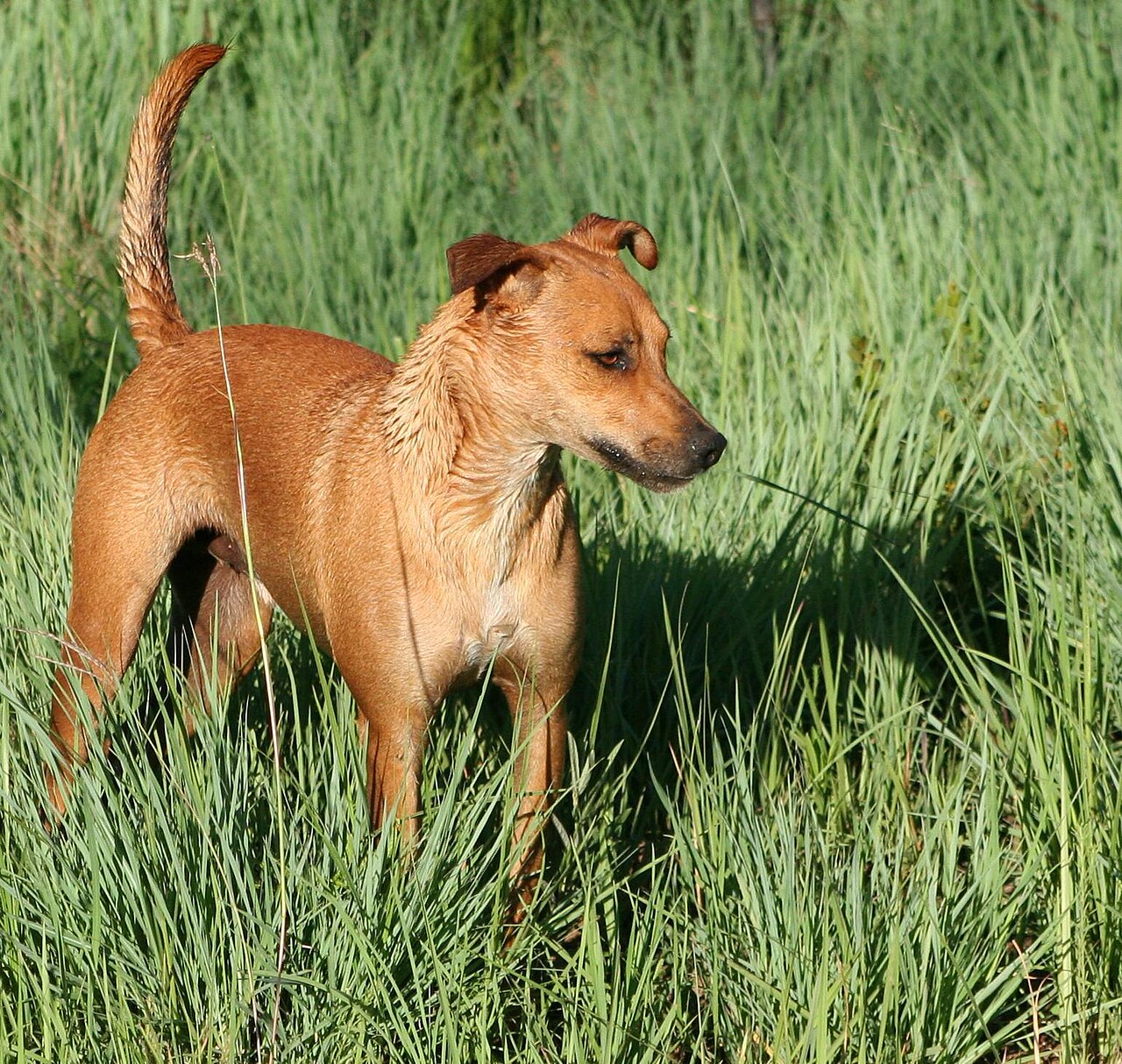
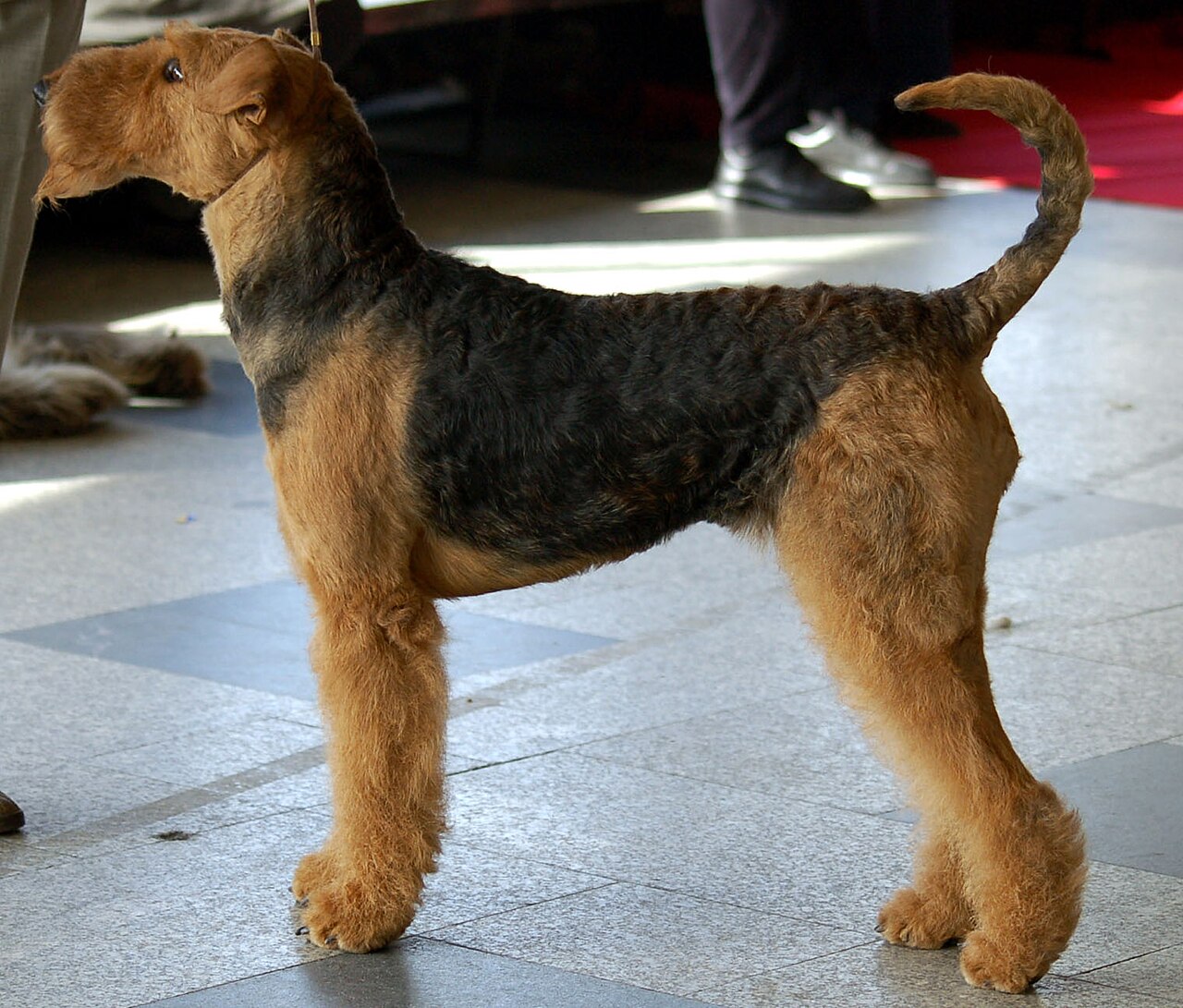
Voir les 930 autres races
- American Hairless terrier
- American Pit Bull Terrier
- American Staffordshire Terrier
- Anglo-français de petite vénerie
- Ariégeois
- Australian Kelpie
- Azawakh
- Aïdi
- Bangkaew de Thaïlande
- Barbet
- Barbu tchèque
- Barzoï
- Basati Alaunt
- Basenji
- Basset artésien normand
- Basset bleu de Gascogne
- Basset de Westphalie
- Basset des Alpes
- Basset fauve de Bretagne
- Basset hound
- Basset suédois
- Beagle
- Beagle-harrier
- Bearded collie
- Bedlington terrier
- Berger Kangal
- Berger allemand
- Berger anglais
- Berger australien
- Berger basque
- Berger belge Groenendael
- Berger belge Laekenois
- Berger belge Tervueren
- Berger blanc suisse
- Berger bulgare
- Berger catalan
- Berger croate
- Berger d'Asie centrale
- Berger de Beauce
- Berger de Bergame
- Berger de Bohême
- Berger de Bosnie-Herzégovine et de Croatie
- Berger de Brie
- Berger de Maremme et Abruzzes
- Berger de Russie méridionale
- Berger de Savoie
- Berger de la Serra de Aires
- Berger des Pyrénées à face rase
- Berger des Pyrénées à poil long
- Berger des Tatras
- Berger du Caucase
- Berger du Karst
- Berger finnois de Laponie
- Berger hollandais
- Berger picard
- Berger polonais de plaine
- Berger roumain corbeau
- Bichon bolonais
- Bichon havanais
- Bichon maltais
- Bichon à poil frisé
- Biewer Yorkshire
- Billy
- Bluetick coonhound
- Bobtail
- Boerboel
- Border Terrier
- Border collie
- Bouledogue
- Bouledogue américain
- Bouvier australien
- Bouvier australien courte queue
- Bouvier bernois
- Bouvier d'Appenzell
- Bouvier de l'Entlebuch
- Bouvier des Flandres
- Boxer
- Boykin Spaniel
- Brachet allemand
- Brachet de Styrie à poil dur
- Brachet noir et feu
- Brachet polonais
- Brachet tyrolien
- Braque Dupuy
- Braque Saint-Germain
- Braque allemand à poil court
- Braque d'Auvergne
- Braque de Weimar
- Braque de l'Ariège
- Braque du Bourbonnais
- Braque français
- Braque français, type Pyrénées
- Braque hongrois à poil court
- Braque hongrois à poil dur
- Braque italien
- Braque slovaque à poil dur
- Briquet griffon vendéen
- Broholmer
- Bruno du Jura
- Buhund norvégien
- Bull Terrier
- Bull Terrier miniature
- Bulldog anglais
- Bullmastiff
- Ca de Bou
- Cairn terrier
- Can de palleiro
- Cane Corso
- Caniche
- Carlin
- Carolina Dog
- Cavalier King Charles Spaniel
- Cavoodle
- Chart polski
- Chien chinois de Chongqing
- Chien chinois à crête
- Chien courant bernois
- Chien courant d'Istrie à poil dur
- Chien courant d'Istrie à poil ras
- Chien courant de Bosnie à poil dur
- Chien courant de Halden
- Chien courant de Hamilton
- Chien courant de Hygen
- Chien courant de Schiller
- Chien courant de Transylvanie
- Chien courant de la vallée de la Save
- Chien courant de montagne du Monténégro
- Chien courant du Småland
- Chien courant espagnol
- Chien courant finlandais
- Chien courant grec
- Chien courant italien à poil ras
- Chien courant lucernois
- Chien courant norvégien
- Chien courant polonais
- Chien courant schwytzois
- Chien courant serbe
- Chien courant slovaque
- Chien courant suisse
- Chien courant tricolore serbe
- Chien d'Artois
- Chien d'arrêt allemand à poil dur
- Chien d'arrêt allemand à poil long
- Chien d'arrêt allemand à poil raide
- Chien d'arrêt danois ancestral
- Chien d'arrêt frison
- Chien d'arrêt portugais
- Chien d'eau américain
- Chien d'eau espagnol
- Chien d'eau frison
- Chien d'eau portugais
- Chien d'eau romagnol
- Chien d'ours de Carélie
- Chien d'oysel allemand
- Chien d'élan norvégien gris
- Chien d'élan norvégien noir
- Chien d'élan suédois
- Chien de Canaan
- Chien de Castro Laboreiro
- Chien de Rhodésie à crête dorsale
- Chien de Saint-Hubert
- Chien de Taïwan
- Chien de berger de Majorque
- Chien de berger islandais
- Chien de berger roumain de Bucovine
- Chien de berger roumain de Mioritza
- Chien de berger roumain des Carpathes
- Chien de berger yougoslave de Charplanina
- Chien de ferme dano-suédois
- Chien de garenne des Canaries
- Chien de garenne portugais
- Chien de la Serra da Estrela
- Chien de montagne des Pyrénées
- Chien de perdrix de Drente
- Chien de recherche au sang de Hanovre
- Chien de recherche au sang de la montagne bavaroise
- Chien de trait belge
- Chien des Fuégiens
- Chien du Groenland
- Chien du pharaon
- Chien finnois de Laponie
- Chien noir et feu pour la chasse au raton laveur
- Chien norvégien de macareux
- Chien nu du Pérou
- Chien polynésien
- Chien thaïlandais à crête dorsale
- Chien à loutre
- Chien-loup de Saarloos
- Chien-loup tchécoslovaque
- Chihuahua
- Chippiparai
- Chow-chow
- Cimarron uruguayen
- Cirneco de l'Etna
- Clumber Spaniel
- Cockapoo
- Cocker américain
- Cocker spaniel anglais
- Colley
- Colley à poil court
- Continental Bulldog
- Coton de Tuléar
- Cursinu
- Dalmatien
- Dandie Dinmont Terrier
- Deerhound
- Dobermann
- Dogue argentin
- Dogue de Bordeaux
- Dogue des Canaries
- Dogue du Tibet
- English Coonhound
- Esquimau américain
- Esquimau canadien
- Eurasier
- Eurohound
- Field Spaniel
- Fila Brasileiro
- Fila de São Miguel
- Fox-terrier à poil dur
- Fox-terrier à poil lisse
- Foxhound américain
- Foxhound anglais
- Français blanc et noir
- Français tricolore
- Gampr
- Gascon saintongeois
- Golden retriever
- Grand anglo-français blanc et noir
- Grand anglo-français blanc et orange
- Grand basset griffon vendéen
- Grand bleu de Gascogne
- Grand bouvier suisse
- Grand griffon vendéen
- Grand spitz
- Grand épagneul de Münster
- Griffon belge
- Griffon bleu de Gascogne
- Griffon bruxellois
- Griffon d'arrêt à poil dur Korthals
- Griffon fauve de Bretagne
- Griffon nivernais
- Harrier
- Hokkaïdo
- Hovawart
- Husky de Sibérie
- Inuit du Nord
- Irish wolfhound
- Jack Russell terrier
- Jindo coréen
- Kai
- Kangal
- Kerry beagle
- Kintamani
- Kishu
- Komondor
- Kooikerhondje
- Kromfohrländer
- Kuvasz
- Labrador retriever
- Lakeland Terrier
- Lancashire Heeler
- Landseer
- Lapphund suédois
- Laïka de Iakoutie
- Laïka de Sibérie occidentale
- Laïka de Sibérie orientale
- Laïka russo-européen
- Leavitt bulldog
- Leonberg
- Lhassa Apso
- Lurcher
- Lévrier Bakhmull
- Lévrier Rampur
- Lévrier Tazi
- Lévrier Taïgan
- Lévrier afghan
- Lévrier de soie
- Lévrier espagnol
- Lévrier greyhound
- Lévrier hongrois
- Lévrier persan
- Lévrier whippet
- Malamute de l'Alaska
- Malinois
- Maltzu
- Manchester terrier
- Mastiff
- Mastiff d'Anatolie
- Mucuchies
- Mudi
- Mâtin des Pyrénées
- Mâtin napolitain
- Norfolk Terrier
- Norwich Terrier
- Parson Russell terrier
- Perdiguero de Burgos
- Perro fino Colombiano
- Petit basset griffon vendéen
- Petit bleu de Gascogne
- Petit brabançon
- Petit chien courant suisse
- Petit chien lion
- Petit chien russe
- Petit lévrier italien
- Petit spitz
- Petit épagneul de Münster
- Phalène
- Pinscher allemand
- Pinscher autrichien
- Pinscher nain
- Podenco d'Ibiza
- Pointer anglais
- Poitevin
- Pomsky
- Porcelaine
- Pudelpointer
- Puli
- Pumi
- Pékinois
- Rafeiro de l'Alentejo
- Ratier de Prague
- Ratier valencien
- Redbone Coonhound
- Retriever de la Nouvelle-Écosse
- Retriever de la baie de Chesapeake
- Retriever à poil bouclé
- Retriever à poil plat
- Rottweiler
- Ryūkyū
- Saint-bernard
- Samoyède
- Schapendoes néerlandais
- Schipperke
- Schnauzer géant
- Schnauzer miniature
- Schnauzer moyen
- Sealyham Terrier
- Setter Gordon
- Setter anglais
- Setter irlandais rouge
- Setter irlandais rouge et blanc
- Shar Pei
- Shetland
- Shiba
- Shih tzu
- Shikoku
- Shiloh Shepherd Dog
- Skye terrier
- Sloughi
- Smous des Pays-Bas
- Spinone
- Spitz Loup
- Spitz allemand
- Spitz de Norrbotten
- Spitz finlandais
- Spitz japonais
- Spitz moyen
- Springer anglais
- Staffordshire Bull Terrier
- Sussex Spaniel
- Tamaskan
- Tchouvatch slovaque
- Teckel
- Teckel à poil dur
- Terre-neuve
- Terrier Kerry Blue
- Terrier australien
- Terrier australien à poil soyeux
- Terrier brésilien
- Terrier d'agrément anglais noir et feu
- Terrier de Boston
- Terrier de chasse allemand
- Terrier irlandais
- Terrier irlandais Glen of Imaal
- Terrier irlandais à poil doux
- Terrier japonais
- Terrier noir russe
- Terrier tchèque
- Terrier tibétain
- Terrier écossais
- Tosa
- Vallhund suédois
- Vertagus
- Volpino italien
- Welsh Corgi Cardigan
- Welsh Corgi Pembroke
- Welsh Springer Spaniel
- Welsh terrier
- West Highland white terrier
- Xoloitzcuintle
- Yorkshire terrier
- Zuchon
- Épagneul bleu de Picardie
- Épagneul breton
- Épagneul d'eau irlandais
- Épagneul de Pont-Audemer
- Épagneul de Saint-Usuge
- Épagneul français
- Épagneul japonais
- Épagneul nain continental papillon
- Épagneul russe
- Akita matagi
- Alangu Mastiff
- American Alsatian
- American Fox Terrier
- Andalusian Terrier
- Argentine Pila
- Australian Cobberdog
- Bakharwal
- Basset
- Berger Blanc
- Berger américain miniature
- Berger belge
- Berger des Pyrénées
- Berner Niederlaufhund
- Black Mouth Cur
- Blue Lacy
- Boca-preta sertanejo
- Bohemian Spotted Dog
- Bolonka
- Borador
- Bouvier de Bouriatie-Mongolie
- Bouvier des Ardennes
- Bouvier portugais
- Buckhound
- Bull Arab
- Bắc Hà dog
- Ca Rater Mallorquí
- Calupoh
- Campeiro Bulldog
- Can de Chira
- Catalburun
- Chien de Majorado
- Chien de Taïmyr
- Chien léopard catahoula
- Chien nu
- Chien paria
- Chilean Terrier
- Chinook
- Chukotka sled dog
- Cocker spaniel
- Combai
- Cretan Hound
- Czech Mountain Dog
- Cão de Gado Transmontano
- Danish Spitz
- Dogue Brasileiro
- Donggyeongi
- East European Shepherd
- Elo
- Estonian Hound
- Fox-terrier
- Gaucho sheepdog
- Georgian Shepherd
- Goldendoodle
- Grand Fauve de Bretagne
- Greek Shepherd
- Griffon
- Gull Terrier
- Himalayan Sheepdog
- Huntaway
- Hällefors Elkhound
- Indian Spitz
- Jonangi
- Kanni
- Karelo-Finnish Laika
- Kawakami Inu
- King Charles Spaniel
- King's White Hound
- Kokoni
- Koolie
- Kunma Dog
- Labradoodle
- Laizhou Hong
- Langqing Quan
- Lobito Herreño
- Lucas Terrier
- Lupo Italiano
- Lài dog
- Macedonian Shepherd Dog
- Mackenzie River husky
- Maneto
- Mantiqueira Shepherd
- Markiesje
- Mexican lapdog
- Mi-Ki
- Miniature Australian Shepherd
- Miniature Fox Terrier
- Morkie
- Moscow Watchdog
- Mountain Cur
- Mâtin espagnol
- Nenets Herding Laika
- Olde English Bulldogge
- Original Fila Brasileiro
- Paisley Terrier
- Pastor Garafiano
- Patagonian Sheepdog
- Patterdale Terrier
- Perro de Agua Cantábrico
- Phu Quoc Ridgeback
- Piccolo Segugio dell'Appennino
- Plott Hound
- Podenco Andaluz
- Podenco Valenciano
- Puggle
- Pungsan
- Rajapalayam
- Rat Terrier
- Sapsali
- Sarabi dog
- Sarail Hound
- Sardinian Shepherd Dog
- Segugio Maremmano
- Segugio dell'Appennino
- Seppala Siberian Sleddog
- Small Međimurje Dog
- Spanish dogo
- Sporting Lucas Terrier
- Staghound
- Tang Dog
- Tatra Hound
- Techichi
- Teddy Roosevelt Terrier
- Telomian
- Tenterfield Terrier
- Tonya Finosu
- Toy Manchester Terrier
- Treeing Feist
- Treeing Tennessee Brindle
- Treeing Walker Coonhound
- Valdueza
- Villano de las Encartaciones
- Welsh Corgi
- Welsh Hound
- Welsh Sheepdog
- West Country Harrier
- Xiasi Dog
- Xigou
- Zerdava
- Épagneul tibétain
- Meitei Hui
- Beaglier
- Bernedoodle
- Black and Tan Terrier
- Catahoula Bulldog
- Dorgi
- Double-nosed Andean tiger hound
- Gerberian Shepsky
- Gull Dong
- Mal-shi
- Maltipoo
- Miniature Shar Pei
- Pomchi
- Pugese
- Schnoodle
- Shih-poo
- Sulimov dog
- Swinford Bandog
- Texas Heeler
- Yorkipoo
- Afghan mastiff
- American Mastiff
- Anglo-Russian Hound
- Australian stock dog
- Berger de Kars
- Berger noir slovaque
- Bolonka Franzuska
- Bone-mouth
- Borneo dog
- Boxador
- Branchiero siciliano
- Braque Français, Type «Gascongne»
- Brazilian Bull-mastiff
- Bulgarian Shepherd Dog
- Bullbras
- Cane Pecoraio Varbutu
- Chamuco
- Chien de St. Hubert
- Decker Terrier
- Dogo Guatemalteco
- Epagneul du Chasse Polonais
- Gotland Hound
- Grand Gascon saintongeois
- Griffon à poil laineux
- Guregh
- Hedehund
- Kattai dog
- Kyi-Leo
- Lévrier turc
- Miniature dachshund
- Pandikona
- Petit Gascon Saintongeois
- Pit Monster
- Pitador
- Pulin
- Ramanathapuram mandai dog
- Russian Hound
- Seskar Seal Dog
- Sila Shepherd
- Silken Windsprite
- Svensk vit älghund
- Toy Poodle
- Trailhound
- Tuvinskaya ovcharka
- Westiepoo
- White English Bulldog
- Berger d'Auvergne
- Braque français, type Gascogne
- Caravan hound
- Charnaigre
- Chien courant italien à poil dur
- Chien créole
- Chien fer
- English bull terrier
- Français blanc et orange
- Grand anglo-français tricolore
- Greyster
- Khortaï
- Laobé
- Lévrier grec
- Nureongi
- Talbot
- Teckel à poil long
- Teckel à poil ras
- Épagneul picard
- Alopekis
- American Leopard Hound
- Argentine polar dog
- Armant
- Australian Bulldog
- Berger de Crau
- Beskydský bundáš
- Briquet de Provence
- Bulgae
- Bulgarian Hound
- Bulgarian Scenthound
- Ca Mè Mallorquí
- Ca de Conills
- Cane Paratore
- Carea Castellano Manchego
- Chien de Berger de Lessinia et Lagorai
- Cão do Barrocal Algarvio
- Córdoba fighting dog
- Dikkulak
- Dogo Sardesco
- Ecuadorian Hairless Dog
- English Water Spaniel
- Erbi Txakur
- Fu Quan
- Guicho
- Hmong bobtail dog
- Irish bull terrier
- Italian Shepherd
- Jeju dog
- Kars dog
- Kunming dog
- Kurdish Mastiff
- Labrit
- Laconian
- Lapponian Shepherd
- Levesque
- Lithuanian Hound
- Majestic Tree Hound
- Molossus of Epirus
- Moscow Water Dog
- New Zealand Heading Dog
- Norman Hound
- Old Croatian Sighthound
- Old Welsh Grey Sheepdog
- Pachon Navarro
- Pampas Deerhound
- Perdigueiro Galego
- Podengo Galego
- Ramanadhapuram Mandai
- Rastreador Brasileiro
- Ratonero Murciano
- Red Decoy Dog
- Rize Koyun
- Serrano Bulldog
- Smithfield
- Stephens Cur
- Tahitian Dog
- Terceira Mastiff
- Tibetan Kyi Apso
- Treeing Cur
- Villanuco de Las Encartaciones
- Welsh Hillman
- Assyrian Mastiff
- DenMark Feist
- Liangshan Dog
- Mojee
- Pekapoo
- Poochon
- Segugio Cravin
- St. Hubert Jura Hound
- Strobel
- Adirondack Pointing Dog
- Afghan Spaniel
- Agassaei
- Agassin
- Alano
- Albanian Mountain Dog
- Albanian Wolfdog
- Alicant Dog
- Ameri-Indian Alaskan Husky
- American Blue Gascon Hound
- American Squirrel Dog
- American Wolfdog
- American Working Red
- Anglo-Spanish Greyhound
- Antebellum Bulldog
- Appalachian Sighthound
- Aquarius
- Artésien-normand
- Aurora Husky
- Aussiedoodle
- Australian Barb
- Australian Staghound
- Awa Ken
- Badger dog
- Baganda Dog
- Bajan Toy Terrier
- Balla Terrier
- Bangara Mastiff
- Basset Saintongeois
- Basset d’Artois
- Batak Dog
- Belgian Pointer
- Bichon Yorkie
- Bisben
- Bisharin Greyhound
- Black Norrlandshund
- Black Pointer
- Black Spitz
- Black and Tan Virginia Foxhound
- Boerenfox terrier
- Bordoodle
- Braque Charles X
- Brittany Spaniel
- Bull Boxer
- Bullnese
- Burmese Spitz Dog
- Camas Cur
- Camus cur
- Canadian cur
- Canis Panther
- Capheaton Terrier
- Carolina cur
- Cesky Wire-haired Pointing Griffon
- Chien particolore à poil frisé
- Chigi
- Chilean Dogo
- Chinese Happa Dog
- Chinese Hound
- Chinese Imperial Dog
- Chorkie
- Chuandong Hound
- Circassian Orloff Wolfhound
- Clallam-Indian Dog
- Cojack
- Colima Dog
- Comforter
- Common Indian Dog
- Creeper Terrier
- Cur dog
- Cyprus Poodle
- Daitō Inu
- Damchi
- Deltari ilir
- Dinka Greyhound
- Dropper
- Egyptian Hairless Dog
- Farm collie
- Faroese Sheepdog
- Fell Hound
- Field labrador
- Frenchton
- Friesian Windhund
- Gegar colombien
- German Silky Pinscher
- Glenwherry Collie
- Gollie
- Gorskaja
- Gos d'atura aranès
- Gran Mastín de Borínquen
- Gredin Spaniel
- Gråhund
- Hairless Khala
- Han Dog
- Harlequin Pinscher
- Hertha pointer
- Hungarian sheepdog
- Huslia Husky
- Inca Dog
- Indian Husky
- Indian Tailles Dog
- Inn kwe
- Izcuintli, itzcuintli
- Juan Fernández Sheepdog
- Jōmon Dog
- Kanawar Dog
- Karadeniz Shepherd Dog
- Kemmer stock cur
- Kentucky Shell Heap Dog
- Kitler
- Klamath-Indian Dog
- Korean Mastiff
- Koshi
- Koshikiyama Inu
- Kumiş
- Kurdistan Greyhound
- Laconian Hound
- Lakeland Foxhound
- Larye, Larrye
- Latvian Hound
- Levriero meridionale
- Llewellin Setter
- Long-haired Inca Dog
- Longhaired Whippet
- Lottatore Brindisino
- Lyme Mastiff
- Lévrier de Saintonge
- Maltese Fox Terrier
- Maltese Little Lion-dog
- Maltese Pocket Dog
- Marxdorfer Wolfshund
- Medelyan
- Medium-sized Anglo-French Hound
- Miniature Siberian Husky
- Mountain Feist
- Mountain View Cur
- Mullins' feist
- Murray River Curly Coated Retriever
- Mâtin
- Naga Dog
- National Deerhound
- Native Irish Pedigree Dog Breeds
- Nootka Dog
- Normand-Poitevin
- North-Easthrly Haaling Laika
- Northern terrier
- Northwest farm terrier
- Odis
- Old Time Farm Shepherd
- Oriental Shar Pei
- Original Cajun Squirrel Dog
- Pardog
- Pashmi hound
- Pastor Americano
- Patagonian Bearded Greyhound
- Perro pampa argentino
- Peruvian Inca Orchid
- Philippines Islands Dog
- Pit Bullmastiff
- Plains-Indian Dog
- Pocket beagle
- Podenco palmero
- Poligar Hound
- Poltalloch Terrier
- Pomeranian Wolf-dog
- Powinder Dog
- Prapsos
- Pueblo Dog
- Puscha
- Ratonero Palmero
- Renascence Bulldogge
- Rothbury Terrier
- Ruby Spaniel
- Running Walker Coonhound
- Russian Setter
- San'in Shiba Inu
- Sanshu
- Satsuma Dog
- Schafpudel
- Schwarzer
- Serbian Yellow Hound
- Serbian sheep dog
- Shakhi
- Shelburne Terrier
- Shepweiler
- Shilluk Greyhound
- Shorty Bull
- Shropshre Terrier
- Siberian Sheepdog
- Sicilian Sheepdog
- Silky Spitz
- Sioux Dog
- South African Mastiff
- Sparta Sheepdog
- Spino siciliano
- St. Domingo Dog
- Steinbracke
- Strathdoon dingo killer
- Takayasu Inu
- Targhee Hound)
- Terry
- Tibetan Hound
- Timber-wolf Dog
- Timon's Biter
- Toy Bull Terrier
- Toy Mi-Ki
- Toy Munchkin
- Transcaucasian Mountain Dog
- Tripuri Dog
- Turkish Greyhound
- Turkmen Alabai
- Ukrainian Sheepdog
- Vaghari Dog
- Valley Bulldog
- Victorian Bulldog
- Waeller
- Walker Foxhound
- Water drawer
- Welsh Black-and-Tan Sheepdog
- Welsh Blue-Grey
- Welsh Harrier
- West Greenland Dog
- Westfal Terrier
- White Greek sheepdog
- Wire-haired Beagle
- Working Pit Bulldog
- Wurttemberg Pointer
- Yakki Dog
- Yakushima Inu
- Zande Dog
- Zanzibar Greyhound
- Zağar
- Zlatiborski ovčar
Sources et crédits
Informations provenant de plusieurs sources vérifiées. Dernière mise à jour : .
Mentions de licence
Texte disponible sous licence CC BY-SA 4.0. Il adapte notamment Wikipedia (CC BY-SA): German Shepherd (Wikipédia, auteurs dans l’historique de l’article).
- Taxonomie : GBIF Backbone Taxonomy (CC BY 4.0)
Détail : Sources et licences.
Discussion (0)
Aucun message pour l’instant. Lancez la discussion sur cette fiche (sources, précisions, débats éditoriaux).
Connectez-vous pour participer à la discussion.