
Woolly mammoth
Mammuthus primigenius
The woolly mammoth (Mammuthus primigenius) is an extinct species of mammoth that lived from the Middle Pleistocene until its extinction in the Holocene epoch.
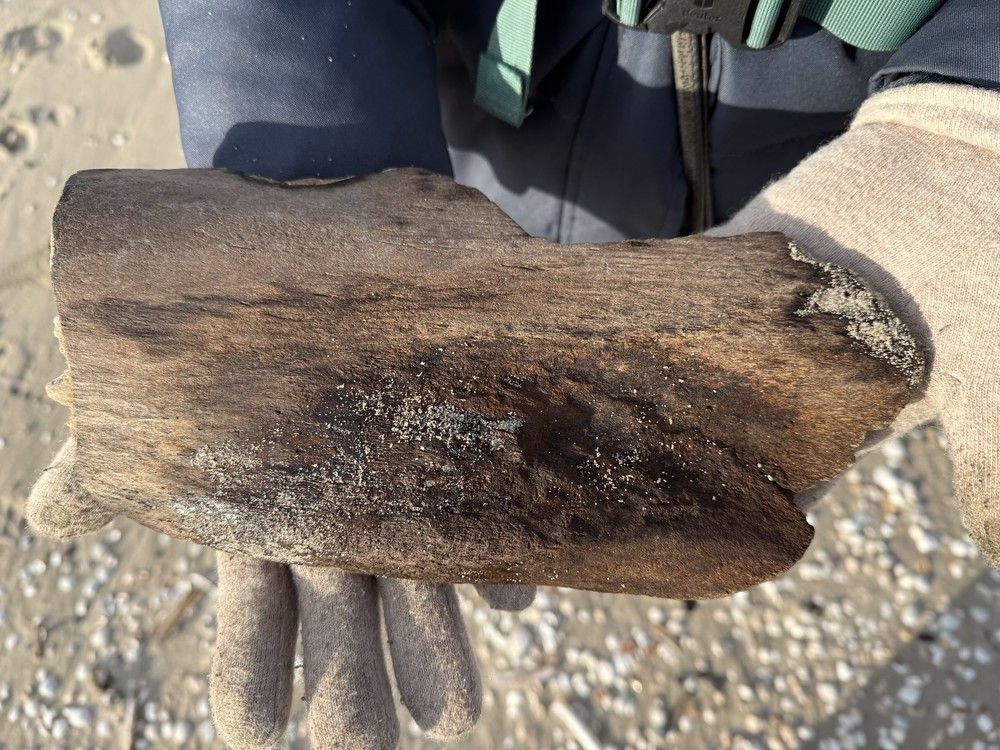
- Kingdom
- Animalia
- Phylum
- Chordata
- Class
- Mammalia
- Order
- Proboscidea
- Family
- Elephantidae
- Genus
- Mammuthus
- Species
- Mammuthus primigenius
Description
The woolly mammoth (Mammuthus primigenius) is an extinct species of mammoth that lived from the Middle Pleistocene until its extinction in the Holocene epoch. It was one of the last in a line of mammoth species, beginning with the African Mammuthus subplanifrons in the early Pliocene. The woolly mammoth began to diverge from the steppe mammoth about 800,000 years ago in Siberia. Its closest extant relative is the Asian elephant. The Columbian mammoth (Mammuthus columbi) lived alongside the woolly mammoth in North America, and DNA studies show that the two hybridised with each other. Mammoth remains were long known in Asia before they became known to Europeans. The origin of these remains was long debated and often explained as the remains of legendary creatures. The mammoth was identified as an extinct elephant species by Georges Cuvier in 1796. The appearance and behaviour of the woolly mammoth are among the best studied of any prehistoric animal because of the discovery of frozen carcasses in Siberia and North America, as well as skeletons, teeth, stomach contents, dung, and depiction from life in prehistoric cave paintings. It was roughly the same size as modern African elephants. Males reached shoulder heights between 2.67 and 3.49 m (8 ft 9 in and 11 ft 5 in) and weighed between 3.9 and 8.2 t (3.8 and 8.1 long tons; 4.3 and 9.0 short tons). Females reached 2.3–2.6 m (7 ft 7 in – 8 ft 6 in) in shoulder heights and weighed between 2.8–4 t (2.8–3.9 long tons; 3.1–4.4 short tons). A newborn calf weighed about 90 kg (200 lb). The woolly mammoth was well adapted to the cold environments present during glacial periods, including the last ice age. It was covered in fur, with an outer covering of long guard hairs and a shorter undercoat. The colour of the coat varied from dark to light. The ears and tail were short to minimise frostbite and heat loss. It had long, curved tusks and four molars, which were replaced six times during the lifetime of an individual. Its behaviour was similar to that of modern elephants, and it used its tusks and trunk for manipulating objects, fighting, and foraging. The diet of the woolly mammoth was mainly forbs and grasses. Individuals could probably reach the age of 60. Its habitat was the mammoth steppe, which stretched across northern Eurasia and North America. The woolly mammoth coexisted with early humans, who hunted the species for food, and used its bones and tusks for making art, tools, and dwellings. The population of woolly mammoths declined at the end of the Late Pleistocene, with the last populations on mainland Siberia persisting until around 10,000 years ago, although isolated populations survived on St. Paul Island until 5,600 years ago and on Wrangel Island until 4,000 years ago. After its extinction, humans continued using its ivory as a raw material, a tradition that continues today. The completion of the mammoth genome project in 2015 sparked discussion about potentially reviving the woolly mammoth through several various methods. However, none of these approaches are currently feasible.
Gallery
Ajouter des photos
Partagez vos photos de cette espèce (jusqu'à 20 à la fois) : elles sont vérifiées automatiquement, puis publiées.
Répartition
Occurrences observées (données GBIF). Les zones hors aire d'origine peuvent indiquer une présence introduite ou invasive.
Sources et crédits
Informations provenant de plusieurs sources vérifiées. Dernière mise à jour : .
Crédits photos (6)
- Photo : Sjoerd Groos · CC BY-NC 4.0 · via GBIF
- Photo : Erwin Goutbeek · CC BY-NC 4.0 · via GBIF
- Photo : Arie Twigt · CC BY-NC 4.0 · via GBIF
- Photo : Arie Twigt · CC BY-NC 4.0 · via GBIF
- Photo : Tom Damm · CC BY-NC 4.0 · via GBIF
- Photo : diego jansen · CC BY-NC 4.0 · via GBIF
Mentions de licence
Texte disponible sous licence CC BY-SA 4.0. Il adapte notamment Mammouth laineux, Wikipedia (CC BY-SA) : Woolly mammoth (Wikipédia, auteurs dans l’historique de l’article).
- Taxonomie : GBIF Backbone Taxonomy (CC BY 4.0)
- Carte : occurrences GBIF, fond © contributeurs OpenStreetMap (ODbL)
Détail : Sources et licences.
Discussion (0)
Aucun message pour l’instant. Lancez la discussion sur cette fiche (sources, précisions, débats éditoriaux).
Connectez-vous pour participer à la discussion.