
- Kingdom
- Animalia
- Phylum
- Chordata
- Class
- Mammalia
- Order
- Artiodactyla
- Family
- Bovidae
- Genus
- Bubalus
- Species
- Bubalus bubalis
Overview
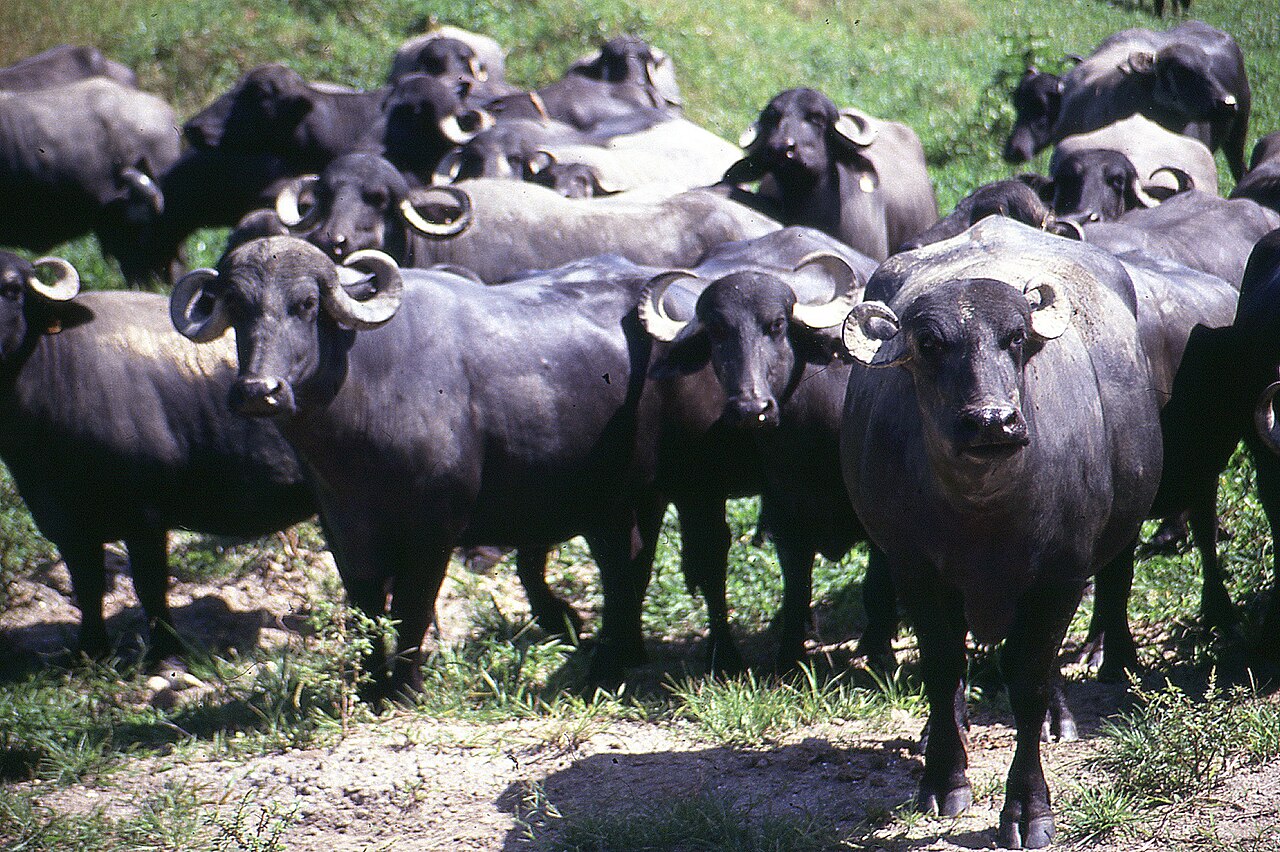
The Jafarabadi buffalo, Jaffrabadi buffalo or Gir buffalo is a domesticated riverine buffalo that originated in Gujarat, India. The most recent estimates reveal that there are around 600,000 Jafarabadi buffaloes in the world. It is one of the important buffalo breeds of India and Pakistan. The Jafarabadi buffalo is also the first buffalo breed exported to Brazil, and is also one of the four buffalo breeds raised in Brazil as of 2017, the others being Mediterranean, Murrah and swamp buffalo.
The Indian National Scientific Documentation Centre states that the Jafarabadi buffalo is a hybrid of the African Cape buffalo and the Indian water buffalo, the former originally been brought to British India for slaughtering. The Centre notes this to be one of the major reasons for the buffalo's poor semen quality. The hybrid buffaloes were widely present in Jafarabad, and were hence named as Jafarabadi buffalo. Jafarabadi buffaloes have heavy heads with fairly large, thick, flat horns, which drop on the sides of the neck and go on upwards till the ears.
This is one of the water buffalo breeds that falls prey to Asiatic lions in the Gir Forest National Park.
Ajouter des photos
Partagez vos photos de cette espèce (jusqu'à 20 à la fois) : elles sont vérifiées automatiquement, puis publiées.
Autres races de l'espèce (15)
Espèce : Buffle domestique
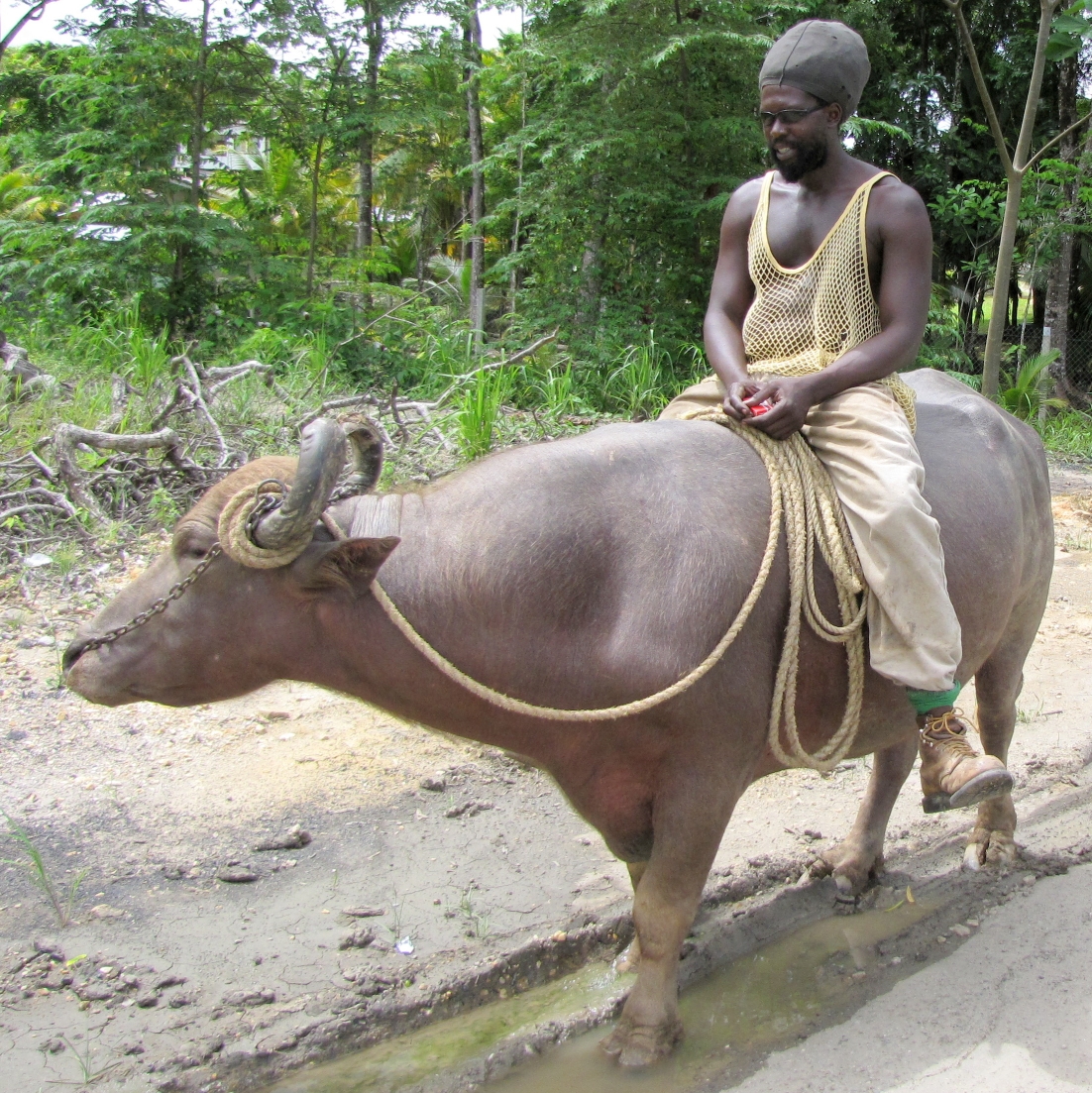
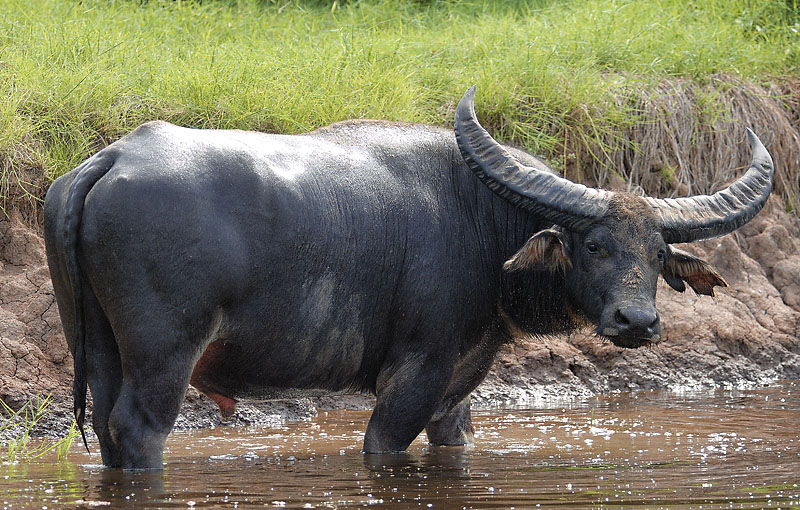
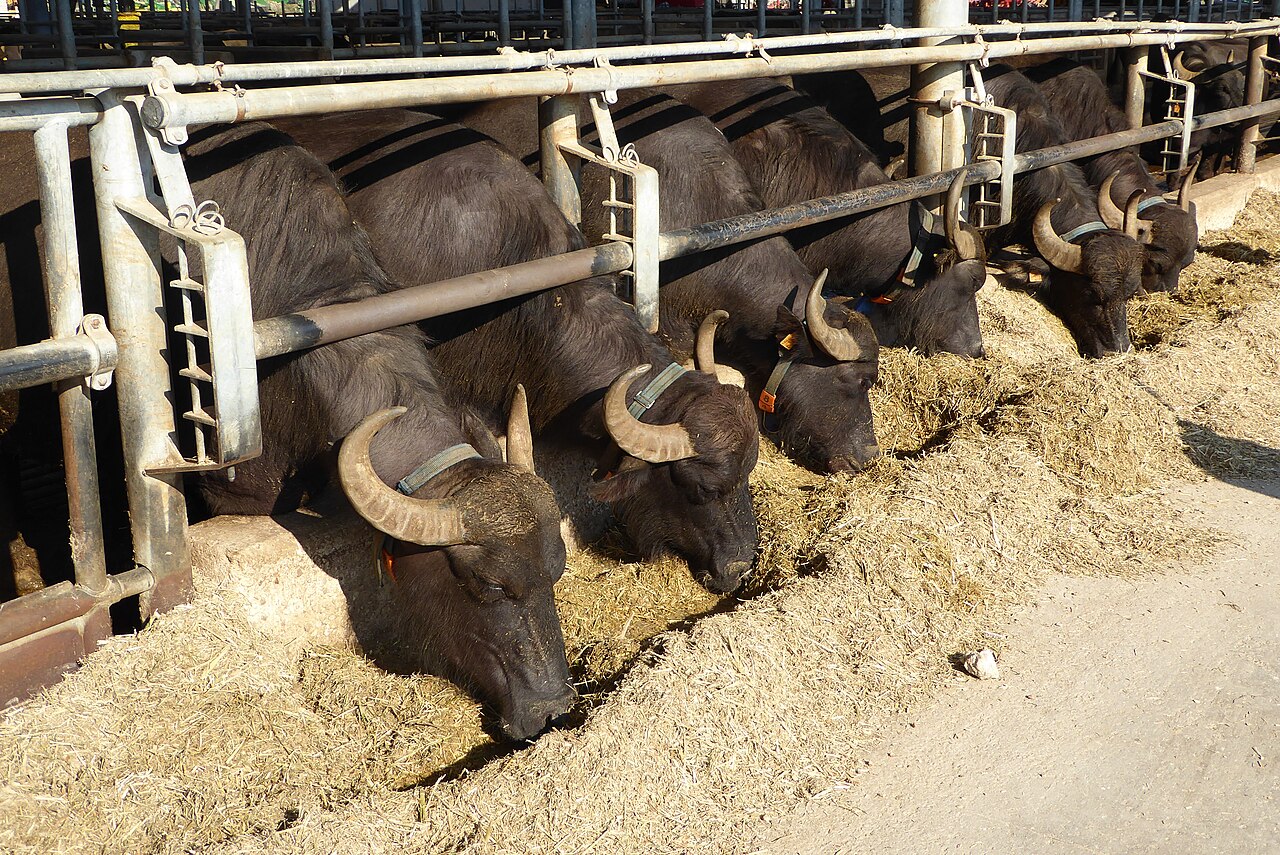
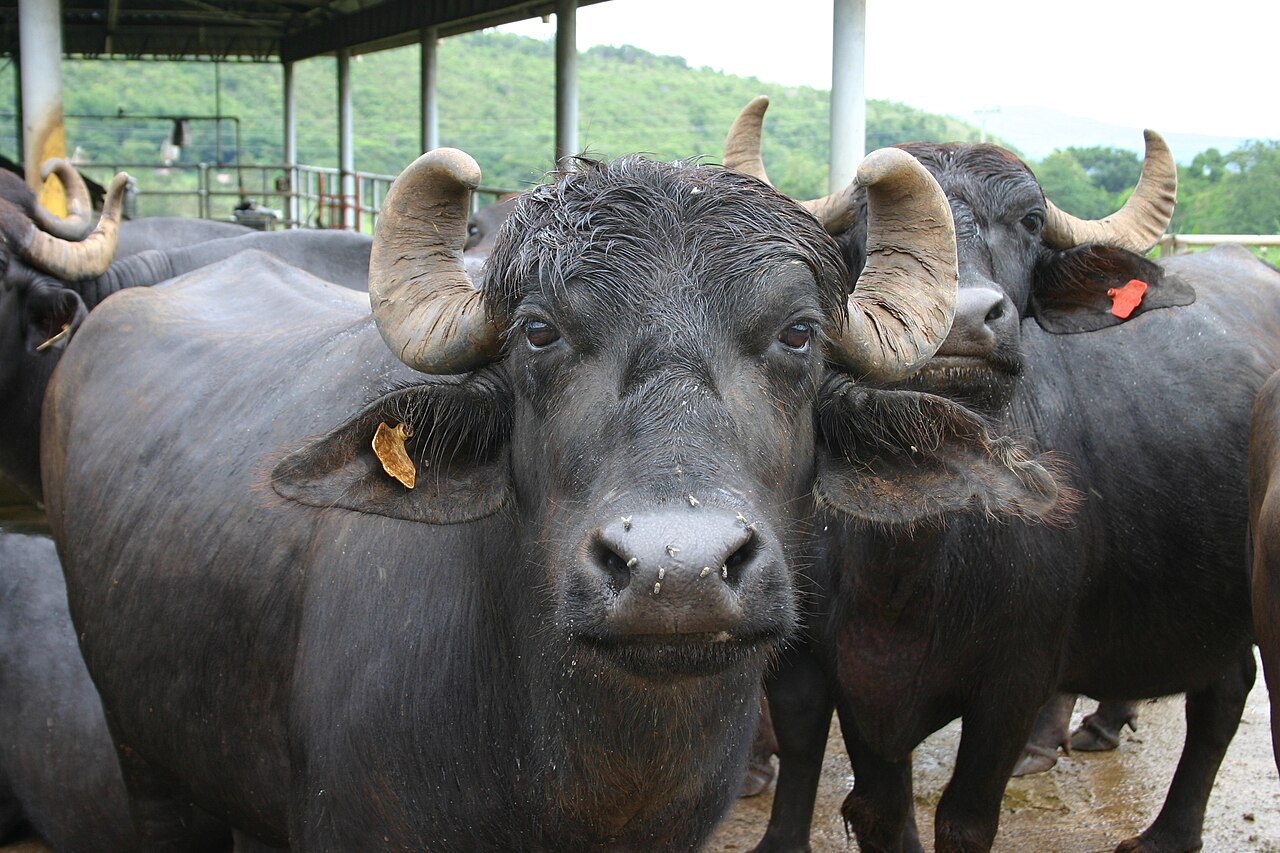
Voir les 3 autres races
Sources et crédits
Informations provenant de plusieurs sources vérifiées. Dernière mise à jour : .
Crédits photos (1)
- Photo : Udo Schmidt from Deutschland · CC BY-SA 2.0 · via Wikimedia Commons
Mentions de licence
Texte disponible sous licence CC BY-SA 4.0. Il adapte notamment Wikipedia (CC BY-SA): Jafarabadi buffalo (Wikipédia, auteurs dans l’historique de l’article).
- Taxonomie : GBIF Backbone Taxonomy (CC BY 4.0)
Détail : Sources et licences.
Discussion (0)
Aucun message pour l’instant. Lancez la discussion sur cette fiche (sources, précisions, débats éditoriaux).
Connectez-vous pour participer à la discussion.