
- Kingdom
- Animalia
- Phylum
- Chordata
- Class
- Mammalia
- Order
- Perissodactyla
- Family
- Equidae
- Genus
- Equus
- Species
- Equus caballus
Overview
Clay trotting horses were an American strain of trotting horse during the 19th century that is no longer extant, but has descendants in the Standardbred.
Early years
In 1818 Richard B. Jones, the American Consul in Tripoli, acquired a stallion named Grand Bashaw. Grand Bashaw was the sire of Young Bashaw, who in turn sired Andrew Jackson, which became noted as a trotting racehorse. From a mare named Old Surrey or Lady Surrey, Andrew Jackson sired Henry Clay, who became the foundation sire of the Clay strain.
The Smithsonian says this about him:
Old Henry Clay, often called "America's National Thoroughbred Trotting Horse" or "Father of American Trotting Horses", was foaled on Long Island in 1837 and purchased by Colonel William W. Wadsworth of Seneso, Livingston County, New York. When his days as a famous trotting horse were over, he was used for breeding and finally died at Lodi, New York in the spring of 1867. In life the horse stood 151⁄4 hands high (61 inches).
The Clays were recognized as a family of trotting horses in the mid-19th century, through to the end of the century. By the end of the century, however, it had almost become extinct, through breeding to other strains. Sometimes they were referred to the Bashaw strain.
Among his descendants was a trotting horse stallion named Cassius Clay. Randolph Huntington, a horse breeder, noticed after the American Civil War that Clays were becoming increasingly rare.
Writing to a friend on Nov. 2, 1888, Huntington said,
"I know the horse [Henry Clay] thoroughly well and also his get. Residing in Brooklyn I knew also the horses there and on Long Island ... practical experience in handling and driving as a young man, as a matured man and as a dealer during and after the [Civil] war, I found my opinions in favor of the blood advocated. My investment was between $40,000 and $50,000."
Linden Tree and Leopard
In 1877, Ulysses S. Grant, who was traveling in modern-day Turkey, was given two stallions by Abdul Hamid II, the Sultan of the Ottoman Empire. These two horses were Linden Tree, a Barb and Leopard, an Arabian.
Randolph Huntingdon bred a number of Clay trotting mares to Grant's two stallions and used the resulting foals in his breeding program, which he called "Clay horses" or "Clay-Arabs".
The following quotation is also taken from the Oyster Bay Pilot:
We have the effort of Mr. Randolph Huntington to establish a type by mixing the blood of General Grant's Arab stallions with the mares of the Clay family. It will be recalled that when General Grant made his famous tour of the world he stopped at Constantinople, and was entertained by the Sultan, who gave the American soldier, as a souvenir of his visit, two stallions, Leopard and Linden Tree. These horses were landed in 1879, and Mr. Huntington at once began making arrangements to breed to them. Mr. Huntington has theories as to in-breeding, or close breeding, as he prefers to call it, that are more in consonance with the ideas that prevail abroad than here. Of interest to the sports enthusiast is the record of one Clay stallion with the name Cassius. Although extinct now, the Clays did contribute to the creation of another American breed, the Standardbred Trotting Horse.
Citations
- ^ Wallace Horse in America pp. 321–325
- ^ Wallace Horse in America pp. 327–329
- ^ Staff "Famous Horses" Encyclopedia Smithsonian
- ^ Crowell Cavalcade of American Horses p. 176
- ^ Wallace Horse of America p. 21
- ^ Wallace Horse of America p. 321
- ^ Conn Arabian Horse in America pp. 127–129
- ^ Conn Arabian Horse in America pp. 139–144
Further reading
- Conn, George. "Randolph Huntington, American Horse Breeder", Western Horseman, Apr 1949
Extinct American horse breed
Ajouter des photos
Partagez vos photos de cette espèce (jusqu'à 20 à la fois) : elles sont vérifiées automatiquement, puis publiées.
Autres races de l'espèce (822)
Espèce : Cheval
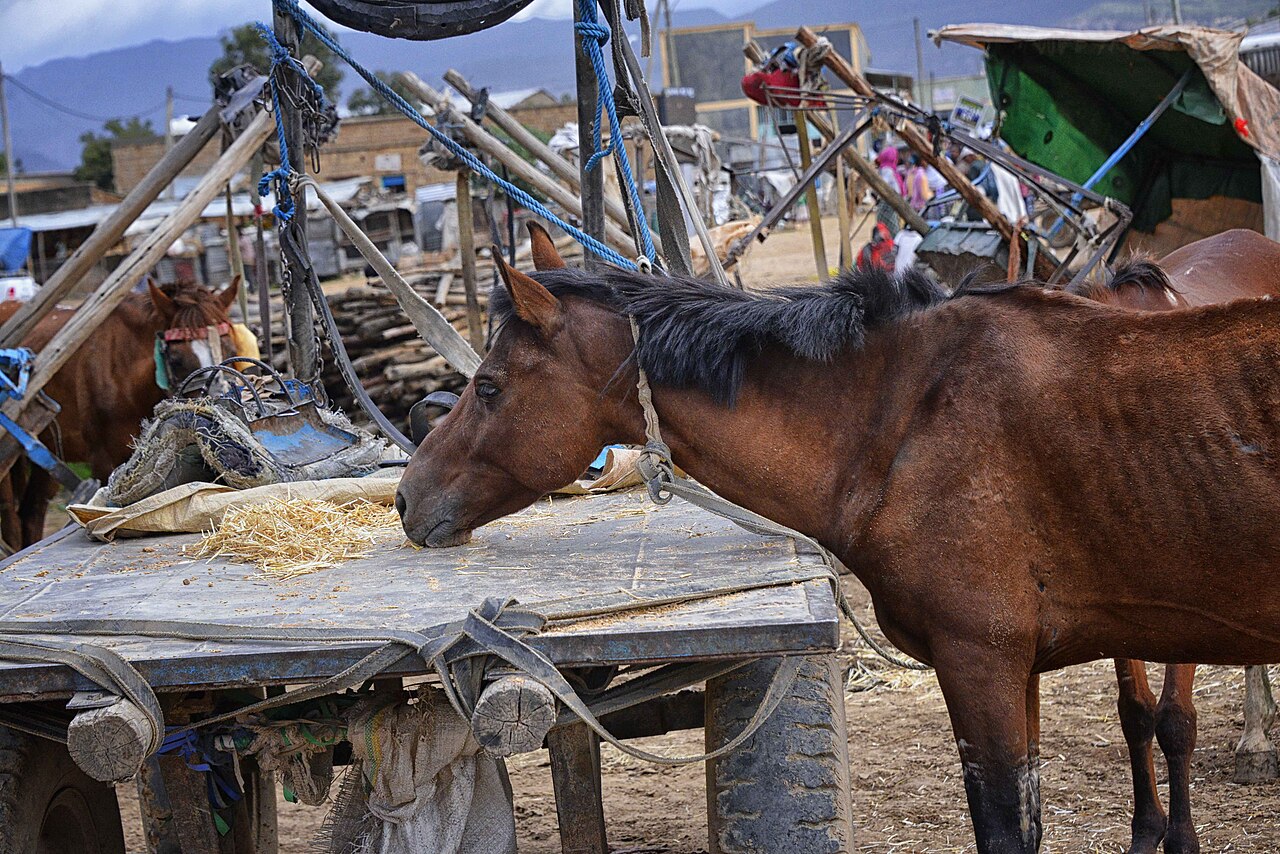
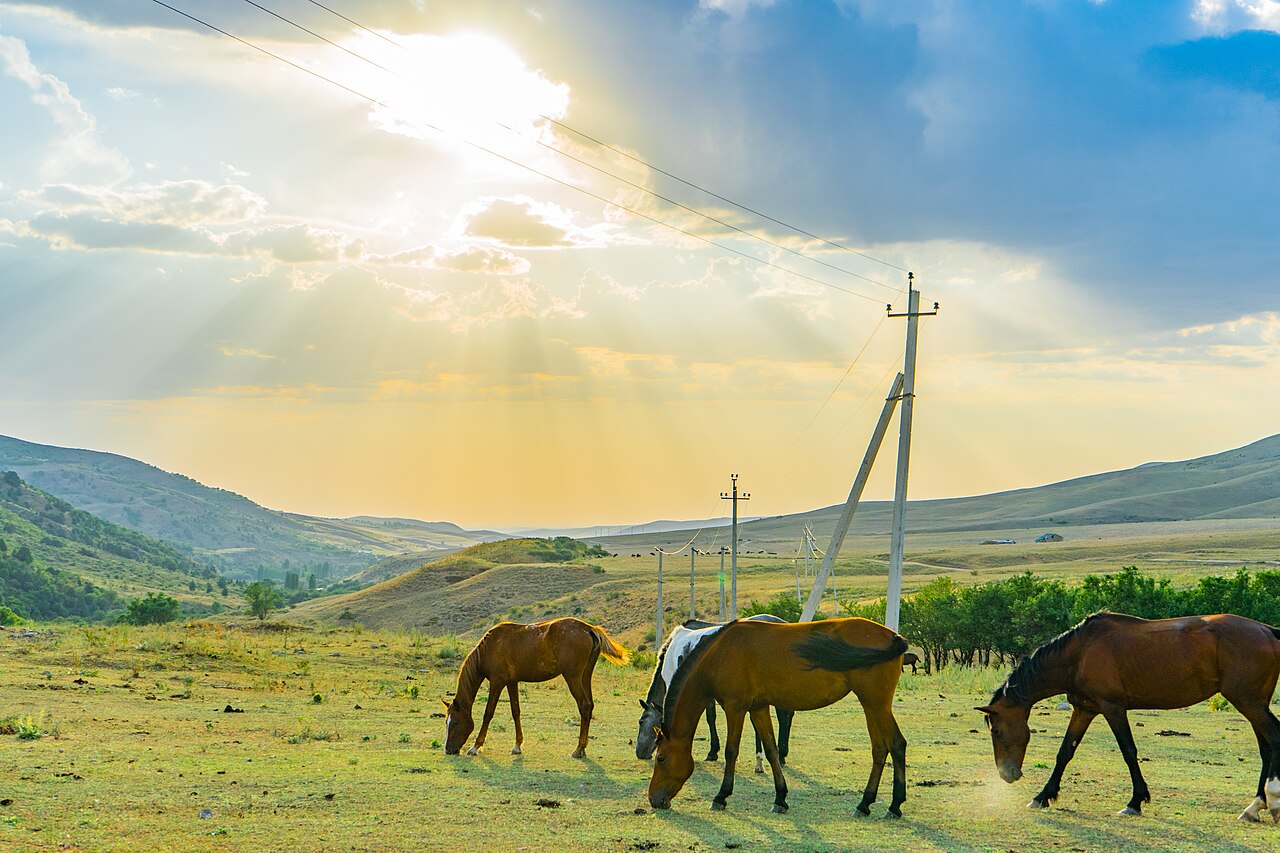
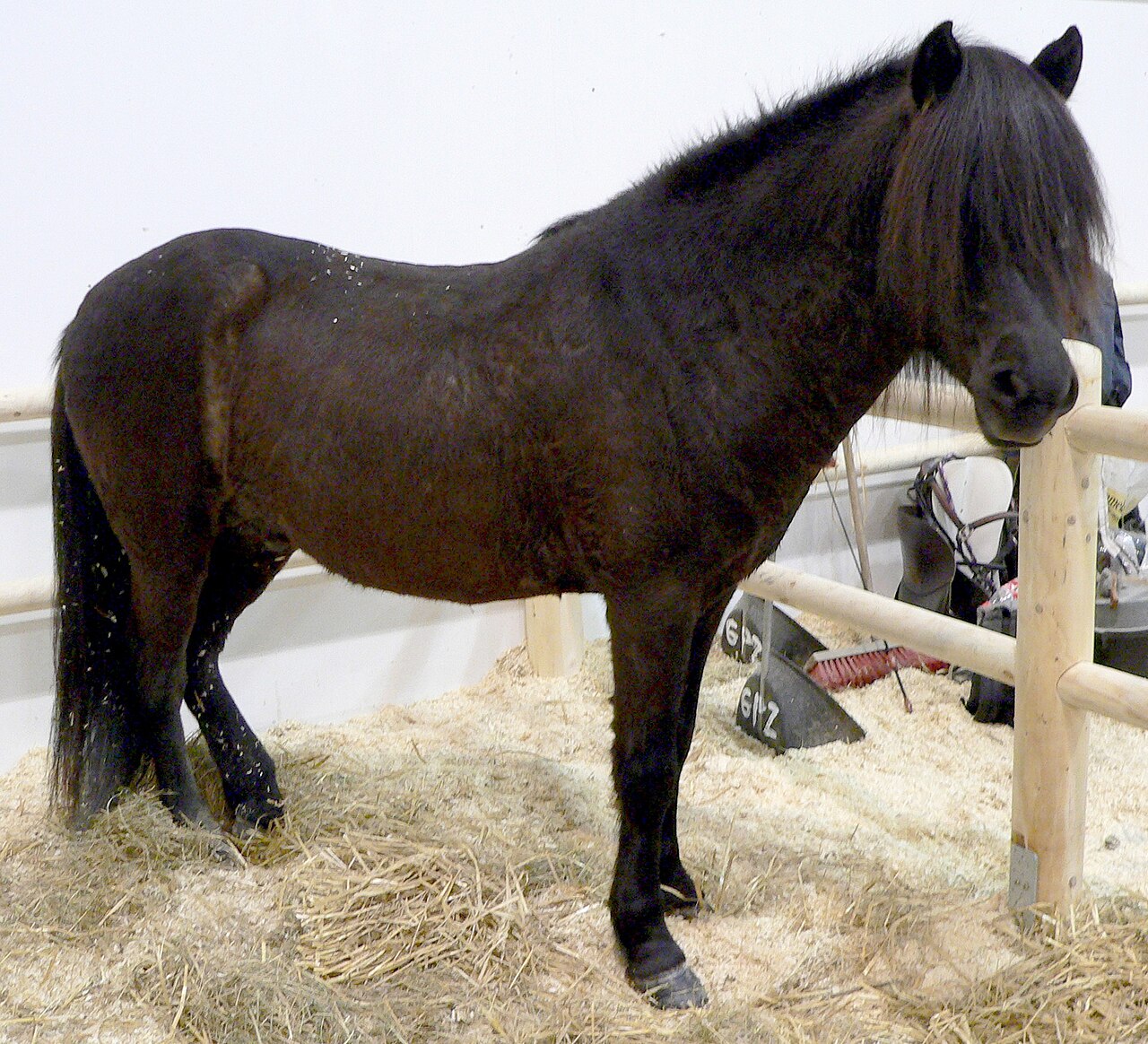
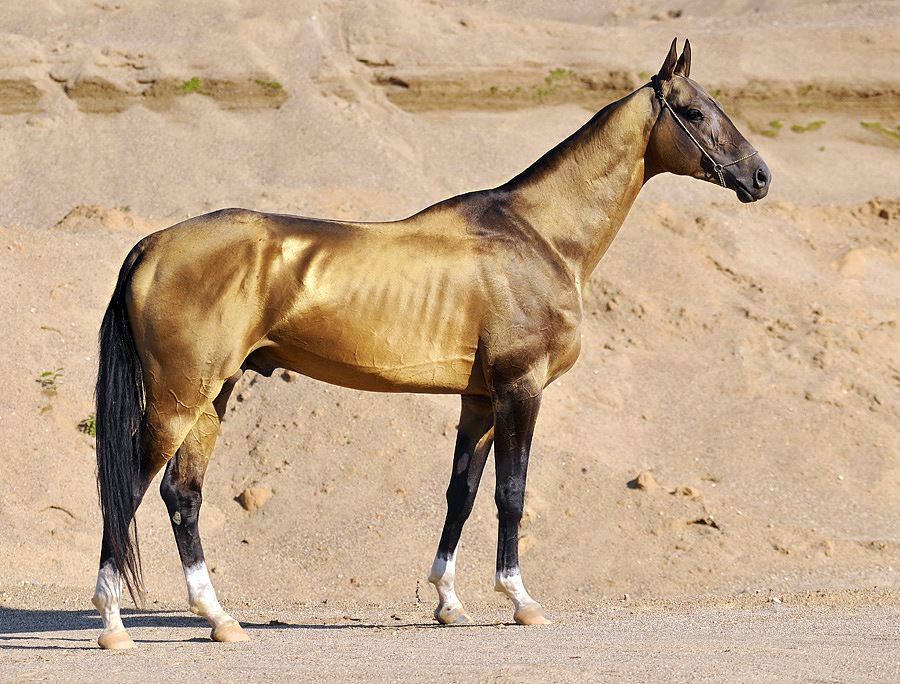
Voir les 810 autres races
- American Indian Horse
- American warmblood
- Amourski
- Anatolien
- Andin
- Angevin
- Anglo-arabe
- Anglo-arabe français
- Anglo-arabe sarde
- Anglo-européen
- Anglo-normand
- Appaloosa
- Appaloosa britannique
- Appaloosa néerlandais
- AraAppaloosa
- Arabe
- Arabe persan
- Arabe polonais
- Arabe syrien
- Arabe égyptien
- Arabe-Barbe
- Arabo-Haflinger
- Arabo-boulonnais
- Arabo-frison
- Aravani
- Ardennais
- Ardennais suédois
- Aréwa
- Asturcón
- Augeron
- Autre que Pur-sang
- Auxois
- Axios
- Aztèque
- BWP
- Bachkir
- Bagual
- Baguio
- Bahr el-Ghazal
- Baise
- Baladi
- Bale
- Balikun
- Baloutche
- Bangladais
- Barbe
- Barbe d'Abaco
- Barbe d'Oran
- Barbe de Constantine
- Bardigiano
- Barock Pinto
- Basuto
- Batak
- Bavarois
- Beberbecker
- Berrichon
- Bhirum
- Bhotia
- Bidet breton
- Blazer
- Bobo
- Boer sud-africain
- Borana
- Bosnien
- Boudienny
- Boulonnais
- Bourbourien
- Bouriate
- Brandebourgeois
- Brandin
- Breton
- Britannique sang-chaud
- Brumby
- Bulgare oriental
- Buohai
- Burguete
- Camargue
- Camarillo white
- Cambodgien
- Campolina
- Canadian pacer
- Canadien
- Carneddau
- Carolina Marsh Tacky
- Carrossier du Yorkshire
- Carrossier noir du Cotentin
- Carélien
- Caspien
- Castilian
- Castillonnais
- Cauchois
- Cayuse
- Chaidamu
- Chakouyi
- Chamurthi
- Charentais
- Charolais
- Chartreux
- Cheju
- Cheval catalan
- Cheval chez les Hmong
- Cheval corse
- Cheval crème
- Cheval d'Auvergne
- Cheval d'Erlenbach
- Cheval de Catria
- Cheval de Corlay
- Cheval de Ferghana
- Cheval de Heck
- Cheval de Megève
- Cheval de Miquelon
- Cheval de Nangchen
- Cheval de Riwoché
- Cheval de dressage français
- Cheval de l'île de Cumberland
- Cheval de l'île de Sable
- Cheval de la Sierra Tarahumara
- Cheval de montagne des Balkans
- Cheval de sport allemand
- Cheval de sport belge
- Cheval de sport brésilien
- Cheval de sport canadien
- Cheval de sport croate
- Cheval de sport espagnol
- Cheval de sport frison
- Cheval de sport polonais
- Cheval de sport suisse
- Cheval des Marquises
- Cheval des Outer Banks
- Cheval des montagnes du Pays basque
- Cheval du Cap
- Cheval du Delta
- Cheval du Haut-Ienisseï
- Cheval du Morvan
- Cheval du Namib
- Cheval du Vercors de Barraquand
- Cheval du plateau persan
- Cheval limousin
- Cheval lorrain
- Cheval marocain de sport
- Cheval miniature américain
- Cheval miniature français
- Cheval navarrin
- Cheval portugais de sport
- Chilien
- Chilote
- Chincoteague
- Chumbivilcas
- Cleveland Bay
- Clydesdale
- Cob Gypsy
- Cob irlandais
- Cob normand
- Comtois
- Conestoga
- Connemara
- Costeño
- Criollo
- Criollo paraguayen
- Criollo uruguayen
- Criollo vénézuélien
- Crioulo
- Crétois
- Curly
- Dales
- Danois sang-chaud
- Darashouri
- Darkhad
- Dartmoor
- Datong
- Demi-sang d'Auvergne
- Demi-sang d'Inde
- Djavakhéti
- Don
- Dongola
- Drum Horse
- Døle
- Dülmen
- Edelbluthaflinger
- Einsiedeln
- Emscherbrücher
- Eriskay
- Erlunchun
- Estonien
- Exmoor
- Falabella
- Feliński
- Fell
- Finlandais
- Finlandais sang-chaud
- Fjord
- Flamand
- Fleuve
- Florida Cracker Horse
- Foutanké
- Fox-trotter du Missouri
- Franches-Montagnes
- Frederiksborg
- Frison
- Frison oriental
- Furioso-North Star
- Féroé
- Galiceno
- Galicien
- Galshar
- Ganzi
- Garrano
- Gayo
- Gelderland
- Georgian Grande
- Gharkawi
- Giara
- Gidran
- Gotland
- Grand Žemaitukas
- Groningen
- Guanzhong
- Guba
- Guizhou
- Guoxia
- Hackney
- Haflinger
- Haguard
- Hanovrien
- Heihe
- Heilongjiang
- Henan
- Henson
- Hequ
- Hessois
- Highland
- Hirzai
- Hispano-Bretón
- Hispano-arabe
- Hokkaïdo washu
- Holsteiner
- Horro
- Huçul
- Hınıs
- Iakoute
- Irish Hobby
- Irish Sport Horse
- Islandais
- Israélien
- Jabe
- Jaca Navarra
- Jaf
- Jata
- Java
- Jianchang
- Jilin
- Jinjiang
- Jinzhou
- Jomud
- Jumli
- Jutland
- KWPN
- Kabardin
- Kachchhi-Sindhit
- Kafa
- Kaimanawa
- Kajlan
- Kalmouk
- Kandachime
- Karabakh
- Karabaïr
- Karacabey
- Karachai
- Karakatchan
- Kathiawari
- Kazakh chinois
- Kentucky Mountain Saddle Horse
- Kerqin
- Kerry bog
- Kiger Mustang
- Kinsky
- Kirghiz
- Kisber Felver
- Kiso
- Kladruber
- Klusak
- Knabstrup
- Konik
- Koto-koli
- Kouznetsk
- Kuda Pacu indonésien
- Kuda Padi
- Kundido
- Kurde
- La Silla
- Landais
- Lavradeiro
- Lehmkuhlener
- Letton
- Lewitzer
- Lichuan
- Liebenthaler
- Lipizzan
- Lippitt Morgan
- Livno
- Lombok
- Losino
- Lundy
- Lusitanien
- Mallorquín
- Malopolski
- Mangalarga marchador
- Mangalarga paulista
- Marajoara
- Maremmien
- Marwari
- Mecklembourgeois
- Merak-Saktenpata
- Merlerault
- Mezen
- Međimurje
- Midilli
- Minahasa
- Mini-Shetland
- Miniature néerlandais
- Minorquin
- Misaki
- Miyako
- Moldave
- Monchina
- Mongol
- Mongol chinois
- Morab
- Morgan
- Morna
- Mountain Pleasure Horse
- Moyle
- Muniqi
- Murgese
- Mustang
- Mustang de Cerbat
- Mustang des monts Pryor
- Mustang espagnol
- Mérens
- Napolitain
- National Show Horse
- New Forest
- Ngua Noi
- Nigérian
- Ningqiang
- Nivernais
- Nokota
- Noma
- Nonius
- Nordestin
- Nordlandshest
- Noriker
- Noriker silésien
- Nouvel Altaï
- Novoalexandrovsk
- Novokirghize
- Ob
- Old English Black
- Oldenbourg
- Orlov-Rostopchin
- Padang
- Paint Horse
- Pampa
- Panje
- Pantaneiro
- Paso Fino
- Paso iberoamericano
- Paso péruvien
- Patibarcino
- Percheron
- Persano
- Pfalz-ardenner
- Pindos
- Pintabian
- Pleven
- Poitevin mulassier
- Polesskaya
- Polo argentin
- Poney Hackney
- Poney brésilien
- Poney classique allemand
- Poney de Birmanie
- Poney de Manipur
- Poney de Monterufoli
- Poney de Terre-Neuve
- Poney de l'Esperia
- Poney de selle allemand
- Poney de selle australien
- Poney de selle suédois
- Poney de sport tchèque
- Poney des Amériques
- Poney des Açores
- Poney des Hébrides
- Poney des Lofoten
- Poney des Mogods
- Poney du Sri Lanka
- Poney français de selle
- Poney indien du lac La Croix
- Poney rustique canadien
- Poney tacheté britannique
- Poney thaïlandais
- Poney tibétain
- Posavina
- Pottok
- Pur-sang
- Pure race espagnole
- Pyrénées catalanes
- Quarab
- Quarter Horse
- Quarter pony
- Retuertas
- Rhodos
- Rhénan sang-chaud
- Rocky Mountain Horse
- Romano della Maremma Laziale
- Rottaler
- Saddlebred
- Salernitano
- Sandalwood
- Sanfratellano
- Sanhe
- Selale
- Selle argentin
- Selle australien
- Selle autrichien
- Selle français
- Selle italien
- Selle suédois
- Selle tchèque
- Selle ukrainien
- Senner
- Serrano
- Shagya
- Shandan
- Shetland
- Shetland américain
- Shire
- Sikang
- Silésien
- Skyros
- Sokólski
- Sorraia
- Soudanais
- Spanish Jennet
- Spanish Norman
- Spiti
- Spotted saddle horse
- Standardbred
- Stock Horse australien
- Strelets
- Suffolk Punch
- Sumbar-Sandel-Arabe
- Sumbawa
- Sunicho
- Suédois du Nord
- Tarāi
- Tawleed
- Tchenaran
- Tchernomor
- Tchéco-morave belge
- Tennessee Walker
- Tersk
- Tieling
- Tiger horse
- Timor
- Tokara
- Tolfetano
- Tonga
- Tori
- Touchine
- Touran
- Touva
- Trait allemand du Sud
- Trait argentin
- Trait australien
- Trait belge
- Trait belge américain
- Trait biélorusse
- Trait crème américain
- Trait de Croatie
- Trait de Rhénanie
- Trait de Saxe-Thuringe
- Trait de la Forêt-Noire
- Trait du Maine
- Trait du Nord
- Trait du Schleswig
- Trait estonien
- Trait hongrois
- Trait irlandais
- Trait italien
- Trait lituanien
- Trait néerlandais
- Trait polonais
- Trait russe
- Trait soviétique
- Trakehner
- Transbaïkal
- Trocha Pura Colombiana
- Trotteur Norfolk
- Trotteur allemand
- Trotteur cubain
- Trotteur d'Orlov
- Trotteur danois
- Trotteur de Ljutomer
- Trotteur espagnol
- Trotteur finlandais sang-chaud
- Trotteur français
- Trotteur italien
- Trotteur russe
- Trotteur scandinave
- Tuigpaard
- Turkoman
- Ujumqin
- Unmol
- Uzunyayla
- Vladimir
- Voronej
- Waler
- Walkaloosa
- Warlander
- Waziri
- Welara
- Welsh
- Welsh A
- Welsh cob
- Welsh de type cob
- Wenshan
- Westphalien
- Wielkopolski
- Wilwal
- Wushen
- Württemberger
- Xiangfen
- Xilinguole
- Xinihe
- Yanqi
- Yili
- Yiwu
- Yonaguni
- Yongning
- Yunnan
- Yushu
- Yuta
- Zakynthos
- Zangersheide
- Zanskari
- Zhangbei
- Zhongdian
- Zweibrücker
- Öland
- Žemaitukas
- Andalou
- Ardennais baltique
- Bucovine
- Cheval de sport estonien
- Cheval de sport roumain
- Cheval du delta du Danube
- Nisaen
- Opole
- Poney roumain
- Single-footing Horse
- Trait roumain
- Viatka
- Windsor Grey
- Banat
- Trotteur roumain
- Hack
- Anglo-barbe
- Bachmat
- Basseri
- Cheval de selle japonais
- Cheval tatar
- Finlandais de type trotteur
- Lincolnshire Dray Horse
- Shetland part-bred allemand
- Sport Horse Breeding of Great Britain
- Trotteur à sang chaud
- Ushi-uma
- Alaca
- Arabe turc
- Baixadeiro
- Barbe de Mantoue
- Bima
- Boer du Cap
- Campeiro
- Canik
- Carrossier du Cap
- Cheval de cirit
- Cheval de la plantation McCurdy
- Cheval de sport hongrois
- Corajoso
- Demi-sang de la Dombes
- Eygue
- Gemlik
- Kurutlu Kaytalı
- M'Bayar
- Malakan
- Narragansett Pacer
- Piquira
- Pur-sang turc
- Puruca
- Rahvan
- Shan
- Thrakya
- Topuğu Kıllı
- Trait bulgare
- Trait picard
- Çamardı Kulası
- Çukurova
- American walking pony
- Andravida
- Anglo-kabarde
- Appenninico
- Arenberg-Nordkirchener
- Avelignese
- Aénos
- Bagzan
- Bajau
- Bali
- Bergmann
- Biłgoraj
- Bornéo
- Bélédougou
- Cabadin
- Calabrais
- Calvinia
- Cherokee
- Cheval de Barouéli
- Cheval de Hegardt et Stroebel
- Cheval de Rila
- Cheval de ban'ei
- Cheval de selle luxembourgeois
- Cheval de sport bulgare
- Cheval des Nez-Percés
- Cheval du Condroz
- Cheval du Karst
- Chickasaw
- Chilkov
- Choctaw
- Chumysh
- Coffin Bay Brumby
- Colorado ranger
- Criollo militar
- Daghestan
- Danubien
- Davertnickel
- Deli de Sumatra
- Deli-Orman
- Deliboz
- Edles Warmblut
- Flores
- Giarab
- Goonhilly
- Halla
- Hodh
- Jargalant
- Jofi
- Kazakh
- Kuningan
- Kushum
- Kustanair
- Lao
- Leutstettener
- Logone
- Lokaï
- Lovets
- M'Par
- Macassar
- Makra
- Mazurien
- Megezh
- Megruli
- Miniature Toy Horse
- Miniature sud-africain
- Montana Traveler
- Morocco spotted horse
- Mossi
- Mugalzhar
- Myangad
- Narym
- Nefza
- Nogaï
- Nooitgedacht
- Oldenbourg danois
- Ondorshil
- Paso cubain
- Paso du Costa Rica
- Pentro
- Petiso argentino
- Petit cheval de selle allemand
- Pinto cubain
- Poney australien
- Poney de l'île de Krk
- Poney de selle belge
- Poney de selle britannique
- Poney de sport danois
- Poney de sport nord-américain
- Poney de sport slovaque
- Poznań
- Priangan
- Purosangue Orientale
- Pénée
- Qatgani
- Racking horse
- Rodope
- Samolaco
- Sang-chaud lourd de Saxe-Thuringe
- Sarcidano
- Saxe-Anhalt
- Selle algérien
- Selle de Thuringe
- Selle slovaque
- Selle slovène
- Selle sud-africain
- Selle uruguayen
- Shirvan
- Siaen
- Siciliano
- Somalien
- Sportaloosa
- Stara Planina
- Sud-africain sang-chaud
- Sugarbush
- Sulphur
- Sztumski
- Tadjik
- Tagaytay
- Taishuh
- Tavda
- Tchouvache
- Tes
- Thessalien
- Tomsk
- Trait de l'Altmark
- Trait hanovrien d'origine Schleswig
- Trait pie américain
- Trait slovène
- Trote y galope
- Trotteur belge
- Trotteur croate
- Trotteur européen
- Ventasso
- Virginia highlander
- Vlaamperd
- Yabu
- Karst
- Minoussinsk
- Morave
- Nanbu
- Petchora
- Poney Appaloosa européen
- Poney de selle polonais
- Tatar
- Kwangok
- Poney d'Inde
- Debao
- Mannois
- Namaqua
- American White Draught Horse
- American spotted paso
- Amyrakikos
- Anglo-Arabe-Barbe
- Anglo-Karachai
- Anglo-arabe espagnol
- Borta
- Bourbonnais
- Bovenlander
- Brantome line
- Buša
- Cavallo del Cicolano
- Chapman
- Cheval d'attelage de Touva
- Cheval de Bisbino
- Cheval de sport japonais
- Cheval domestique de montagne
- Cheval miniature japonais
- Chyanta
- Dawand
- Demi-sang anglais
- Desert Norman Horse
- Glasinacki
- Goklan
- Golden American Saddlebred
- Herati
- Hispano-breton de Cerdagne
- Hutovo-Blato
- Kamchiya
- Kohband
- Leonharder
- Levene
- Mazari
- Nokhorli
- Pahlavan
- Paint Pony
- Podveleski
- Poney de Macédoine
- Poney de sport westphalien
- Poney irlandais
- Poney japonais
- Poney suisse
- Pyongwon
- Qazal
- Sabyol
- Shishan
- Sistani
- Tanghan
- Tattu
- Tchèque sang-froid
- Trotteur baltique
- Yargha
Sources et crédits
Informations provenant de plusieurs sources vérifiées. Dernière mise à jour : .
Mentions de licence
Texte disponible sous licence CC BY-SA 4.0. Il adapte notamment Wikipedia (CC BY-SA): Clay Trotting Horses (Wikipédia, auteurs dans l’historique de l’article).
- Taxonomie : GBIF Backbone Taxonomy (CC BY 4.0)
Détail : Sources et licences.
Discussion (0)
Aucun message pour l’instant. Lancez la discussion sur cette fiche (sources, précisions, débats éditoriaux).
Connectez-vous pour participer à la discussion.