
- Kingdom
- Animalia
- Phylum
- Chordata
- Class
- Mammalia
- Order
- Perissodactyla
- Family
- Equidae
- Genus
- Equus
- Species
- Equus caballus
Overview
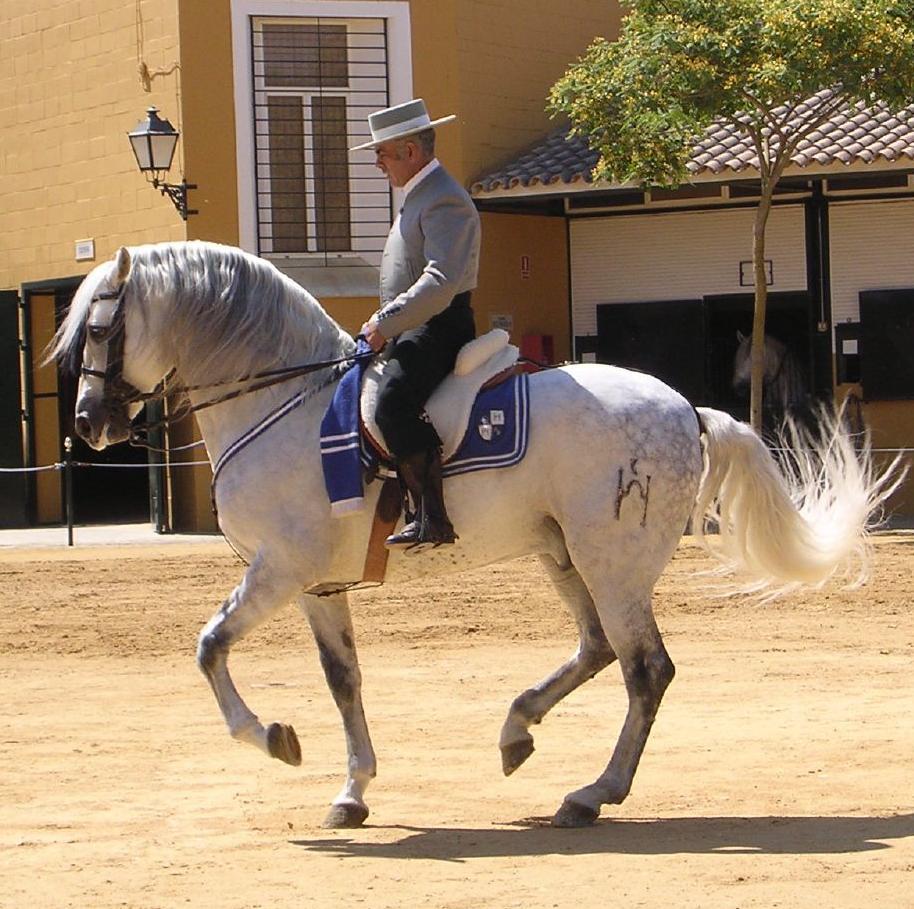
The Andalusian, also known as the Pure Spanish Horse (Pura Raza Española, abbreviated PRE), is a Spanish breed of riding horse from the Iberian Peninsula, where its ancestors have lived for thousands of years. The Andalusian has been recognized as a distinct breed since the 15th century, and its conformation has changed very little over the centuries.
Throughout its history, it has been known for its prowess as a war horse, and was prized by the nobility. The breed was used as a tool of diplomacy by the Spanish government, and kings across Europe rode and owned Spanish horses. During the 19th century, warfare, disease, and crossbreeding reduced herd numbers dramatically, and despite some recovery in the late 19th century, the trend continued into the early 20th century. Exports of Andalusians from Spain were restricted until the 1960s, but the breed has since spread throughout the world, despite its low population. In 2010, more than 185,000 registered Andalusians existed worldwide.
Strongly built, and compact yet elegant, Andalusians have long, thick manes and tails. Their most common coat color is gray, although they can be found in many other colors. They are known for their intelligence, sensitivity, and docility. A sub-strain within the breed known as the Carthusian is considered by breeders to be the purest strain of Andalusian, though no genetic evidence for this claim is known. The strain is still considered separate from the main breed and is preferred by breeders because buyers pay more for horses of Carthusian bloodlines.
Several competing registries are keeping records of horses designated as Andalusian or PRE, but they differ on their definition of the Andalusian and PRE, the purity of various strains of the breed, and the legalities of stud book ownership. At least one lawsuit was in progress as of 2011 to determine the ownership of the Spanish PRE stud book.
The Andalusian is closely related to the Lusitano of Portugal, and has been used to develop many other breeds, especially in Europe and the Americas. Breeds with Andalusian ancestry include many of the warmbloods in Europe, as well as Western Hemisphere breeds such as the Azteca.
Over its centuries of development, the Andalusian breed has been selected for athleticism and stamina. The horses were originally used for classical dressage, driving, bullfighting, and working livestock. Modern Andalusians are used for many equestrian activities, including dressage, show jumping, and driving. The breed is also used extensively in movies, especially historical pictures and fantasy epics.
Characteristics
Andalusians average 15.1 1⁄2 hands (61.5 inches, 156 cm) at the withers; stallions and geldings are typically 512 kilograms (1,129 lb) in weight, while mares average 412 kilograms (908 lb). The Spanish government has set the minimum height for registration in Spain at 15.0 hands (60 inches, 152 cm) for males and 14.3 hands (59 inches, 150 cm) for mares; this standard is followed by the Association of Purebred Spanish Horse Breeders of Spain (Asociación Nacional de Criadores de Caballo de Pura Raza Española) and the Andalusian Horse Association of Australasia. The Spanish legislation also requires that for animals to be approved as either "qualified" or "élite" breeding stock, stallions must stand at least 15.1 hands (61 inches, 155 cm) and mares at least 15 1⁄4 hands (60.25 inches, 153 cm).
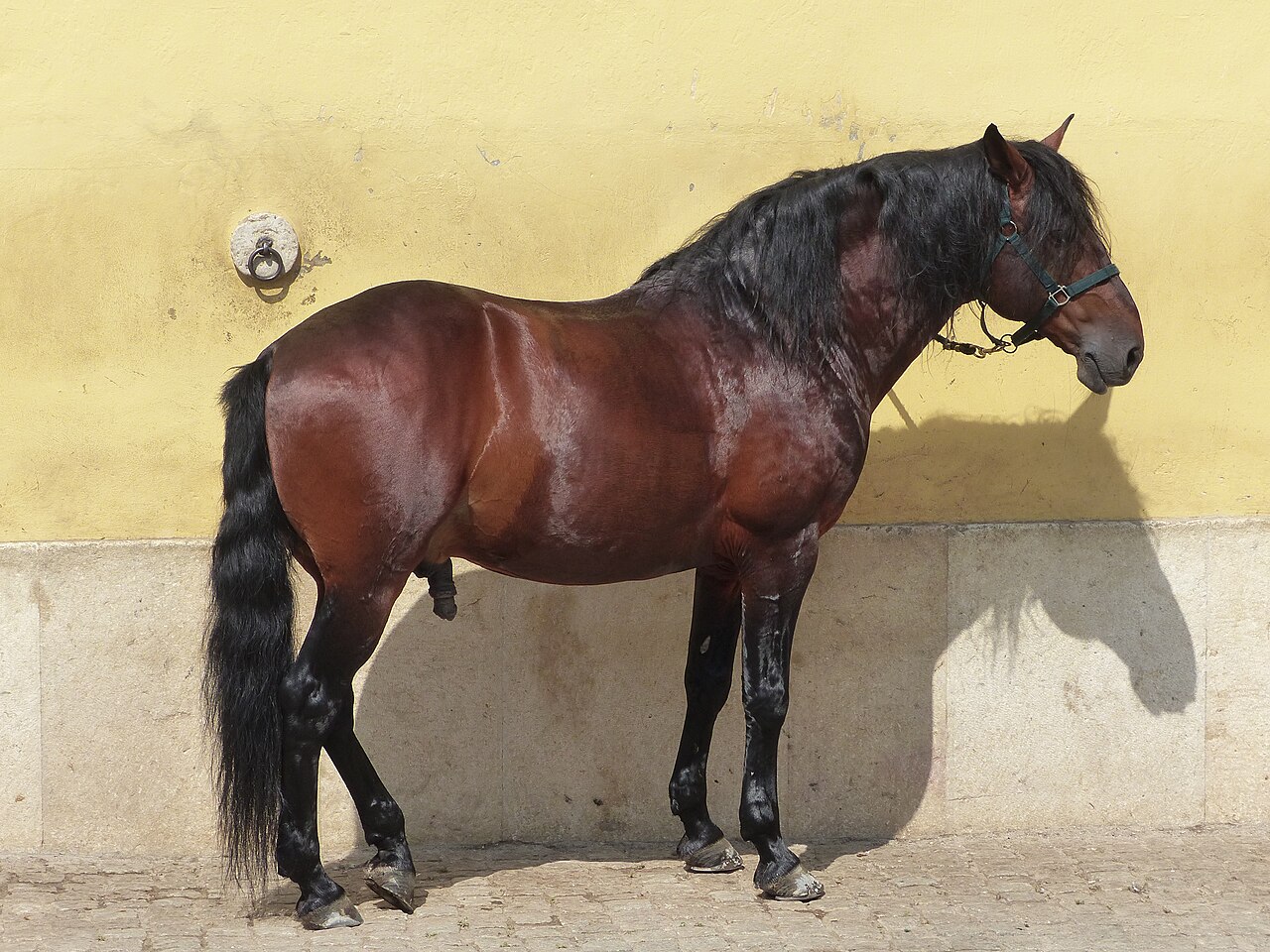
Andalusian horses are elegant and strongly built with a straight or slightly convex profile. Ultra convex and concave profiles are discouraged in the breed and are penalized in breed shows. Necks are long and broad, running to well-defined withers and a massive chest. They have a short back and broad, strong hindquarters with a well-rounded croup. The breed tends to have clean legs, with no propensity for blemishes or injuries, and energetic gaits. The mane and tail are thick and long, but the legs do not have excess feathering. Andalusians tend to be docile, while remaining intelligent and sensitive. When treated with respect, they are quick to learn, responsive, and cooperative.
Two additional characteristics are unique to the Carthusian strain, believed to trace back to the strain's foundation stallion Esclavo. The first is warts under the tail, a trait that Esclavo passed to his offspring and which some breeders felt was necessary to prove that a horse was a member of the Esclavo bloodline. The second characteristic is the occasional presence of "horns", which are frontal bosses, possibly inherited from Asian ancestors. The physical descriptions of the bosses vary, ranging from calcium-like deposits at the temple to small, horn-like protuberances near or behind the ear, but these "horns" are not considered proof of Esclavo descent, unlike the tail warts.
In the past, most coat colors were found, including spotted patterns. Today, most Andalusians are gray or bay; in the US, around 80% of all Andalusians are gray. Of the remaining horses, around 15% are bay and 5% are black, dun, palomino, or chestnut. Other colors, such as buckskin, pearl, and cremello, are rare, but are recognized as allowed colors by registries for the breed.
In the early history of the breed, certain white markings and whorls were considered to be indicators of character and good or bad luck. Horses with white socks on their feet were considered to have good or bad luck, depending on the leg or legs marked. A horse with no white markings at all was considered to be ill-tempered and vice-ridden, while certain facial markings were considered representative of honesty, loyalty, and endurance. Similarly, hair whorls in various places were considered to show good or bad luck, with the most unlucky being in places where the horse could not see them – for example the temples, cheek, shoulder, or heart. Two whorls near the root of the tail were considered a sign of courage and good luck.
The movement of Andalusian horses is extended, elevated, cadenced, and harmonious, with a balance of roundness and forward movement. Poor elevation, irregular tempo, and excessive winging (sideways movement of the legs from the knee down) are discouraged by breed registry standards. Andalusians are known for their agility and their ability to learn difficult moves quickly, such as advanced collection and turns on the haunches. A 2001 study compared the kinematic characteristics of Andalusian, Arabian, and Anglo-Arabian horses while moving at the trot. Andalusians were found to overtrack less (the degree to which the hind foot lands ahead of the front hoof print), but also exhibit greater flexing of both fore and hind joints, movement consistent with the more elevated way of going typically found in this breed. The authors of the study theorized that these characteristics of the breed's trot may contribute to their success as a riding and dressage horse.
A 2008 study found that Andalusians experience ischaemic (reduced blood flow) diseases of the small intestine at a rate significantly higher than other breeds; stallions had higher numbers of inguinal hernias, with risk for oc…
Breed history
Early development
... the noblest horse in the world, the most beautiful that can be. He is of great spirit and of great courage and docile; hath the proudest trot and the best action in his trot, the loftiest gallop, and is the lovingest and gentlest horse, and fittest of all for a king in his day of triumph.
 William Cavendish, the Duke of Newcastle, 1667
The Andalusian horse is descended from the Iberian horses of Spain and Portugal, and derives its name from its place of origin, the Spanish region of Andalusia. Cave paintings show that horses have been present on the Iberian Peninsula as far back as 20,000 to 30,000 BCE. Although Portuguese historian Ruy d'Andrade hypothesized that the ancient Sorraia breed was an ancestor of the Southern Iberian breeds, including the Andalusian, genetic studies using mitochondrial DNA show that the Sorraia is part of a genetic cluster that is largely separated from most Iberian breeds.
Throughout history, the Iberian breeds have been influenced by many different peoples and cultures who occupied Spain, including the Celts, Carthaginians, Romans, various Germanic tribes, and Arabs. The Iberian horse was identified as a talented warhorse as early as 450 BCE. Mitochondrial DNA studies of the modern Andalusian horse of the Iberian Peninsula and Barb horse of North Africa present convincing evidence that both breeds crossed the Strait of Gibraltar and were used for breeding with each other, influencing one another's bloodlines. Thus, the Andalusian may have been the first European "warmblood", a mixture of heavy European and lighter Oriental horses. Some of the earliest written pedigrees in recorded European history were kept by Carthusian monks, beginning in the 13th century. Because they could read and write, thus were able to maintain careful records, monastics were given the responsibility for horse breeding by certain members of the nobility, particularly in Spain. Andalusian stud farms for breeding were formed in the late 15th century in Carthusian monasteries in Jerez, Seville, and Cazalla.
The Carthusians bred powerful, weight-bearing horses in Andalusia for the Crown of Castile, using the finest Spanish Jennets as foundation bloodstock. These horses were a blend of Jennet and warmblood breeding, taller and more powerfully built than the original Jennet. By the 15th century, the Andalusian had become a distinct breed, and was being used to influence the development of other breeds. They were also noted for their use as cavalry horses. Though in the 16th and 17th centuries, Spanish horses had not reached the final form of the modern Andalusian, by 1667 William Cavendish, the Duke of Newcastle, called the Spanish horse of Andalusia the "princes" of the horse world, and reported that they were "unnervingly intelligent". The Iberian horse became known as the "royal horse of Europe" and was seen at many royal courts and riding academies, including those in Austria, Italy, France, and Germany. By the 16th century, during the reigns of Charles V (1500–1558) and Phillip II (1556–1581), Spanish horses were considered the finest in the world. Even in Spain, quality horses were owned mainly by the wealthy. During the 16th century, inflation and an increased demand for harness and cavalry horses drove the price of horses extremely high. The always-expensive Andalusian became even more so, and finding a member of the breed to purchase at any price was often impossible.
Dissemination
Spanish horses also were spread widely as a tool of diplomacy by the government of Spain, which granted both horses and export rights to favored citizens and other royalty. As early as the 15th century, the Spanish horse was widely distributed throughout the Mediterranean, and was known in Northern European countries, despite being less common and more expensive there. As time went on, kings from across Europe, including every French monarch from Francis I to Louis XVI, had equestrian portraits created showing themselves riding Spanish-type horses. The kings of France, including Louis XIII and Louis XIV, especially preferred the Spanish horse; the head groom to Henri IV, Salomon de la Broue, said in 1600, "Comparing the best horses, I give the Spanish horse first place for its perfection, because it is the most beautiful, noble, graceful and courageous". War horses from Spain and Portugal began to be introduced to England in the 12th century, and importation continued through the 15th century…
Naming and registration
Until modern times, horse breeds throughout Europe were known primarily by the name of the region where they were bred. Thus, the original term "Andalusian" simply described the horses of distinct quality that came from Andalusia in Spain. Similarly, the Lusitano, a Portuguese horse very similar to the Andalusian, takes its name from the ancient Roman province of Lusitania, now part of western Spain and most of Portugal.
The Andalusian horse has been known historically as the Iberian Saddle Horse, Iberian War Horse, Spanish Horse, Portuguese, Peninsular, Extremeño, Villanos, Zapata, Zamoranos, Castilian, and Jennet. The Portuguese name refers to what is now the Lusitano, while the Peninsular, Iberian Saddle Horse, and Iberian War Horse names refer to horses from the Iberian Peninsula as a whole. The Extremeño name refers to Spanish horses from the Extremadura province of Spain and the Zapata or Zapatero name to horses that come from the Zapata family stud. The Villano name has occasionally been applied to modern Andalusians, but originally referred to heavy, crossbred horses from the mountains north of Jaen. The Carthusian horse, also known as the Carthusian-Andalusian and the Cartujano, is a subtype of the Andalusian, rather than a distinct breed in itself. A common nickname for the Andalusian is the "Horse of Kings". Some sources state that the Andalusian and the Lusitano are genetically the same, differing only in the country of origin of individual horses.
In many areas today, the breeding, showing, and registration of the Andalusian and Lusitano are controlled by the same registries. One example of this is the International Andalusian and Lusitano Horse Association (IALHA), claimed to have the largest membership of any Andalusian registering organization. Other organizations, such as the Association of Purebred Spanish Horse Breeders of Spain (Asociación Nacional de Criadores de Caballo de Pura Raza Española, ANCCE), use the term pura raza española or PRE to describe the true Spanish horse, and claim sole authority to officially register and issue documentation for PRE horses, both in Spain and anywhere else in the world. In most of the world, the terms "Andalusian" and "PRE" are considered one and the same breed, but the public position of the ANCCE is that terms such as "Andalusian" and "Iberian horse" refer only to crossbreds, which the ANCCE considers to be horses that lack quality and purity, without official documentation or registration from official Spanish Stud Book.
In Australasia, the Australasia Andalusian Association registers Andalusians (which the registry considers an interchangeable term for PRE), Australian Andalusians, and partbred Andalusians. They share responsibility for the Purebred Iberian Horse (an Andalusian/Lusitano cross) with the Lusitano Association of Australasia. In the Australian registry, various levels of crossbred horses are known. A first-cross Andalusian is a crossbreed that is 50% Andalusian, while a second-cross Andalusian is the result of crossing a purebred Andalusian with a first-cross horse, resulting in a horse of 75% Andalusian blood. A third-cross horse, also known by the registry as an Australian Andalusian, is when a second-cross individual is mated with a foundation Andalusian mare. This sequence is known as a "breeding up" program by the registry.
Pure Spanish Horse (PRE)
The name pura raza española (PRE), usually rendered in English "Pure Spanish Horse" (not a literal translation) is the term used by the ANCCE, a private organization, and the Ministry of Agriculture of Spain. The ANCCE uses neither the term "Andalusian" nor "Iberian horse", and only registers horses that have certain recognized bloodlines. In addition, all breeding stock must undergo an evaluation process. The ANCCE was founded in 1972. Spain's Ministry of Agriculture recognizes the ANCCE as the representing entity for PRE breeders and owners across the globe, as well as the administrator of the breed stud book. ANCCE functions as the international parent association for all breeders worldwide who record their horses as PRE. For example, the United States PRE association is affiliated with ANCCE, follows ANCCE rules, and has a wholly separate governance system from the IALHA.
A second group, the Foundation for the Pure Spanish Horse or PRE Mundial, has begun another PRE registry as an alternative to the ANCCE. This new registry claims that all of their registered horses trace back to th…
Uses
The Andalusian breed over the centuries has been consistently selected for athleticism. In the 17th century, referring to multikilometer races, Cavendish said, "They were so much faster than all other horses known at that time that none was ever seen to come close to them, even in the many remarkable races that were run." In 1831, horses at five years old were expected to be able to gallop, without changing pace, four or five leagues, about 12 to 15 miles (19 to 24 km). By 1925, the Portuguese military expected horses to "cover 40 km over uneven terrain at a minimum speed of 10 km/h, and to gallop a flat course of 8 km at a minimum speed of 800 metres per minute carrying a weight of at least 70 kg", and the Spanish military had similar standards.
From the beginning of their history, Andalusians have been used for both riding and driving. Among the first horses used for classical dressage, they still compete in international competition in dressage today. At the 2002 World Equestrian Games, two Andalusians were on the bronze medal-winning Spanish dressage team, which went on to take the silver medal at the 2004 Summer Olympics. Today, the breed is increasingly being selectively bred for increased aptitude in classical dressage. Historically, however, they were also used as stock horses, especially suited to working with Iberian bulls, known for their aggressive temperaments. They were and still are known for their use in mounted bull fighting. Mares were traditionally used for la trilla, the Spanish process of threshing grain practiced until the 1960s. Mares, some pregnant or with foals at their side, spent full days trotting over the grain. As a traditional farming practice, it also served as a test of endurance, hardiness, and willingness for the maternal Andalusian lines.
Andalusians today are also used for show jumping, western pleasure, and other horse show events. As of 2025, the mascot of the University of Southern California is an Andalusian named Traveler IX. The dramatic appearance of the Andalusian horse, with its arched neck, muscular build, and energetic gaits, has made it a popular breed to use in film, particularly in historical and fantasy epics. Andalusians have been present in films ranging from Gladiator to Interview with the Vampire, and Lara Croft Tomb Raider: The Cradle of Life to Braveheart. The horses have also been seen in such fantasy epics as The Lord of the Rings film trilogy, King Arthur, and The Chronicles of Narnia: The Lion, the Witch and the Wardrobe. In 2006, a rearing Andalusian stallion, ridden by Spanish conquistador Don Juan de Oñate, was recreated as the largest bronze equine in the world. Measuring 11 m (36 ft) high, the statue currently stands in El Paso, Texas.
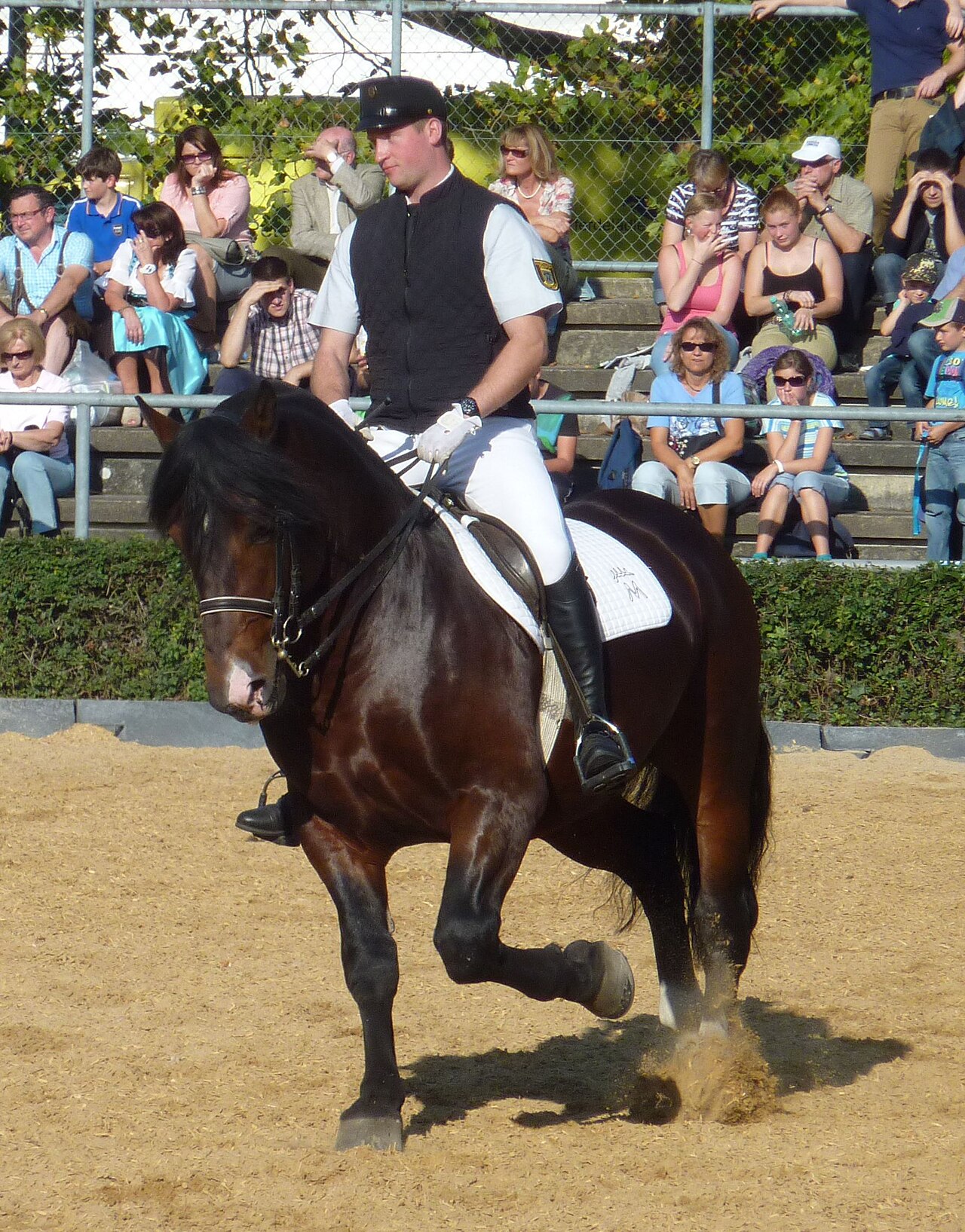
Performing dressage
In the bullfighting ring
Demonstration of doma vaquera riding
A "cobra" of Andalusians
External links
Listen to this article (9 minutes)
This audio file is based on a version from this article dated 12 December 2011 (2011-12-12), and does not reflect subsequent edits.
(Audio help · More spoken articles)
Wikimedia Commons has media related to:
Andalusian horse (category)
- International Andalusian & Lusitano Horse Association
- United States P.R.E. Association
- The Foundation for the Pure Spanish Horse
- Australasia Andalusian Association; Archived 2014-02-20 at the Wayback Machine
- National Association of Purebred Spanish Horse Breeders of Spain
- •
Animals
People
Equipment
- Estoc
- Montera
- Muleta
- Traje de luces
Organizations
Media
- Films
- Books
- L'Écho taurin
- Mexican Hayride (musical)
- The Story of Ferdinand
- Ferdinand the Bull (film)
- Ferdinand (film)
Related
- Bull wrestling
- Bovine sports
- Bous al carrer
- Camel wrestling
- Combat de Reines
- Rodeo
- Category
- • • • • •
Gallery
Ajouter des photos
Partagez vos photos de cette espèce (jusqu'à 20 à la fois) : elles sont vérifiées automatiquement, puis publiées.
Autres races de l'espèce (822)
Espèce : Cheval
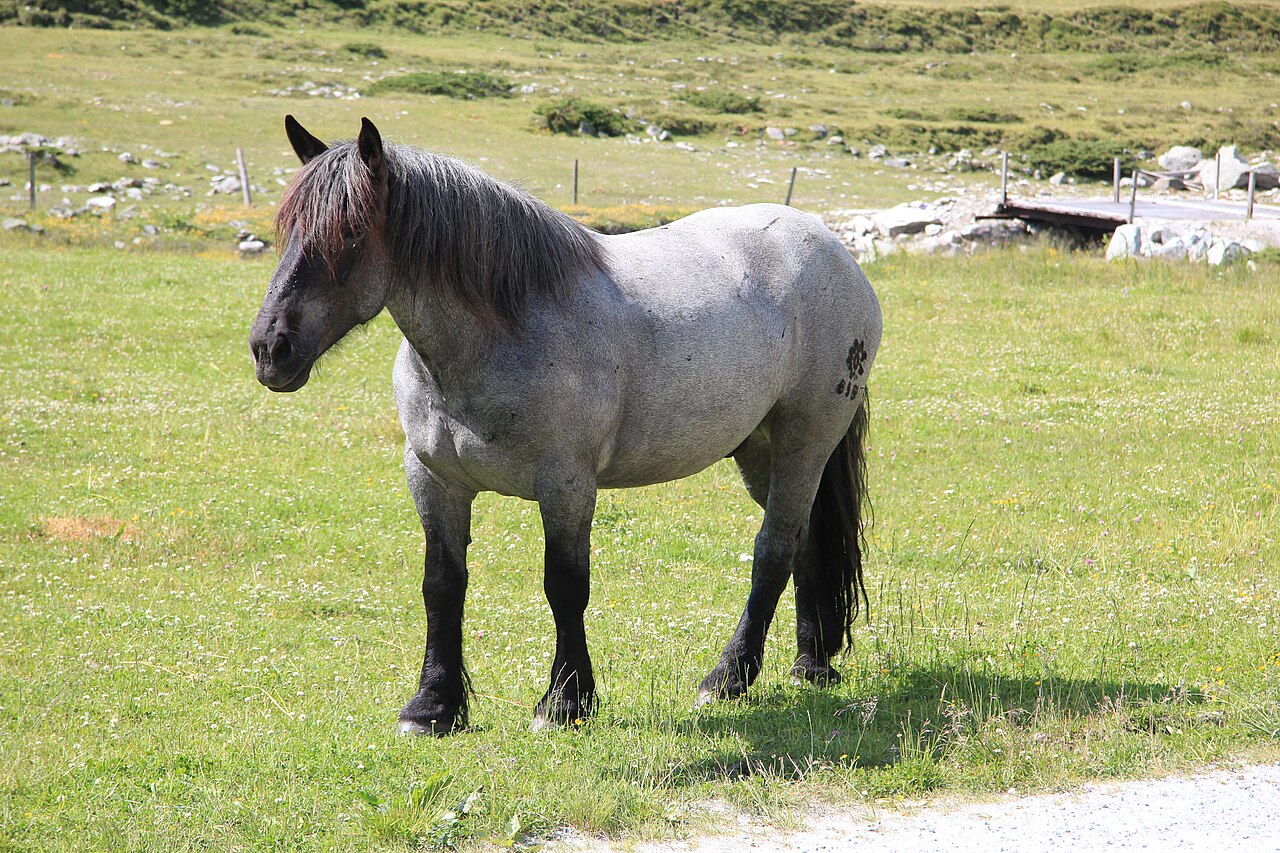
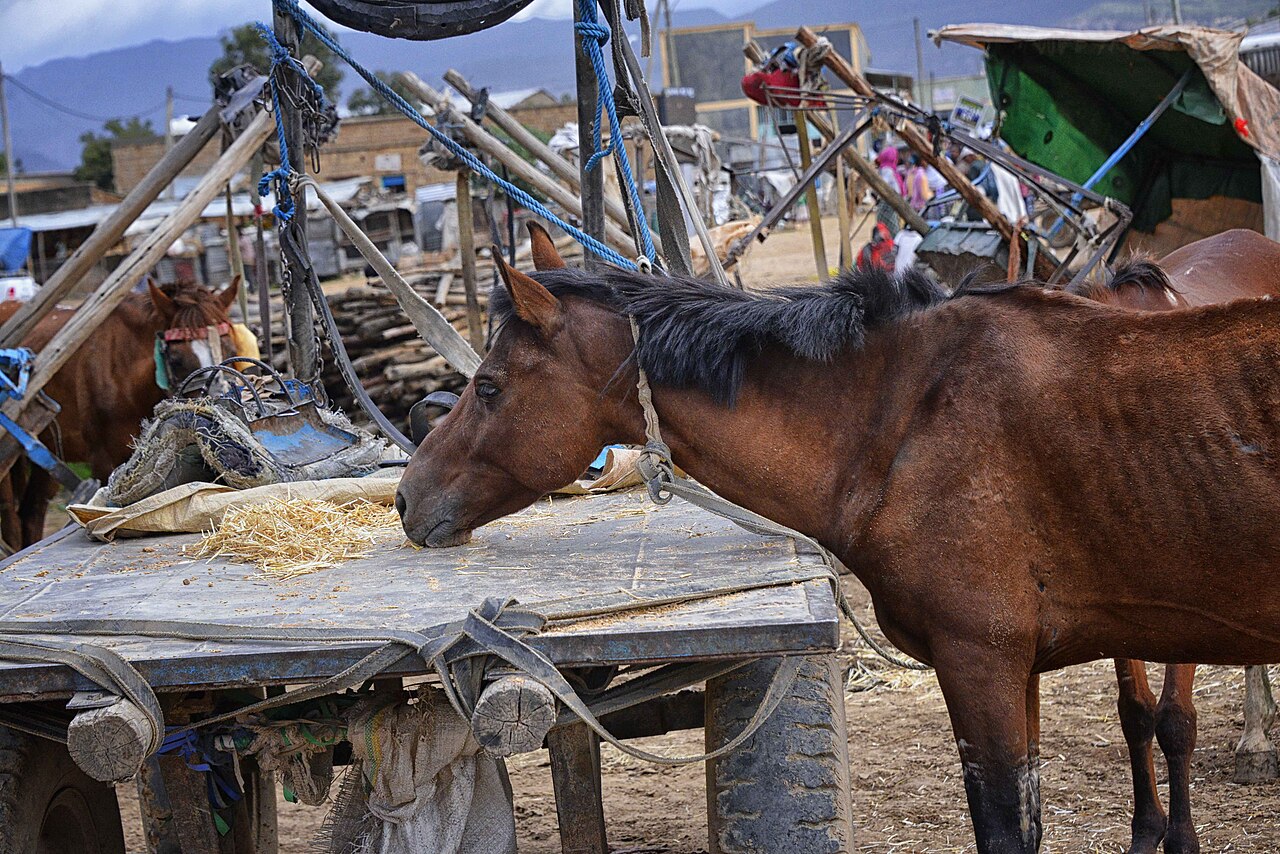
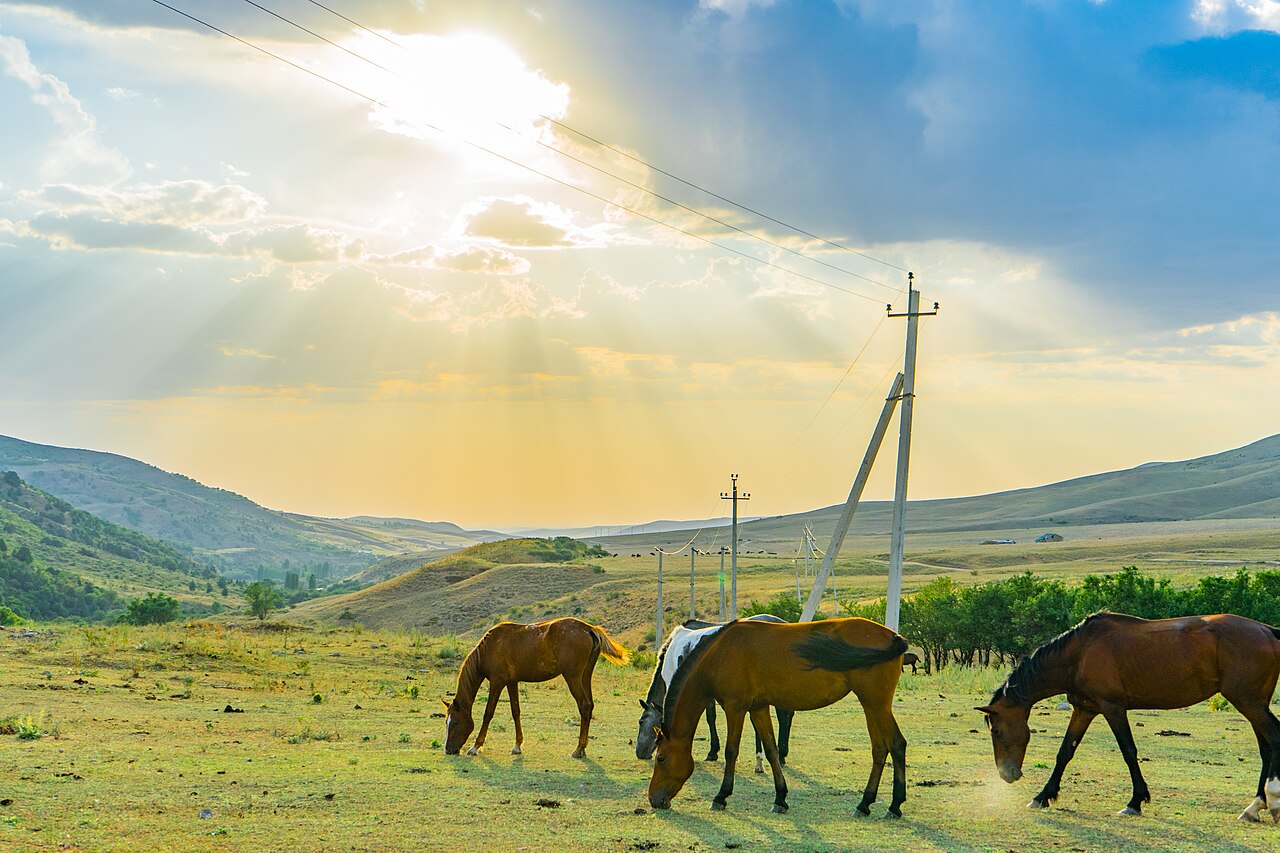
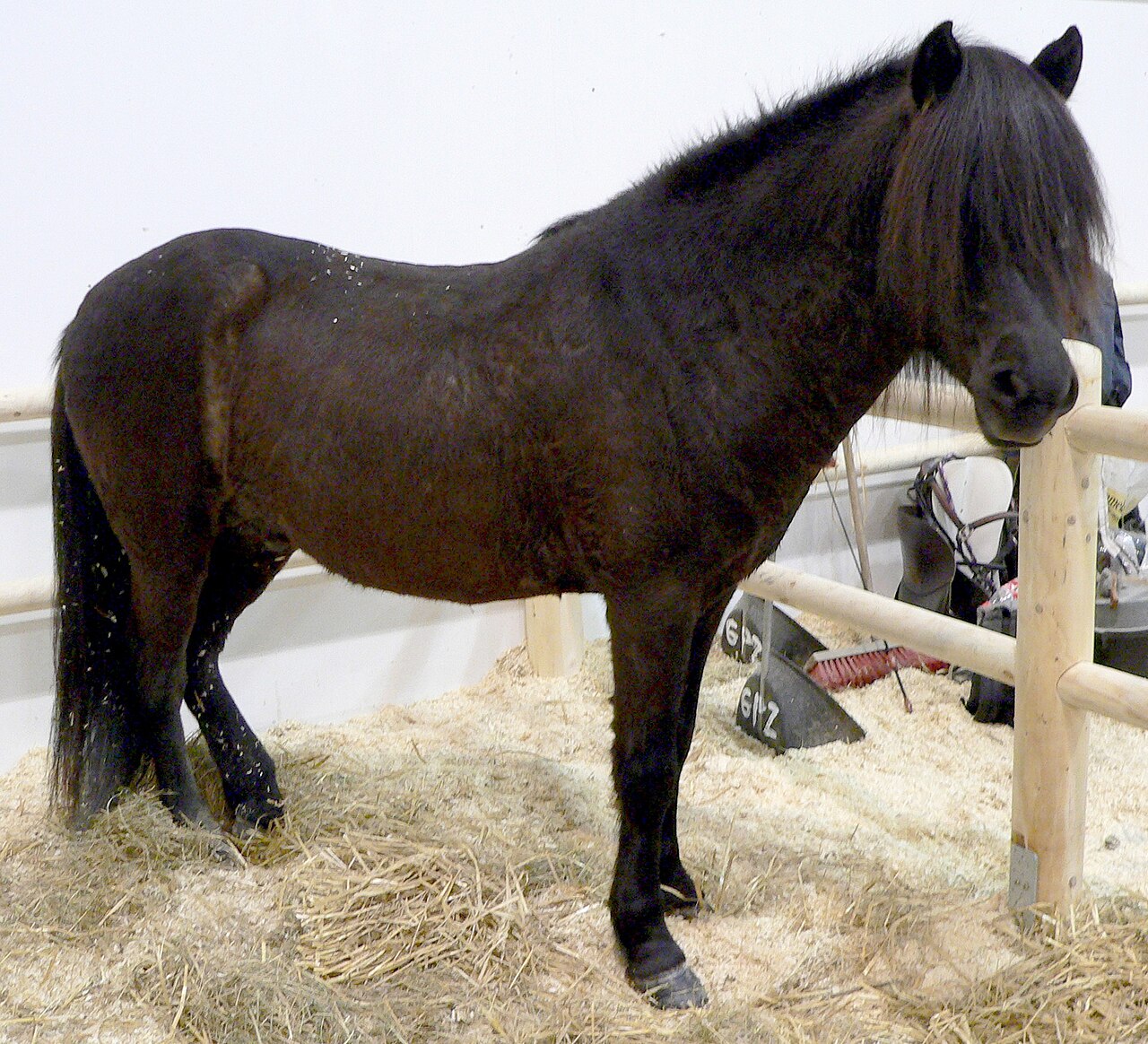
Voir les 810 autres races
- American Indian Horse
- American warmblood
- Amourski
- Anatolien
- Andin
- Angevin
- Anglo-arabe
- Anglo-arabe français
- Anglo-arabe sarde
- Anglo-européen
- Anglo-normand
- Appaloosa
- Appaloosa britannique
- Appaloosa néerlandais
- AraAppaloosa
- Arabe
- Arabe persan
- Arabe polonais
- Arabe syrien
- Arabe égyptien
- Arabe-Barbe
- Arabo-Haflinger
- Arabo-boulonnais
- Arabo-frison
- Aravani
- Ardennais
- Ardennais suédois
- Aréwa
- Asturcón
- Augeron
- Autre que Pur-sang
- Auxois
- Axios
- Aztèque
- BWP
- Bachkir
- Bagual
- Baguio
- Bahr el-Ghazal
- Baise
- Baladi
- Bale
- Balikun
- Baloutche
- Bangladais
- Barbe
- Barbe d'Abaco
- Barbe d'Oran
- Barbe de Constantine
- Bardigiano
- Barock Pinto
- Basuto
- Batak
- Bavarois
- Beberbecker
- Berrichon
- Bhirum
- Bhotia
- Bidet breton
- Blazer
- Bobo
- Boer sud-africain
- Borana
- Bosnien
- Boudienny
- Boulonnais
- Bourbourien
- Bouriate
- Brandebourgeois
- Brandin
- Breton
- Britannique sang-chaud
- Brumby
- Bulgare oriental
- Buohai
- Burguete
- Camargue
- Camarillo white
- Cambodgien
- Campolina
- Canadian pacer
- Canadien
- Carneddau
- Carolina Marsh Tacky
- Carrossier du Yorkshire
- Carrossier noir du Cotentin
- Carélien
- Caspien
- Castilian
- Castillonnais
- Cauchois
- Cayuse
- Chaidamu
- Chakouyi
- Chamurthi
- Charentais
- Charolais
- Chartreux
- Cheju
- Cheval catalan
- Cheval chez les Hmong
- Cheval corse
- Cheval crème
- Cheval d'Auvergne
- Cheval d'Erlenbach
- Cheval de Catria
- Cheval de Corlay
- Cheval de Ferghana
- Cheval de Heck
- Cheval de Megève
- Cheval de Miquelon
- Cheval de Nangchen
- Cheval de Riwoché
- Cheval de dressage français
- Cheval de l'île de Cumberland
- Cheval de l'île de Sable
- Cheval de la Sierra Tarahumara
- Cheval de montagne des Balkans
- Cheval de sport allemand
- Cheval de sport belge
- Cheval de sport brésilien
- Cheval de sport canadien
- Cheval de sport croate
- Cheval de sport espagnol
- Cheval de sport frison
- Cheval de sport polonais
- Cheval de sport suisse
- Cheval des Marquises
- Cheval des Outer Banks
- Cheval des montagnes du Pays basque
- Cheval du Cap
- Cheval du Delta
- Cheval du Haut-Ienisseï
- Cheval du Morvan
- Cheval du Namib
- Cheval du Vercors de Barraquand
- Cheval du plateau persan
- Cheval limousin
- Cheval lorrain
- Cheval marocain de sport
- Cheval miniature américain
- Cheval miniature français
- Cheval navarrin
- Cheval portugais de sport
- Chilien
- Chilote
- Chincoteague
- Chumbivilcas
- Cleveland Bay
- Clydesdale
- Cob Gypsy
- Cob irlandais
- Cob normand
- Comtois
- Conestoga
- Connemara
- Costeño
- Criollo
- Criollo paraguayen
- Criollo uruguayen
- Criollo vénézuélien
- Crioulo
- Crétois
- Curly
- Dales
- Danois sang-chaud
- Darashouri
- Darkhad
- Dartmoor
- Datong
- Demi-sang d'Auvergne
- Demi-sang d'Inde
- Djavakhéti
- Don
- Dongola
- Drum Horse
- Døle
- Dülmen
- Edelbluthaflinger
- Einsiedeln
- Emscherbrücher
- Eriskay
- Erlunchun
- Estonien
- Exmoor
- Falabella
- Feliński
- Fell
- Finlandais
- Finlandais sang-chaud
- Fjord
- Flamand
- Fleuve
- Florida Cracker Horse
- Foutanké
- Fox-trotter du Missouri
- Franches-Montagnes
- Frederiksborg
- Frison
- Frison oriental
- Furioso-North Star
- Féroé
- Galiceno
- Galicien
- Galshar
- Ganzi
- Garrano
- Gayo
- Gelderland
- Georgian Grande
- Gharkawi
- Giara
- Gidran
- Gotland
- Grand Žemaitukas
- Groningen
- Guanzhong
- Guba
- Guizhou
- Guoxia
- Hackney
- Haflinger
- Haguard
- Hanovrien
- Heihe
- Heilongjiang
- Henan
- Henson
- Hequ
- Hessois
- Highland
- Hirzai
- Hispano-Bretón
- Hispano-arabe
- Hokkaïdo washu
- Holsteiner
- Horro
- Huçul
- Hınıs
- Iakoute
- Irish Hobby
- Irish Sport Horse
- Islandais
- Israélien
- Jabe
- Jaca Navarra
- Jaf
- Jata
- Java
- Jianchang
- Jilin
- Jinjiang
- Jinzhou
- Jomud
- Jumli
- Jutland
- KWPN
- Kabardin
- Kachchhi-Sindhit
- Kafa
- Kaimanawa
- Kajlan
- Kalmouk
- Kandachime
- Karabakh
- Karabaïr
- Karacabey
- Karachai
- Karakatchan
- Kathiawari
- Kazakh chinois
- Kentucky Mountain Saddle Horse
- Kerqin
- Kerry bog
- Kiger Mustang
- Kinsky
- Kirghiz
- Kisber Felver
- Kiso
- Kladruber
- Klusak
- Knabstrup
- Konik
- Koto-koli
- Kouznetsk
- Kuda Pacu indonésien
- Kuda Padi
- Kundido
- Kurde
- La Silla
- Landais
- Lavradeiro
- Lehmkuhlener
- Letton
- Lewitzer
- Lichuan
- Liebenthaler
- Lipizzan
- Lippitt Morgan
- Livno
- Lombok
- Losino
- Lundy
- Lusitanien
- Mallorquín
- Malopolski
- Mangalarga marchador
- Mangalarga paulista
- Marajoara
- Maremmien
- Marwari
- Mecklembourgeois
- Merak-Saktenpata
- Merlerault
- Mezen
- Međimurje
- Midilli
- Minahasa
- Mini-Shetland
- Miniature néerlandais
- Minorquin
- Misaki
- Miyako
- Moldave
- Monchina
- Mongol
- Mongol chinois
- Morab
- Morgan
- Morna
- Mountain Pleasure Horse
- Moyle
- Muniqi
- Murgese
- Mustang
- Mustang de Cerbat
- Mustang des monts Pryor
- Mustang espagnol
- Mérens
- Napolitain
- National Show Horse
- New Forest
- Ngua Noi
- Nigérian
- Ningqiang
- Nivernais
- Nokota
- Noma
- Nonius
- Nordestin
- Nordlandshest
- Noriker
- Noriker silésien
- Nouvel Altaï
- Novoalexandrovsk
- Novokirghize
- Ob
- Old English Black
- Oldenbourg
- Orlov-Rostopchin
- Padang
- Paint Horse
- Pampa
- Panje
- Pantaneiro
- Paso Fino
- Paso iberoamericano
- Paso péruvien
- Patibarcino
- Percheron
- Persano
- Pfalz-ardenner
- Pindos
- Pintabian
- Pleven
- Poitevin mulassier
- Polesskaya
- Polo argentin
- Poney Hackney
- Poney brésilien
- Poney classique allemand
- Poney de Birmanie
- Poney de Manipur
- Poney de Monterufoli
- Poney de Terre-Neuve
- Poney de l'Esperia
- Poney de selle allemand
- Poney de selle australien
- Poney de selle suédois
- Poney de sport tchèque
- Poney des Amériques
- Poney des Açores
- Poney des Hébrides
- Poney des Lofoten
- Poney des Mogods
- Poney du Sri Lanka
- Poney français de selle
- Poney indien du lac La Croix
- Poney rustique canadien
- Poney tacheté britannique
- Poney thaïlandais
- Poney tibétain
- Posavina
- Pottok
- Pur-sang
- Pure race espagnole
- Pyrénées catalanes
- Quarab
- Quarter Horse
- Quarter pony
- Retuertas
- Rhodos
- Rhénan sang-chaud
- Rocky Mountain Horse
- Romano della Maremma Laziale
- Rottaler
- Saddlebred
- Salernitano
- Sandalwood
- Sanfratellano
- Sanhe
- Selale
- Selle argentin
- Selle australien
- Selle autrichien
- Selle français
- Selle italien
- Selle suédois
- Selle tchèque
- Selle ukrainien
- Senner
- Serrano
- Shagya
- Shandan
- Shetland
- Shetland américain
- Shire
- Sikang
- Silésien
- Skyros
- Sokólski
- Sorraia
- Soudanais
- Spanish Jennet
- Spanish Norman
- Spiti
- Spotted saddle horse
- Standardbred
- Stock Horse australien
- Strelets
- Suffolk Punch
- Sumbar-Sandel-Arabe
- Sumbawa
- Sunicho
- Suédois du Nord
- Tarāi
- Tawleed
- Tchenaran
- Tchernomor
- Tchéco-morave belge
- Tennessee Walker
- Tersk
- Tieling
- Tiger horse
- Timor
- Tokara
- Tolfetano
- Tonga
- Tori
- Touchine
- Touran
- Touva
- Trait allemand du Sud
- Trait argentin
- Trait australien
- Trait belge
- Trait belge américain
- Trait biélorusse
- Trait crème américain
- Trait de Croatie
- Trait de Rhénanie
- Trait de Saxe-Thuringe
- Trait de la Forêt-Noire
- Trait du Maine
- Trait du Nord
- Trait du Schleswig
- Trait estonien
- Trait hongrois
- Trait irlandais
- Trait italien
- Trait lituanien
- Trait néerlandais
- Trait polonais
- Trait russe
- Trait soviétique
- Trakehner
- Transbaïkal
- Trocha Pura Colombiana
- Trotteur Norfolk
- Trotteur allemand
- Trotteur cubain
- Trotteur d'Orlov
- Trotteur danois
- Trotteur de Ljutomer
- Trotteur espagnol
- Trotteur finlandais sang-chaud
- Trotteur français
- Trotteur italien
- Trotteur russe
- Trotteur scandinave
- Tuigpaard
- Turkoman
- Ujumqin
- Unmol
- Uzunyayla
- Vladimir
- Voronej
- Waler
- Walkaloosa
- Warlander
- Waziri
- Welara
- Welsh
- Welsh A
- Welsh cob
- Welsh de type cob
- Wenshan
- Westphalien
- Wielkopolski
- Wilwal
- Wushen
- Württemberger
- Xiangfen
- Xilinguole
- Xinihe
- Yanqi
- Yili
- Yiwu
- Yonaguni
- Yongning
- Yunnan
- Yushu
- Yuta
- Zakynthos
- Zangersheide
- Zanskari
- Zhangbei
- Zhongdian
- Zweibrücker
- Öland
- Žemaitukas
- Ardennais baltique
- Bucovine
- Cheval de sport estonien
- Cheval de sport roumain
- Cheval du delta du Danube
- Nisaen
- Opole
- Poney roumain
- Single-footing Horse
- Trait roumain
- Viatka
- Windsor Grey
- Banat
- Trotteur roumain
- Hack
- Anglo-barbe
- Bachmat
- Basseri
- Cheval de selle japonais
- Cheval tatar
- Finlandais de type trotteur
- Lincolnshire Dray Horse
- Shetland part-bred allemand
- Sport Horse Breeding of Great Britain
- Trotteur à sang chaud
- Ushi-uma
- Alaca
- Arabe turc
- Baixadeiro
- Barbe de Mantoue
- Bima
- Boer du Cap
- Campeiro
- Canik
- Carrossier du Cap
- Cheval de cirit
- Cheval de la plantation McCurdy
- Cheval de sport hongrois
- Corajoso
- Demi-sang de la Dombes
- Eygue
- Gemlik
- Kurutlu Kaytalı
- M'Bayar
- Malakan
- Narragansett Pacer
- Piquira
- Pur-sang turc
- Puruca
- Rahvan
- Shan
- Thrakya
- Topuğu Kıllı
- Trait bulgare
- Trait picard
- Çamardı Kulası
- Çukurova
- American walking pony
- Andravida
- Anglo-kabarde
- Appenninico
- Arenberg-Nordkirchener
- Avelignese
- Aénos
- Bagzan
- Bajau
- Bali
- Bergmann
- Biłgoraj
- Bornéo
- Bélédougou
- Cabadin
- Calabrais
- Calvinia
- Cherokee
- Cheval de Barouéli
- Cheval de Hegardt et Stroebel
- Cheval de Rila
- Cheval de ban'ei
- Cheval de selle luxembourgeois
- Cheval de sport bulgare
- Cheval des Nez-Percés
- Cheval du Condroz
- Cheval du Karst
- Chickasaw
- Chilkov
- Choctaw
- Chumysh
- Coffin Bay Brumby
- Colorado ranger
- Criollo militar
- Daghestan
- Danubien
- Davertnickel
- Deli de Sumatra
- Deli-Orman
- Deliboz
- Edles Warmblut
- Flores
- Giarab
- Goonhilly
- Halla
- Hodh
- Jargalant
- Jofi
- Kazakh
- Kuningan
- Kushum
- Kustanair
- Lao
- Leutstettener
- Logone
- Lokaï
- Lovets
- M'Par
- Macassar
- Makra
- Mazurien
- Megezh
- Megruli
- Miniature Toy Horse
- Miniature sud-africain
- Montana Traveler
- Morocco spotted horse
- Mossi
- Mugalzhar
- Myangad
- Narym
- Nefza
- Nogaï
- Nooitgedacht
- Oldenbourg danois
- Ondorshil
- Paso cubain
- Paso du Costa Rica
- Pentro
- Petiso argentino
- Petit cheval de selle allemand
- Pinto cubain
- Poney australien
- Poney de l'île de Krk
- Poney de selle belge
- Poney de selle britannique
- Poney de sport danois
- Poney de sport nord-américain
- Poney de sport slovaque
- Poznań
- Priangan
- Purosangue Orientale
- Pénée
- Qatgani
- Racking horse
- Rodope
- Samolaco
- Sang-chaud lourd de Saxe-Thuringe
- Sarcidano
- Saxe-Anhalt
- Selle algérien
- Selle de Thuringe
- Selle slovaque
- Selle slovène
- Selle sud-africain
- Selle uruguayen
- Shirvan
- Siaen
- Siciliano
- Somalien
- Sportaloosa
- Stara Planina
- Sud-africain sang-chaud
- Sugarbush
- Sulphur
- Sztumski
- Tadjik
- Tagaytay
- Taishuh
- Tavda
- Tchouvache
- Tes
- Thessalien
- Tomsk
- Trait de l'Altmark
- Trait hanovrien d'origine Schleswig
- Trait pie américain
- Trait slovène
- Trote y galope
- Trotteur belge
- Trotteur croate
- Trotteur européen
- Ventasso
- Virginia highlander
- Vlaamperd
- Yabu
- Clay Trotting
- Karst
- Minoussinsk
- Morave
- Nanbu
- Petchora
- Poney Appaloosa européen
- Poney de selle polonais
- Tatar
- Kwangok
- Poney d'Inde
- Debao
- Mannois
- Namaqua
- American White Draught Horse
- American spotted paso
- Amyrakikos
- Anglo-Arabe-Barbe
- Anglo-Karachai
- Anglo-arabe espagnol
- Borta
- Bourbonnais
- Bovenlander
- Brantome line
- Buša
- Cavallo del Cicolano
- Chapman
- Cheval d'attelage de Touva
- Cheval de Bisbino
- Cheval de sport japonais
- Cheval domestique de montagne
- Cheval miniature japonais
- Chyanta
- Dawand
- Demi-sang anglais
- Desert Norman Horse
- Glasinacki
- Goklan
- Golden American Saddlebred
- Herati
- Hispano-breton de Cerdagne
- Hutovo-Blato
- Kamchiya
- Kohband
- Leonharder
- Levene
- Mazari
- Nokhorli
- Pahlavan
- Paint Pony
- Podveleski
- Poney de Macédoine
- Poney de sport westphalien
- Poney irlandais
- Poney japonais
- Poney suisse
- Pyongwon
- Qazal
- Sabyol
- Shishan
- Sistani
- Tanghan
- Tattu
- Tchèque sang-froid
- Trotteur baltique
- Yargha
Sources et crédits
Informations provenant de plusieurs sources vérifiées. Dernière mise à jour : .
Crédits photos (10)
- Photo : Kartäuser-Pferd_Andalucia,_Spain_Private_Tour_-_June_2007.jpg: Fresco Tours derivative work: Nordlicht8 · CC BY 2.0 · via Wikimedia Commons
- Photo : Just chaos · CC BY 2.0 · via Wikimedia Commons
- Photo : BS Thurner Hof · CC BY-SA 3.0 · via Wikimedia Commons
- Photo : BS Thurner Hof · CC BY-SA 3.0 · via Wikimedia Commons
- Photo : BS Thurner Hof · CC BY-SA 3.0 · via Wikimedia Commons
- Photo : BS Thurner Hof · CC BY-SA 3.0 · via Wikimedia Commons
- Photo : BS Thurner Hof · CC BY-SA 3.0 · via Wikimedia Commons
- Photo : Just chaos · CC BY 2.0 · via Wikimedia Commons
- Photo : Лена · Domaine public · via Wikimedia Commons
- Photo : Juan R. Lascorz · CC BY-SA 4.0 · via Wikimedia Commons
Mentions de licence
Texte disponible sous licence CC BY-SA 4.0. Il adapte notamment Wikipedia (CC BY-SA): Andalusian horse (Wikipédia, auteurs dans l’historique de l’article).
- Taxonomie : GBIF Backbone Taxonomy (CC BY 4.0)
Détail : Sources et licences.
Discussion (0)
Aucun message pour l’instant. Lancez la discussion sur cette fiche (sources, précisions, débats éditoriaux).
Connectez-vous pour participer à la discussion.