
Twist-necked turtle
Platemys platycephala
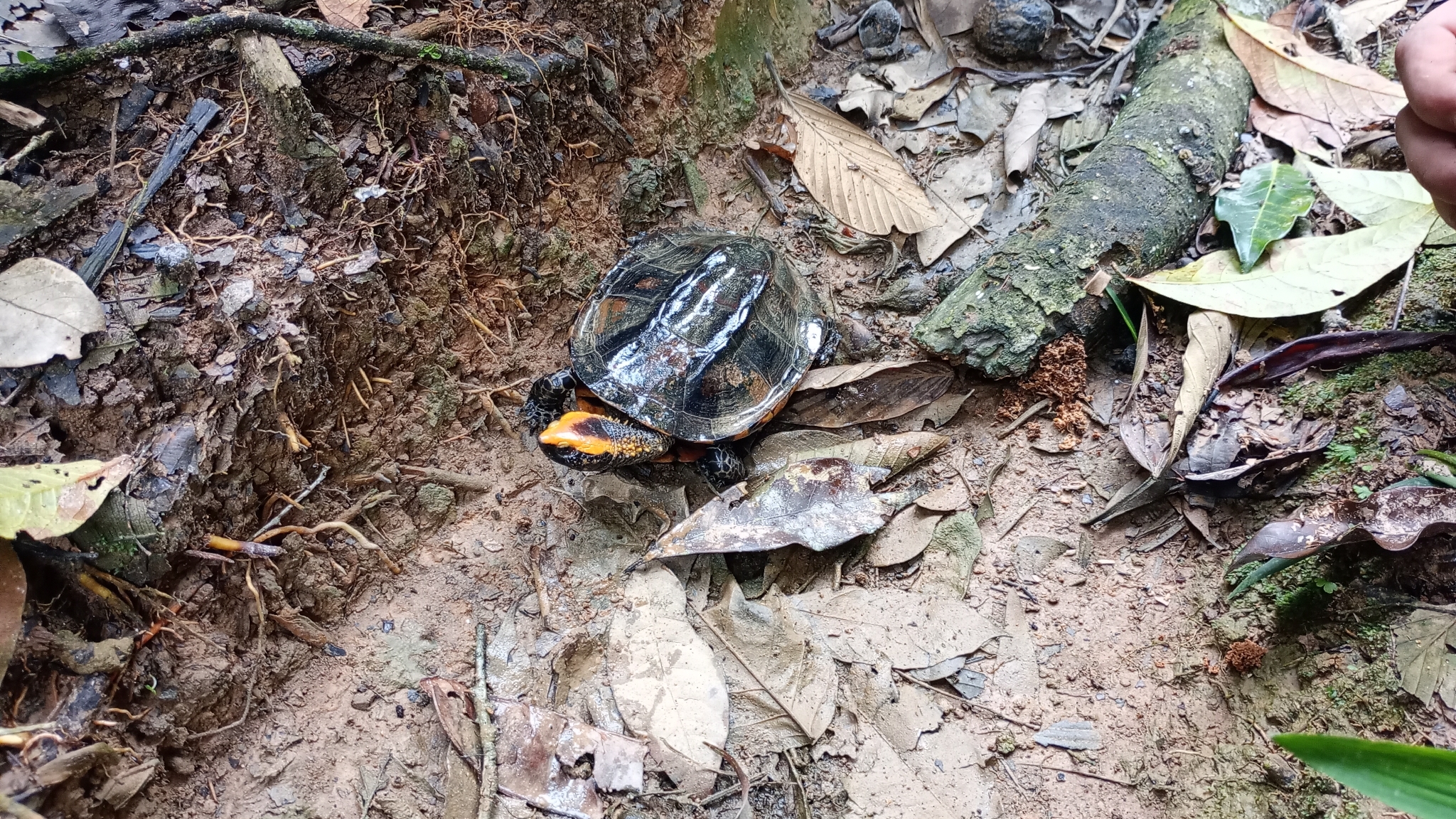
The twist-necked turtle (Platemys platycephala), also known as the flat-headed turtle, is distributed widely across northern South America.
- Kingdom
- Animalia
- Phylum
- Chordata
- Class
- Testudines
- Family
- Chelidae
- Genus
- Platemys
- Species
- Platemys platycephala
Description
The twist-necked turtle (Platemys platycephala), also known as the flat-headed turtle, is distributed widely across northern South America. Twist-necked turtles have extremely flat shells that help them hide from predators under rocks and debris. When threatened, this turtle withdraws by twisting its head into its shell. P. platycephala is the only species of the genus Platemys and occurs in northern and central South America. Platemys platycephala means "flat turtle, flat-head" and accurately describes the structure of the head and shell. This species inhabits shallow creek beds and frequently forages on the floor of the Amazon rainforest for insects, amphibians, and mollusks. Camouflage, head and body shape, and advanced sexual anatomy allow this species of turtle to effectively populate much of South America. Mating occurs during rainy months (March–December) and egg deposit occurs during dry months (January–March). Males have been known to behave aggressively towards females during copulation by squirting water from nostrils and biting. A few genomic studies show mosaicism exists among populations of the twist-necked turtle in Suriname. In other words, diploid and triploid levels exist among individuals at this particular location. No threats have been reported for this species and the International Union for Conservation of Nature does not have a current listing. Lack of human consumption due to the species' small size and its wide range explain why scientists are not concerned about this turtle species.
Gallery
Ajouter des photos
Partagez vos photos de cette espèce (jusqu'à 20 à la fois) : elles sont vérifiées automatiquement, puis publiées.
Répartition
Occurrences observées (données GBIF). Les zones hors aire d'origine peuvent indiquer une présence introduite ou invasive.
Sources et crédits
Informations provenant de plusieurs sources vérifiées. Dernière mise à jour : .
Crédits photos (6)
- Photo : Gianlucca Monteverde C. · CC BY-NC 4.0 · via GBIF
- Photo : @amiestanley · CC BY-NC 4.0 · via iNaturalist
- Photo : @turpialparitzica · CC BY-NC 4.0 · via iNaturalist
- Photo : Vincent A. Vos (@vincentvosriberalta) · CC BY 4.0 · via iNaturalist
- Photo : Fernando Mateos-González (@bioblogo) · CC BY-NC 4.0 · via iNaturalist
- Photo : Vincent A. Vos (@vincentvosriberalta) · CC BY 4.0 · via iNaturalist
Mentions de licence
Texte disponible sous licence CC BY-SA 4.0. Il adapte notamment Wikipedia (CC BY-SA) : Twist-necked turtle (Wikipédia, auteurs dans l’historique de l’article).
- Taxonomie : GBIF Backbone Taxonomy (CC BY 4.0)
- Carte : occurrences GBIF, fond © contributeurs OpenStreetMap (ODbL)
Détail : Sources et licences.
Discussion (0)
Aucun message pour l’instant. Lancez la discussion sur cette fiche (sources, précisions, débats éditoriaux).
Connectez-vous pour participer à la discussion.