
Black soft-shell turtle
Nilssonia nigricans
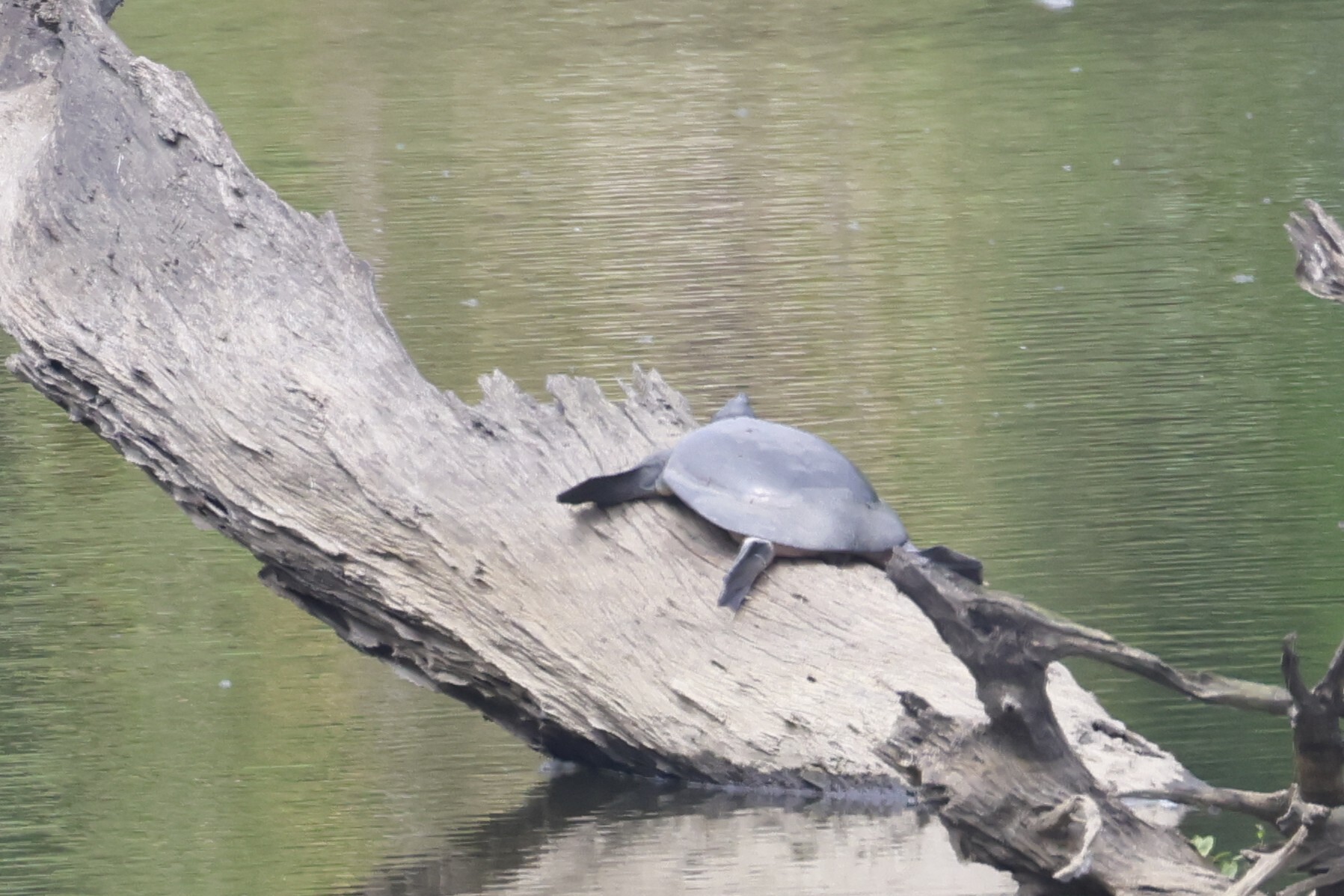
The black softshell turtle or Bostami turtle or Mohan (Nilssonia nigricans), previously placed in genus Aspideretes, is a species of freshwater turtle found in India (Assam, Tripura and West Bengal) and Bangladesh (Chittagong and Sylhet).
- Kingdom
- Animalia
- Phylum
- Chordata
- Class
- Testudines
- Family
- Trionychidae
- Genus
- Nilssonia
- Species
- Nilssonia nigricans
Description
The black softshell turtle or Bostami turtle or Mohan (Nilssonia nigricans), previously placed in genus Aspideretes, is a species of freshwater turtle found in India (Assam, Tripura and West Bengal) and Bangladesh (Chittagong and Sylhet). It was long believed to consist of inbred individuals of the Indian softshell turtle (N. gangetica) or the Indian peacock softshell turtle (N. hurum), but while it is a close relative of the latter, it is a distinct species. In the 1800s, it was believed these turtles were brought from Iran to Chittagong shrine pond by Hazrat Bayezid Bostami. This turtles that he had brought to this pond were treated as sacred and respected by the public. It was also believed by following local tales related to the turtle, about the turtles once being Jinns (a mythological creature in Islam). Previously declared extinct by the International Union for Conservation of Nature in 2002, these turtles were found still to exist in a temple's pond called the Hayagriva Madhava Temple located in Assam, and in Kalyan Sagar lake in Tripura Sundari Temple in Udaipur, Tripura, India. Through conservation methods and protection of the species, some of these turtles can be found today throughout the wild, and scientists and environmental biologists are continuing to work hard to preserve this endangered species and their natural habitat. Their mitogenome represents relatedness to 19 other species of the Testudines. Nilssonia nigricans is the sister species of Nilssonia formosa.
Gallery
Ajouter des photos
Partagez vos photos de cette espèce (jusqu'à 20 à la fois) : elles sont vérifiées automatiquement, puis publiées.
Répartition
Occurrences observées (données GBIF). Les zones hors aire d'origine peuvent indiquer une présence introduite ou invasive.
Sources et crédits
Informations provenant de plusieurs sources vérifiées. Dernière mise à jour : .
Crédits photos (6)
- Photo : andregeelhoed · CC BY-NC 4.0 · via GBIF
- Photo : @arpitadutta · CC BY-NC 4.0 · via iNaturalist
- Photo : @wvclarke · CC BY-NC 4.0 · via iNaturalist
- Photo : Md Jahir Rayhan (@moth_rayhan) · CC BY-NC 4.0 · via iNaturalist
- Photo : Abdul Karim (@iamkarim) · CC BY-NC 4.0 · via iNaturalist
- Photo : Rofikul Islam (@birdinghimalayas) · CC BY-NC 4.0 · via iNaturalist
Mentions de licence
Texte disponible sous licence CC BY-SA 4.0. Il adapte notamment Wikipedia (CC BY-SA) : Black softshell turtle (Wikipédia, auteurs dans l’historique de l’article).
- Taxonomie : GBIF Backbone Taxonomy (CC BY 4.0)
- Carte : occurrences GBIF, fond © contributeurs OpenStreetMap (ODbL)
- Statut de conservation : Liste rouge de l'UICN, via Wikidata (CC0)
Détail : Sources et licences.
Discussion (0)
Aucun message pour l’instant. Lancez la discussion sur cette fiche (sources, précisions, débats éditoriaux).
Connectez-vous pour participer à la discussion.