
Forest cobra
Naja melanoleuca
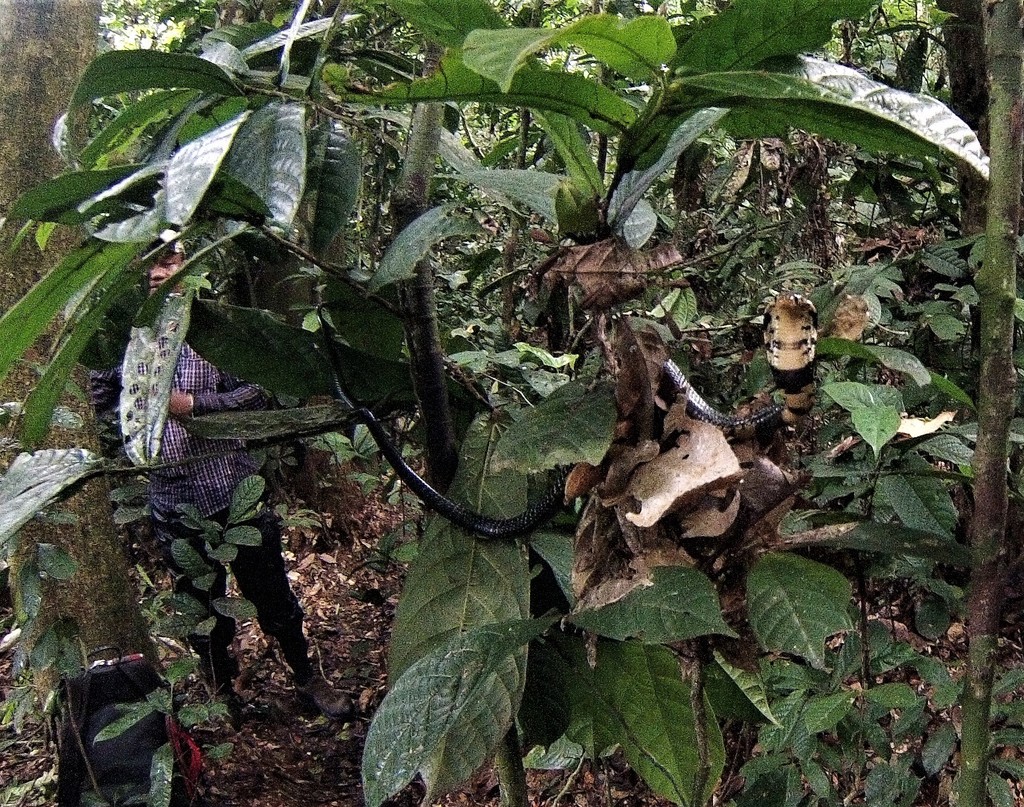
The forest cobra (Naja melanoleuca), also commonly called the black cobra and the black and white-lipped cobra, is a species of highly venomous snake in the family Elapidae.
- Kingdom
- Animalia
- Phylum
- Chordata
- Class
- Squamata
- Family
- Elapidae
- Genus
- Naja
- Species
- Naja melanoleuca
Description
The forest cobra (Naja melanoleuca), also commonly called the black cobra and the black and white-lipped cobra, is a species of highly venomous snake in the family Elapidae. The species is native to Africa, mostly the central and western parts of the continent. It is the largest true cobra species with a record length of 3.2 metres (10 feet 6 inches). Although it prefers lowland forest and moist savanna habitats, this cobra is highly adaptable and can be found in drier climates within its geographical range. It is a very capable swimmer and is often considered to be semi-aquatic. The forest cobra is a generalist in its feeding habits, having a highly varied diet: anything from large insects to small mammals and other reptiles. This species is alert, nervous and is considered to be a medically significant snake. When cornered or molested, it will assume the typical cobra warning posture by raising its fore body off the ground, spreading a narrow hood, and hissing loudly. Bites to humans are less common than from other African cobras due to various factors, though a bite from this species is a life-threatening emergency.
Gallery
Ajouter des photos
Partagez vos photos de cette espèce (jusqu'à 20 à la fois) : elles sont vérifiées automatiquement, puis publiées.
Répartition
Occurrences observées (données GBIF). Les zones hors aire d'origine peuvent indiquer une présence introduite ou invasive.
Sources et crédits
Informations provenant de plusieurs sources vérifiées. Dernière mise à jour : .
Crédits photos (8)
- Photo : Daniel Alempijevic (@dalempijevic1) · CC BY-NC 4.0 · via iNaturalist
- Photo : @gmerveillet · CC BY-NC 4.0 · via iNaturalist
- Photo : Hafiz Abdullahi Adam (@hafiz_a_a) · CC BY-NC 4.0 · via iNaturalist
- Photo : Yorick Van Hoef (@yorickvh) · CC BY-NC 4.0 · via iNaturalist
- Photo : @ayodeleoluwatoyin · CC BY-NC 4.0 · via iNaturalist
- Photo : Babajide Agboola (@agboola) · CC BY-NC 4.0 · via iNaturalist
- Photo : Dérozier Violette (@violettederozier) · CC BY-NC 4.0 · via iNaturalist
- Photo : Jacob C. Cooper (@laniarius) · CC BY-NC 4.0 · via iNaturalist
Mentions de licence
Texte disponible sous licence CC BY-SA 4.0. Il adapte notamment Wikipedia (CC BY-SA) : Forest cobra (Wikipédia, auteurs dans l’historique de l’article).
- Taxonomie : GBIF Backbone Taxonomy (CC BY 4.0)
- Carte : occurrences GBIF, fond © contributeurs OpenStreetMap (ODbL)
- Statut de conservation : Liste rouge de l'UICN, via Wikidata (CC0)
Détail : Sources et licences.
Discussion (0)
Aucun message pour l’instant. Lancez la discussion sur cette fiche (sources, précisions, débats éditoriaux).
Connectez-vous pour participer à la discussion.