
Lepidodactylus tepukapili
Lepidodactylus tepukapili
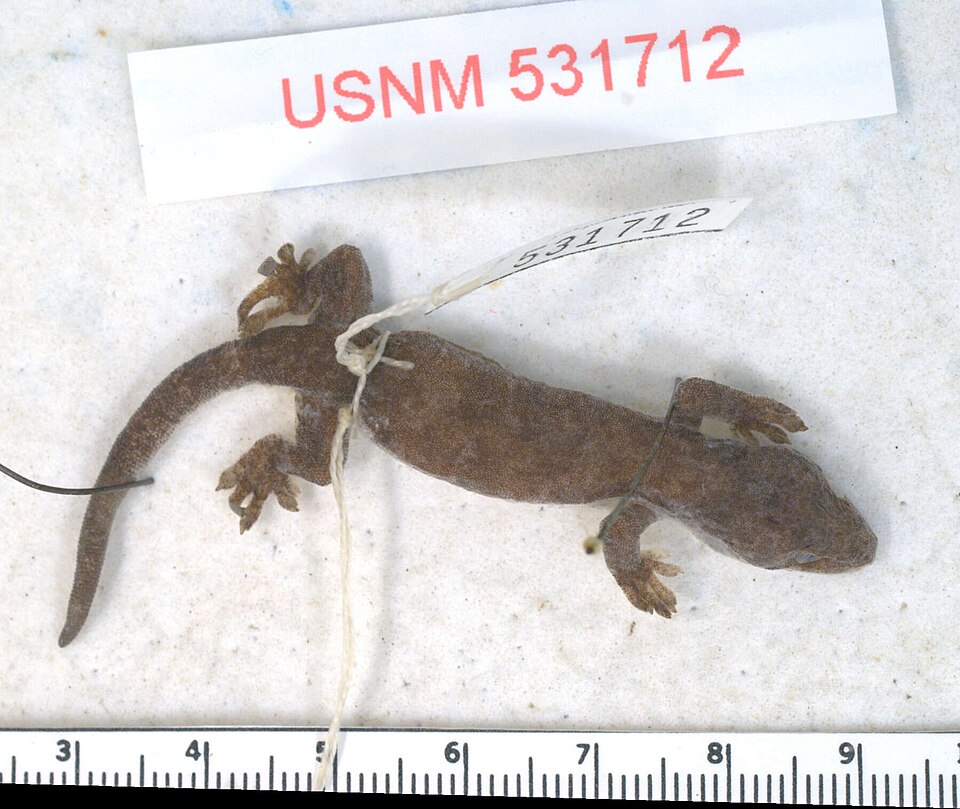
Lepidodactylus tepukapili is a species of gecko, which is known as the Tuvalu forest gecko and is known in the Tuvaluan language as moko or pili.
- Kingdom
- Animalia
- Phylum
- Chordata
- Class
- Squamata
- Family
- Gekkonidae
- Genus
- Lepidodactylus
- Species
- Lepidodactylus tepukapili
Description
Lepidodactylus tepukapili is a species of gecko, which is known as the Tuvalu forest gecko and is known in the Tuvaluan language as moko or pili. It is the only recorded vertebrate that is endemic to Tuvalu. It has been located on Fuagea (also called Fuakea) and on Tepuka. Lepidodactylus tepukapili's naming is based upon the Tuvaluan language words for "small lizard" and the island of Tepuka, where specimens were first discovered. In 2021, the IUCN published its assessment of the Tuvalu forest gecko, classifying it as Critically Endangered due to the ongoing threat of sea-level rise, as related to anthropogenic climate change. The two small low-lying islands on which it occurs average just 2 metres above sea level. IUCN Red List.
Ajouter des photos
Partagez vos photos de cette espèce (jusqu'à 20 à la fois) : elles sont vérifiées automatiquement, puis publiées.
Répartition
Occurrences observées (données GBIF). Les zones hors aire d'origine peuvent indiquer une présence introduite ou invasive.
Sources et crédits
Informations provenant de plusieurs sources vérifiées. Dernière mise à jour : .
Crédits photos (1)
- Photo : Welch, Jenna L. · CC0 (domaine public)
Mentions de licence
Texte disponible sous licence CC BY-SA 4.0. Il adapte notamment Wikipedia (CC BY-SA) : Lepidodactylus tepukapili (Wikipédia, auteurs dans l’historique de l’article).
- Taxonomie : GBIF Backbone Taxonomy (CC BY 4.0)
- Carte : occurrences GBIF, fond © contributeurs OpenStreetMap (ODbL)
- Statut de conservation : Liste rouge de l'UICN, via Wikidata (CC0)
Détail : Sources et licences.
Discussion (0)
Aucun message pour l’instant. Lancez la discussion sur cette fiche (sources, précisions, débats éditoriaux).
Connectez-vous pour participer à la discussion.