
Common House Gecko
Hemidactylus frenatus
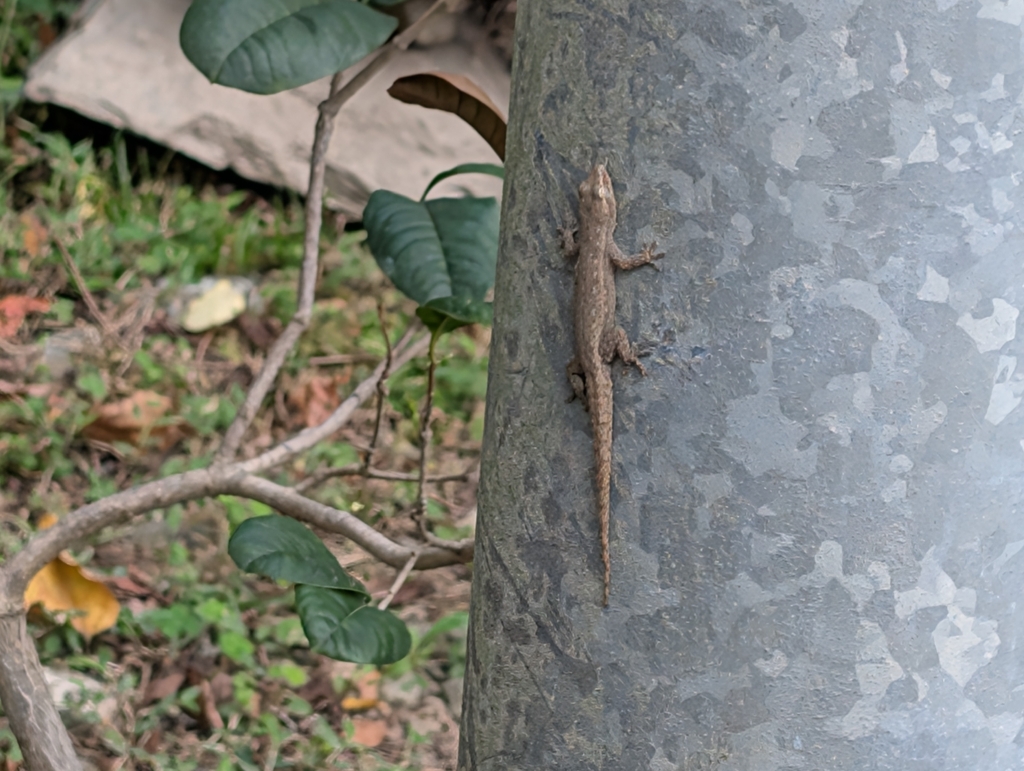
The Common house gecko (Hemidactylus frenatus) is a gecko native to South and Southeast Asia and Near Oceania.
- Kingdom
- Animalia
- Phylum
- Chordata
- Class
- Squamata
- Family
- Gekkonidae
- Genus
- Hemidactylus
- Species
- Hemidactylus frenatus
Description
The Common house gecko (Hemidactylus frenatus) is a gecko native to South and Southeast Asia and Near Oceania. It is also known as the Asian house gecko, Pacific house gecko, wall gecko, House lizard, Tiktiki, chipkali and moon lizard. The common house gecko is nocturnal, hiding during the day and foraging for insects at night. They can be seen climbing walls of houses and other buildings in search of insects attracted to porch lights, and are immediately recognisable by their characteristic chirping. They grow to a length of between 7.5–15 cm (3–6 in), and live for about 7 years. They are non-venomous and not harmful to humans. Most medium-sized to large geckos are docile, but may bite if distressed, which might pierce skin. The common house gecko is a tropical species, and thrives in warm, humid areas where it can crawl around on rotting wood in search of the insects it eats, as well as within urban landscapes in warm climates. The animal is very adaptable and may prey on insects and spiders, displacing other gecko species which are less robust or behaviourally aggressive. In parts of Australia and Papua New Guinea they are often confused with a similar native lizard, the dubious dtella.
Gallery
Ajouter des photos
Partagez vos photos de cette espèce (jusqu'à 20 à la fois) : elles sont vérifiées automatiquement, puis publiées.
Répartition
Occurrences observées (données GBIF). Les zones hors aire d'origine peuvent indiquer une présence introduite ou invasive.
Sources et crédits
Informations provenant de plusieurs sources vérifiées. Dernière mise à jour : .
Crédits photos (8)
- Photo : @tsou · CC BY-NC 4.0 · via iNaturalist
- Photo : David Roche (@davidroche) · CC BY-NC 4.0 · via iNaturalist
- Photo : Abbie Ince-Hendrickson (@abbieih) · CC BY-NC 4.0 · via iNaturalist
- Photo : 鐦鍆錒/锎钔锕(Man Hoimoon) (@pandahead_hoimoon) · CC BY-NC 4.0 · via iNaturalist
- Photo : 眼子菜 (@v9320032) · CC BY-NC 4.0 · via iNaturalist
- Photo : swanand kesari (@swanand) · CC BY 4.0 · via iNaturalist
- Photo : @zayzayem · CC BY-NC 4.0 · via iNaturalist
- Photo : Kseniia Marianna Prondzynska (@kseniiamarianna) · CC BY 4.0 · via iNaturalist
Mentions de licence
Texte disponible sous licence CC BY-SA 4.0. Il adapte notamment Wikipedia (CC BY-SA) : Common house gecko (Wikipédia, auteurs dans l’historique de l’article).
- Taxonomie : GBIF Backbone Taxonomy (CC BY 4.0)
- Carte : occurrences GBIF, fond © contributeurs OpenStreetMap (ODbL)
- Statut de conservation : Liste rouge de l'UICN, via Wikidata (CC0)
Détail : Sources et licences.
Discussion (0)
Aucun message pour l’instant. Lancez la discussion sur cette fiche (sources, précisions, débats éditoriaux).
Connectez-vous pour participer à la discussion.