
Eulamprus quoyii
Eulamprus quoyii
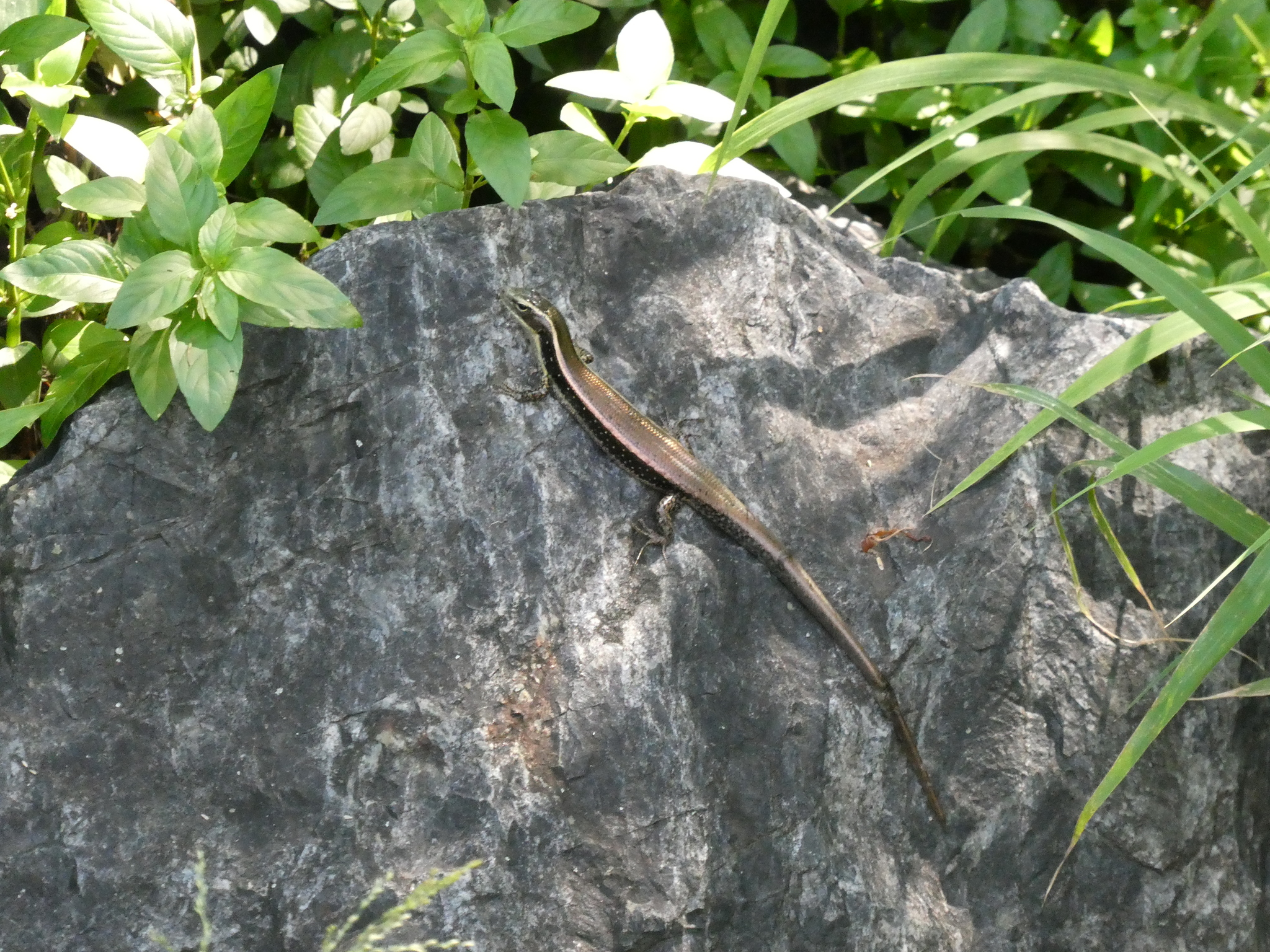
Eulamprus quoyii, more commonly known as the eastern water skink, eastern water-skink, or golden water skink, is a viviparous species of diurnal skink.
- Kingdom
- Animalia
- Phylum
- Chordata
- Class
- Squamata
- Family
- Scincidae
- Genus
- Eulamprus
- Species
- Eulamprus quoyii
Description
Eulamprus quoyii, more commonly known as the eastern water skink, eastern water-skink, or golden water skink, is a viviparous species of diurnal skink. Eulamprus quoyii belongs to the family Scincidae and is considered a common garden animal in Australia. The skink is endemic to Australia and found only along the east coast of the country. It makes its home in creekside habitats along the east coast of Australia and in urban garden areas with high amounts of moisture. The species can be identified by the twin, long yellow stripes that run along its body from the top of the eye, as well as by several more specific character derived states. The pale yellow dorsolateral stripes are most likely where its common name, the golden water skink, is derived. Like other ectotherms, the skink can often be seen basking in the sun on rocky outcroppings in order to regulate its body temperature. Its diet mainly consists of both aquatic and terrestrial insects, tadpoles and small amounts of plant matter. The skink both hunts for food and scavenges when necessary and is considered an opportunistic feeder. It is prey to larger lizards, snakes, cats and birds and so will often be seen moving quickly into hiding when other organisms are present.
Gallery
Ajouter des photos
Partagez vos photos de cette espèce (jusqu'à 20 à la fois) : elles sont vérifiées automatiquement, puis publiées.
Répartition
Occurrences observées (données GBIF). Les zones hors aire d'origine peuvent indiquer une présence introduite ou invasive.
Sources et crédits
Informations provenant de plusieurs sources vérifiées. Dernière mise à jour : .
Crédits photos (6)
- Photo : Sylvia Felicity Ann Haworth · CC BY-NC 4.0 · via GBIF
- Photo : Léni BENNACEUR (@lenibnc) · CC BY-NC 4.0 · via iNaturalist
- Photo : @lunaryu · CC BY-NC 4.0 · via iNaturalist
- Photo : Kath Lloyd (@lloydybird) · CC BY-NC 4.0 · via iNaturalist
- Photo : Mark Clarke (@hatwise) · CC BY 4.0 · via iNaturalist
- Photo : @magickao · CC BY-NC 4.0 · via iNaturalist
Mentions de licence
Texte disponible sous licence CC BY-SA 4.0. Il adapte notamment Wikipedia (CC BY-SA) : Eulamprus quoyii (Wikipédia, auteurs dans l’historique de l’article).
- Taxonomie : GBIF Backbone Taxonomy (CC BY 4.0)
- Carte : occurrences GBIF, fond © contributeurs OpenStreetMap (ODbL)
- Statut de conservation : Liste rouge de l'UICN, via Wikidata (CC0)
Détail : Sources et licences.
Discussion (0)
Aucun message pour l’instant. Lancez la discussion sur cette fiche (sources, précisions, débats éditoriaux).
Connectez-vous pour participer à la discussion.