
Solomon Islands skink
Corucia zebrata
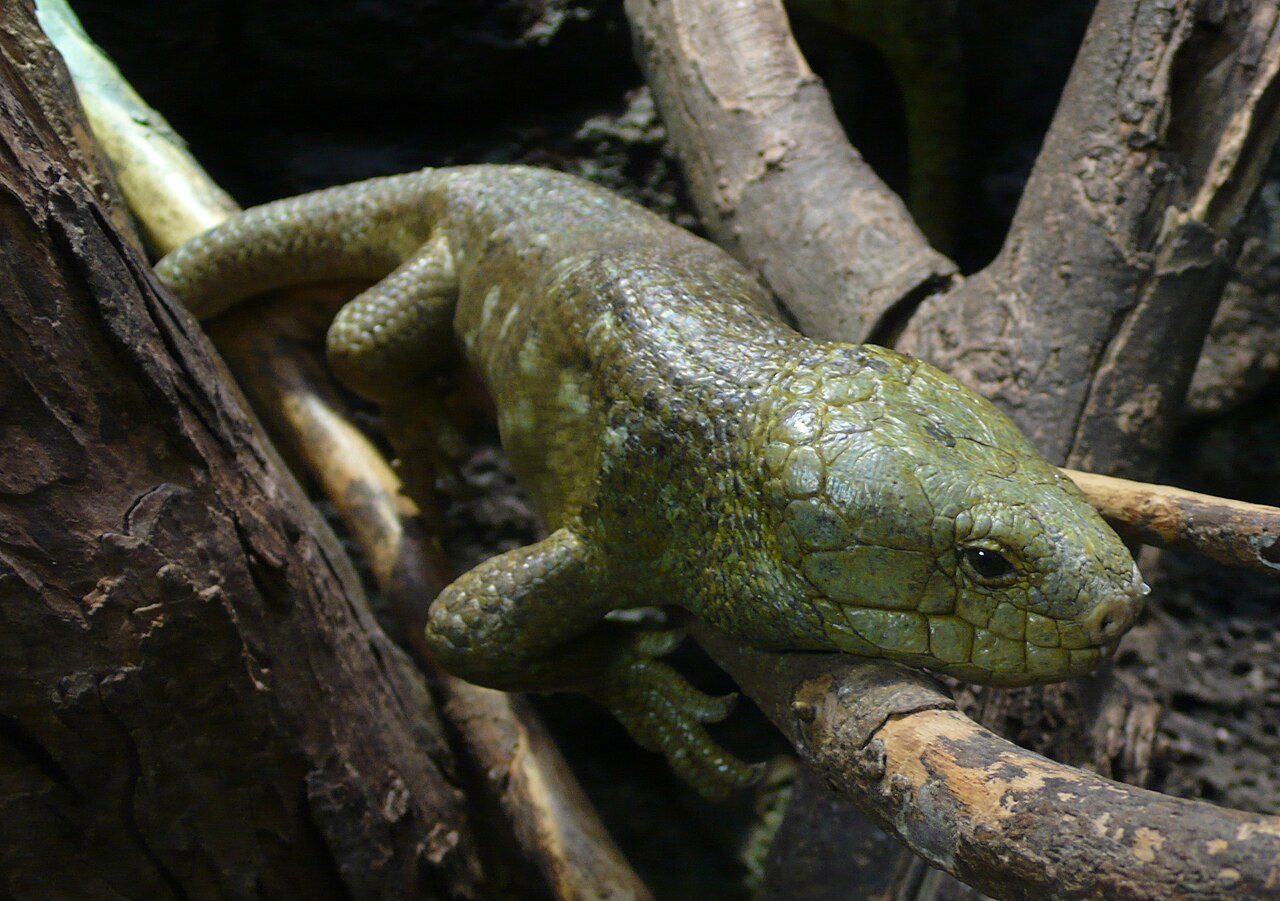
The Solomon Islands skink (Corucia zebrata), also known as prehensile-tailed skink, monkey-tailed skink, giant skink, zebra skink, and monkey skink, is an arboreal species of skink endemic to the Solomon Islands archipelago.
- Kingdom
- Animalia
- Phylum
- Chordata
- Class
- Squamata
- Family
- Scincidae
- Genus
- Corucia
- Species
- Corucia zebrata
Description
The Solomon Islands skink (Corucia zebrata), also known as prehensile-tailed skink, monkey-tailed skink, giant skink, zebra skink, and monkey skink, is an arboreal species of skink endemic to the Solomon Islands archipelago. It is the largest known extant species of skink. The Solomon Islands skink is completely herbivorous, eating many different fruits and vegetables including the pothos plant. It is one of the few species of reptile known to function within a social group or circulus. Both male and female specimens are known to be territorial and often hostile towards members not a part of their family group. Corucia is a monotypic genus, containing a single species. However, in 1997 it was determined that there are two subspecies of the Solomon Islands skink: the common monkey-tailed skink (Corucia zebrata zebrata) and the northern monkey-tailed skink (Corucia zebrata alfredschmidti). Among other variances, the northern skink is smaller and has darker eyes with a black sclera. Extensive logging is a serious threat to the survival of this species. Consumption for food by indigenous Solomon Islanders and excessive pet trade exports have affected wild populations. Export of this species from the Solomon Islands is now restricted and the animal is protected under CITES appendix II.
Gallery
Ajouter des photos
Partagez vos photos de cette espèce (jusqu'à 20 à la fois) : elles sont vérifiées automatiquement, puis publiées.
Répartition
Occurrences observées (données GBIF). Les zones hors aire d'origine peuvent indiquer une présence introduite ou invasive.
Sources et crédits
Informations provenant de plusieurs sources vérifiées. Dernière mise à jour : .
Crédits photos (4)
- Photo : TimVickers · Domaine public
- Photo : @garywwilson · CC BY 4.0 · via iNaturalist
- Photo : @jqrichmond · CC BY-NC 4.0 · via iNaturalist
- Photo : Cole Chapman (@colechap) · CC BY-NC 4.0 · via iNaturalist
Mentions de licence
Texte disponible sous licence CC BY-SA 4.0. Il adapte notamment Wikipedia (CC BY-SA) : Solomon Islands skink (Wikipédia, auteurs dans l’historique de l’article).
- Taxonomie : GBIF Backbone Taxonomy (CC BY 4.0)
- Carte : occurrences GBIF, fond © contributeurs OpenStreetMap (ODbL)
- Statut de conservation : Liste rouge de l'UICN, via Wikidata (CC0)
Détail : Sources et licences.
Discussion (0)
Aucun message pour l’instant. Lancez la discussion sur cette fiche (sources, précisions, débats éditoriaux).
Connectez-vous pour participer à la discussion.