
Brown Trout
Salmo trutta
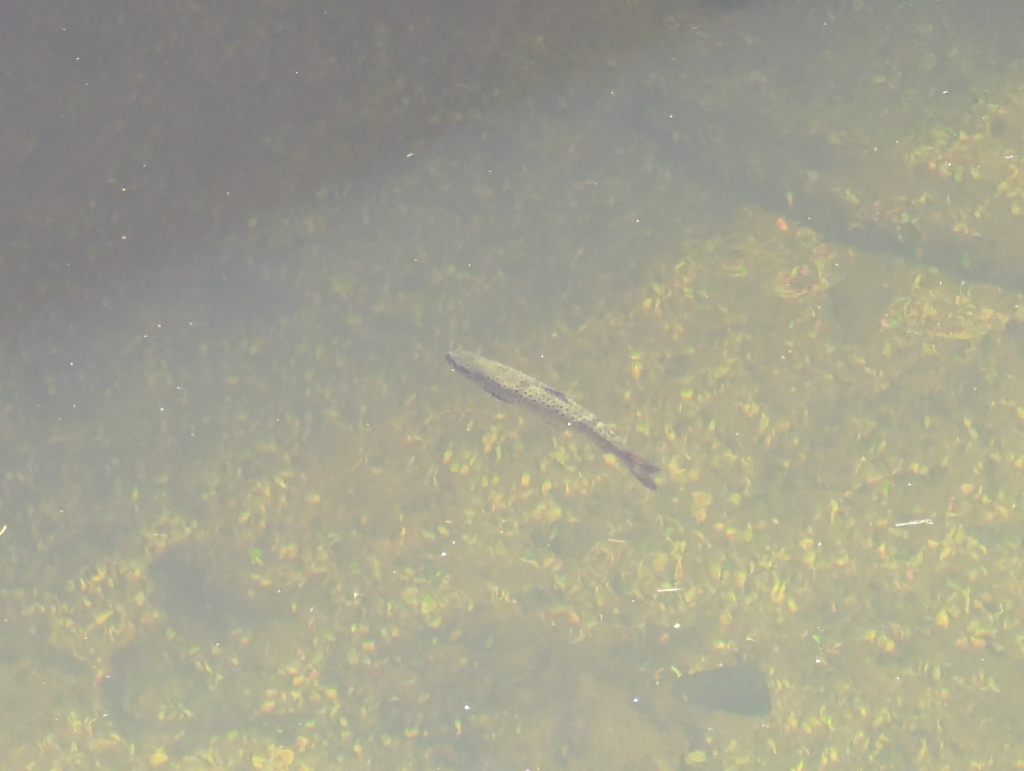
The brown trout (Salmo trutta) is a species of carnivorous ray-finned fish and the most widely distributed species of the salmonid genus Salmo, endemic to most of Europe, West Asia and parts of North Africa, and has been widely…
- Kingdom
- Animalia
- Phylum
- Chordata
- Order
- Salmoniformes
- Family
- Salmonidae
- Genus
- Salmo
- Species
- Salmo trutta
Description
The brown trout (Salmo trutta) is a species of carnivorous ray-finned fish and the most widely distributed species of the salmonid genus Salmo, endemic to most of Europe, West Asia and parts of North Africa, and has been widely introduced globally as a game fish, even becoming one of the world's worst invasive species outside of its native range. Brown trout are highly adaptable and have evolved numerous ecotypes/subspecies. These include three main ecotypes: a riverine ecotype S. trutta morpha fario, commonly called river trout; a lacustrine ecotype S. trutta morpha lacustris, also called the lake trout (not to be confused with the lake trout in North America, which is a species of char); and an euryhaline ecotype S. trutta morpha trutta, also known as the sea trout. Sea trout in Ireland and Great Britain have many regional names: sewin in Wales, finnock in Scotland, peal in the West Country, mort in North West England, and white trout in Ireland. Like all salmonids, all three brown trout ecotypes spawn in fresh water among the gravel beds of headstreams, where the water is colder and better aerated. Sea trout is anadromous, meaning it will spend the juventile life stages in freshwater, but upon reaching adulthood will migrate downstream to the oceans for much of its life, and only returns to fresh water for reproduction. In contrast, the lacustrine and riverine morphs are both potamodromous, meaning they are also migratory but only between different freshwater bodies. Lacustrine trout mainly inhabit large lakes with calm and stratified deep water, while riverine trout forms fluvial populations typically in large rivers but sometimes in shallower creeks and alpine streams, both still migrating upstream during reproductive seasons. Anadromous and potamodromous morphs coexisting in the same river appear genetically identical. What determines whether they migrate to sea or not remains unknown.
En aquarium
Espèce d'eau douce et saumâtre et eau de mer évoluant plutôt en pleine eau. Paramètres d'eau relevés dans son milieu : température de 18 à 24 °C. Sur le plan biologique, elle atteint jusqu'à 140 cm, vit jusqu'à 38 ans, son régime est carnivore.
Paramètres relevés dans le milieu naturel de l’espèce (données scientifiques FishBase ; voir aussi la fiche Fishipedia). À adapter aux besoins précis de l’espèce en captivité.
Gallery
Ajouter des photos
Partagez vos photos de cette espèce (jusqu'à 20 à la fois) : elles sont vérifiées automatiquement, puis publiées.
Sources et crédits
Informations provenant de plusieurs sources vérifiées. Dernière mise à jour : .
Crédits photos (3)
- Photo : @elliebee26 · CC BY-NC 4.0 · via iNaturalist
- Photo : Martin Geiger (@martin_geiger) · CC BY-NC 4.0 · via iNaturalist
- Photo : @ms1998x · CC BY-NC 4.0 · via iNaturalist
Mentions de licence
Texte disponible sous licence CC BY-SA 4.0. Il adapte notamment Wikipedia (CC BY-SA) : Brown trout (Wikipédia, auteurs dans l’historique de l’article).
- Taxonomie : GBIF Backbone Taxonomy (CC BY 4.0)
- Statut de conservation : Liste rouge de l'UICN, via Wikidata (CC0)
- Paramètres d'aquarium : FishBase (faits reformulés)
Détail : Sources et licences.
Discussion (0)
Aucun message pour l’instant. Lancez la discussion sur cette fiche (sources, précisions, débats éditoriaux).
Connectez-vous pour participer à la discussion.