
Common torpedo
Torpedo torpedo
The common torpedo (Torpedo torpedo), also known as ocellate torpedo or eyed electric ray, is a species of electric ray in the family Torpedinidae.
- Kingdom
- Animalia
- Phylum
- Chordata
- Class
- Elasmobranchii
- Order
- Torpediniformes
- Family
- Torpedinidae
- Genus
- Torpedo
- Species
- Torpedo torpedo
Description
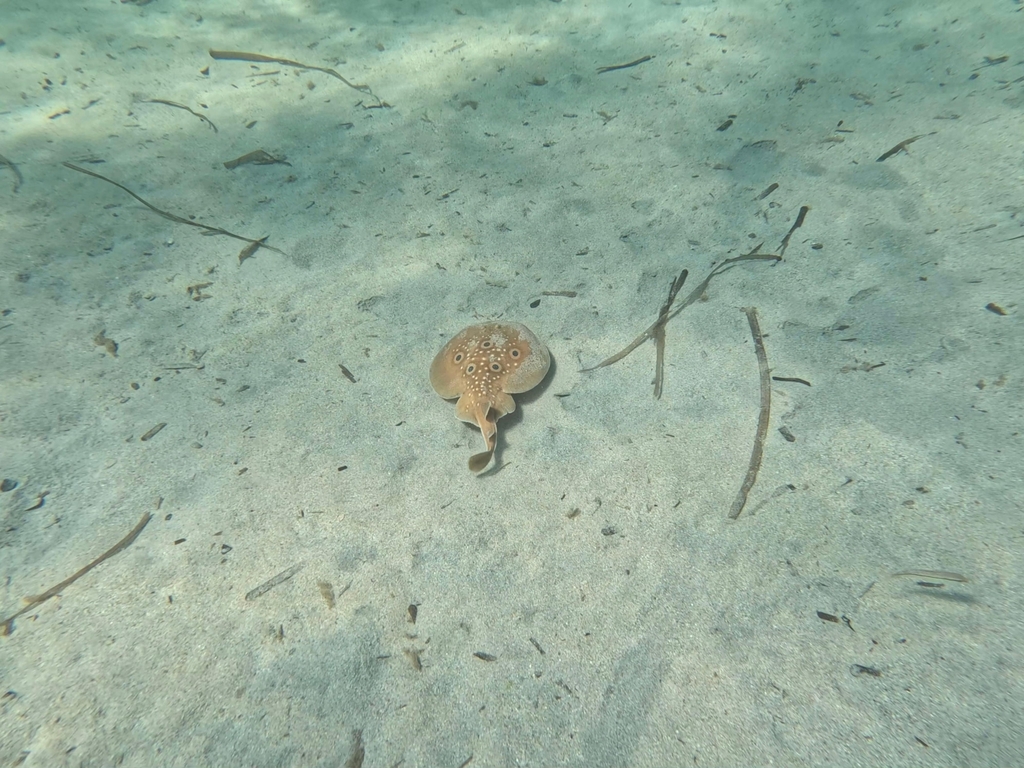
The common torpedo (Torpedo torpedo), also known as ocellate torpedo or eyed electric ray, is a species of electric ray in the family Torpedinidae. It is found in the Mediterranean Sea and the eastern Atlantic Ocean from the Bay of Biscay to Angola, and is a benthic fish typically encountered over soft substrates in fairly shallow, coastal waters. Growing to 60 cm (24 in) long, this species has a nearly circular pectoral fin disc and a short, thick tail with two dorsal fins of nearly equal size and a large caudal fin. It can be identified by the prominent blue spots on its back, which usually number five but may vary from zero to nine, as well as by the small knobs on the rims of its spiracles. For attack and defense, the common torpedo can deliver a strong electric shock of up to 200 volts. It is a solitary, nocturnal ambush predator that feeds mainly on bony fishes and crustaceans. This species is aplacental viviparous, with the developing embryos nourished by yolk and histotroph ("uterine milk") produced by the mother. Females produce litters of up to 28 young every year in late summer or autumn, after a gestation period of 4–8 months; the specifics vary between geographical regions. The common torpedo's shock is painful but otherwise of little danger to humans. Its electrogenic properties led it to be used in medicine by the ancient Greeks and Romans. In modern times, it has no economic value and is mostly discarded when caught as bycatch in fisheries. The impact of fishing on its population is uncertain, and the International Union for Conservation of Nature (IUCN) has listed it as Vulnerable.
En aquarium
Espèce d'eau de mer évoluant plutôt près du fond. Sur le plan biologique, elle atteint jusqu'à 60 cm, son régime est piscivore.
Paramètres relevés dans le milieu naturel de l’espèce (données scientifiques FishBase ; voir aussi la fiche Fishipedia). À adapter aux besoins précis de l’espèce en captivité.
Gallery
Ajouter des photos
Partagez vos photos de cette espèce (jusqu'à 20 à la fois) : elles sont vérifiées automatiquement, puis publiées.
Répartition
Occurrences observées (données GBIF). Les zones hors aire d'origine peuvent indiquer une présence introduite ou invasive.
Sources et crédits
Informations provenant de plusieurs sources vérifiées. Dernière mise à jour : .
Crédits photos (3)
- Photo : GABRIELE CARIA (@gabrieyo) · CC BY-NC 4.0 · via iNaturalist
- Photo : Prat (@mathias_prat) · CC BY-NC 4.0 · via iNaturalist
- Photo : Thomas Menut (@tmenut) · CC BY-NC 4.0 · via iNaturalist
Mentions de licence
Texte disponible sous licence CC BY-SA 4.0. Il adapte notamment Wikipedia (CC BY-SA) : Common torpedo (Wikipédia, auteurs dans l’historique de l’article).
- Taxonomie : GBIF Backbone Taxonomy (CC BY 4.0)
- Carte : occurrences GBIF, fond © contributeurs OpenStreetMap (ODbL)
- Statut de conservation : Liste rouge de l'UICN, via Wikidata (CC0)
- Paramètres d'aquarium : FishBase (faits reformulés)
Détail : Sources et licences.
Discussion (0)
Aucun message pour l’instant. Lancez la discussion sur cette fiche (sources, précisions, débats éditoriaux).
Connectez-vous pour participer à la discussion.