
Atlantic Bluefin Tuna
Thunnus thynnus
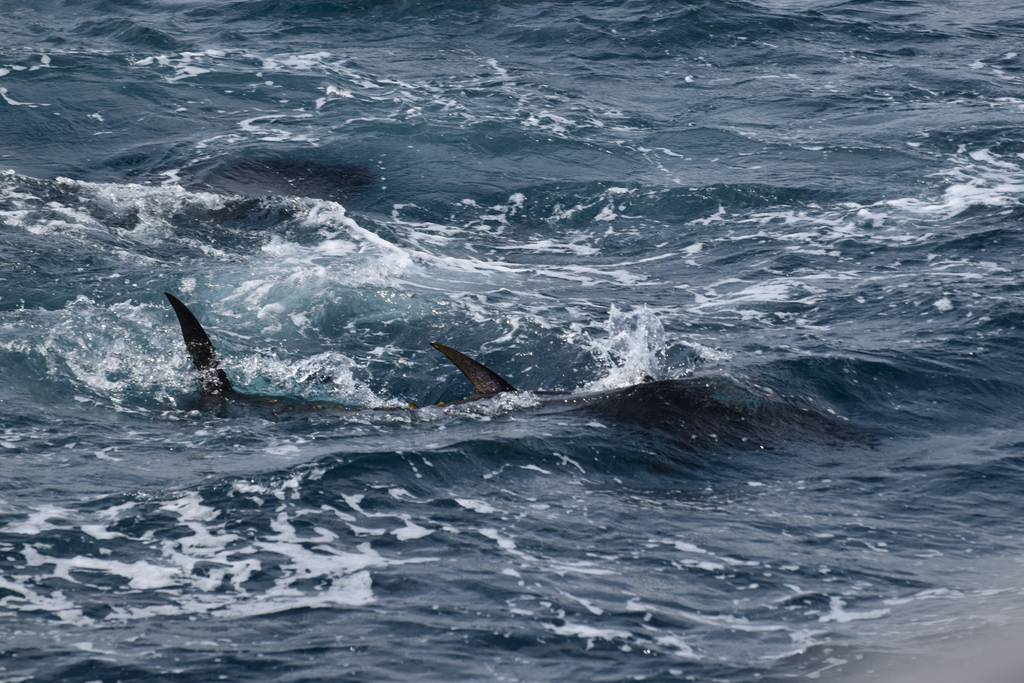
The Atlantic bluefin tuna (Thunnus thynnus) is a species of tuna in the family Scombridae.
- Kingdom
- Animalia
- Phylum
- Chordata
- Order
- Perciformes
- Family
- Scombridae
- Genus
- Thunnus
- Species
- Thunnus thynnus
Description
The Atlantic bluefin tuna (Thunnus thynnus) is a species of tuna in the family Scombridae. It is variously known as the northern bluefin tuna (mainly when including Pacific bluefin as a subspecies), giant bluefin tuna (for individuals exceeding 150 kg [330 lb]), and formerly as the tunny. Atlantic bluefins are native to both the western and eastern Atlantic Ocean, as well as the Mediterranean Sea. They have become regionally extinct in the Black Sea. The Atlantic bluefin tuna is a close relative of one of the other two bluefin tuna species, the Pacific bluefin tuna. The southern bluefin tuna, on the other hand, is more closely related to other tuna species such as yellowfin tuna and bigeye tuna, and the similarities between the southern and northern species are due to convergent evolution. Atlantic bluefin tuna have been recorded at up to 680 kg (1,500 lb) in weight, and rival the black marlin, blue marlin, and swordfish as one of the largest Percomorpha (though these species are vastly outweighed by the enormous Molidae species). Throughout recorded history, the Atlantic bluefin tuna has been highly prized as a food fish. Besides their commercial value as food, the great size, speed, and power they display as predators has attracted the admiration of fishermen, writers, and scientists. The Atlantic bluefin tuna has been the foundation of one of the world's most lucrative commercial fisheries. Medium-sized and large individuals are heavily targeted for the Japanese raw-fish market, where all bluefin species are highly prized for sushi and sashimi. This commercial importance has led to severe overfishing. The International Commission for the Conservation of Atlantic Tunas affirmed in October 2009 that Atlantic bluefin tuna stocks had declined dramatically over the last 40 years, by 72% in the Eastern Atlantic, and by 82% in the Western Atlantic. On 16 October 2009, Monaco formally recommended endangered Atlantic bluefin tuna for an Appendix I CITES listing and international trade ban. In early 2010, European officials, led by the French ecology minister, increased pressure to ban the commercial fishing of bluefin tuna internationally. However, a UN proposal to protect the species from international trade was voted down (68 against, 20 for, 30 abstaining). Since then, enforcement of regional fishing quotas has led to some increases in population. As of 4 September 2021 the Atlantic bluefin tuna was moved from the category of Endangered to the category of Least Concern on the IUCN Red List of Threatened Species. However, many regional populations are still severely depleted, including western stocks which spawn in the Gulf of Mexico. Most bluefins are captured commercially by professional fishermen using longlines, purse seines, assorted hook-and-line gear, heavy rods and reels, and harpoons. Recreationally, bluefins have been one of the most important big-game species sought by sports fishermen since the 1930s, particularly in the United States, but also in Canada, Spain, France, England, and Italy.
En aquarium
Espèce d'saumâtre et eau de mer évoluant plutôt en pleine eau. Paramètres d'eau relevés dans son milieu : température de 3 à 30 °C. Sur le plan biologique, elle atteint jusqu'à 458 cm, vit jusqu'à 32 ans, son régime est piscivore.
Paramètres relevés dans le milieu naturel de l’espèce (données scientifiques FishBase ; voir aussi la fiche Fishipedia). À adapter aux besoins précis de l’espèce en captivité.
Gallery
Ajouter des photos
Partagez vos photos de cette espèce (jusqu'à 20 à la fois) : elles sont vérifiées automatiquement, puis publiées.
Sources et crédits
Informations provenant de plusieurs sources vérifiées. Dernière mise à jour : .
Crédits photos (2)
- Photo : @henryck31 · CC BY-NC 4.0 · via iNaturalist
- Photo : Martin Kielland (@makvaerk) · CC BY-NC 4.0 · via iNaturalist
Mentions de licence
Texte disponible sous licence CC BY-SA 4.0. Il adapte notamment Wikipedia (CC BY-SA) : Atlantic bluefin tuna (Wikipédia, auteurs dans l’historique de l’article).
- Taxonomie : GBIF Backbone Taxonomy (CC BY 4.0)
- Statut de conservation : Liste rouge de l'UICN, via Wikidata (CC0)
- Paramètres d'aquarium : FishBase (faits reformulés)
Détail : Sources et licences.
Discussion (0)
Aucun message pour l’instant. Lancez la discussion sur cette fiche (sources, précisions, débats éditoriaux).
Connectez-vous pour participer à la discussion.