
Scup
Stenotomus chrysops
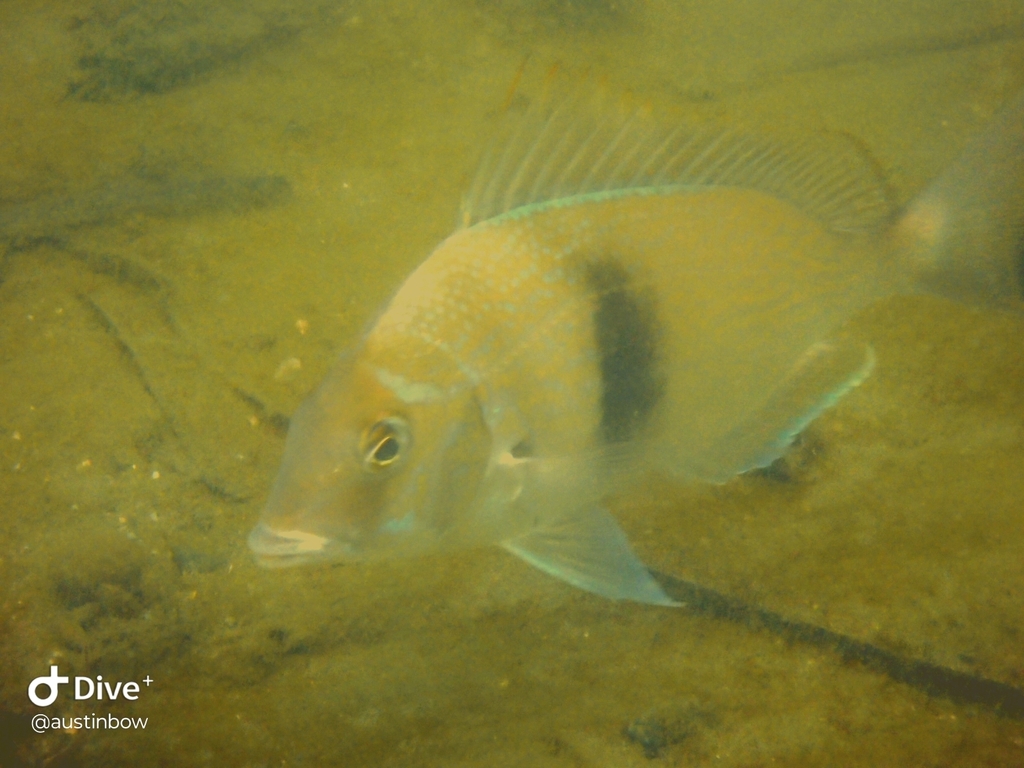
The scup (Stenotomus chrysops) is a fish that occurs primarily in the Atlantic from Massachusetts to South Carolina.
- Kingdom
- Animalia
- Phylum
- Chordata
- Order
- Perciformes
- Family
- Sparidae
- Genus
- Stenotomus
- Species
- Stenotomus chrysops
Description
The scup (Stenotomus chrysops) is a fish that occurs primarily in the Atlantic from Massachusetts to South Carolina. Along with many other fish of the family Sparidae, it is also commonly known as porgy. Scup grow as large as 18 in (460 mm) and weigh 3–4 lb (1.4–1.8 kg), but they average 0.5–1.0 lb (0.23–0.45 kg). Scup can live up to 20 years; females can begin to reproduce at the age of two. Every year female scups lay approximately 7,000 eggs in sand and weed abundant areas. In the Middle Atlantic Bight, scup spawn along the inner continental shelf. Their larvae end up in inshore waters, along the coast and in estuarine areas. At two to three years of age, they mature. Scup winter along the mid and outer continental shelf. When the temperature warms in the spring, they migrate inshore. They are fished for by both commercial and recreational fishermen. The scup fishery is one of the oldest in the United States, with records dating back to 1800. Scup was the most abundant fish in colonial times. Fishermen began using trawls in 1929, which increased catches dramatically. The species was termed overfished in 1996, and today there is evidence of a rebound. Today, scup are still caught primarily using an otter trawl.
En aquarium
Espèce d'eau de mer évoluant plutôt près du fond. Sur le plan biologique, elle atteint jusqu'à 46 cm, son régime est piscivore.
Paramètres relevés dans le milieu naturel de l’espèce (données scientifiques FishBase). À adapter aux besoins précis de l’espèce en captivité.
Ajouter des photos
Partagez vos photos de cette espèce (jusqu'à 20 à la fois) : elles sont vérifiées automatiquement, puis publiées.
Répartition
Occurrences observées (données GBIF). Les zones hors aire d'origine peuvent indiquer une présence introduite ou invasive.
Sources et crédits
Informations provenant de plusieurs sources vérifiées. Dernière mise à jour : .
Crédits photos (1)
- Photo : Austin Bow (@adwodarkfly) · CC BY-NC 4.0 · via iNaturalist
Mentions de licence
Texte disponible sous licence CC BY-SA 4.0. Il adapte notamment Wikipedia (CC BY-SA) : Scup (Wikipédia, auteurs dans l’historique de l’article).
- Taxonomie : GBIF Backbone Taxonomy (CC BY 4.0)
- Carte : occurrences GBIF, fond © contributeurs OpenStreetMap (ODbL)
- Statut de conservation : Liste rouge de l'UICN, via Wikidata (CC0)
- Paramètres d'aquarium : FishBase (faits reformulés)
Détail : Sources et licences.
Discussion (0)
Aucun message pour l’instant. Lancez la discussion sur cette fiche (sources, précisions, débats éditoriaux).
Connectez-vous pour participer à la discussion.