
Monkfish
Squatina squatina
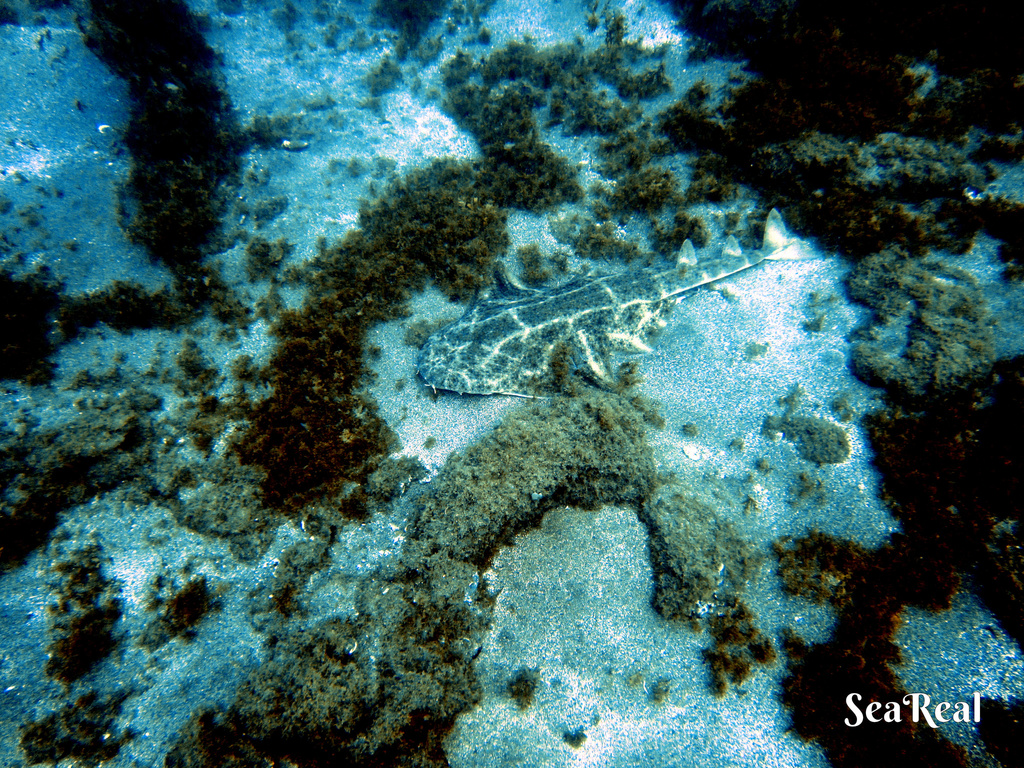
Squatina squatina, known as the common angelshark, is a species of shark in the family Squatinidae (known generally also as angel sharks), that were once widespread in the coastal waters of the northeastern Atlantic Ocean.
- Kingdom
- Animalia
- Phylum
- Chordata
- Class
- Elasmobranchii
- Order
- Squatiniformes
- Family
- Squatinidae
- Genus
- Squatina
- Species
- Squatina squatina
Description
Squatina squatina, known as the common angelshark, is a species of shark in the family Squatinidae (known generally also as angel sharks), that were once widespread in the coastal waters of the northeastern Atlantic Ocean. Well-adapted for camouflaging itself on the sea floor, the angelshark has a flattened form with enlarged pectoral and pelvic fins, giving it a superficial resemblance to a ray. This species can be identified by its broad and stout body, conical barbels, thornless back (in larger individuals), and grayish or brownish dorsal coloration with a pattern of numerous small light and dark markings (that is more vivid in juveniles). It measures up to 2.4 m (7.9 ft) long. Like other members of its family, the angelshark is a nocturnal ambush predator that buries itself in sediment and waits for passing prey, mostly benthic bony fishes, but also skates and invertebrates. An aplacental viviparous species, females bear litters of seven to 25 pups every other year. The angelshark normally poses little danger to humans, though if provoked, it is quick to bite. Since the mid-20th century, intense commercial fishing across the angelshark's range has decimated its population via bycatch – it is now locally extinct or nearly so across most of its northern range, and the prospects of the remaining fragmented subpopulations are made more precarious by its slow rate of reproduction. As a result, the International Union for Conservation of Nature has assessed this species as critically endangered.
En aquarium
Espèce d'saumâtre et eau de mer évoluant plutôt près du fond. Sur le plan biologique, elle atteint jusqu'à 183 cm, son régime est piscivore.
Paramètres relevés dans le milieu naturel de l’espèce (données scientifiques FishBase ; voir aussi la fiche Fishipedia). À adapter aux besoins précis de l’espèce en captivité.
Gallery
Ajouter des photos
Partagez vos photos de cette espèce (jusqu'à 20 à la fois) : elles sont vérifiées automatiquement, puis publiées.
Répartition
Occurrences observées (données GBIF). Les zones hors aire d'origine peuvent indiquer une présence introduite ou invasive.
Sources et crédits
Informations provenant de plusieurs sources vérifiées. Dernière mise à jour : .
Crédits photos (4)
- Photo : @deyvhunt · CC BY-NC 4.0 · via iNaturalist
- Photo : Thomas Belaoud (@bldthomas) · CC BY-NC 4.0 · via iNaturalist
- Photo : Tony Gilbert (@tonyjgilbert) · CC BY-NC 4.0 · via iNaturalist
- Photo : Thomas Belaoud (@bldthomas) · CC BY-NC 4.0 · via iNaturalist
Mentions de licence
Texte disponible sous licence CC BY-SA 4.0. Il adapte notamment Wikipedia (CC BY-SA) : Squatina squatina (Wikipédia, auteurs dans l’historique de l’article).
- Taxonomie : GBIF Backbone Taxonomy (CC BY 4.0)
- Carte : occurrences GBIF, fond © contributeurs OpenStreetMap (ODbL)
- Statut de conservation : Liste rouge de l'UICN, via Wikidata (CC0)
- Paramètres d'aquarium : FishBase (faits reformulés)
Détail : Sources et licences.
Discussion (0)
Aucun message pour l’instant. Lancez la discussion sur cette fiche (sources, précisions, débats éditoriaux).
Connectez-vous pour participer à la discussion.