
Sand Devil
Squatina dumeril
The sand devil or Atlantic angel shark (Squatina dumeril) is a species of angelshark, family Squatinidae, native to the northwestern Atlantic Ocean.
- Kingdom
- Animalia
- Phylum
- Chordata
- Class
- Elasmobranchii
- Order
- Squatiniformes
- Family
- Squatinidae
- Genus
- Squatina
- Species
- Squatina dumeril
Description
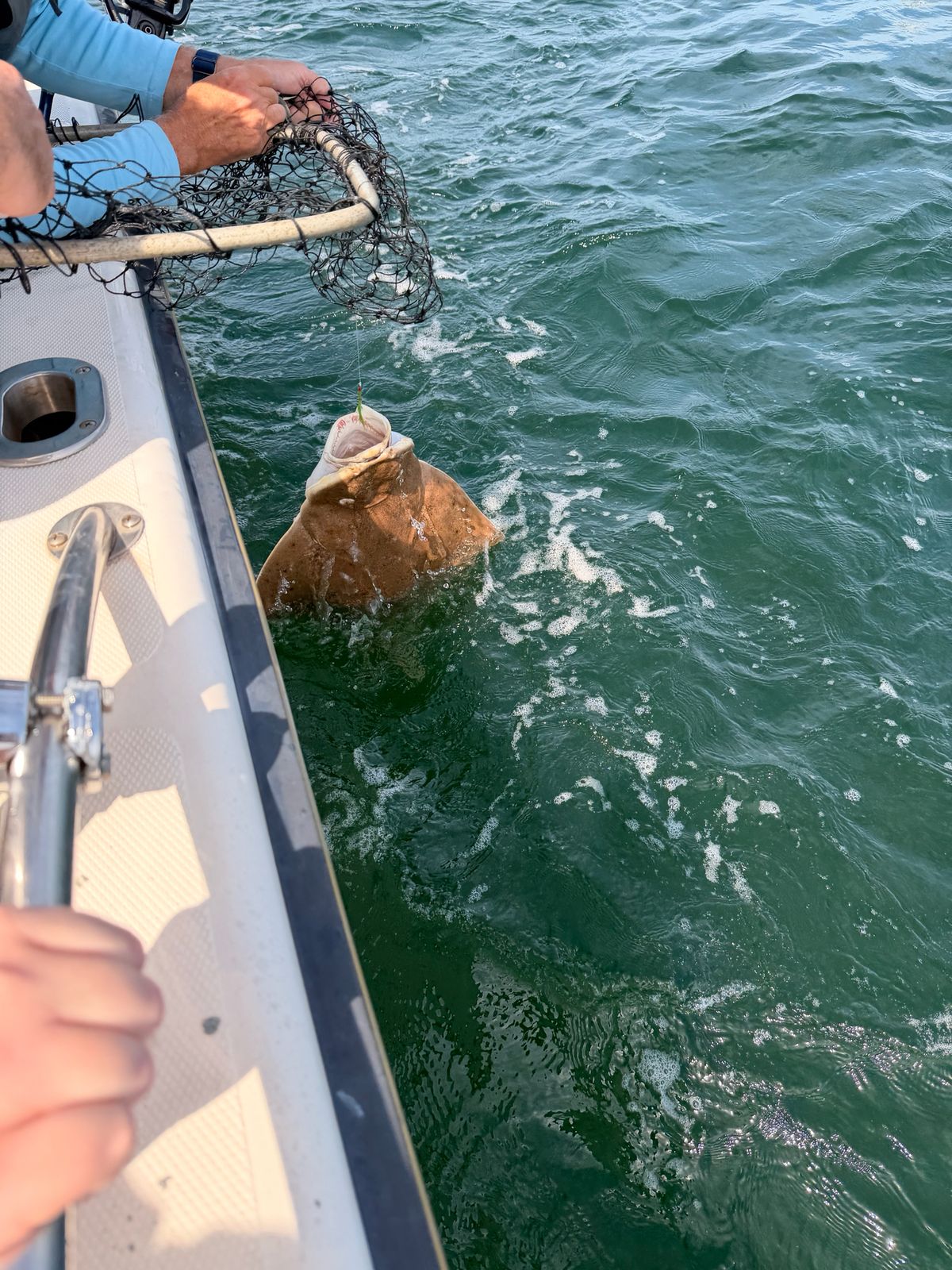
The sand devil or Atlantic angel shark (Squatina dumeril) is a species of angelshark, family Squatinidae, native to the northwestern Atlantic Ocean. It occurs off the eastern United States, in the northern Gulf of Mexico, and possibly in parts of the Caribbean Sea. This bottom-dwelling shark is found in shallow inshore waters in summer and fall, and deep offshore waters in winter and spring. The sand devil's flattened body and enlarged pectoral and pelvic fins give it a ray-like appearance. There is a band of enlarged thorns running along the middle of its back. It is gray or brown in color, with scattered small dark spots. This species reaches 1.2–1.5 m (3.9–4.9 ft) in length. The diet of the sand devil consists mainly of small teleost fishes and squid, which are captured via ambush attack. This species is viviparous, with the unborn young nourished by their yolk sacs. Females have a multi-year reproductive cycle and give birth to 4–25 pups in spring or early summer, following a 12-month gestation period. The sand devil is not aggressive, but may attempt to bite if harassed or captured. Though not valued economically, it is caught incidentally by commercial bottom trawl fisheries.
En aquarium
Espèce d'eau de mer évoluant plutôt en pleine eau. Sur le plan biologique, elle atteint jusqu'à 152 cm, son régime est piscivore.
Paramètres relevés dans le milieu naturel de l’espèce (données scientifiques FishBase). À adapter aux besoins précis de l’espèce en captivité.
Gallery
Ajouter des photos
Partagez vos photos de cette espèce (jusqu'à 20 à la fois) : elles sont vérifiées automatiquement, puis publiées.
Répartition
Occurrences observées (données GBIF). Les zones hors aire d'origine peuvent indiquer une présence introduite ou invasive.
Sources et crédits
Informations provenant de plusieurs sources vérifiées. Dernière mise à jour : .
Crédits photos (10)
- Photo : Taylor · CC BY-NC 4.0 · via GBIF
- Photo : harrier · CC BY 4.0 · via GBIF
- Photo : Larry Chen · CC BY-NC 4.0 · via GBIF
- Photo : Brian Whitehorne · CC BY-NC 4.0 · via GBIF
- Photo : friedmummichog · CC BY-NC 4.0 · via GBIF
- Photo : skinnerpro24 · CC BY-NC 4.0 · via GBIF
- Photo : connor_gable · CC BY-NC 4.0 · via GBIF
- Photo : Zakqary Roy · CC BY 4.0 · via GBIF
- Photo : lillithhughes_07 · CC BY-NC 4.0 · via GBIF
- Photo : dberenty22 · CC BY-NC 4.0 · via GBIF
Mentions de licence
Texte disponible sous licence CC BY-SA 4.0. Il adapte notamment Wikipedia (CC BY-SA) : Sand devil (Wikipédia, auteurs dans l’historique de l’article).
- Taxonomie : GBIF Backbone Taxonomy (CC BY 4.0)
- Carte : occurrences GBIF, fond © contributeurs OpenStreetMap (ODbL)
- Statut de conservation : Liste rouge de l'UICN, via Wikidata (CC0)
- Paramètres d'aquarium : FishBase (faits reformulés)
Détail : Sources et licences.
Discussion (0)
Aucun message pour l’instant. Lancez la discussion sur cette fiche (sources, précisions, débats éditoriaux).
Connectez-vous pour participer à la discussion.