
Lesser Amberjack
Seriola fasciata
The lesser amberjack (Seriola fasciata), also known as the false amberjack or little amberjack, is a species of ray-finned fish from the family Carangidae, the jacks and pompanos.
- Kingdom
- Animalia
- Phylum
- Chordata
- Order
- Perciformes
- Family
- Carangidae
- Genus
- Seriola
- Species
- Seriola fasciata
Description
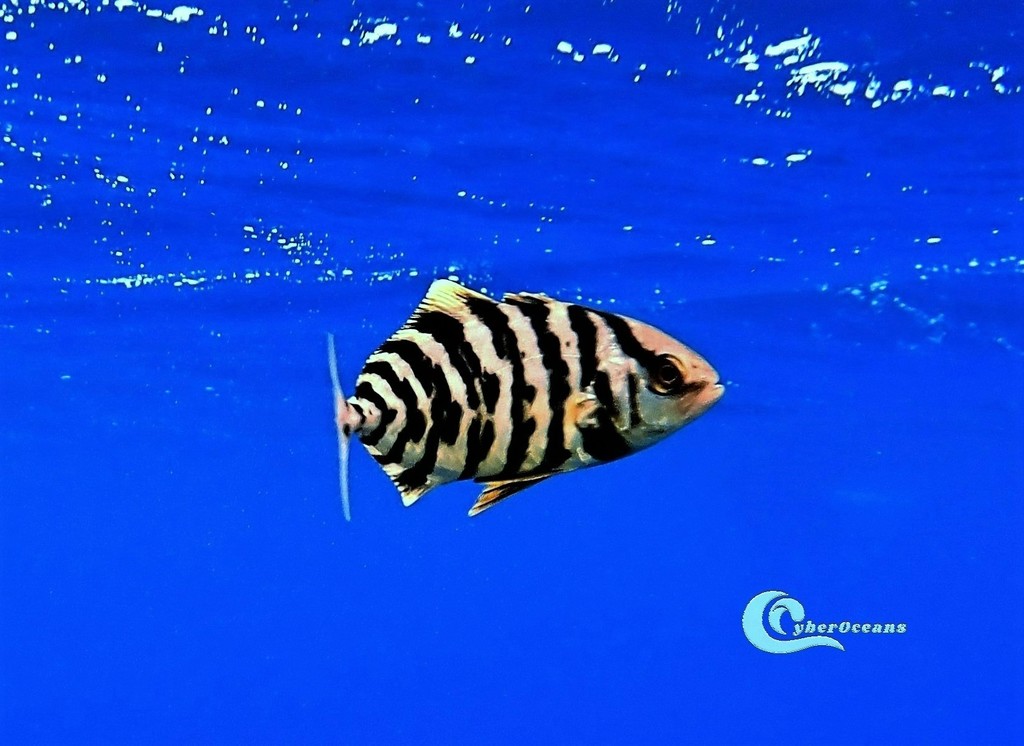
The lesser amberjack (Seriola fasciata), also known as the false amberjack or little amberjack, is a species of ray-finned fish from the family Carangidae, the jacks and pompanos. It occurs in the Atlantic Ocean. In the western Atlantic it ranges from Massachusetts in the north along the eastern Coast of the United States and into the Gulf of Mexico as far south as Tamaulipas. In the Caribbean Sea it is found off Cuba and Barbados and from Santa Marta, Colombia to Isla la Tortuga, Venezuela. It is also found around Bermuda. In the eastern Atlantic its distribution reaches north to Spain to Ghana as well as being found around the Canary Islands, Azores, Madeira and St Helena. Reported for the first time in 1993 in the Western Mediterranean Sea, it has now expanded eastwards from Sicily to the Levant. It is a benthopelagic, predatory species, the adults feed on smaller fish and cephalopods. The adults occur close to or on the bottom at depths of 55–130 metres (180–427 ft) while the larger juveniles are pelagic or benthic in the waters of the continental shelf and the smaller juveniles are found in oceanic or offshore waters. The lesser amberjack has an olive green or brownish back with silver flanks. There is a dark stripe which runs from behind the eye to front of the first dorsal fin. Compared to the related greater amberjack, the lesser amberjack has a proportionately larger eye and a deeper body. The anal fin is around two-thirds the length of the second dorsal fin. The juveniles are marked with split or wavy transverse bars on their sides.
En aquarium
Espèce d'eau de mer évoluant plutôt en pleine eau. Sur le plan biologique, elle atteint jusqu'à 67,5 cm, son régime est piscivore.
Paramètres relevés dans le milieu naturel de l’espèce (données scientifiques FishBase). À adapter aux besoins précis de l’espèce en captivité.
Ajouter des photos
Partagez vos photos de cette espèce (jusqu'à 20 à la fois) : elles sont vérifiées automatiquement, puis publiées.
Répartition
Occurrences observées (données GBIF). Les zones hors aire d'origine peuvent indiquer une présence introduite ou invasive.
Sources et crédits
Informations provenant de plusieurs sources vérifiées. Dernière mise à jour : .
Crédits photos (1)
- Photo : Ana Santos (@cyberoceans) · CC BY-NC 4.0 · via iNaturalist
Mentions de licence
Texte disponible sous licence CC BY-SA 4.0. Il adapte notamment Wikipedia (CC BY-SA) : Lesser amberjack (Wikipédia, auteurs dans l’historique de l’article).
- Taxonomie : GBIF Backbone Taxonomy (CC BY 4.0)
- Carte : occurrences GBIF, fond © contributeurs OpenStreetMap (ODbL)
- Statut de conservation : Liste rouge de l'UICN, via Wikidata (CC0)
- Paramètres d'aquarium : FishBase (faits reformulés)
Détail : Sources et licences.
Discussion (0)
Aucun message pour l’instant. Lancez la discussion sur cette fiche (sources, précisions, débats éditoriaux).
Connectez-vous pour participer à la discussion.