
Nursehound
Scyliorhinus stellaris
The nursehound (Scyliorhinus stellaris), also known as the large-spotted dogfish, greater spotted dogfish or bull huss, is a species of catshark, belonging to the family Scyliorhinidae, found in the northeastern Atlantic Ocean.
- Kingdom
- Animalia
- Phylum
- Chordata
- Class
- Elasmobranchii
- Order
- Carcharhiniformes
- Family
- Scyliorhinidae
- Genus
- Scyliorhinus
- Species
- Scyliorhinus stellaris
Description
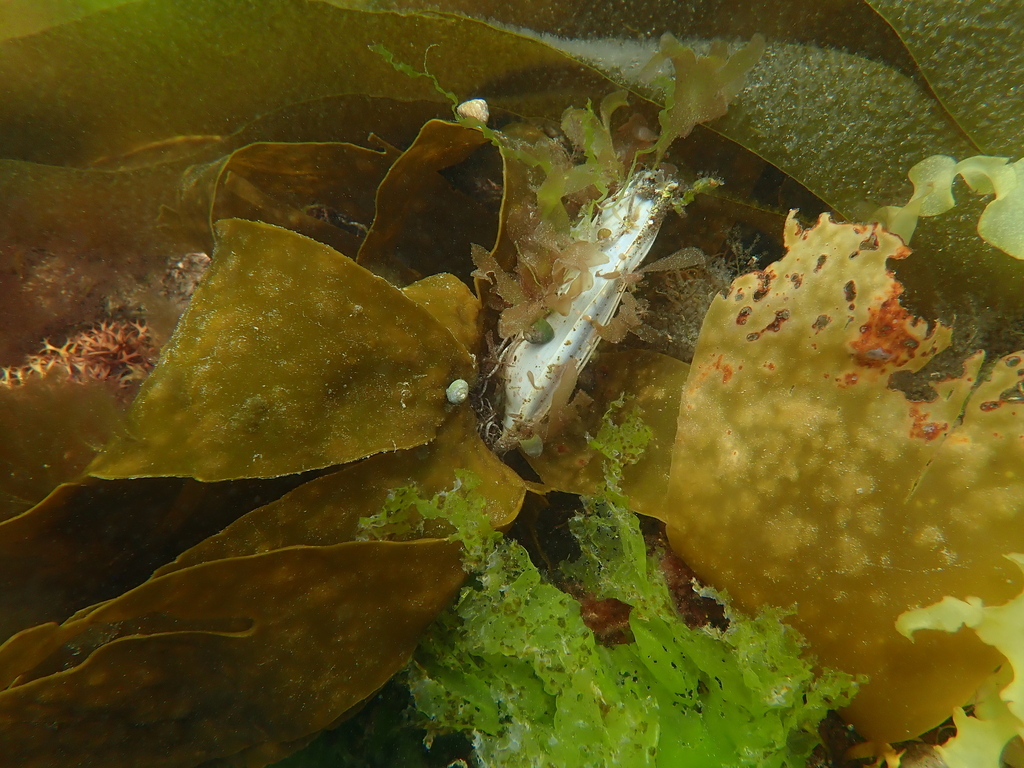
The nursehound (Scyliorhinus stellaris), also known as the large-spotted dogfish, greater spotted dogfish or bull huss, is a species of catshark, belonging to the family Scyliorhinidae, found in the northeastern Atlantic Ocean. It is generally found among rocks or algae at a depth of 20–60 m (70–200 ft). Growing up to 1.6 m (5.2 ft) long, the nursehound has a robust body with a broad, rounded head and two dorsal fins placed far back. It shares its range with the more common and closely related small-spotted catshark (S. canicula), which it resembles in appearance but can be distinguished from, in having larger spots and nasal skin flaps that do not extend to the mouth. Nursehounds have nocturnal habits and generally hide inside small holes during the day, often associating with other members of its species. A benthic predator, it feeds on a range of bony fishes, smaller sharks, crustaceans, and cephalopods. Like other catsharks, the nursehound is oviparous in reproduction. Females deposit large, thick-walled egg cases, two at a time, from March to October, securing them to bunches of seaweed. The eggs take 7–12 months to hatch. Nursehounds are marketed as food in several European countries under various names, including "flake", "catfish", "rock eel", and "rock salmon". It was once also valued for its rough skin (called "rubskin"), which was used as an abrasive. The International Union for Conservation of Nature (IUCN) has assessed the nursehound as Vulnerable, as its population in the Mediterranean Sea seems to have declined substantially from overfishing.
En aquarium
Espèce d'eau de mer évoluant plutôt autour des récifs. Sur le plan biologique, elle atteint jusqu'à 170 cm, vit jusqu'à 19 ans, son régime est piscivore.
Paramètres relevés dans le milieu naturel de l’espèce (données scientifiques FishBase ; voir aussi la fiche Fishipedia). À adapter aux besoins précis de l’espèce en captivité.
Gallery
Ajouter des photos
Partagez vos photos de cette espèce (jusqu'à 20 à la fois) : elles sont vérifiées automatiquement, puis publiées.
Répartition
Occurrences observées (données GBIF). Les zones hors aire d'origine peuvent indiquer une présence introduite ou invasive.
Sources et crédits
Informations provenant de plusieurs sources vérifiées. Dernière mise à jour : .
Crédits photos (3)
- Photo : John Hepburn (@john_hepburn) · CC BY 4.0 · via iNaturalist
- Photo : @seasynergy · CC BY-NC 4.0 · via iNaturalist
- Photo : Giosue Reale (@gioprince) · CC BY-NC 4.0 · via iNaturalist
Mentions de licence
Texte disponible sous licence CC BY-SA 4.0. Il adapte notamment Wikipedia (CC BY-SA) : Nursehound (Wikipédia, auteurs dans l’historique de l’article).
- Taxonomie : GBIF Backbone Taxonomy (CC BY 4.0)
- Carte : occurrences GBIF, fond © contributeurs OpenStreetMap (ODbL)
- Statut de conservation : Liste rouge de l'UICN, via Wikidata (CC0)
- Paramètres d'aquarium : FishBase (faits reformulés)
Détail : Sources et licences.
Discussion (0)
Aucun message pour l’instant. Lancez la discussion sur cette fiche (sources, précisions, débats éditoriaux).
Connectez-vous pour participer à la discussion.