
Whale Shark
Rhincodon typus
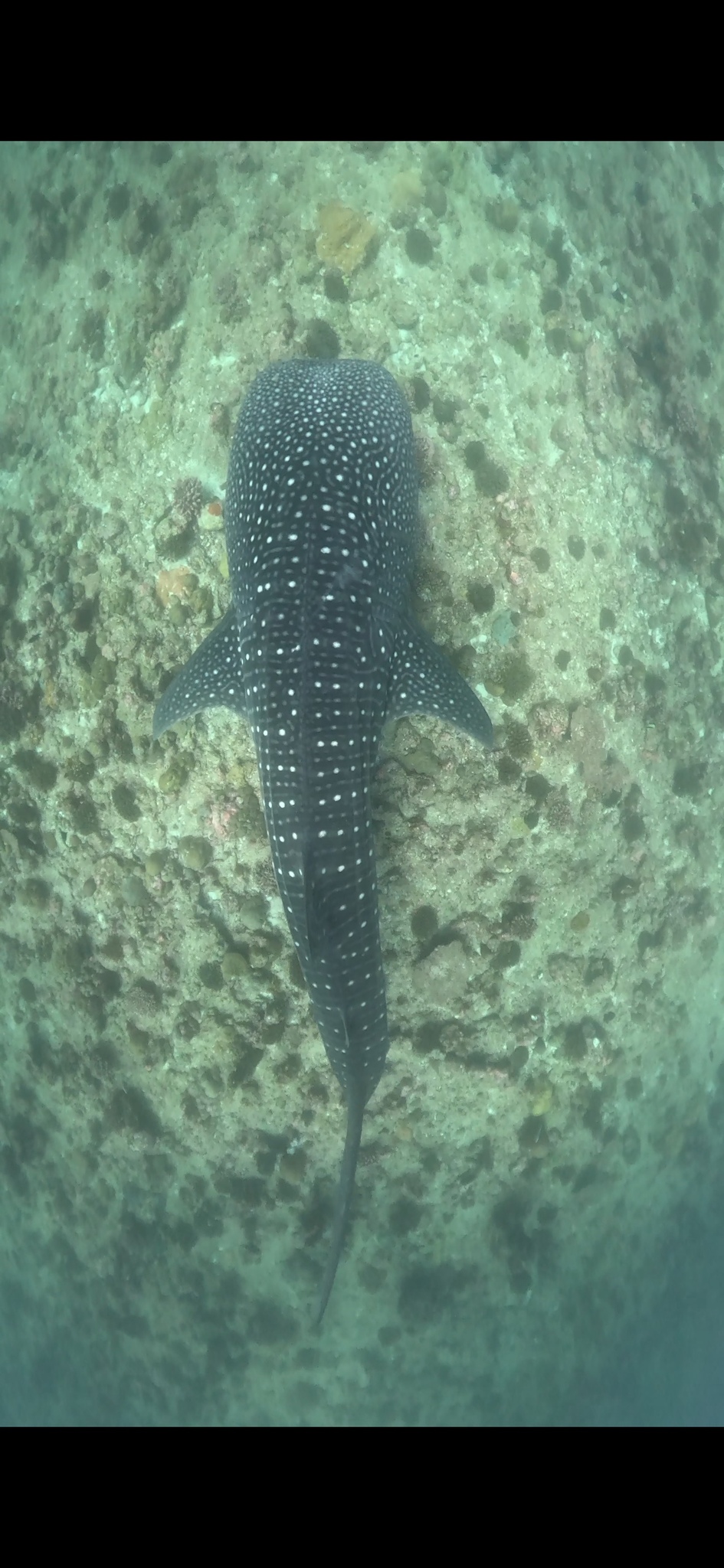
The whale shark (Rhincodon typus) is a slow-moving, filter-feeding carpet shark and the largest known extant fish species.
- Kingdom
- Animalia
- Phylum
- Chordata
- Class
- Elasmobranchii
- Order
- Orectolobiformes
- Family
- Rhincodontidae
- Genus
- Rhincodon
- Species
- Rhincodon typus
Description
The whale shark (Rhincodon typus) is a slow-moving, filter-feeding carpet shark and the largest known extant fish species. An individual with a length of 18.8 m (61.7 ft) has been considered the largest reliably recorded. The whale shark holds many records for size in the animal kingdom, most notably being by far the largest living non-cetacean animal. It is the only living species of the genus Rhincodon and the only extant member of the family Rhincodontidae, which belongs to the subclass Elasmobranchii in the class Chondrichthyes. Before 1984, it was classified as Rhiniodon into Rhinodontidae. An extinct species, Rhincodon ferriolensis, was described in Europe (probably in Spain), in the Late Burdigalian stage. The whale shark is an active filter feeder, primarily consuming plankton, krill, fish eggs, and small schooling fish such as sardines and anchovies. The shark can process over 6,000 liters of water per hour through its specialized sieve-like gill pads. Highly migratory, the whale shark travels thousands of miles across tropical oceans to exploit seasonal food sources, with large, predictable feeding aggregations occurring at coastal sites such as Ningaloo Reef in Western Australia, the Yucatan Peninsula in Mexico, and off the coast of Gujarat and Kerala in India. Despite its immense size, the whale shark is docile and poses no significant threat to humans. It is currently listed as an Endangered species on the IUCN Red List owing to a population decline of more than 50% over the last 75 years, primarily as a result of targeted fishing, bycatch in other fisheries, and collisions with large ships. Whale sharks inhabit the open waters of all tropical oceans. They are rarely found in water below 21 °C (70 °F). The lifespan of a whale shark is estimated to be between 80 and 130 years, based on studies of their vertebral growth bands and the growth rates of free-swimming sharks. The species was distinguished in April 1828 after the harpooning of a 4.6 m (15 ft) specimen in Table Bay, South Africa. Andrew Smith, a military doctor associated with British troops stationed in Cape Town, described it the following year. The name "whale shark" refers to the animal's appearance and large size; it is a fish, not a mammal, and, like all sharks, is not closely related to whales.
En aquarium
Espèce d'eau de mer évoluant plutôt en pleine eau. Paramètres d'eau relevés dans son milieu : température de 18 à 30 °C. Sur le plan biologique, elle atteint jusqu'à 1700 cm, vit jusqu'à 80.4000015258789 ans, son régime est carnivore.
Paramètres relevés dans le milieu naturel de l’espèce (données scientifiques FishBase ; voir aussi la fiche Fishipedia). À adapter aux besoins précis de l’espèce en captivité.
Gallery
Ajouter des photos
Partagez vos photos de cette espèce (jusqu'à 20 à la fois) : elles sont vérifiées automatiquement, puis publiées.
Répartition
Occurrences observées (données GBIF). Les zones hors aire d'origine peuvent indiquer une présence introduite ou invasive.
Sources et crédits
Informations provenant de plusieurs sources vérifiées. Dernière mise à jour : .
Crédits photos (6)
- Photo : G.S. · CC BY-NC 4.0 · via GBIF
- Photo : Jacob Kniebe (@the_kniebe) · CC BY-NC 4.0 · via iNaturalist
- Photo : Barna Takats (@beavisnail) · CC BY-NC 4.0 · via iNaturalist
- Photo : Sabine Templeton (@sabinegt) · CC BY-NC 4.0 · via iNaturalist
- Photo : Dominik Maximilián Ramík (@dominik_ramik) · CC BY 4.0 · via iNaturalist
- Photo : @feetontheground · CC BY-NC 4.0 · via iNaturalist
Mentions de licence
Texte disponible sous licence CC BY-SA 4.0. Il adapte notamment Wikipedia (CC BY-SA) : Whale shark (Wikipédia, auteurs dans l’historique de l’article).
- Taxonomie : GBIF Backbone Taxonomy (CC BY 4.0)
- Carte : occurrences GBIF, fond © contributeurs OpenStreetMap (ODbL)
- Paramètres d'aquarium : FishBase (faits reformulés)
Détail : Sources et licences.
Discussion (0)
Aucun message pour l’instant. Lancez la discussion sur cette fiche (sources, précisions, débats éditoriaux).
Connectez-vous pour participer à la discussion.