
Crocodile shark
Pseudocarcharias kamoharai
The crocodile shark (Pseudocarcharias kamoharai) is a species of mackerel shark and the only extant member of the family Pseudocarchariidae.
- Kingdom
- Animalia
- Phylum
- Chordata
- Class
- Elasmobranchii
- Order
- Lamniformes
- Family
- Pseudocarchariidae
- Genus
- Pseudocarcharias
- Species
- Pseudocarcharias kamoharai
Description
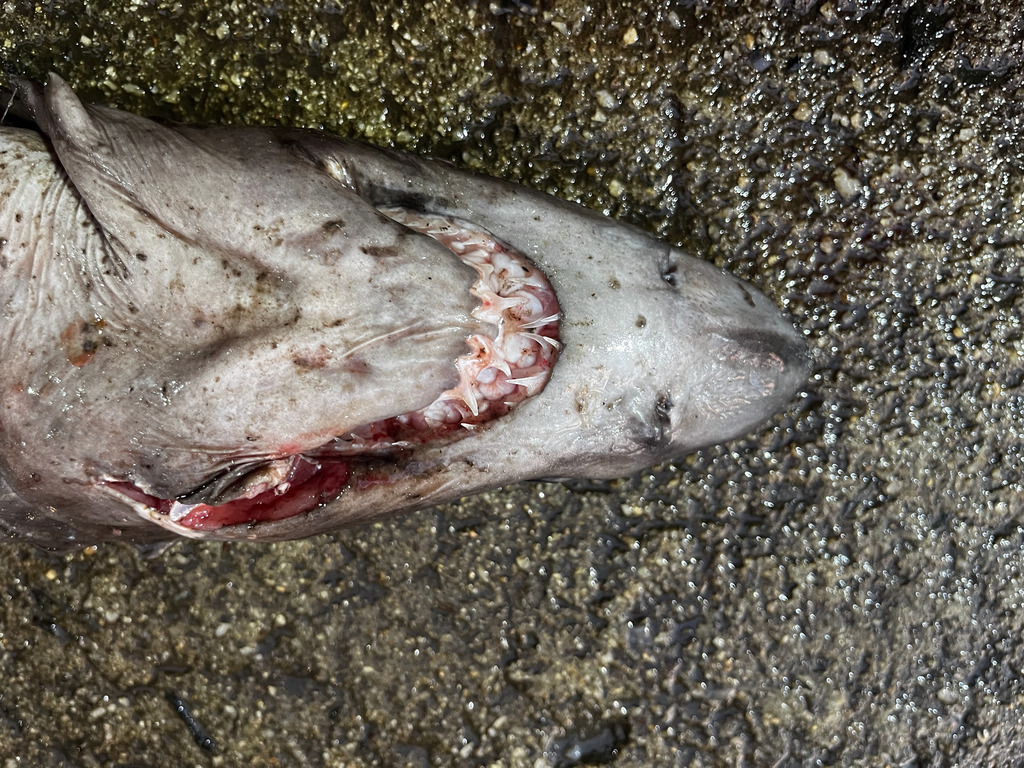
The crocodile shark (Pseudocarcharias kamoharai) is a species of mackerel shark and the only extant member of the family Pseudocarchariidae. A specialized inhabitant of the mesopelagic zone, the crocodile shark can be found worldwide in tropical waters from the surface to a depth of 590 m (1,940 ft). It performs a diel vertical migration, staying below a depth of 200 m (660 ft) during the day and ascending into shallower water at night to feed. Typically measuring only 1 m (3.3 ft) in length, the crocodile shark is the smallest living mackerel shark. It can be distinguished by its elongated cigar-shaped body, extremely large eyes, and relatively small fins. An active-swimming predator of pelagic bony fishes, squid and shrimp, the crocodile shark has a sizable oily liver that allows it to maintain its position in the water column with minimal effort. The size and structure of its eyes suggests that it is adapted for hunting at night. The crocodile shark is aplacental viviparous, with females typically giving birth to litters of four. The fetuses are oophagous, meaning that they feed on undeveloped eggs ovulated for this purpose by their mother. Due to its small size, the crocodile shark poses little danger to humans and is of little commercial importance. This species was responsible for damaging deep sea fiberoptic cables when the technology was first deployed in 1985. In 2017, one crocodile shark was spotted on a UK beach spotted by a family walking on the beach.
En aquarium
Espèce d'eau de mer évoluant plutôt en pleine eau. Sur le plan biologique, elle atteint jusqu'à 110 cm, son régime est piscivore.
Paramètres relevés dans le milieu naturel de l’espèce (données scientifiques FishBase). À adapter aux besoins précis de l’espèce en captivité.
Gallery
Ajouter des photos
Partagez vos photos de cette espèce (jusqu'à 20 à la fois) : elles sont vérifiées automatiquement, puis publiées.
Répartition
Occurrences observées (données GBIF). Les zones hors aire d'origine peuvent indiquer une présence introduite ou invasive.
Sources et crédits
Informations provenant de plusieurs sources vérifiées. Dernière mise à jour : .
Crédits photos (9)
- Photo : Sebastian Ross (@sebby_the_melon) · CC BY-NC 4.0 · via iNaturalist
- Photo : Gonzalo Mucientes Sandoval (@gmucientes) · CC BY-NC 4.0 · via iNaturalist
- Photo : Andrey M. M. (@andreymoreno) · CC BY-NC 4.0 · via iNaturalist
- Photo : Leonardo Lopez (@lopgar26) · CC BY-NC 4.0 · via iNaturalist
- Photo : Sebastian Ross (@sebby_the_melon) · CC BY-NC 4.0 · via iNaturalist
- Photo : Gonzalo Mucientes Sandoval (@gmucientes) · CC BY-NC 4.0 · via iNaturalist
- Photo : Gonzalo Mucientes Sandoval (@gmucientes) · CC BY-NC 4.0 · via iNaturalist
- Photo : Sebastian Ross (@sebby_the_melon) · CC BY-NC 4.0 · via iNaturalist
- Photo : Gonzalo Mucientes Sandoval (@gmucientes) · CC BY-NC 4.0 · via iNaturalist
Mentions de licence
Texte disponible sous licence CC BY-SA 4.0. Il adapte notamment Wikipedia (CC BY-SA) : Crocodile shark (Wikipédia, auteurs dans l’historique de l’article).
- Taxonomie : GBIF Backbone Taxonomy (CC BY 4.0)
- Carte : occurrences GBIF, fond © contributeurs OpenStreetMap (ODbL)
- Statut de conservation : Liste rouge de l'UICN, via Wikidata (CC0)
- Paramètres d'aquarium : FishBase (faits reformulés)
Détail : Sources et licences.
Discussion (0)
Aucun message pour l’instant. Lancez la discussion sur cette fiche (sources, précisions, débats éditoriaux).
Connectez-vous pour participer à la discussion.