
Poecilia velifera
Poecilia velifera
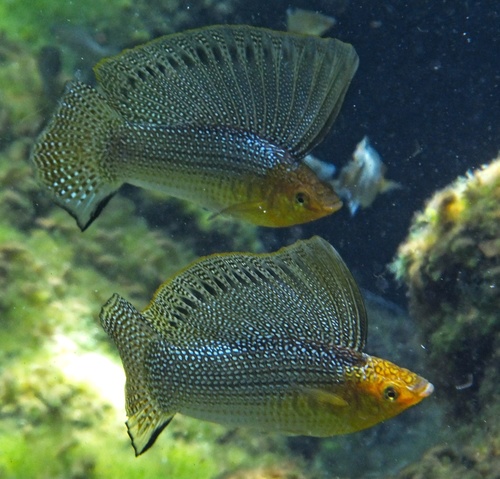
Poecilia velifera, commonly known as the Yucatán molly or giant sailfin molly, is a poeciliid fish native to the Yucatán Peninsula in Mexico.
- Kingdom
- Animalia
- Phylum
- Chordata
- Order
- Cyprinodontiformes
- Family
- Poeciliidae
- Genus
- Poecilia
- Species
- Poecilia velifera
Description
Poecilia velifera, commonly known as the Yucatán molly or giant sailfin molly, is a poeciliid fish native to the Yucatán Peninsula in Mexico. It is typically under 10 cm (3.9 in) in length, but may reach 15 cm (5.9 in), with males somewhat larger than females. It belongs to a group of mollies known as sailfins, named for the large males' sail-like dorsal fin, a feature that is especially pronounced in P. velifera. The species occurs in a range of habitats, from coastal lagoons, estuaries, and salt marshes to freshwater pools in the interior of the peninsula; it is particularly associated with mangrove swamps and sinkholes known as cenotes. Yucatán mollies are primarily herbivorous, but also consume small invertebrates, adjusting their diet to available resources. They are preyed upon by a variety of larger fish, birds, and crocodilians, and are host to a diverse parasite fauna. Much of their time is spent browsing for food and maintaining their bodies. Males are divided into size-based classes, which differ in appearance and behavior: the largest males flare their dorsal fin when they spar with other males and when they perform courtship displays for females; the smallest males remain hidden among females and mate through quick thrusts; and the intermediate males may employ either strategy. A few weeks after mating, females give birth to live young. P. velifera produces viable hybrids with other mollies, including the naturally occurring P. mexicana×P. velifera. Although classified as a vulnerable species owing to threats in its native range, the Yucatán molly has been introduced to various countries in South America, Africa, and Asia through both mosquito control efforts and the ornamental fish trade. Its striking coloration and enlarged fins made it a popular species in the fishkeeping hobby, where it has been selectively bred and hybridized to produce a variety of fancy mollies.
En aquarium
Espèce d'eau douce et saumâtre évoluant plutôt en pleine eau. Paramètres d'eau relevés dans son milieu : température de 25 à 28 °C, pH de 8 à 8, dureté de 13 à 19 °dGH. Sur le plan biologique, elle atteint jusqu'à 15 cm, son régime est carnivore.
Paramètres relevés dans le milieu naturel de l’espèce (données scientifiques FishBase ; voir aussi la fiche Fishipedia). À adapter aux besoins précis de l’espèce en captivité.
Gallery
Ajouter des photos
Partagez vos photos de cette espèce (jusqu'à 20 à la fois) : elles sont vérifiées automatiquement, puis publiées.
Répartition
Occurrences observées (données GBIF). Les zones hors aire d'origine peuvent indiquer une présence introduite ou invasive.
Sources et crédits
Informations provenant de plusieurs sources vérifiées. Dernière mise à jour : .
Crédits photos (4)
- Photo : (c) Matteo Cassella, some rights reserved (CC BY-SA) · CC BY-SA 4.0 · via iNaturalist
- Photo : @ekwerkwe · CC BY-NC 4.0 · via iNaturalist
- Photo : Christine Loew (@fresa_diving_caves) · CC BY 4.0 · via iNaturalist
- Photo : @epic2112 · CC BY-NC 4.0 · via iNaturalist
Mentions de licence
Texte disponible sous licence CC BY-SA 4.0. Il adapte notamment Wikipedia (CC BY-SA) : Poecilia velifera (Wikipédia, auteurs dans l’historique de l’article).
- Taxonomie : GBIF Backbone Taxonomy (CC BY 4.0)
- Carte : occurrences GBIF, fond © contributeurs OpenStreetMap (ODbL)
- Statut de conservation : Liste rouge de l'UICN, via Wikidata (CC0)
- Paramètres d'aquarium : FishBase (faits reformulés)
Détail : Sources et licences.
Discussion (0)
Aucun message pour l’instant. Lancez la discussion sur cette fiche (sources, précisions, débats éditoriaux).
Connectez-vous pour participer à la discussion.