
Atlantic Mudskipper
Periophthalmus barbarus
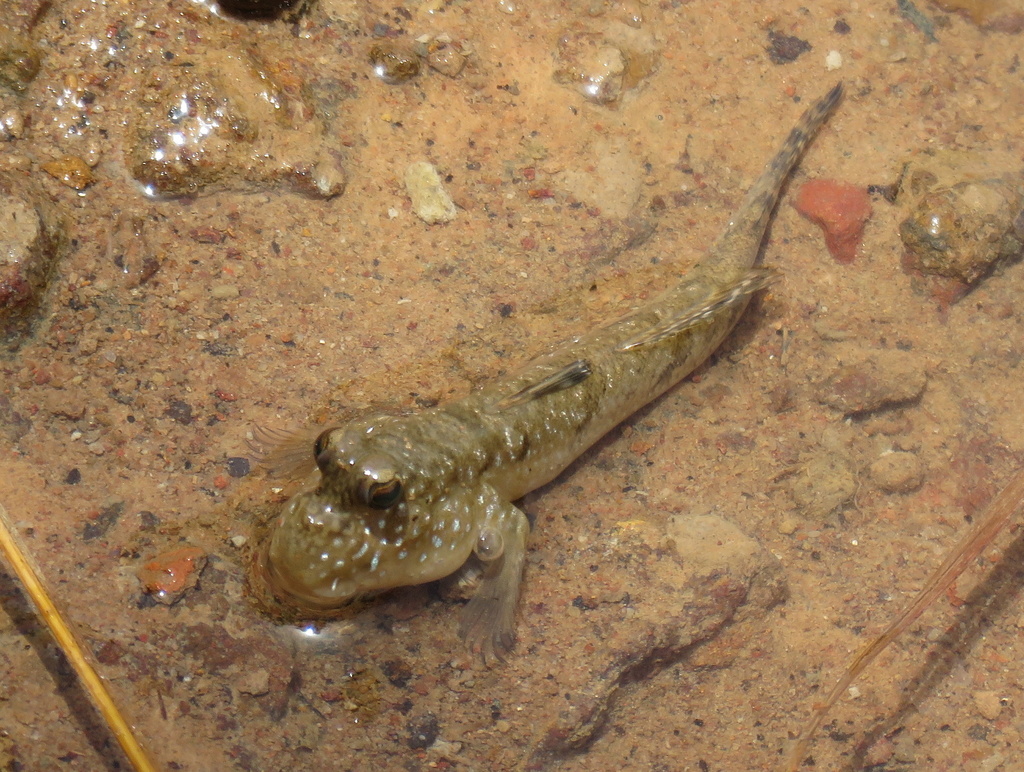
The Atlantic mudskipper (Periophthalmus barbarus) is a species of mudskipper native to fresh, marine, and brackish waters of the tropical Atlantic coasts of Africa, including most offshore islands.
- Kingdom
- Animalia
- Phylum
- Chordata
- Order
- Perciformes
- Family
- Gobiidae
- Genus
- Periophthalmus
- Species
- Periophthalmus barbarus
Description
The Atlantic mudskipper (Periophthalmus barbarus) is a species of mudskipper native to fresh, marine, and brackish waters of the tropical Atlantic coasts of Africa, including most offshore islands. The Greek scientific name Periophthalmus barbarus is named after the eyes that provide the Atlantic mudskipper with a wide field of vision. The Atlantic mudskipper is a member of the genus Periophthalmus, which includes oxudercine gobies that have one row of canine-like teeth. The Atlantic mudskipper can grow up to 25 cm (9.8 in) in body length. Similar to other members of the genus, it has dorsally positioned eyes and pectoral fins that aid in locomotion on land and in water. Atlantic mudskippers can skip, crawl, and climb on land using their pelvic and pectoral fins. The Atlantic mudskipper is a semi-aquatic animal that occurs on tidal flats and mangrove forests, where it readily crosses mud and sand surfaces out of the water. The Atlantic mudskipper is carnivorous and utilises an ambushing strategy to capture prey. This involves using a 'hydrodynamic tongue' and water to suction the prey into the mouth. Sexual maturity is reached at approximately 10.2 cm (4.0 in) for females and 10.8 cm (4.3 in) for males, making it one of the largest species of mudskippers. The Atlantic mudskipper can live up to 15 years. Atlantic mudskippers have been used by humans for food, bait, and medicinal purposes. The conservation status of the Atlantic mudskipper is classified as 'Least Concern'.
En aquarium
Espèce d'eau douce et saumâtre et eau de mer évoluant plutôt autour des récifs. Paramètres d'eau relevés dans son milieu : température de 25 à 30 °C. Sur le plan biologique, elle atteint jusqu'à 14,7 cm, son régime est carnivore.
Paramètres relevés dans le milieu naturel de l’espèce (données scientifiques FishBase ; voir aussi la fiche Fishipedia). À adapter aux besoins précis de l’espèce en captivité.
Gallery
Ajouter des photos
Partagez vos photos de cette espèce (jusqu'à 20 à la fois) : elles sont vérifiées automatiquement, puis publiées.
Répartition
Occurrences observées (données GBIF). Les zones hors aire d'origine peuvent indiquer une présence introduite ou invasive.
Sources et crédits
Informations provenant de plusieurs sources vérifiées. Dernière mise à jour : .
Crédits photos (4)
- Photo : Antonio Xeira (@axeira) · CC BY-NC 4.0 · via iNaturalist
- Photo : Francesco Cecere (@francescocecere) · CC0 (domaine public) · via iNaturalist
- Photo : @joe_cutler · CC BY-NC 4.0 · via iNaturalist
- Photo : Almut Martens (@almut_66) · CC BY-NC 4.0 · via iNaturalist
Mentions de licence
Texte disponible sous licence CC BY-SA 4.0. Il adapte notamment Wikipedia (CC BY-SA) : Atlantic mudskipper (Wikipédia, auteurs dans l’historique de l’article).
- Taxonomie : GBIF Backbone Taxonomy (CC BY 4.0)
- Carte : occurrences GBIF, fond © contributeurs OpenStreetMap (ODbL)
- Statut de conservation : Liste rouge de l'UICN, via Wikidata (CC0)
- Paramètres d'aquarium : FishBase (faits reformulés)
Détail : Sources et licences.
Discussion (0)
Aucun message pour l’instant. Lancez la discussion sur cette fiche (sources, précisions, débats éditoriaux).
Connectez-vous pour participer à la discussion.