
Lingcod
Ophiodon elongatus
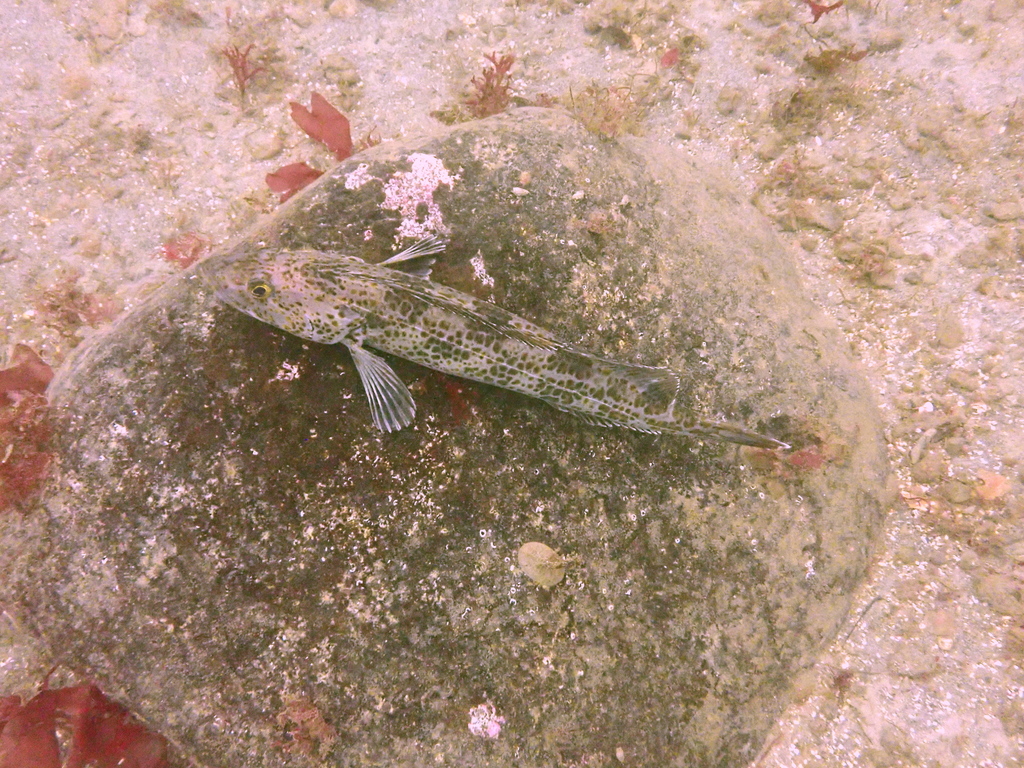
The lingcod or ling cod (Ophiodon elongatus) is a fish of the greenling family Hexagrammidae.
- Kingdom
- Animalia
- Phylum
- Chordata
- Order
- Scorpaeniformes
- Family
- Hexagrammidae
- Genus
- Ophiodon
- Species
- Ophiodon elongatus
Description
The lingcod or ling cod (Ophiodon elongatus) is a fish of the greenling family Hexagrammidae. Despite its name, the lingcod is neither a cod nor a ling. It is also known as the buffalo cod, cultus cod, or Buckethead. It is the only extant member of the genus Ophiodon. A slightly larger, extinct species, Ophiodon ozymandias, is known from fossils from the Late Miocene of Southern California. Ophiodon elongatus is native to the North American west coast from Shumagin Islands in the Gulf of Alaska to Baja California, Mexico. It has been observed up to a size of 152 centimetres (60 in) and a confirmed weight of 39 kilograms (86 lb), with unconfirmed reports of fish weighing more than 50 kilograms (110 lb). It is spotted in various shades of gray. The lingcod is a popular eating fish and is thus prized by anglers. Though not closely related to either ling or cod, the name "lingcod" originated because it somewhat resembles those fish. Around 20% of lingcods have blue-green to turquoise flesh.p. 298 The color, which is no longer present after cooking, may be due to biliverdin, but this has not been established beyond doubt.
En aquarium
Espèce d'eau de mer évoluant plutôt près du fond. Sur le plan biologique, elle atteint jusqu'à 152 cm, vit jusqu'à 25 ans, son régime est piscivore.
Paramètres relevés dans le milieu naturel de l’espèce (données scientifiques FishBase). À adapter aux besoins précis de l’espèce en captivité.
Gallery
Ajouter des photos
Partagez vos photos de cette espèce (jusqu'à 20 à la fois) : elles sont vérifiées automatiquement, puis publiées.
Répartition
Occurrences observées (données GBIF). Les zones hors aire d'origine peuvent indiquer une présence introduite ou invasive.
Sources et crédits
Informations provenant de plusieurs sources vérifiées. Dernière mise à jour : .
Crédits photos (2)
- Photo : Em Lim (@emlim) · CC BY-NC 4.0 · via iNaturalist
- Photo : Josh Houston (@greenwaterdiver) · CC BY-NC 4.0 · via iNaturalist
Mentions de licence
Texte disponible sous licence CC BY-SA 4.0. Il adapte notamment Wikipedia (CC BY-SA) : Lingcod (Wikipédia, auteurs dans l’historique de l’article).
- Taxonomie : GBIF Backbone Taxonomy (CC BY 4.0)
- Carte : occurrences GBIF, fond © contributeurs OpenStreetMap (ODbL)
- Paramètres d'aquarium : FishBase (faits reformulés)
Détail : Sources et licences.
Discussion (0)
Aucun message pour l’instant. Lancez la discussion sur cette fiche (sources, précisions, débats éditoriaux).
Connectez-vous pour participer à la discussion.