
Cutthroat trout
Oncorhynchus clarkii
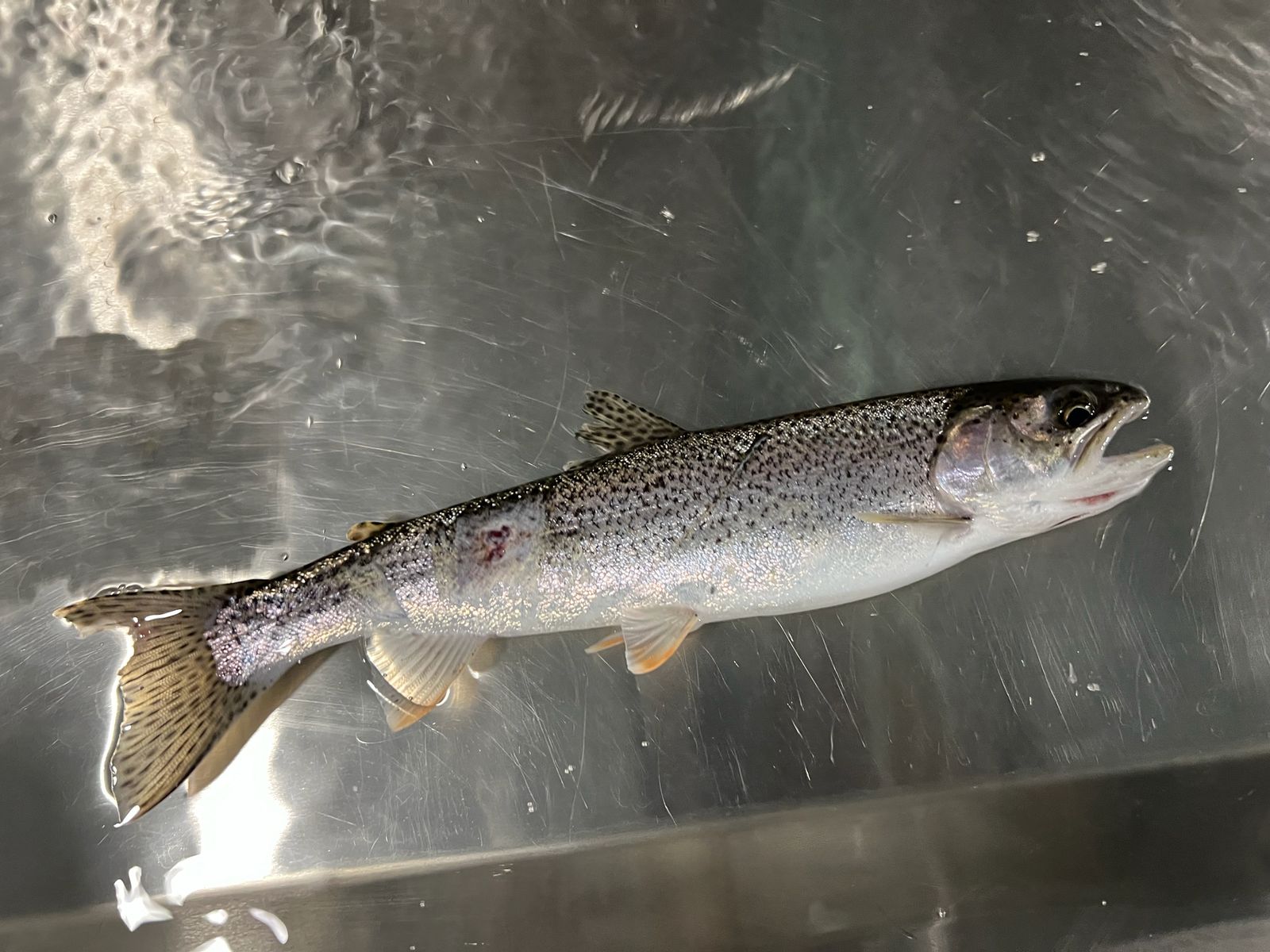
The cutthroat trout (Oncorhynchus clarkii clade) is a clade of four fish species of the family Salmonidae native to cold-water tributaries of the Pacific Ocean, Rocky Mountains, and Great Basin in North America.
- Kingdom
- Animalia
- Phylum
- Chordata
- Order
- Salmoniformes
- Family
- Salmonidae
- Genus
- Oncorhynchus
- Species
- Oncorhynchus clarkii
Description
The cutthroat trout (Oncorhynchus clarkii clade) is a clade of four fish species of the family Salmonidae native to cold-water tributaries of the Pacific Ocean, Rocky Mountains, and Great Basin in North America. These four species are the Coastal (O. clarkii), Westslope (O. lewisi), Lahontan (O. henshawi), and the Rocky Mountain (O. virginalis). As a member of the genus Oncorhynchus, it is in the Pacific trout group, which includes the widely distributed rainbow trout. Cutthroat trout are popular gamefish, especially among anglers who enjoy fly fishing. The common name "cutthroat" refers to the distinctive red coloration on the underside of the lower jaw. The specific name clarkii was given to honor explorer William Clark, coleader of the Lewis and Clark Expedition. Cutthroat trout usually inhabit and spawn in small to moderately large, clear, well-oxygenated, shallow rivers with gravel bottoms. They reproduce in clear, cold, moderately deep lakes. They are native to the alluvial or freestone streams that are typical tributaries of the rivers of the Pacific Basin, Great Basin and Rocky Mountains. Cutthroat trout spawn in the spring and may inadvertently but naturally hybridize with rainbow trout, producing fertile cutbows. Some populations of the coastal cutthroat trout (O. c. clarkii) are semi-anadromous. Several subspecies of cutthroat trout are currently listed as threatened in their native ranges due to habitat loss and the introduction of non-native species. Two subspecies, O. henshawi alvordensis and O. virginalis macdonaldi, are considered extinct. Cutthroat trout are raised in hatcheries to restore populations in their native range, as well as stock non-native lake environments to support angling. The cutthroat trout type species and several subspecies are the official state fish of seven western U.S. states.
En aquarium
Espèce d'eau douce et saumâtre et eau de mer évoluant plutôt près du fond. Sur le plan biologique, elle atteint jusqu'à 99 cm, vit jusqu'à 13 ans, son régime est piscivore.
Paramètres relevés dans le milieu naturel de l’espèce (données scientifiques FishBase). À adapter aux besoins précis de l’espèce en captivité.
Gallery
Ajouter des photos
Partagez vos photos de cette espèce (jusqu'à 20 à la fois) : elles sont vérifiées automatiquement, puis publiées.
Répartition
Occurrences observées (données GBIF). Les zones hors aire d'origine peuvent indiquer une présence introduite ou invasive.
Sources et crédits
Informations provenant de plusieurs sources vérifiées. Dernière mise à jour : .
Crédits photos (10)
- Photo : Brody Lewis · CC BY-NC 4.0 · via GBIF
- Photo : Brody Lewis · CC BY-NC 4.0 · via GBIF
- Photo : Benjamin Legree · CC BY-NC 4.0 · via GBIF
- Photo : Alex Munday · CC BY-NC 4.0 · via GBIF
- Photo : Brody Lewis · CC BY-NC 4.0 · via GBIF
- Photo : Evelyn Lazzaretti 🏳️⚧️ · CC0 (domaine public) · via GBIF
- Photo : Riley M · CC BY-NC 4.0 · via GBIF
- Photo : halibuthead · CC BY-NC 4.0 · via GBIF
- Photo : Keith Brady · CC BY-NC 4.0 · via GBIF
- Photo : Brody Lewis · CC BY-NC 4.0 · via GBIF
Mentions de licence
Texte disponible sous licence CC BY-SA 4.0. Il adapte notamment Wikipedia (CC BY-SA) : Cutthroat trout (Wikipédia, auteurs dans l’historique de l’article).
- Taxonomie : GBIF Backbone Taxonomy (CC BY 4.0)
- Carte : occurrences GBIF, fond © contributeurs OpenStreetMap (ODbL)
- Paramètres d'aquarium : FishBase (faits reformulés)
Détail : Sources et licences.
Discussion (0)
Aucun message pour l’instant. Lancez la discussion sur cette fiche (sources, précisions, débats éditoriaux).
Connectez-vous pour participer à la discussion.