
Sharptooth lemon shark
Negaprion acutidens
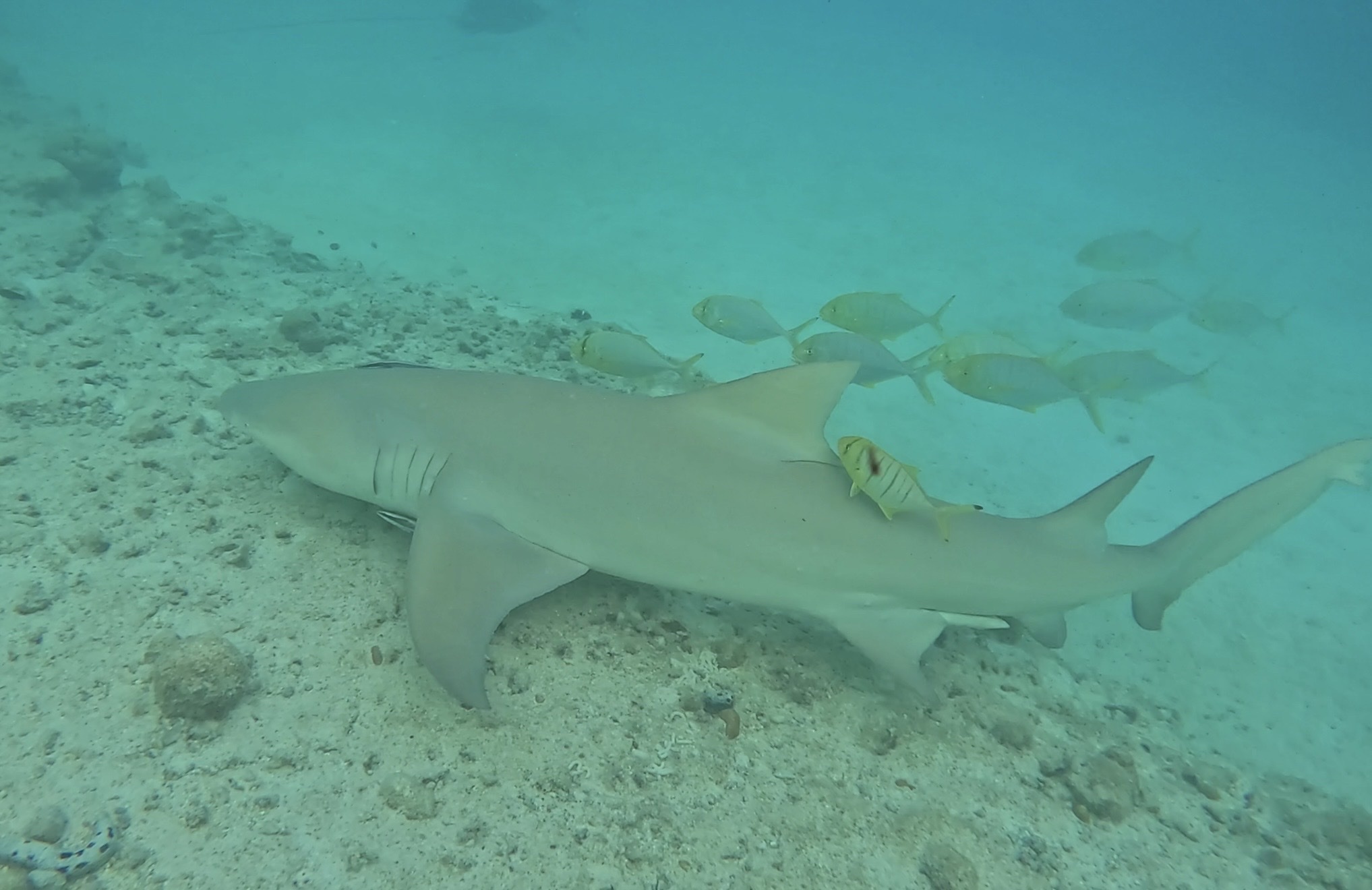
The sicklefin lemon shark (Negaprion acutidens) or sharptooth lemon shark is a species of requiem shark belonging to the family Carcharhinidae, widely distributed in the tropical waters of the Indo-Pacific.
- Kingdom
- Animalia
- Phylum
- Chordata
- Class
- Elasmobranchii
- Order
- Carcharhiniformes
- Family
- Carcharhinidae
- Genus
- Negaprion
- Species
- Negaprion acutidens
Description
The sicklefin lemon shark (Negaprion acutidens) or sharptooth lemon shark is a species of requiem shark belonging to the family Carcharhinidae, widely distributed in the tropical waters of the Indo-Pacific. It is closely related to the better-known lemon shark (N. brevirostris) of the Americas; the two species are almost identical in appearance, both being stout-bodied sharks with broad heads, two dorsal fins of nearly equal size, and a plain yellow-tinged coloration. As its common name suggests, the sicklefin lemon shark differs from its American counterpart in having more falcate (sickle-shaped) fins. This large species grows up to 3.8 m (12 ft) long. It generally inhabits water less than 92 m (302 ft) deep in a variety of habitats, from mangrove estuaries to coral reefs. A slow-moving predator feeding mainly on bony fishes, the sicklefin lemon shark seldom travels long distances and many individuals can be found year-round at certain locations. Like other members of its family, this species is viviparous, with females giving birth to no more than 13 pups every other year, following a gestation period of 10–11 months. Although they are potentially dangerous to humans and known to respond vigorously to any provocation, under normal circumstances, sicklefin lemon sharks are cautious and tend to retreat if approached. The IUCN has assessed this species as Endangered; its low reproductive productivity and rate of movement limits the capacity of depleted stocks to recover. Off India and Southeast Asia, this species has been severely depleted or extirpated by unregulated exploitation for its meat, fins, and liver oil.
En aquarium
Espèce d'saumâtre et eau de mer évoluant plutôt autour des récifs. Sur le plan biologique, elle atteint jusqu'à 380 cm, son régime est piscivore.
Paramètres relevés dans le milieu naturel de l’espèce (données scientifiques FishBase). À adapter aux besoins précis de l’espèce en captivité.
Gallery
Ajouter des photos
Partagez vos photos de cette espèce (jusqu'à 20 à la fois) : elles sont vérifiées automatiquement, puis publiées.
Répartition
Occurrences observées (données GBIF). Les zones hors aire d'origine peuvent indiquer une présence introduite ou invasive.
Sources et crédits
Informations provenant de plusieurs sources vérifiées. Dernière mise à jour : .
Crédits photos (5)
- Photo : kev-davies-ormeau · CC BY-NC 4.0 · via GBIF
- Photo : Serena Stean (@serenastean) · CC BY-NC 4.0 · via iNaturalist
- Photo : Tim Karnasuta (@timkarnasuta) · CC BY-NC 4.0 · via iNaturalist
- Photo : Katrina Schwager (@katrina116) · CC BY-NC 4.0 · via iNaturalist
- Photo : Geoff Shuetrim (@shuetrim) · CC BY 4.0 · via iNaturalist
Mentions de licence
Texte disponible sous licence CC BY-SA 4.0. Il adapte notamment Wikipedia (CC BY-SA) : Sicklefin lemon shark (Wikipédia, auteurs dans l’historique de l’article).
- Taxonomie : GBIF Backbone Taxonomy (CC BY 4.0)
- Carte : occurrences GBIF, fond © contributeurs OpenStreetMap (ODbL)
- Paramètres d'aquarium : FishBase (faits reformulés)
Détail : Sources et licences.
Discussion (0)
Aucun message pour l’instant. Lancez la discussion sur cette fiche (sources, précisions, débats éditoriaux).
Connectez-vous pour participer à la discussion.